Museumsberg Flensburg Travel Guide
Free Guide: A hilltop twin museum where North German art, historic interiors and church treasures reveal the layered culture of the Flensburg border region.


A brief summary of Museumsberg Flensburg
A hilltop twin museum where North German art, historic interiors and church treasures reveal the layered culture of the Flensburg border region.
Perched on a green hill above Flensburg’s rooftops, Museumsberg Flensburg is a twin-building museum complex that weaves together art, regional history and natural history. Inside, you move from richly panelled peasant rooms and church art from South Schleswig to expressive modern paintings, Art Nouveau textiles and furniture spanning Gothic to Classicism. Combined with views over the city and nearby parkland, it’s an atmospheric place to explore Northern German culture in depth.
On-site amenities
 Restrooms
 Drink options
 Food options
 Lockers
 Seating areas
 Sheltered areas
 Trash bins
 Information boards
 Visitor centre
Opening hours
- MonClosed
- Tue10 am–5 pm
- Wed10 am–5 pm
- Thu10 am–5 pm
- Fri10 am–5 pm
- Sat10 am–5 pm
- Sun10 am–5 pm
Opening hours as listed on the venue’s Google Business Profile. Hours can change for services and special events, so check with the venue before you go.
- Address
- Museumsberg 1, 24937 Flensburg
- Phone
- Website
Getting there
Local bus from Flensburg Zentrum
Walking from the historic harbour area
Taxi or on-demand ride within Flensburg
Car from the wider Flensburg region
Discover more about Museumsberg Flensburg
A hilltop museum world above Flensburg
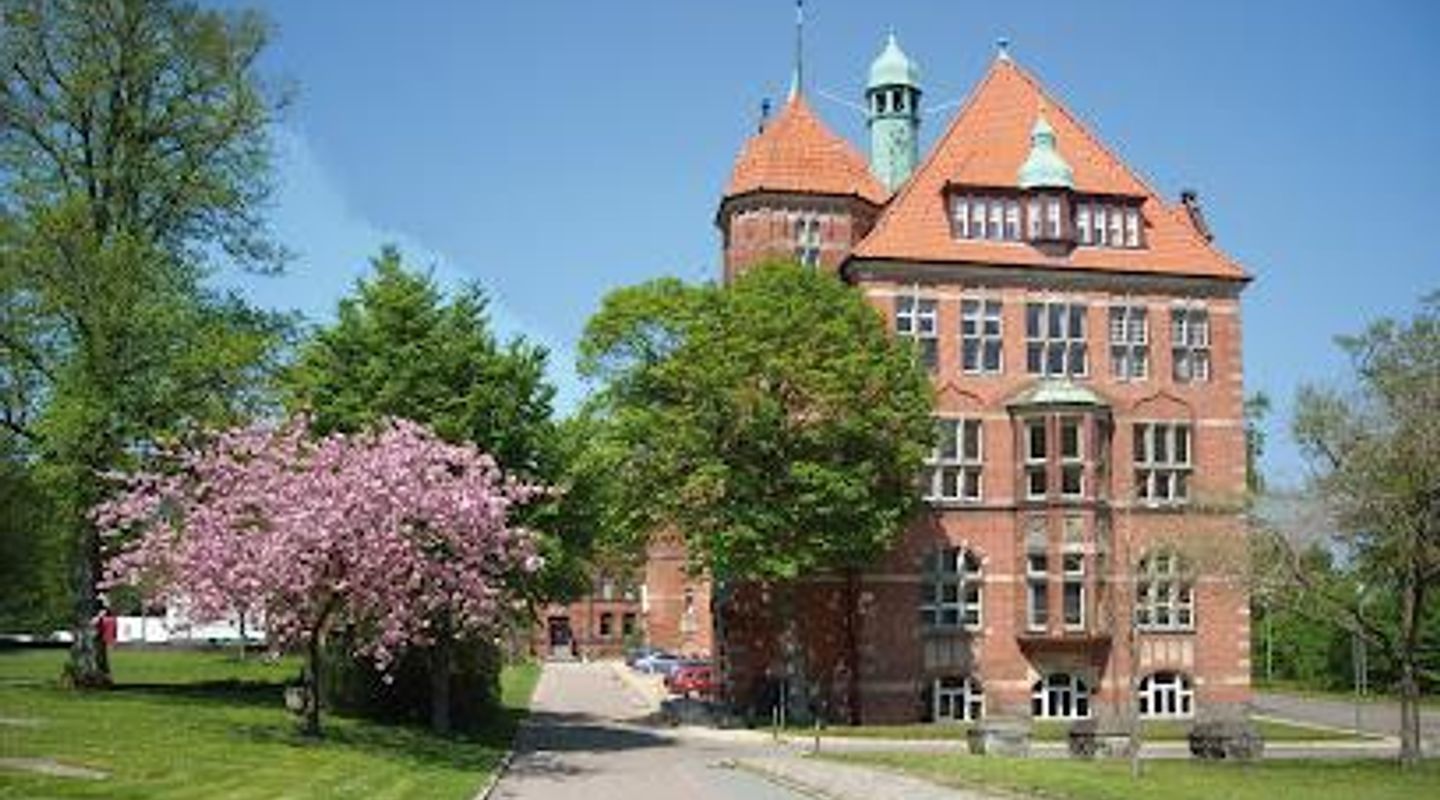
Museumsberg Flensburg crowns a rise just south of the historic centre, its two museum buildings tucked into a slope that looks out over gables, church towers and the fjord beyond. The approach leads you through greenery and past traces of an old cemetery, so you step indoors already primed for a slower rhythm and a sense of local time depth. Once inside, white staircases, creaking floors and long corridors branch into a quiet maze of galleries.Rather than a single grand hall, the complex reveals itself gradually. Rooms are scaled to human proportions, inviting you to wander, pause and double back as something catches your eye. Windows in some galleries frame fragments of city and park, constantly reminding you that this dense concentration of art and artefacts is rooted in a very specific place on the German–Danish border.
Art from the fjord and the German–Danish borderlands
One of the strongest threads here is painting from northern Germany and Schleswig-Holstein in the 19th and 20th centuries. The collections highlight the artist colony around Egernsund on Flensburg Fjord, where plein-air painters were drawn by wide skies, shimmering water and working harbours. Seascapes, rural scenes and portraits mix with more experimental work as you move towards expressionism.Names such as Ernst Barlach, Erich Heckel and Emil Nolde chart the region’s links to wider European movements. Modern and post-war pieces from northern Germany and Scandinavia show how abstraction, colour fields and new materials reshaped artistic language. The result is a compact but surprisingly broad overview of how this border region has been seen, interpreted and reimagined on canvas over more than a century.
Historic interiors, peasant rooms and craftsmanship
Beyond the picture galleries, Museumsberg is famed for its furniture and room installations. Instead of isolated chairs and cabinets, you step into reconstructed interiors that trace styles from the Gothic period through to classicism. Here, carved chests, tiled stoves and painted cupboards sit where they would once have been used, giving a vivid impression of domestic life before industrial production.The peasant rooms are particularly evocative. Richly panelled walls, low ceilings and warm woods showcase the skill of rural craftsmen in South Schleswig, where carpenters transformed practical spaces into showcases of carving and colour. Moving from one reconstructed room to another, you sense changing ideas of comfort, status and ornament, right down to the patterns on benches and bed boxes.
Church treasures and the Parisian chamber
Church art from South Schleswig forms another highlight. Altarpieces, wooden sculptures and devotional objects demonstrate both the piety and the artistry of the region’s parishes. Many of the carved figures still carry traces of their original paint, the expressions and gestures of saints and apostles surprisingly lively at close range.Perhaps the most memorable space is the so‑called Parisian chamber, an imposing neo-Gothic assembly hall. Tall, coloured lancet windows wash the room in soft light, while a beamed ceiling with carved detail soars overhead. Standing here, it is easy to imagine public gatherings and solemn ceremonies, the architecture designed as much to impress as to enclose.
Art Nouveau tapestries and modern perspectives
A distinctive feature of Museumsberg is its Art Nouveau section, closely connected to the weaving school once active in Skærbæk, then part of Prussia. The gobelin tapestries on display show flowing lines, stylised plants and sinuous figures typical of the period, but they also speak to cross-border cultural exchange between present-day Denmark and Germany.These decorative works form a bridge to later 20th-century and contemporary pieces elsewhere in the museum. Together they underline how design, textile art and painting evolved side by side. For visitors, the thread that runs through the complex is not just chronology but the creative energy that this northern coastal landscape has continually inspired.
Exploring the grounds and planning your visit
Outside the buildings, the hill itself is part of the experience. Paths lead past old gravestones and into neighbouring parkland, offering quiet corners to sit and process what you have seen. The elevated position makes it easy to orient yourself within Flensburg, with glimpses of harbour cranes and red roofs appearing between trees.The museum is usually open from Tuesday to Sunday during the daytime, with one house staying open later on some evenings in the warmer months. Admission is ticketed but remains moderate, with combined options that also cover other city museums. Facilities such as restrooms, lockers and a small café area make it straightforward to spend several unhurried hours exploring without needing to leave the site.
Evendo Review Centre
 Google
Guest reviews
Best time to go
Quietest: Jan, Feb & Mar · before 9am or from 6pm
Busy times are Evendo estimates for a typical year, to help you plan. Actual crowds vary with events, school holidays and the weather.
Explore Museumsberg Flensburg on the map
A handpicked selection of must-see spots near Museumsberg Flensburg, mapped for you.
Get your free copy of our complete guide to Museumsberg Flensburg, delivered straight to you.
Everything on this page, from opening hours and how to get there to Eve’s tips and the best time to go, in one PDF you can read offline, print or share.
Already have an account? Sign in
Your Museumsberg Flensburg guide is ready.
We'll send it to · Not you? Sign out

Getting your guide ready…
We are putting together a fresh copy of the Museumsberg Flensburg guide. This can take up to a minute.
This can take a few moments. If your browser asks, choose Allow so the download can start. You'll find the guide in your Downloads folder.
Nothing happened? Download it again
Sorry, the guide is taking longer than usual. Please try again in a minute, or get it by email instead.
Unlock the best of Museumsberg Flensburg
Skip-the-line tickets, guided tours with entry, and walking tours of the area, booked in a few clicks.

Other nearby places you may find interesting
The closest places of the same kind, if this one is not quite what you had in mind.
-
-
-
-
-


Swipe for more places
More to explore near Museumsberg Flensburg

 Best experiences near Museumsberg Flensburg

 Best hotels near Museumsberg Flensburg

 Best landmarks near Museumsberg Flensburg

 Best attractions near Museumsberg Flensburg

 Best shops near Museumsberg Flensburg

 Best restaurants near Museumsberg Flensburg

 Best bars near Museumsberg Flensburg
Do you manage this location?
Take control to get all the benefits, like improved information, better appearance, and stronger visibility across AI-powered discovery.
Explore more

Explore more of South Jutland
Discover the beauty and charm of South Jutland, Denmark's southern treasure, with its rich history, stunning landscapes, and delightful local cuisine.
Explore South Jutland
Explore more of Denmark
Discover Denmark: A perfect blend of history, modern design, and the cozy concept of hygge. Explore vibrant cities, serene landscapes, and world-class cuisine.
Explore Denmark