
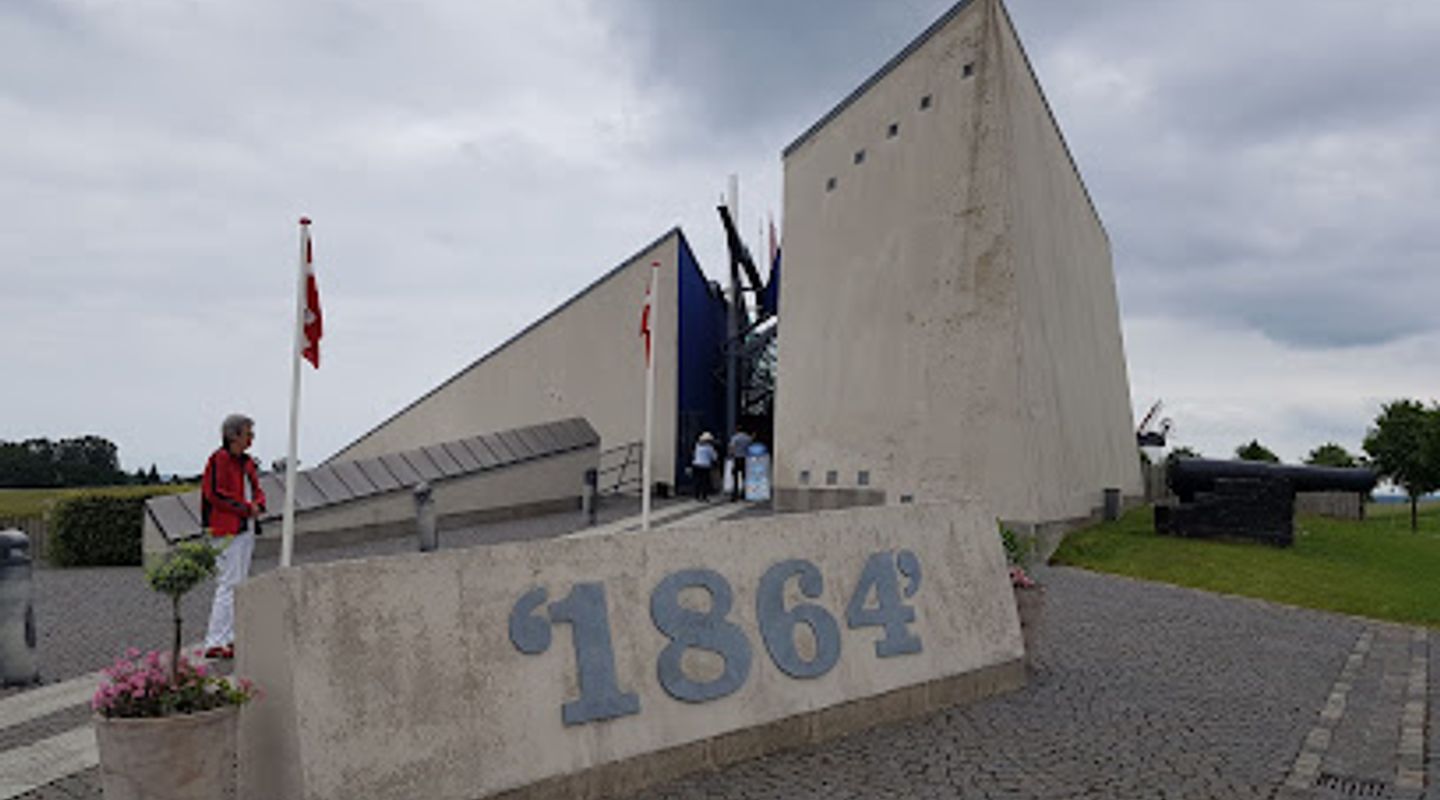
Historiecenter Dybbøl Banke, Sonderborg Travel Guide
Step onto the ridge where Denmark’s fate was decided in 1864, with immersive battle films, reconstructed trenches and a living soldiers’ camp on historic Dybbøl Banke.
Historiecenter Dybbøl Banke, set on the windswept Dybbøl Banke outside Sønderborg, is Denmark’s major interpretive centre for the pivotal war of 1864. Blending immersive exhibitions, outdoor reconstructions of redoubts and barracks, and powerful film presentations, it places you in the midst of the Danish–Prussian conflict that reshaped the nation. Cannon salutes, living-history storytelling and seasonal programmes bring the battlefield’s human drama vividly to life.
A brief summary to Historiecenter Dybbøl Banke
- Dybbøl Banke 16, Sønderborg, 6400, DK
- Click to display
- Click to display
- Duration: 2 to 3.5 hours
- Mid ranged
-
 Mixed
Mixed
- Mobile reception: 4 out of 5
- Monday 10 am-5 pm
- Tuesday 10 am-5 pm
- Wednesday 10 am-5 pm
- Thursday 10 am-5 pm
- Friday 10 am-5 pm
- Saturday 10 am-5 pm
- Sunday 10 am-5 pm

Know before you go
Hi, I'm Eve. Here are a few practical things to know before exploring Historiecenter Dybbøl Banke.
- Wear sturdy, weatherproof shoes and layers; much of the experience takes place outdoors on an exposed ridge, which can be windy and cool even in summer.
- Plan at least 2–3 hours so you can watch the films, join outdoor demonstrations in the soldiers’ camp and still have time to explore the exhibitions at your own pace.
- Check the centre’s seasonal programme in advance if you want to catch rifle or cannon demonstrations, children’s storytelling or special holiday events.
- Consider buying a combined ticket with nearby Dybbøl Mill in the main season to round out the story of the battlefield and its role as a national symbol.
- If visiting with dogs, keep them on a leash and skip the cinema, where loud battle sound effects can be uncomfortable for animals.
Do you manage this location?
Take control to get all the benefits, like improved information, better appearance, and stronger visibility across AI-powered discovery. Learn more about listing your business on Evendo
Activate your presenceOther nearby places you may find interesting
The closest places of the same kind, if this one is not quite what you had in mind.
Explore Historiecenter Dybbøl Banke on the Map
A handpicked selection of must-see spots near Historiecenter Dybbøl Banke, mapped for you.
Getting There
-
Local bus from Sønderborg
From central Sønderborg you can use a regional bus towards Dybbøl; services typically take around 10–20 minutes depending on the exact stop and run several times per hour on weekdays, less frequently on weekends. A single adult ticket within the local zone structure usually costs in the range of 20–35 DKK and can be bought from ticket machines or via local travel apps. Buses stop a short walk from the ridge, and this option is convenient if you prefer not to worry about parking.
-
Taxi from Sønderborg town
A taxi from the centre of Sønderborg to Historiecenter Dybbøl Banke normally takes about 10–15 minutes, depending on traffic along the approach roads. Fares in the region are typically around 120–200 DKK one way for up to four passengers, with supplements in the evening and on holidays. This option is well suited if you are travelling as a small group, have limited mobility, or are connecting from a train or long-distance bus with luggage.
-
Self-drive by car from the Sønderborg area
Driving from most points in the Sønderborg area to Dybbøl Banke generally takes 10–25 minutes along well-maintained local roads. There is parking available near the history centre, but spaces can fill up in peak holiday periods, so arriving earlier in the day is advisable. Fuel costs vary, but for such a short return trip they remain modest; if you are using a rental car, check in advance whether any mileage limits or insurance conditions apply.
-
Bicycle from Sønderborg
For a more active approach, cycling from Sønderborg to Dybbøl Banke typically takes 20–35 minutes each way, depending on your pace and starting point. Routes use regular public roads with some hills as you climb onto the ridge, so basic fitness and comfort with traffic are needed. This low-cost option lets you experience the coastal scenery at a leisurely speed; just remember that wind can be strong on the exposed stretches, and bring lights if returning late.
For the on-the-go comforts that matter to you
-
 Restrooms
-
 Drink Options
-
 Food Options
-
 Seating Areas
-
 Picnic Areas
-
 Trash Bins
-
 Information Boards
-
 Visitor Center
Discover more about Historiecenter Dybbøl Banke
A battlefield ridge that reshaped Denmark
Perched on the rolling heights west of Sønderborg, Historiecenter Dybbøl Banke stands on ground where Danish and Prussian forces fought one of the most decisive battles in the country’s history. Here in 1864, after weeks of heavy bombardment, Danish defensive lines finally broke, leading to a defeat that cost Denmark around two-fifths of its territory and population. The landscape still carries the memory of trenches, redoubts and artillery positions, even as the surrounding fields and views towards Als Island look peaceful today.The centre is dedicated to telling this turning point not as distant military history, but as a living European story. Exhibitions explain how a regional conflict in Schleswig and Holstein became a clash between a small kingdom and a rising Prussian power, with consequences that would echo through later German unification and the shifting borders of Southern Jutland.Immersive encounters with the war of 1864
Inside the main building, you move through carefully staged environments and multimedia installations that place you in the middle of the 1864 campaign. Introductory films set out the political background and then focus on the two crucial battles around Sønderborg, including the storming of the Dybbøl positions and the attack on Als. Surround sound, archival material and dramatised scenes create a sense of urgency without slipping into spectacle for its own sake.Exhibits highlight uniforms, weapons and personal items, but the emphasis is on people: young conscripts in muddy trenches, officers facing impossible decisions, and civilians caught between languages and loyalties. Texts are available in multiple languages, and clear visual storytelling helps you follow events even if you arrive with little prior knowledge of Danish history.Soldiers’ camp, cannons and life at the front
Step outside and the site opens into a reconstructed soldiers’ town, laid out like a field camp from 1864. Low wooden barracks with straw-filled sleeping platforms, a bustling sutler’s stall, blacksmith demonstrations and field kitchens show how an army actually lived between battles. On selected days and seasonal programmes, costumed interpreters fire rifles and artillery, lead visitors through the redoubts and demonstrate how guns were loaded under pressure.The open-air area is where you sense the physical demands of the campaign: the chill of the wind on the ridge, the weight of a musket, the cramped bunks where dozens of soldiers tried to rest. Children can crawl into shelters, handle replica equipment and join tailored storytelling sessions that introduce the conflict at eye level, while adults can linger over detailed explanations of fortifications and artillery technology.Seasons, special programmes and neighbouring mill
The history centre operates a strong seasonal calendar. Spring and summer days typically run from morning to late afternoon with a full programme of guided activities, while winter openings focus on shorter, atmospheric days that underline just how cold and harsh the front line could be. During winter holidays, the narrative often centres on frostbitten sentries, smoky barracks and the challenges of keeping warm, making the weather part of the experience rather than an inconvenience.On selected holiday periods such as Ascension, the schedule intensifies with extra demonstrations, children’s stories and thematic talks about artillery, eyewitness accounts and the redoubts themselves. Nearby Dybbøl Mill, a national symbol in its own right, can be visited on a combined ticket during the main season, tying together the story of the battlefield ridge with that of the iconic mill silhouetted against the sky.Planning your visit on the ridge
A visit typically fills half a day, especially if you combine indoor exhibitions, films and the outdoor camp. The ridge is exposed and much of the experience takes place outside, so sturdy shoes, layers and rain protection are strongly recommended. You can bring a picnic to enjoy in designated courtyard or outdoor areas, and there are spots to sit and pause between activities.The site is suitable for a wide range of travellers, from history enthusiasts tracing the Schleswig wars to families looking for an engaging way to understand Denmark’s past. Dogs are permitted on leads in the outdoor areas but not in the cinema because of loud sound effects. Information boards and clear pathways make it easy to orient yourself across the grounds, and the sweeping views over the fjord and fields give a powerful sense of the geography that shaped the battle.More to explore near Historiecenter Dybbøl Banke













Your all‑in‑one travel companion app
Explore expert travel guides, compare and book tours, experiences, hotels, and more—all from the palm of your hand. Download now for seamless trip planning wherever your wanderlust takes you.


Explore More of Sonderborg
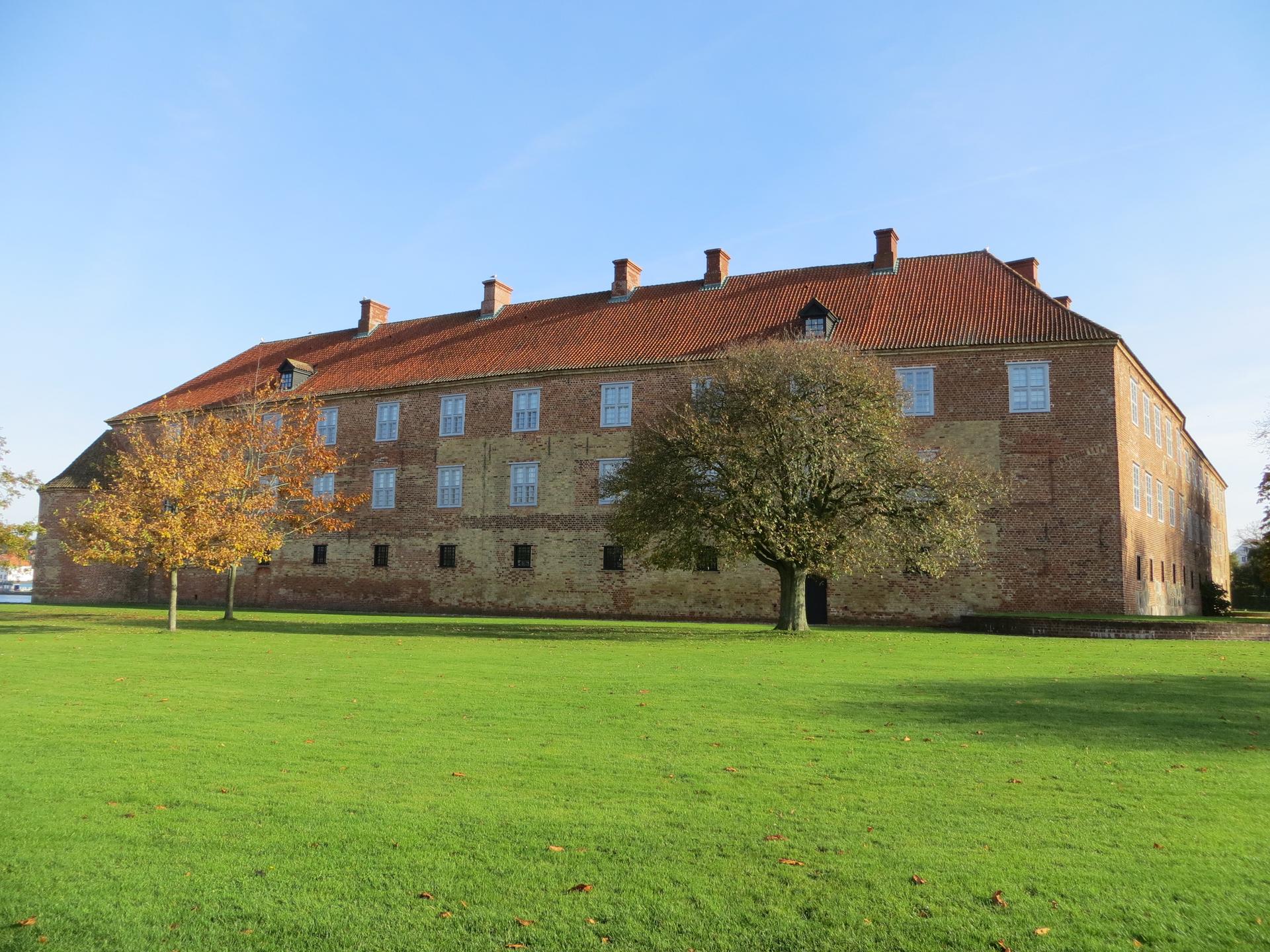
Looking beyond Historiecenter Dybbøl Banke? Discover Sonderborg for broader travel guides, local hot-spots, and regional highlights.
Explore Sonderborg
A cosy attic museum on a 14th‑century farm, where tools, toys and grain samples bring everyday rural life on Als vividly back to life.
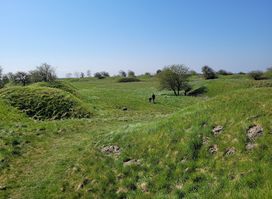
A modest reunification plaque on Dybbøl’s former German Redoubt X, linking the 1864 battlefield to the peaceful border changes of 1920 in a quiet, open landscape.
