Lodvig Travel Guide
Free Guide: A small, whimsical bronze figure on Ebeltoft’s main street, Lodvig adds a playful touch of local folklore to the town’s cobbled, half-timbered historic core.


A brief summary of Lodvig
A small, whimsical bronze figure on Ebeltoft’s main street, Lodvig adds a playful touch of local folklore to the town’s cobbled, half-timbered historic core.
Tucked into the cobbled main street of Ebeltoft’s old town, the small bronze statue of Lodvig is a quirky local landmark that celebrates the town’s storytelling tradition. This whimsical figure stands amid half-timbered houses and rose-lined façades, offering a playful counterpoint to the historic surroundings. A quick stop at Lodvig easily combines with a stroll through the atmospheric streets, cafés and independent shops of Adelgade and the old merchant quarter.
On-site amenities
 Restrooms
 Drink options
 Drinking water
 Food options
 Seating areas
 Trash bins
 Information boards
Opening hours
- Every dayOpen 24 hours
Opening hours as listed on the venue’s Google Business Profile. Hours can change for services and special events, so check with the venue before you go.
- Address
- Adelgade 9 A, 8400 Ebeltoft
- Website
Getting there
Regional bus from Aarhus
Car from Aarhus and Djursland
Local bus within Syddjurs
Discover more about Lodvig
A whimsical figure in Ebeltoft’s old streets
Lodvig is a modest but memorable statue set along Adelgade, one of Ebeltoft’s central streets in the historic town core. Here the paving stones are worn smooth, façades lean gently over the street, and the little bronze figure almost feels as if it has stepped out of a storybook. Many visitors first notice Lodvig by surprise while wandering between boutiques and galleries, and then pause to look more closely at his expressive posture and quiet, slightly mischievous presence.Ebeltoft is famous for its old merchant-town atmosphere, and Lodvig adds a touch of humour and intimacy to that setting. The statue is at a human, approachable scale, inviting you to stand beside it rather than merely look up from a distance. It hints at a character from local tales, grounding the town’s long history in something playful and personal.
Folklore, imagination and local character
While grand monuments often commemorate kings or battles, Lodvig feels much more like an everyday figure, the sort of person you might imagine meeting on these streets a century ago. The sculpture draws on the region’s love of anecdotes and small-scale stories, where the mood of a town is captured through its ordinary characters rather than its powerful elites.The name adds to the charm: Lodvig sounds familiar yet slightly offbeat, suggesting a person who does things in his own way. Children are often drawn to the statue’s size and friendly appearance, and adults tend to recognise a hint of dry Danish humour in the way he occupies his little patch of pavement, unbothered by the flow of shoppers and sightseers around him.
Surrounded by half-timbered houses and harbour light
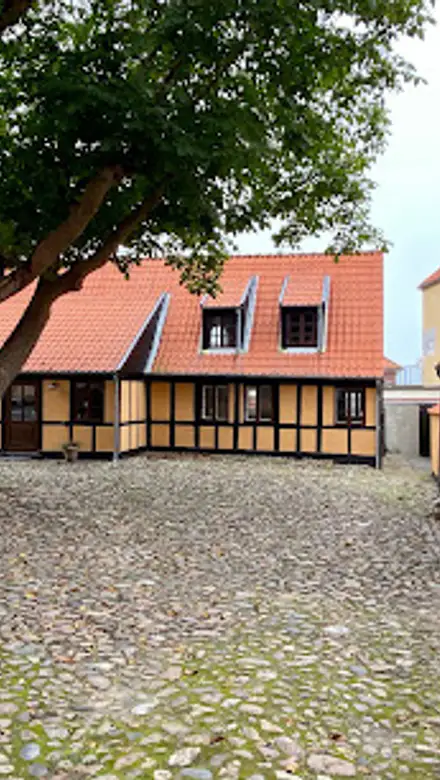
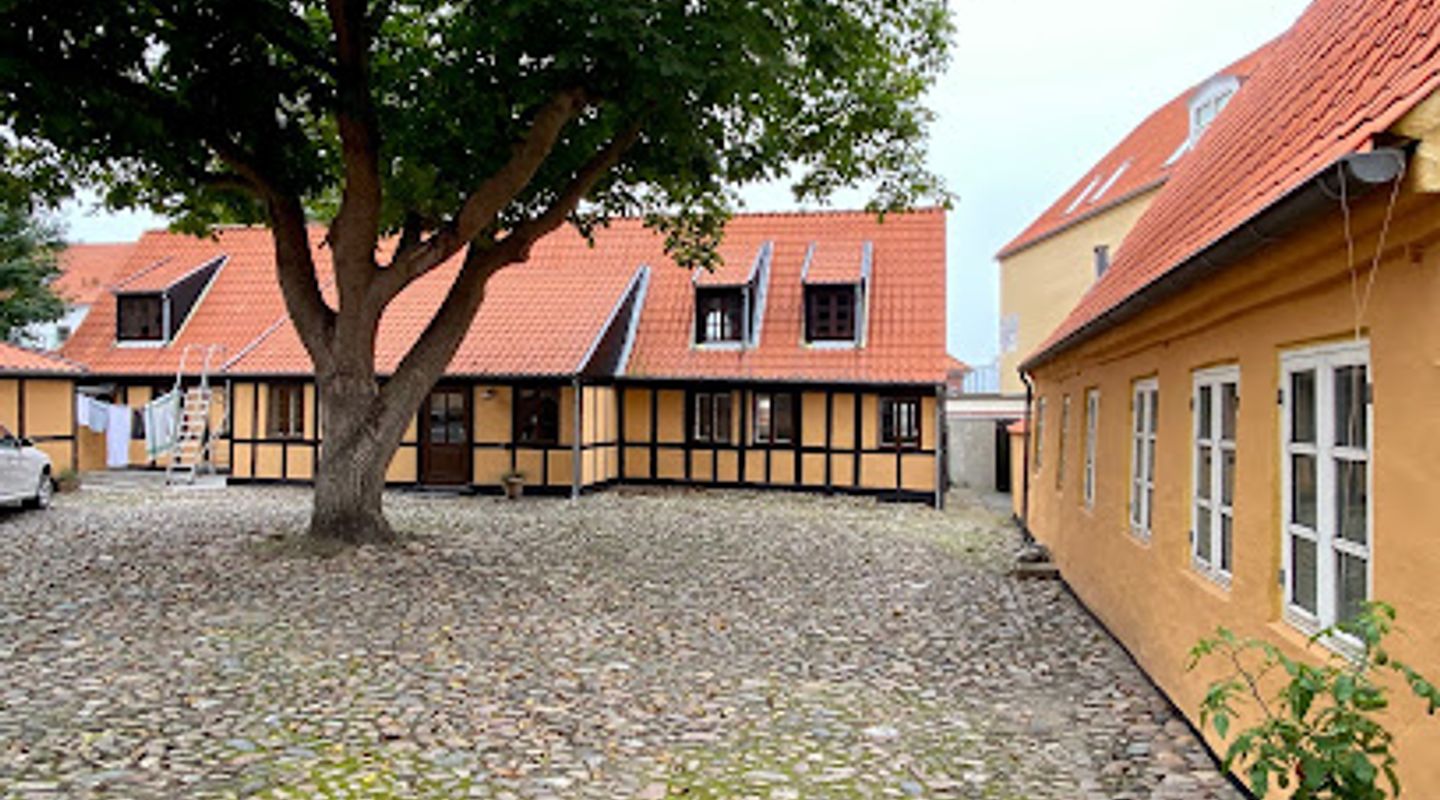
Part of Lodvig’s appeal comes from where he stands. Adelgade runs through Ebeltoft’s picturesque old town, an area known for its timber-framed houses, colourful doors, and hollyhocks that bloom along the walls in summer. Just a short walk away lies the old town hall and, further downhill, the harbour with its historic ships.Because the statue is placed right in this lived-in streetscape, it becomes part of everyday life rather than a distant museum piece. Locals go about their errands, cyclists rattle past on the cobbles, and the changing Danish light plays across the bronze surface as the day progresses. On quiet mornings Lodvig can appear contemplative; on busy afternoons he feels like one more character in the crowd.
A brief yet rewarding stop on a town stroll
Visiting Lodvig does not require much time; many people spend only a few minutes here. Yet those minutes provide a useful pause to take in the scale and rhythm of the street. It is an ideal point to orient yourself, glance up at the timbered gables, or decide which narrow lane to explore next.Because there is no ticket booth or formal entrance, you can fold a stop at Lodvig into a relaxed walk that might include small design shops, glass studios, and cosy cafés. In good weather, the statue is often bathed in soft natural light, making it a pleasing subject for quick photos, sketches, or simply a quiet moment of observation.
Details that reward a closer look
Up close, the sculpture reveals thoughtful touches in the modelling of clothing, posture and expression. The patina of the bronze carries subtle colour shifts, revealing where many hands have brushed the surface over the years. The way Lodvig is positioned in relation to nearby façades suggests motion and story, as if he has just paused mid-errand or is about to speak.These small details encourage you to linger slightly longer than planned. Observing the statue from different angles, you can frame it against crooked houses, flowered windowsills or a strip of sky between rooftops, each view emphasising a different aspect of both Lodvig and Ebeltoft itself.
A small monument to everyday Ebeltoft
In a town that also boasts grander historic buildings and a scenic harbourfront, Lodvig serves as a reminder that character often resides in the small, easily overlooked corners. The statue honours the texture of daily life in a former market town: the errands, conversations and quiet moments that never make it into history books but shape the spirit of a place.For travellers, Lodvig offers a gentle anchor point in the middle of the old streets, a figure you can return to as you weave through the lanes. It is a stop that suits unhurried exploration, where the reward is not spectacle but a subtle sense of connection to Ebeltoft’s humour, imagination and enduring charm.
Evendo Review Centre
 Google
Guest reviews
Best time to go
Quietest: Jan, Feb & Mar · before 8am or at 9pm
Busy times are Evendo estimates for a typical year, to help you plan. Actual crowds vary with events, school holidays and the weather.
Explore Lodvig on the map
A handpicked selection of must-see spots near Lodvig, mapped for you.
Get your free copy of our complete guide to Lodvig, delivered straight to you.
Everything on this page, from opening hours and how to get there to Eve’s tips and the best time to go, in one PDF you can read offline, print or share.
Already have an account? Sign in
Your Lodvig guide is ready.
We'll send it to · Not you? Sign out

Getting your guide ready…
We are putting together a fresh copy of the Lodvig guide. This can take up to a minute.
This can take a few moments. If your browser asks, choose Allow so the download can start. You'll find the guide in your Downloads folder.
Nothing happened? Download it again
Sorry, the guide is taking longer than usual. Please try again in a minute, or get it by email instead.
Other nearby places you may find interesting
The closest places of the same kind, if this one is not quite what you had in mind.
-
-
-
-
-


Swipe for more places
More to explore near Lodvig

 Best experiences near Lodvig
 Best hotels near Lodvig
 Best landmarks near Lodvig
 Best attractions near Lodvig
 Best shops near Lodvig
 Best restaurants near Lodvig
 Best bars near Lodvig
Do you manage this location?
Take control to get all the benefits, like improved information, better appearance, and stronger visibility across AI-powered discovery.
Explore more

Explore more of Mols Bjerge National Park
Discover the natural beauty and historical charm of Mols Bjerge National Park, where rolling hills, ancient woodlands, and serene lakes create a perfect outdoor escape.
Explore Mols Bjerge National Park
Explore more of Denmark
Discover Denmark: A perfect blend of history, modern design, and the cozy concept of hygge. Explore vibrant cities, serene landscapes, and world-class cuisine.
Explore Denmark