

Lolland Travel Guide
Free Guide: Low, flat and quietly atmospheric, Lolland is Denmark’s Baltic “pancake island” of manor houses, bird-rich coasts and easy cycling between small historic towns.


A brief summary of Lolland
Low, flat and quietly atmospheric, Lolland is Denmark’s Baltic “pancake island” of manor houses, bird-rich coasts and easy cycling between small historic towns.
Lolland is Denmark’s fourth-largest island, a tranquil Baltic Sea escape of big skies, flat farmland and soft coastlines just north of Germany. Known as the “pancake island” for its gentle terrain, it mixes sugar‑beet fields, bird-rich fjords and sandy beaches with manor houses, castles and small historic towns such as Nakskov, Maribo and Nysted. An ideal slow‑travel base, it offers cycling trails, nature parks, ancient burial mounds and contemporary land art, all within easy reach of Copenhagen and continental Europe.
On-site amenities
 Restrooms
 Drink options
 Drinking water
 Food options
 Seating areas
 Sheltered areas
 Picnic areas
 Trash bins
 Information boards
 Visitor centre
- Address
- Lolland
Getting there
Regional train and local bus from Copenhagen
Car via motorway from Zealand
Car and passenger ferry from Germany
Cycling connection from nearby islands
Discover more about Lolland
An island framed by sea, sky and flat horizons
Lolland sits low and wide in the Baltic Sea, just south of Zealand and close to the German coast, its shoreline broken by sheltered fjords like Nakskov and Sakskøbing. The landscape feels immediately open: long lines of hedgerows, wind-bent trees and farmsteads punctuate views that seem to run uninterrupted from beet fields to the water’s edge. Protected dikes and sand dunes along the southern coast keep the sea at bay, shaping a distinctive rim of levees, beaches and birdlife.This is one of Denmark’s great agricultural heartlands, its fertile clay soils supporting extensive sugar-beet cultivation alongside cereals, rapeseed and grazing land. The result is a lived-in countryside rather than wilderness, where tractors share the road with cyclists and the seasons are written in colours across the fields.
Manor houses, castles and stories in the landscape
Scattered across the island are imposing estates that hint at Lolland’s historic wealth. Knuthenborg, now known for its sprawling parkland and zoological attractions, still reads as a classic 19th‑century manor landscape of tree-lined avenues, lakes and specimen trees. Older still, Aalholm Castle near Nysted began as a royal stronghold; today its turrets, courtyards and waterfront setting offer a textbook Danish castle silhouette.Between these stand countless smaller manors and village churches, many with medieval foundations and frescoed interiors. Prehistory is present too: near Kragenæs, the Glentehøj burial mounds and other megalithic tombs dot the rolling coastal slopes, weaving Neolithic ritual into a modern rural shoreline.
Nature parks, fjords and quiet coastal corners
Lolland’s coastline is remarkably varied for such a flat island. To the west, Nakskov Fjord forms a shallow, island-studded lagoon, now protected as a nature park rich in wading birds, seaweed beds and tranquil channels best explored by small boat or kayak. In the south, narrow spits like Albuen stretch into the sea, mixing dunes, salt-tolerant grasses and big, wind-scoured beaches.Inland, lakes near Maribo are ringed by reedbeds and mixed woodland, with walking paths and bird hides offering a gentle immersion in wetland nature. Migratory birds funnel along this southern Danish corridor, so spring and autumn can bring dramatic skies of geese and raptors, while summer quiets to soft wave-lap and the distant hum of farm machinery.
Art, culture and life at a slower tempo
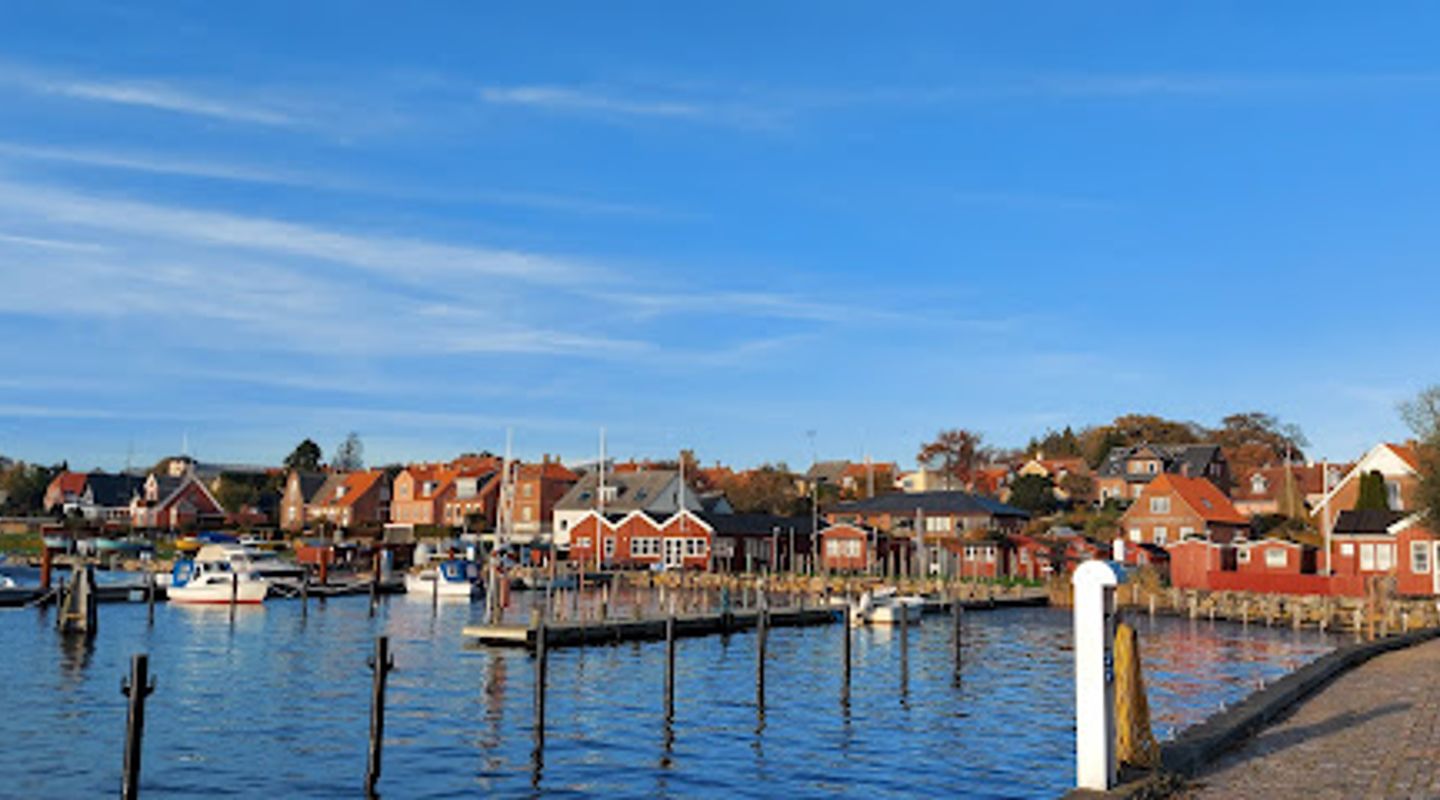
Despite its rural character, Lolland has a surprising cultural depth. The stone circle and sound installation of Dodekalitten rises above the northern coast, a contemporary monument that layers electronic music onto massive carved figures facing the sea. Museums across the island explore local history, maritime life and regional art, while Maribo Cathedral anchors the old market town with its lakeside profile and resonant interior.Towns like Nakskov, Sakskøbing and Nysted retain cobbled streets, low, colourful houses and modest harbours that shift with the working day: fishing boats and small yachts easing in and out, cafés opening onto squares, bakeries supplying cyclists and day‑trippers. The overall rhythm is unhurried, grounded in local routines rather than spectacle.
Cycling island and gateway between Denmark and Germany
Lolland’s famously flat terrain makes it one of Denmark’s easiest cycling destinations. Long-distance routes, including the Baltic Sea Cycle Route, loop past beaches, dikes, lakes and villages, with only gentle climbs on low coastal hills like Ravnsby Bakker. Quiet country roads and purpose-built paths mean even less experienced riders can comfortably cover distance, pausing at farm shops, roadside stalls and unsignposted picnic spots overlooking the sea.At the same time, the island occupies a strategic position on the corridor between Copenhagen and Germany. Ferries at Rødby connect across the Fehmarn Belt, and new fixed links under construction will further weave Lolland into European rail and road networks. Yet away from the main arteries, the island still feels distinctly local, a place where you can step off the transit route and discover a softer, slower side of Denmark.
Evendo Review Centre
 Google
Guest reviews
Best time to go
Quietest: Jan, Feb & Mar · before 6am
Busy times are Evendo estimates for a typical year, to help you plan. Actual crowds vary with events, school holidays and the weather.
Explore Lolland on the map
A handpicked selection of must-see spots near Lolland, mapped for you.
Get your free copy of our complete guide to Lolland, delivered straight to you.
Everything on this page, from opening hours and how to get there to Eve’s tips and the best time to go, in one PDF you can read offline, print or share.
Already have an account? Sign in
Your Lolland guide is ready.
We'll send it to · Not you? Sign out

Getting your guide ready…
We are putting together a fresh copy of the Lolland guide. This can take up to a minute.
This can take a few moments. If your browser asks, choose Allow so the download can start. You'll find the guide in your Downloads folder.
Nothing happened? Download it again
Sorry, the guide is taking longer than usual. Please try again in a minute, or get it by email instead.
Other nearby places you may find interesting
The closest places of the same kind, if this one is not quite what you had in mind.
-
Rømø A wind-swept Wadden Sea island of endless sand, tidal flats and maritime heritage, where drivable beaches, kites and wild dunes meet North Sea light and migrating birds.
-
The North Sea Oceanarium Northern Europe’s largest North Sea–focused aquarium, blending giant tanks, playful seals, outdoor adventure zones, and hands‑on marine science in coastal Hirtshals.
-
Saltholm A low, wind-swept Øresund island of meadows, marsh and birdlife, Saltholm offers a rare taste of near-urban wilderness just off Copenhagen’s coastline.
-
Wadden Sea National Park Walk on the seabed, witness starling murmurations, and explore Europe's most dynamic tidal wilderness.
-
The Little Mermaid Copenhagen’s most famous mermaid sits quietly on a harbor rock, a small bronze figure whose fairy-tale melancholy and seaside setting have become a symbol of the city.
Swipe for more places
More to explore near Lolland

 Best experiences near Lolland
 Best hotels near Lolland
 Best landmarks near Lolland
 Best attractions near Lolland
 Best shops near Lolland
 Best restaurants near Lolland
 Best bars near Lolland
Do you manage this location?
Take control to get all the benefits, like improved information, better appearance, and stronger visibility across AI-powered discovery.
Explore more

Explore more of The North Sea Islands
Discover the North Sea Islands of Denmark: idyllic sandy beaches, vibrant local culture, and unique natural landscapes await you on Fanø, Rømø, and Mandø.
Explore The North Sea Islands
Explore more of Denmark
Discover Denmark: A perfect blend of history, modern design, and the cozy concept of hygge. Explore vibrant cities, serene landscapes, and world-class cuisine.
Explore Denmark
