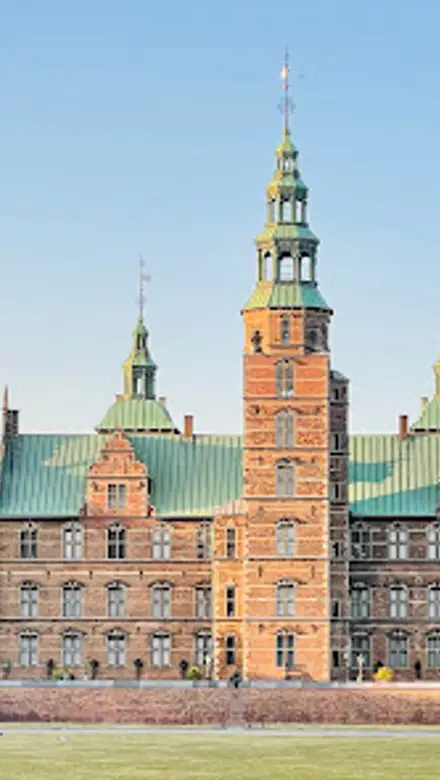
Rosenborg Castle Travel Guide
Free Guide: A fairy‑tale Renaissance castle in Copenhagen’s King’s Garden, where intimate royal chambers, the glittering Crown Jewels and 400 years of Danish history share a single red‑brick stage.


A brief summary of Rosenborg Castle
A fairy‑tale Renaissance castle in Copenhagen’s King’s Garden, where intimate royal chambers, the glittering Crown Jewels and 400 years of Danish history share a single red‑brick stage.
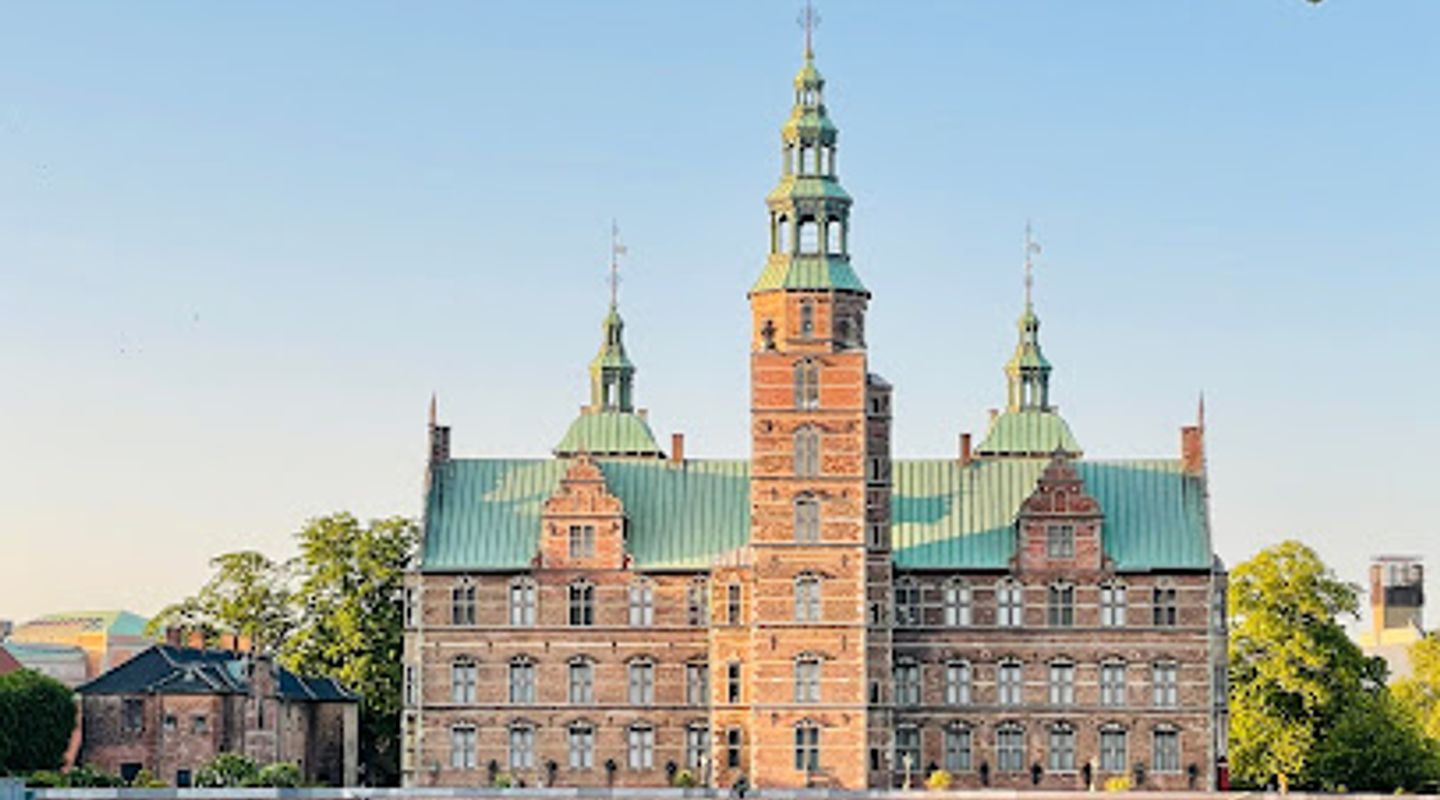
Rosenborg Castle rises like a red-brick fairy tale in Copenhagen’s King’s Garden, a compact Renaissance palace built by King Christian IV in the early 1600s as his pleasure retreat. Inside, intricately furnished rooms chart 400 years of Danish monarchy, from intimate chambers and rare Venetian glass to the dazzling Crown Jewels and royal regalia secured in the basement vaults. Surrounded by manicured lawns and tree-lined avenues, this is both a richly layered museum of royal power and taste, and one of the city’s most atmospheric green refuges.
On-site amenities
 Restrooms
 Lockers
 Seating areas
 Sheltered areas
 Trash bins
 Information boards
 Visitor centre
 Drink options
 Food options
Opening hours
- Every day9 am–5 pm
Opening hours as listed on the venue’s Google Business Profile. Hours can change for services and special events, so check with the venue before you go.
- Address
- Øster Voldgade 4A, 1350 København
- Phone
- Website
Getting there
Metro and walk from Nørreport Station
City bus to Øster Voldgade area
Cycling from central Copenhagen
Walking from Strøget and inner city
Discover more about Rosenborg Castle
Royal summer retreat turned time capsule
Rosenborg Castle began life in the early 17th century as King Christian IV’s idyllic summer residence, set just outside Copenhagen’s old ramparts. Its tall copper spires, stepped gables and patterned red brickwork are textbook Northern Renaissance, but on an intimate, human scale that feels almost like a storybook fortress. Christian IV expanded and embellished the castle over several decades, using it as both a private retreat and a stage for royal display.Over time Rosenborg shifted from residence to repository. By the 18th century, the Danish monarchy had largely moved on to grander palaces, and Rosenborg became the place where royal heirlooms, portraits and ceremonial objects were deliberately preserved. Today it functions as a meticulously curated time capsule, with interiors arranged to evoke the eras and personalities of the kings and queens who once lived here.
Inside the chambers of Danish kings
Crossing the threshold, you move through a sequence of richly decorated rooms where every surface seems to carry a story. The best preserved space from Christian IV’s day is the so‑called Winter Room, an intimate suite lined with dark wood panelling, containing his private writing cabinet and details that hint at the daily routines of a powerful but very human monarch. Nearby, you glimpse practical fixtures such as early toilets and washrooms that bring palace life down to earth.Higher up, the atmosphere grows ever more ceremonial. Walls are dense with portraits, allegorical paintings and woven tapestries charting alliances, wars and dynastic marriages. Side chambers reveal themed collections: cases of porcelain and faience, cabinets filled with small bronzes, and an extraordinary array of Venetian glassware that shimmers in the filtered northern light. Each room represents a particular reign, allowing you to trace changing tastes from austere Renaissance to exuberant baroque.
The splendour of the Knights’ Hall
At the top of the castle, the long, uninterrupted sweep of the Knights’ Hall forms Rosenborg’s dramatic climax. This grand state room stretches the length of the building, its coffered ceiling, polished floors and regimented rows of portraits designed to impress foreign envoys and noble guests. At one end stand the coronation thrones of king and queen: the king’s chair fashioned from narwhal tusks with gilded ornament, the queen’s in gleaming silver.Guarding the thrones are three life‑size silver lions, poised mid‑prowl, their reflective bodies echoing candlelight during court ceremonies. Around the hall, tapestries depict tumultuous battles between Denmark and Sweden, turning the room into both a gallery of royal power and a visual chronicle of shifting fortunes in Scandinavia. Even when quiet, the space feels charged with the echoes of proclamations, performances and diplomatic negotiations.
Crown Jewels and hidden treasures below
Descend to the cool basement and the mood changes from ceremonial show to guarded secrecy. Here, in secure vaults beneath the castle, lie the Danish Crown Jewels and royal regalia: crowns, sceptres, swords and jewelled ornaments that together symbolised the authority of the monarchy. Diamonds, emeralds, rubies and pearls are set in intricate goldwork, many pieces reserved historically for specific state occasions.The vaults also contain elaborate ceremonial weapons, riding gear and precious objects given as diplomatic gifts. Displayed beside them are Rosenborg’s own historic wine barrels and other apparatus that sustained life above. The contrast between the glittering jewels under spotlights and the sturdy masonry of the old cellars underscores how much effort went into protecting these symbols of power.
Stories, scandals and the surrounding gardens
Beyond dynastic splendour, Rosenborg also hints at the more personal dramas of the Danish court. Portraits of figures such as Queen Caroline Matilda and the royal physician Johan Friedrich Struensee recall episodes of scandal and political upheaval, when relationships at court overturned established orders and ended in exile and execution. These paintings add a human, sometimes tragic dimension to the otherwise formal galleries.Stepping back outside, the King’s Garden provides a softer frame for the castle’s sharp silhouettes. Long avenues, clipped hedges and seasonal flowerbeds create a classic city park where locals picnic, sunbathe and stroll. From here, the castle’s turrets and gables rise above the trees, changing character with the light and seasons. Whether blanketed in snow, framed by autumn leaves or mirrored in summer puddles, Rosenborg stands as a compact, evocative symbol of Denmark’s royal past in the very heart of modern Copenhagen.
Evendo Review Centre
 Google
Guest reviews
Best time to go
Quietest: Jan, Feb & Mar · before 7am or from 8pm
Busy times are Evendo estimates for a typical year, to help you plan. Actual crowds vary with events, school holidays and the weather.
Explore Rosenborg Castle on the map
A handpicked selection of must-see spots near Rosenborg Castle, mapped for you.
Get your free copy of our complete guide to Rosenborg Castle, delivered straight to you.
Everything on this page, from opening hours and how to get there to Eve’s tips and the best time to go, in one PDF you can read offline, print or share.
Already have an account? Sign in
Your Rosenborg Castle guide is ready.
We'll send it to · Not you? Sign out

Getting your guide ready…
We are putting together a fresh copy of the Rosenborg Castle guide. This can take up to a minute.
This can take a few moments. If your browser asks, choose Allow so the download can start. You'll find the guide in your Downloads folder.
Nothing happened? Download it again
Sorry, the guide is taking longer than usual. Please try again in a minute, or get it by email instead.
Unlock the best of Rosenborg Castle
Skip-the-line tickets, guided tours with entry, and walking tours of the area, booked in a few clicks.
 Tour with entry
Half Day Self-Guided Audio Walking Private Tour in Copenhagen
from $14.10 Tour with entry
Copenhagen Highlights & Hidden Gems Walking Tour with Local Guide
from $32.05 Tour with entry
Copenhagen 2-hour City Highlights Bike Tour
from $35.46 Tour with entry
48-Hour Hop-on Hop-off Copenhagen Sightseeing Bus Tour
from $41.06


Other nearby places you may find interesting
The closest places of the same kind, if this one is not quite what you had in mind.
-
Rømø A wind-swept Wadden Sea island of endless sand, tidal flats and maritime heritage, where drivable beaches, kites and wild dunes meet North Sea light and migrating birds.
-
The North Sea Oceanarium Northern Europe’s largest North Sea–focused aquarium, blending giant tanks, playful seals, outdoor adventure zones, and hands‑on marine science in coastal Hirtshals.
-
Saltholm A low, wind-swept Øresund island of meadows, marsh and birdlife, Saltholm offers a rare taste of near-urban wilderness just off Copenhagen’s coastline.
-
Wadden Sea National Park Walk on the seabed, witness starling murmurations, and explore Europe's most dynamic tidal wilderness.
-
The Little Mermaid Copenhagen’s most famous mermaid sits quietly on a harbor rock, a small bronze figure whose fairy-tale melancholy and seaside setting have become a symbol of the city.
Swipe for more places
More to explore near Rosenborg Castle

 Best experiences near Rosenborg Castle
 Best hotels near Rosenborg Castle
 Best landmarks near Rosenborg Castle
 Best attractions near Rosenborg Castle
 Best shops near Rosenborg Castle
 Best restaurants near Rosenborg Castle
 Best bars near Rosenborg Castle
Do you manage this location?
Take control to get all the benefits, like improved information, better appearance, and stronger visibility across AI-powered discovery.
Explore more

Explore more of The North Sea Islands
Discover the North Sea Islands of Denmark: idyllic sandy beaches, vibrant local culture, and unique natural landscapes await you on Fanø, Rømø, and Mandø.
Explore The North Sea Islands
Explore more of Denmark
Discover Denmark: A perfect blend of history, modern design, and the cozy concept of hygge. Explore vibrant cities, serene landscapes, and world-class cuisine.
Explore Denmark