

Møn Travel Guide
Free Guide: Denmark's white chalk cliffs meet pristine Dark Skies on a UNESCO-protected island of medieval charm and natural wonder.


A brief summary of Møn
Denmark's white chalk cliffs meet pristine Dark Skies on a UNESCO-protected island of medieval charm and natural wonder.
Møn is a picturesque Danish island in the Baltic Sea, renowned for its dramatic white chalk cliffs that rise 128 metres above turquoise waters. This UNESCO World Heritage Site and Dark Sky Park combines stunning natural landscapes with medieval heritage, charming market towns, and pristine beaches. Perfect for cyclists, hikers, and photographers seeking a slower pace of life amid Denmark's most spectacular coastal scenery.
On-site amenities
 Restrooms
 Drink options
 Food options
 Seating areas
 Picnic areas
 Trash bins
 Information boards
 Visitor centre
- Address
- Vordingborg Municipality
Getting there
Car via Bridge from Zealand
Train and Bus from Copenhagen
Bicycle from Zealand via Bridge
Ferry and Boat Access
Discover more about Møn
The Iconic Chalk Cliffs and Geological Significance
Møns Klint stands as Denmark's most celebrated natural wonder—a six-kilometre stretch of brilliant white chalk cliffs towering 128 metres above the Baltic Sea. These dramatic formations originated from calcite shells of marine organisms that accumulated millions of years ago, gradually solidifying into the luminous stone visible today. The cliffs continue to evolve through ongoing erosion and landslides, reshaping the landscape and creating an ever-changing natural sculpture. In 2025, Møns Klint earned designation as a UNESCO World Heritage Site, recognizing its exceptional geological and scientific value. The GeoCenter Møns Klint, opened in 2007, offers interactive exhibitions, fossil displays, a 3D cinema, and climbing experiences that illuminate the Earth's ancient history and the formation processes that created these iconic cliffs.
A UNESCO Biosphere Reserve and Dark Sky Destination
In 2017, UNESCO designated Møn as Denmark's first biosphere reserve, encompassing approximately 45,118 hectares across multiple islands and islets in the southern Baltic Sea. This protected landscape encompasses diverse ecosystems including woodlands, grasslands, meadows, wetlands, coastal areas, and steep chalk formations. The island's ecological significance extends to its recognition as the Nordic region's first Dark Sky Park, where minimal light pollution allows visitors to witness the Milky Way in stunning clarity. This dual designation underscores Møn's importance as both a natural laboratory and a sanctuary for stargazing and astrophotography enthusiasts seeking pristine night skies.
Medieval Heritage and Historic Towns
Stege, the island's principal town and commercial hub, bears the unmistakable imprint of medieval Denmark. Once the seat of a royal fortress in the 12th century, Stege retains its historic character while offering modern amenities including shops, cafes, bars, restaurants, a cinema, and a disco. The town's main street, Storegade, showcases banking facilities and dining establishments reflecting centuries of mercantile tradition. Beyond Stege, Møn contains numerous ancient churches dating from approximately 1100 CE, many adorned with notable frescoes that testify to the island's deep cultural roots. Several Stone Age burial chambers and passage graves, including a 10-metre passage grave among Denmark's largest, reveal continuous human settlement dating back to at least 4000 BCE.
Forests, Beaches, and Outdoor Recreation
Møn's landscape extends far beyond its famous cliffs. Beech forests crown the cliff edges and blanket much of the interior, creating scenic corridors for hiking and cycling. The island's 217 square kilometres support diverse habitats and offer numerous sandy beaches along the Baltic coastline. The Camønoen hiking trail network spans 175 kilometres across 12 stages, guiding visitors through varied terrain and natural corners. Cyclists favour panoramic routes like Munkevejen, while the island's gentle topography and well-maintained paths make it ideal for leisurely exploration. Water-based activities including kayaking, swimming, diving, snorkelling, and kitesurfing appeal to those seeking Baltic Sea experiences.
Castles, Harbours, and Coastal Character
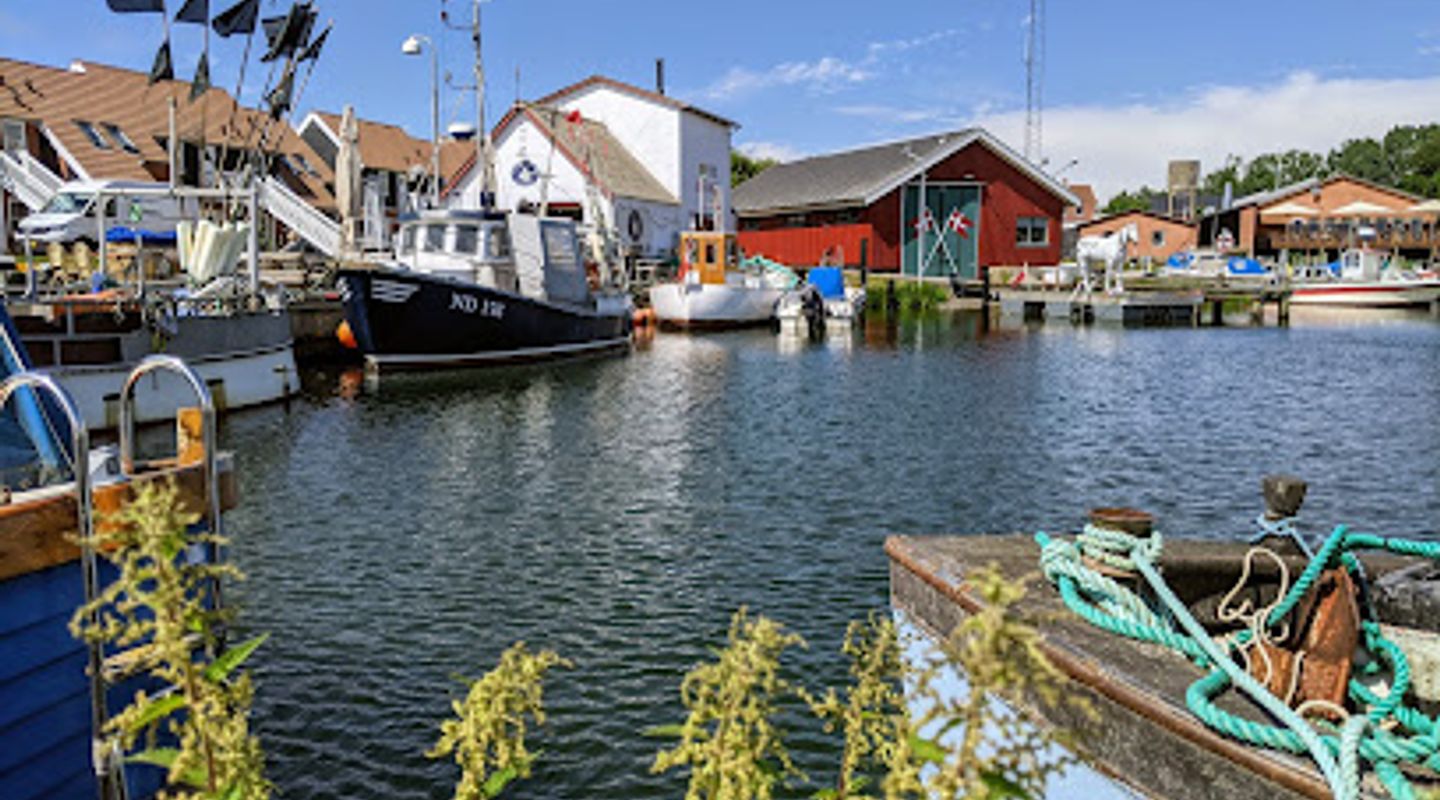
Liselund, a small château constructed in 1792, now operates as a hotel and restaurant, offering accommodation and dining within a historic manor setting. Klintholm Havn serves as a working harbour and gateway for maritime visitors, positioned strategically for passages to Swedish waters and the Småland fairway connecting the southern Danish islands. Møn Fyr, a distinctive yellow lighthouse built in 1845 and still operational, stands as one of the Nordic region's oldest functioning lighthouses, offering panoramic views across the Baltic and surrounding cliffs. The island's harbours and coastal infrastructure reflect its maritime heritage and contemporary role as a destination for both leisure and nautical tourism.
Accessibility and Practical Connections
Møn's integration into Denmark's transport network makes it readily accessible despite its island status. Bridges connect the island to Zealand to the north and to Bogø and Farø islands to the southwest, creating seamless road access from the Danish mainland. The nearest regional airport is located in Odense, while Billund serves as the closest international gateway. Summer represents peak visitation season, when long, sunny days and mild temperatures create ideal conditions for outdoor exploration. The island's fertile clay loam supports agricultural traditions including grain cultivation and dairy farming, contributing to its rural character and local food culture.
Evendo Review Centre
 Google
Guest reviews
Best time to go
Quietest: Jan, Feb & Nov · before 6am or at 9pm
Busy times are Evendo estimates for a typical year, to help you plan. Actual crowds vary with events, school holidays and the weather.
Explore Møn on the map
A handpicked selection of must-see spots near Møn, mapped for you.
Get your free copy of our complete guide to Møn, delivered straight to you.
Everything on this page, from opening hours and how to get there to Eve’s tips and the best time to go, in one PDF you can read offline, print or share.
Already have an account? Sign in
Your Møn guide is ready.
We'll send it to · Not you? Sign out

Getting your guide ready…
We are putting together a fresh copy of the Møn guide. This can take up to a minute.
This can take a few moments. If your browser asks, choose Allow so the download can start. You'll find the guide in your Downloads folder.
Nothing happened? Download it again
Sorry, the guide is taking longer than usual. Please try again in a minute, or get it by email instead.
Other nearby places you may find interesting
The closest places of the same kind, if this one is not quite what you had in mind.
-
The Little Mermaid Copenhagen’s quietly powerful harbour icon, a small bronze mermaid on Langelinie whose fairytale origins and waterfront setting have come to symbolise the city.
-
Peberholm A man-made island where nature reclaimed the landscape—Europe's most successful ecological experiment.
-
Møns Klint Denmark's most dramatic white chalk cliffs rise 128 meters above the Baltic, offering geological wonders, coastal trails, and adventure activities.
-
Island of imagination A tiny forest island near Hillerød where a vanished royal pleasure palace, scattered stones and mythic details turn a quiet lakeside walk into a journey of imagination.
-
Zealand Denmark's largest island, home to Copenhagen and a millennium of Nordic history, culture, and natural beauty.
Swipe for more places
More to explore near Møn

 Best experiences near Møn
 Best hotels near Møn
 Best landmarks near Møn
 Best attractions near Møn
 Best shops near Møn
 Best restaurants near Møn
 Best bars near Møn
Do you manage this location?
Take control to get all the benefits, like improved information, better appearance, and stronger visibility across AI-powered discovery.
Explore more

Explore more of The North Sea Islands
Discover the North Sea Islands of Denmark: idyllic sandy beaches, vibrant local culture, and unique natural landscapes await you on Fanø, Rømø, and Mandø.
Explore The North Sea Islands
Explore more of Denmark
Discover Denmark: A perfect blend of history, modern design, and the cozy concept of hygge. Explore vibrant cities, serene landscapes, and world-class cuisine.
Explore Denmark
