Moen lighthouse, South Zealand Travel Guide
Historic lighthouse on Møn’s wild eastern tip, where chalk cliffs, Baltic horizons and Dark Sky nights meet around a quietly atmospheric coastal beacon.
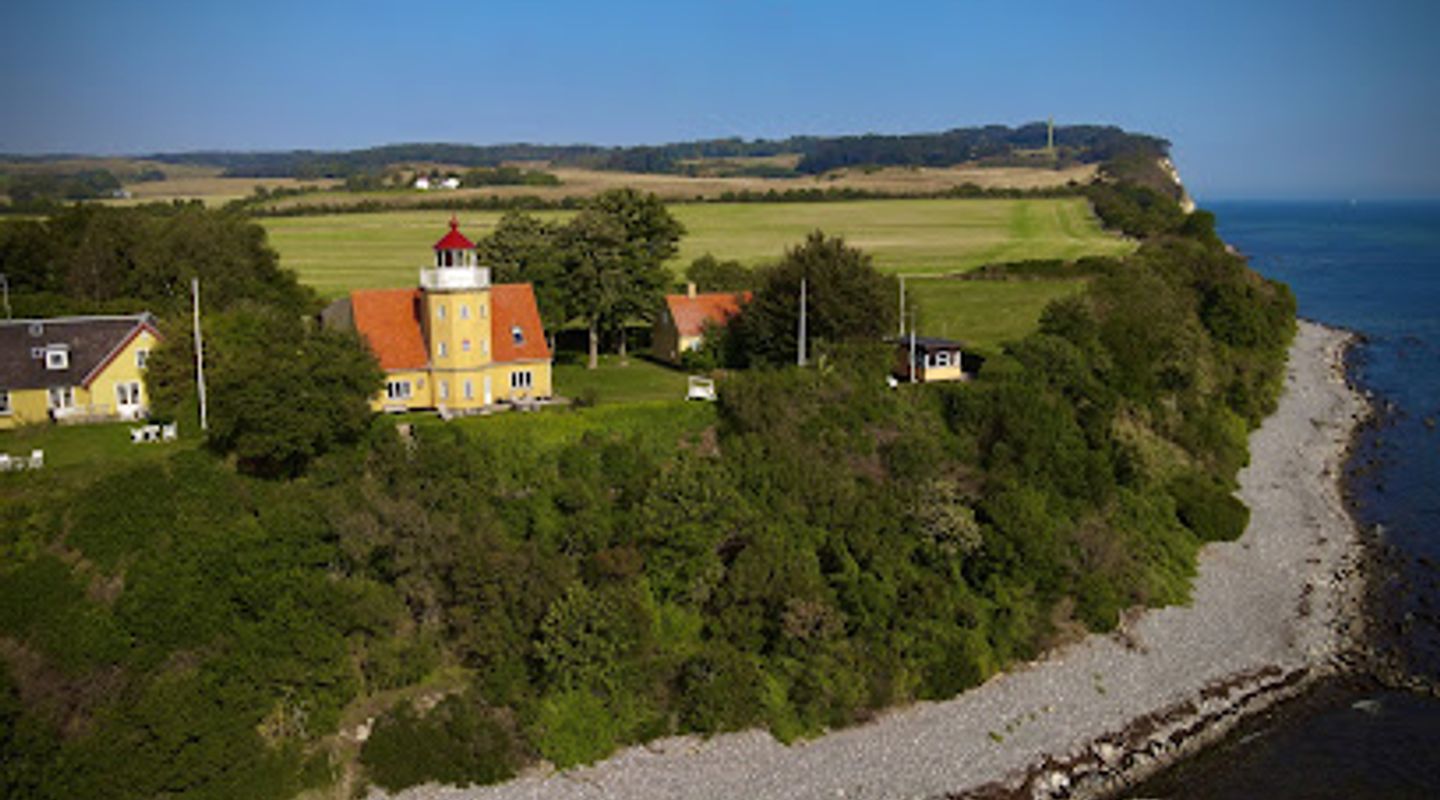
Perched on the wild eastern tip of the island of Møn, Møn Lighthouse (Moen Lighthouse) stands above the Baltic Sea, a historic beacon framed by chalk cliffs, open sky and wind-swept meadows. Built in the 19th century to guide ships past the treacherous coast, it now anchors a quiet headland of grassland paths, sea views and big skies. Come for the maritime heritage, stay for the sense of remoteness, Dark Sky-quality nights and the dramatic landscape linking the lighthouse to nearby Møns Klint.
A brief summary to Moen lighthouse
- Fyrvej 8, Borre, 4791, DK
- Duration: 0.5 to 2 hours
- Free
-
 Outdoor
- Mobile reception: 3 out of 5

Know before you go
Hi, I'm Eve. Here are a few practical things to know before exploring Moen lighthouse.
- Bring windproof layers, even in summer; the exposed headland can feel significantly colder and windier than inland Møn.
- Plan time to combine the lighthouse with a walk along the cliff-top paths towards Møns Klint for the most dramatic sea and chalk views.
- If you enjoy night photography or stargazing, arrive after dark on a clear evening to take advantage of Møn’s renowned Dark Sky conditions.
- Wear sturdy shoes; paths around the headland can be uneven, grassy and slippery after rain, especially near the cliff edge.
- Check local information in advance if you hope to go inside any nearby buildings, as access to interiors is not always guaranteed.
Do you manage this location?
Take control to get all the benefits, like improved information, better appearance, and stronger visibility across AI-powered discovery. Learn more about listing your business on Evendo
Activate your presenceOther nearby places you may find interesting
The closest places of the same kind, if this one is not quite what you had in mind.
Explore Moen lighthouse on the Map
A handpicked selection of must-see spots near Moen lighthouse, mapped for you.
Getting There
-
Car from Stege (Møn’s main town)
From Stege, driving to Møn Lighthouse typically takes 25–35 minutes. The route follows main island roads and a smaller country road towards Borre and the eastern tip of Møn. The final stretch is narrow and can be busy in high season, but the surface is paved and suitable for standard cars. Parking near the lighthouse is usually free, though spaces are limited on peak summer days, so arrive earlier in the morning or later in the afternoon if you prefer fewer cars.
-
Regional bus plus walk from Borre area
In season, a regional bus runs between Stege and the Møns Klint area, with a stop near Fyrvej by Borre. The journey from Stege to the stop normally takes around 30–40 minutes, and a single adult ticket is generally in the range of 20–30 DKK. From the bus stop, expect an on-foot approach of roughly 20–30 minutes along a rural road and track, mostly flat but exposed to wind. Services can be less frequent outside school holidays and weekends, so check timetables locally before you set out.
-
Cycling from Stege or Borre
Cycling is a popular way to reach the lighthouse, allowing you to enjoy Møn’s gentle countryside. From Stege, the ride typically takes 60–90 minutes one way, depending on fitness and wind, using minor roads shared with traffic. From Borre village, the journey is shorter at about 20–35 minutes. The terrain is mostly modest hills with no extreme gradients, but coastal winds can make progress slower. There is no dedicated bike parking infrastructure at the headland, so bring a lock and be prepared to leave your bike in an unobtrusive spot.
For the on-the-go comforts that matter to you
-
 Restrooms
-
 Trash Bins
-
 Information Boards
-
 Seating Areas
Discover more about Moen lighthouse
Beacon on the Edge of Møn
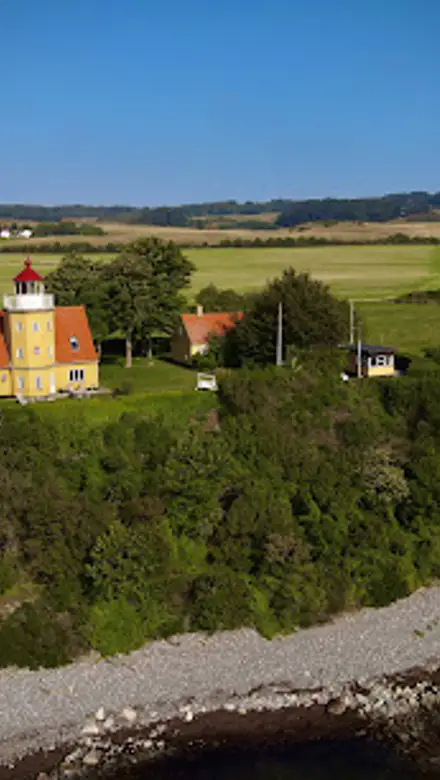
Møn Lighthouse crowns a low, windswept headland on the southeastern tip of the island, where land gives way abruptly to the Baltic Sea. The tower stands close to the cliff edge at Fyrvej 8, with the simple former keeper’s buildings clustered nearby. Its elevated position means the horizon seems immense: on clear days the sea and sky blur into a single blue band, broken only by passing ships and sweeping beams of light after dusk.The landscape here feels open and exposed. Short grass bends under steady coastal winds, and the air carries a persistent tang of salt. Even on calm days, the soft roar of distant surf reaches the headland from the chalky beaches below Møns Klint. It is a place where the weather is never just background, but a central part of the experience.From Maritime Lifeline to Quiet Lookout
The lighthouse dates back to the mid-19th century, when maritime traffic in the Baltic was growing and the dangerous shallows off Møn demanded a reliable warning light. Built in sturdy masonry and traditionally painted in light tones, it served as a vital reference point for cargo ships and fishing vessels navigating Denmark’s intricate coastal waters. The modest keeper’s house nearby once housed the families who maintained the lantern through storms and long winter nights.Today, automated technology has taken over the painstaking work of tending the light, but the tower still operates as part of Denmark’s coastal safety network. Around it, the atmosphere is far quieter than in its working heyday. Instead of signal flags and supply deliveries, the sounds are of seabirds calling from the cliffs and the distant hum of a boat engine far out on the water.Cliffs, Chalk and Ever-Changing Sea
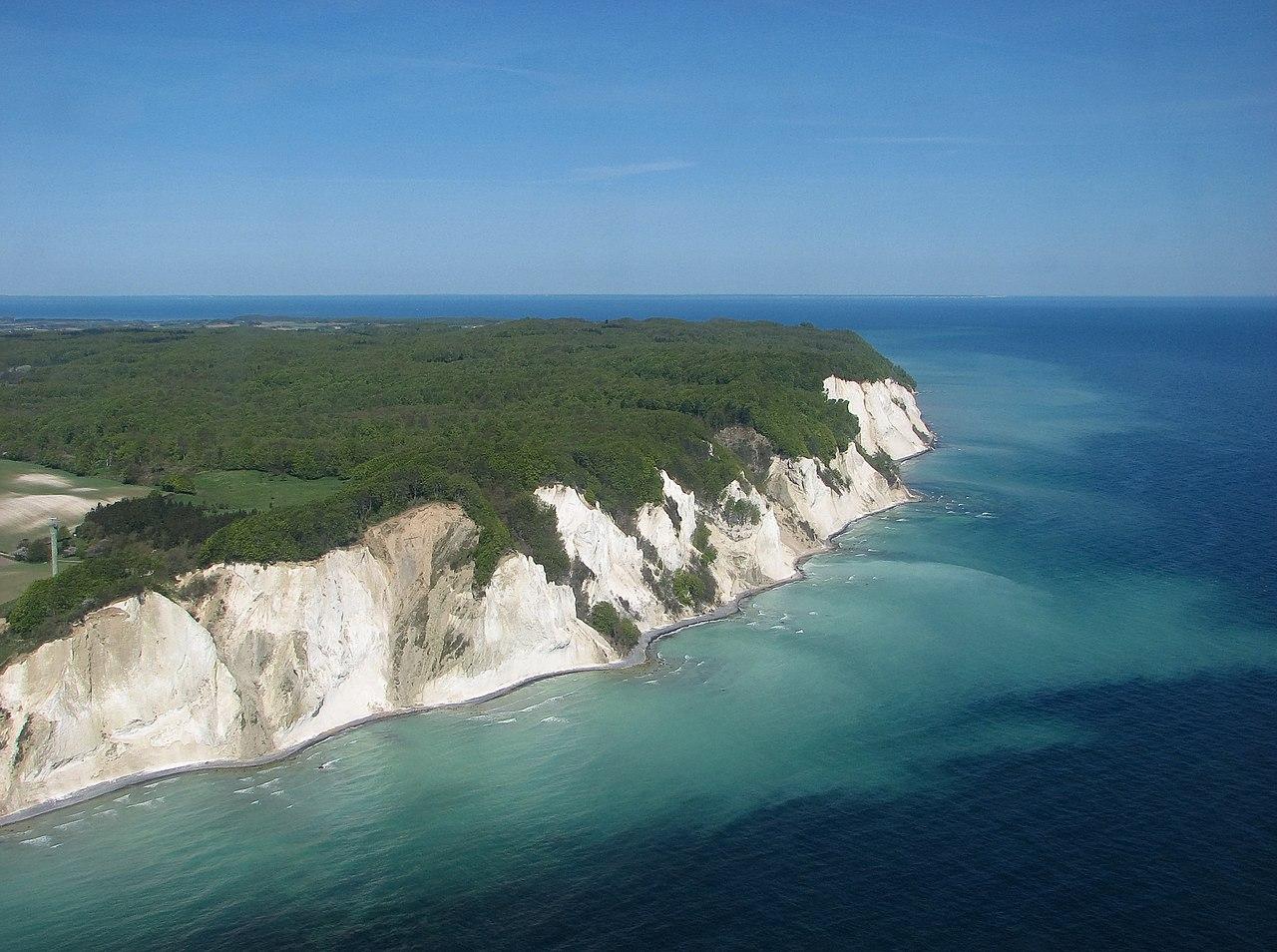
The headland around Møn Lighthouse forms part of the same dramatic chalk landscape that makes nearby Møns Klint so distinctive. The cliffs, composed of ancient compressed seabed, fall away steeply not far from the lighthouse, creating a striking transition from grassy plateau to sheer white faces and shingle beaches below. The sea here often appears unusually clear and pale turquoise, especially in sunlight, as tiny chalk particles tint the water.This stretch of coast is constantly reshaped by erosion. Sections of cliff occasionally crumble, new patterns appear in the rock, and the shoreline subtly shifts. Standing by the lighthouse, you are looking at a living coastline in slow motion, where geology and weather quietly redraw the map over decades.Walking, Quiet Moments and Big Skies
Visitors typically experience Møn Lighthouse as part of a broader wander along the cliff-top paths that lace this side of the island. Grassy trails lead away from the buildings through gentle undulations and patches of scrub, offering viewpoints where you can pause and watch seabirds riding the updrafts. The openness of the terrain means the light changes constantly, with clouds casting moving shadows across fields and water.Despite its importance in navigation, the lighthouse precinct itself feels human in scale: a small cluster of buildings set against an oversized sky. There are spots where you can sit on a low bank, lean back against the wall of a former service building, and simply listen to wind, waves and the occasional rustle of dry grass. On still evenings, the light from the tower sweeps over the sea in measured rhythm, giving the place a gently cinematic quality.Dark Sky Nights and Seasonal Atmosphere
Møn and the neighbouring island of Nyord are celebrated for exceptionally low light pollution, and the headland around the lighthouse benefits fully from this darkness. On clear nights, the Milky Way often appears as a distinct band overhead, and constellations stand out with unusual sharpness. The rhythm of the rotating beam combines with the starry dome to create an atmospheric nightscape that feels far from urban life.Each season gives the lighthouse a different character. Spring brings fresh greens and migrating birds, while summer evenings stretch long, with amber light lingering over the water. In autumn, stronger winds and dramatic cloud formations underline the raw, coastal feel of the site. Even in winter, when the air can be bitingly cold and the sea steel-grey, the headland offers a stark beauty that suits the lighthouse’s role as a steadfast presence on this exposed corner of Denmark.












Your all‑in‑one travel companion app
Explore expert travel guides, compare and book tours, experiences, hotels, and more—all from the palm of your hand. Download now for seamless trip planning wherever your wanderlust takes you.


Explore More of South Zealand
Looking beyond Moen lighthouse? Discover South Zealand for broader travel guides, local hot-spots, and regional highlights.
Explore South Zealand
Discover the enchanting island of Hiddensee, where breathtaking landscapes, charming villages, and a peaceful atmosphere await your exploration.
Denmark's most dramatic white chalk cliffs rise 128 meters above the Baltic, offering geological wonders, coastal trails, and adventure activities.