Fontaine Roesselmann Travel Guide
Free Guide: Discover the Fontaine Roesselmann in Colmar, a stunning tribute to local heroism by Statue of Liberty sculptor Auguste Bartholdi, reflecting the city's rich history and artistic spirit.


A brief summary of Fontaine Roesselmann
Discover the Fontaine Roesselmann in Colmar, a stunning tribute to local heroism by Statue of Liberty sculptor Auguste Bartholdi, reflecting the city's rich history and artistic spirit.
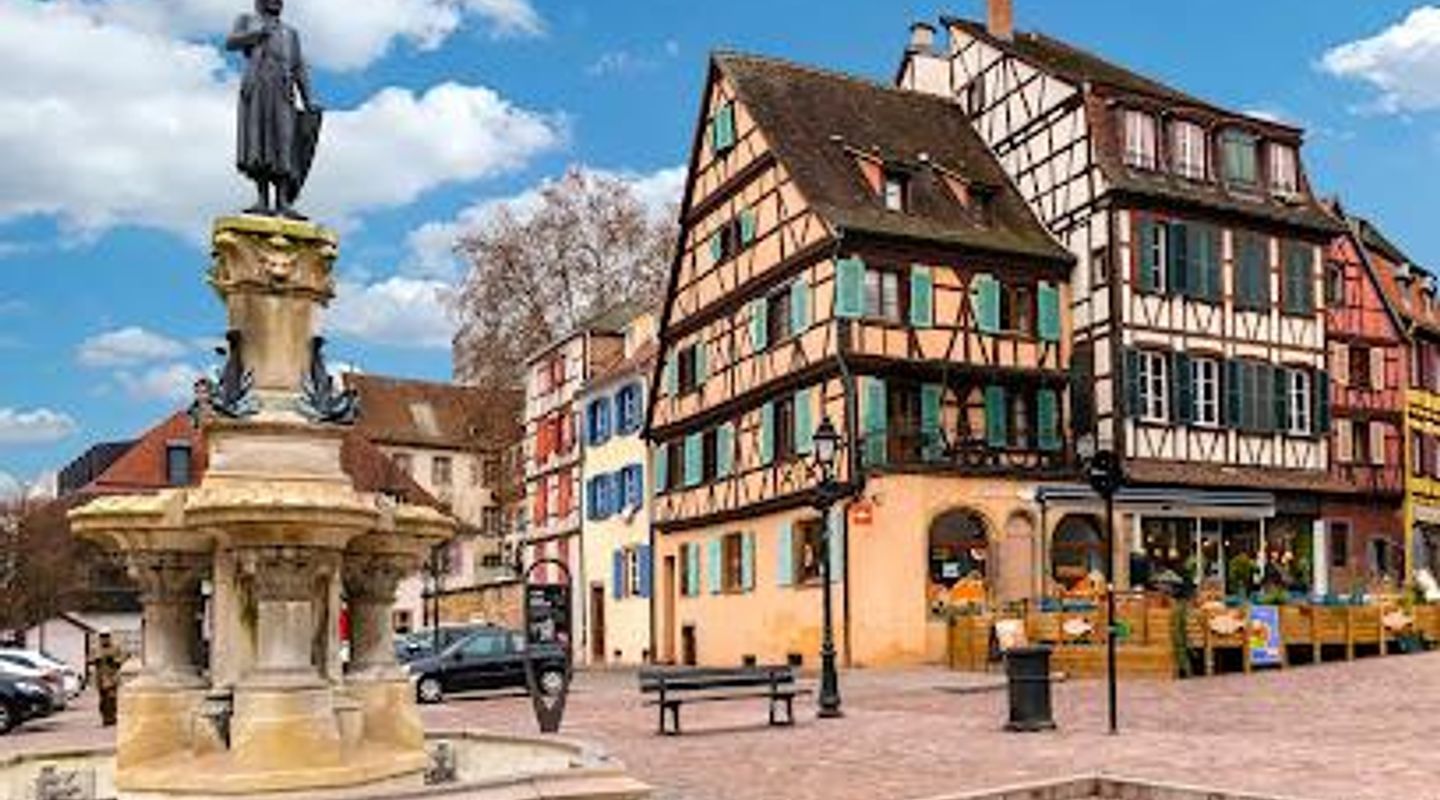
The Fontaine Roesselmann, gracing the Place des 6 Montagnes Noires in Colmar, is more than just a fountain; it's a symbol of the city's resilience and a tribute to local hero Jean Roesselmann. Created in 1888 by Auguste Bartholdi, the famed sculptor of the Statue of Liberty, the fountain features a bronze statue of Roesselmann, who bravely defended Colmar against the Bishop of Strasbourg in the 13th century. The white stone fountain, adorned with bronze fish spouts, reflects a Gothic-inspired design. Its historical significance is deepened by the statue's facial features, modeled after Hercule Jean-Baptiste de Peyerimhoff, a mayor who resisted Alsatian annexation. The fountain stands as a testament to Colmar's rich history and artistic heritage, offering visitors a glimpse into the city's past and its enduring spirit. It is a must-see landmark, embodying Colmar's unique blend of history, art, and civic pride, making it a central point of interest for tourists exploring the city's charming streets and squares.
Opening hours
- Mon–Sat9 am–6 pm
- Sun10 am–1 pm
Opening hours as listed on the venue’s Google Business Profile. Hours can change for services and special events, so check with the venue before you go.
- Address
- Pl. des 6 Montagnes Noires, 68000 Colmar
- Phone
- Website
Getting there
Walking
Public Transport
Taxi/Ride-Share
Discover more about Fontaine Roesselmann
Overview
Fontaine Roesselmann, situated on the Place des 6 Montagnes Noires in the heart of Colmar, stands as a proud testament to the city's rich history and artistic heritage. This ornate fountain, created in 1888 by Auguste Bartholdi, the renowned sculptor best known for the Statue of Liberty, commemorates Jean Roesselmann, a local hero who valiantly defended Colmar against the Bishop of Strasbourg in 1262. The fountain's design is a harmonious blend of historical and artistic elements. The central figure is a bronze statue of Jean Roesselmann, depicted in a heroic pose, embodying the spirit of resistance and civic pride. Bartholdi masterfully captured Roesselmann's determined character, creating a lasting tribute to his bravery and sacrifice. Intriguingly, the statue's facial features are modeled after Hercule Jean-Baptiste de Peyerimhoff, a 19th-century mayor of Colmar who staunchly opposed the annexation of Alsace by Germany, adding another layer of historical significance to the monument. The fountain itself is constructed from white stone and adorned with four bronze fish that serve as spouts, adding a touch of whimsy and elegance to the overall design. The fountain's polylobed shape draws inspiration from Gothic fountains, reflecting the architectural styles prevalent during Roesselmann's time. The intricate carvings and ornate decorations showcase the skill and artistry of the sculptors who brought Bartholdi's vision to life. Throughout its history, the Fontaine Roesselmann has faced challenges and undergone transformations. During World War II, the statue was removed in 1943 with the intention of melting it down for resources. However, it was later discovered, severely damaged, at the port of the Rhine. Following the war, the statue was meticulously restored and reinstalled in 1945, reaffirming its importance as a symbol of Colmar's resilience and enduring spirit. Today, the Fontaine Roesselmann remains a beloved landmark and a popular gathering place for locals and tourists alike. The square surrounding the fountain provides a picturesque setting for relaxation and socializing, allowing visitors to soak in the ambiance of the city. The fountain's presence enhances the square's charm, making it a focal point for cultural events and celebrations. As you stand before the Fontaine Roesselmann, take a moment to appreciate the intricate details of the sculpture and the fountain's elegant design. Imagine the scene in 1262 when Jean Roesselmann led the defense of Colmar against the Bishop of Strasbourg, safeguarding the city's liberties and independence. Consider the challenges faced by Hercule Jean-Baptiste de Peyerimhoff in the 19th century as he resisted the annexation of Alsace, embodying the same spirit of defiance as his historical counterpart. The Fontaine Roesselmann is more than just a beautiful work of art; it is a cultural and historical landmark that reflects the rich heritage of Colmar. It symbolizes the city's resilience, civic pride, and artistic legacy. A visit to the Fontaine Roesselmann offers a unique opportunity to connect with Colmar's past and appreciate the enduring spirit of its people. Beyond the Fontaine Roesselmann, Colmar offers a wealth of attractions for visitors to explore. The city's charming old town, with its colorful half-timbered houses and winding canals, is a delight to wander through. La Petite Venise, a picturesque district along the Lauch River, is particularly enchanting, with its flower-adorned balconies and quaint bridges. Art enthusiasts will appreciate the Musée Bartholdi, located in the sculptor's birthplace, which showcases a collection of his works, including models and studies for the Statue of Liberty. The Unterlinden Museum, housed in a former convent, is home to the Isenheim Altarpiece, a masterpiece of Renaissance art. Colmar is also known for its vibrant culinary scene, with numerous restaurants and Winstubs (traditional Alsatian wine taverns) offering local specialties such as choucroute (sauerkraut with sausages and meats), baeckeoffe (a hearty meat and potato stew), and tarte flambée (a thin-crust pizza-like dish). Whether you are interested in history, art, architecture, or gastronomy, Colmar has something to offer every visitor. The Fontaine Roesselmann serves as a perfect starting point for exploring this captivating city and discovering the many treasures it holds. Its location on Place des 6 Montagnes Noires places it within easy reach of other attractions, restaurants, and shops, making it a convenient and memorable destination for travelers. Visiting Colmar is like stepping into a fairy tale, with its enchanting atmosphere and rich cultural heritage. The Fontaine Roesselmann stands as a symbol of the city's enduring spirit and artistic legacy, inviting visitors to delve into its fascinating past and create lasting memories. So, come and experience the magic of Colmar and discover the beauty and history of the Fontaine Roesselmann. Let the fountain's story inspire you as you explore the city's charming streets and immerse yourself in its unique culture. Colmar awaits, ready to captivate your senses and leave you with a lasting appreciation for its rich heritage and artistic treasures. The Place des 6 Montagnes Noires itself holds historical significance, as it was once the site of the Zum Schwarzenberg, a popular 14th-century hostelry that burned down in 1880. This adds another layer of historical context to the fountain's location, connecting it to the city's past as a hub for travelers and traders. In conclusion, the Fontaine Roesselmann is an essential landmark for any visitor to Colmar. Its artistic beauty, historical significance, and central location make it a must-see attraction that embodies the city's unique blend of culture, history, and civic pride. Take the time to admire its intricate details, learn about its fascinating story, and let it serve as a gateway to exploring the many other wonders that Colmar has to offer.
Evendo Review Centre
 Google
Guest reviews
Explore Fontaine Roesselmann on the map
A handpicked selection of must-see spots near Fontaine Roesselmann, mapped for you.
Get your free copy of our complete guide to Fontaine Roesselmann, delivered straight to you.
Everything on this page, from opening hours and how to get there to Eve’s tips and the best time to go, in one PDF you can read offline, print or share.
Already have an account? Sign in
Your Fontaine Roesselmann guide is ready.
We'll send it to · Not you? Sign out

Getting your guide ready…
We are putting together a fresh copy of the Fontaine Roesselmann guide. This can take up to a minute.
This can take a few moments. If your browser asks, choose Allow so the download can start. You'll find the guide in your Downloads folder.
Nothing happened? Download it again
Sorry, the guide is taking longer than usual. Please try again in a minute, or get it by email instead.
Unlock the best of Fontaine Roesselmann
Skip-the-line tickets, guided tours with entry, and walking tours of the area, booked in a few clicks.


Other nearby places you may find interesting
The closest places of the same kind, if this one is not quite what you had in mind.
-
-
-
-
-


Swipe for more places
More to explore near Fontaine Roesselmann

 Best experiences near Fontaine Roesselmann
 Best hotels near Fontaine Roesselmann
 Best landmarks near Fontaine Roesselmann
 Best attractions near Fontaine Roesselmann
 Best shops near Fontaine Roesselmann
 Best restaurants near Fontaine Roesselmann
 Best bars near Fontaine Roesselmann
Do you manage this location?
Take control to get all the benefits, like improved information, better appearance, and stronger visibility across AI-powered discovery.
Explore more

Explore more of Alsace
Discover Alsace: A scenic region of France blending French and German cultures, famed for its charming villages, world-class wines, and stunning natural landscapes.
Explore Alsace
Explore more of France
Explore France: A land of romance, history, and unparalleled beauty, from the iconic streets of Paris to the serene landscapes of Provence and the luxury of the French Riviera.
Explore France