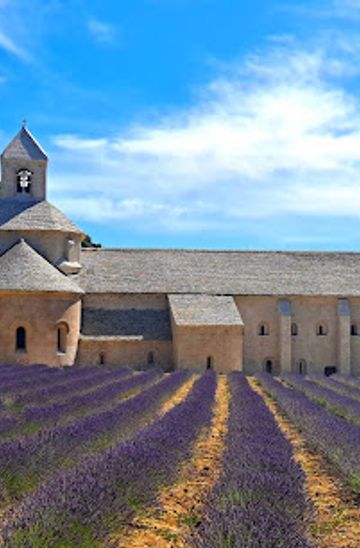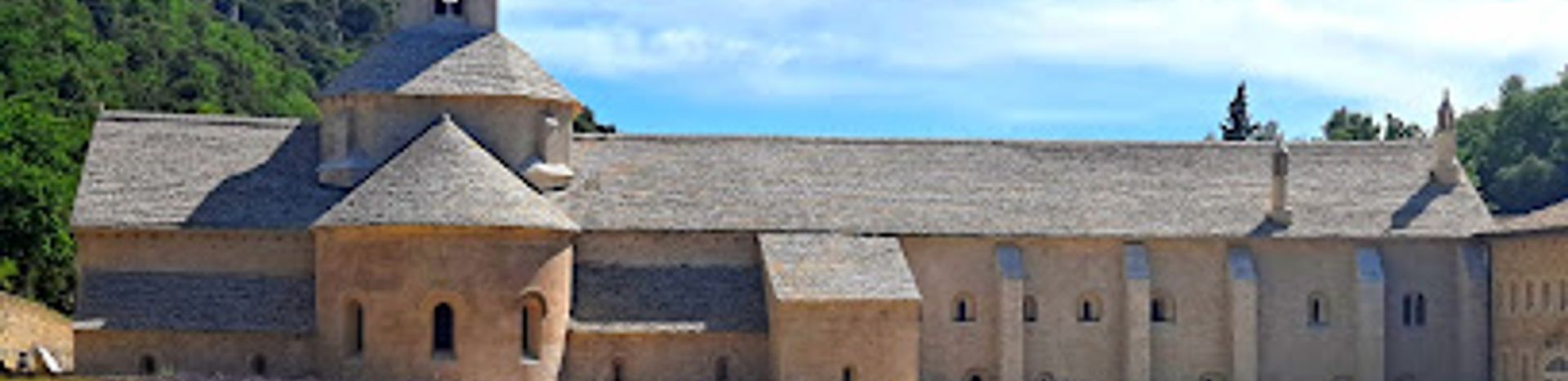
Abbaye Notre-Dame de Sénanque: A Sanctuary of Serenity
Experience the serenity of a Cistercian monastery nestled in the heart of Provence, surrounded by iconic lavender fields. A timeless escape.
Nestled in a secluded valley near Gordes, the Abbaye Notre-Dame de Sénanque is a stunning Cistercian monastery founded in 1148. Surrounded by picturesque lavender fields, it offers a serene escape and a glimpse into monastic life.
A brief summary to Abbaye Notre-Dame de Sénanque
- Abbaye de Sénanque, Gordes, 84220, FR
- Click to display
- Click to display
- Monday 9:30 am-7 pm
- Tuesday 9:30 am-7 pm
- Wednesday 9:30 am-7 pm
- Thursday 9:30 am-7 pm
- Friday 9:30 am-7 pm
- Saturday 9:30 am-7 pm
- Sunday 10:30 am-7 pm

Know before you go
Hi, I'm Eve. Here are a few practical things to know before exploring Abbaye Notre-Dame de Sénanque.
- Visit during the lavender blooming season (late June to early August) for the most stunning views.
- Book your tour in advance, especially during peak season, as spaces are limited.
- Dress modestly and maintain silence out of respect for the monastic community.
- Arrive early to secure parking, as it can get crowded.
- Check the official website for closure dates, especially around religious holidays.
Do you manage this location?
Take control to get all the benefits, like improved information, better appearance, and stronger visibility across AI-powered discovery. Learn more
Activate your presenceOther nearby places you may find interesting
Getting There
-
Walking
From the village of Gordes, the Abbaye Notre-Dame de Sénanque is approximately a 30-minute walk. The route follows the D177 road, offering scenic views of the abbey nestled in the valley below. Be mindful of traffic as you share the road with vehicles.
-
Public Transport
While public transport directly to the abbey is limited, you can take a regional bus (Line #15) from Avignon to Gordes. From Gordes, it's either a 30-minute walk to the abbey or a short taxi ride. A bus ticket from Avignon to Gordes costs approximately €2.10. A taxi from Gordes to the abbey will cost approximately €15-20.
-
Taxi
Taxis are available in Gordes and can take you directly to the Abbaye Notre-Dame de Sénanque. A taxi ride from Gordes to the abbey typically costs between €15 and €20. Taxi services can also be arranged from nearby towns such as Avignon or l'Isle-sur-la-Sorgue, with fares ranging from €80 to €95.
-
Driving
The Abbaye Notre-Dame de Sénanque is accessible via the D177 road from Gordes. The drive is approximately 10 minutes. Note that the D177 becomes a one-way road during peak season (March 15 to September 30). Free parking is available at the abbey, a 5-minute walk from the entrance. When departing the abbey, follow the D177 towards Venasque, then take the D244 to return to Gordes.
Discover more about Abbaye Notre-Dame de Sénanque
Explore the best of what Abbaye Notre-Dame de Sénanque has to offer













More about Provence
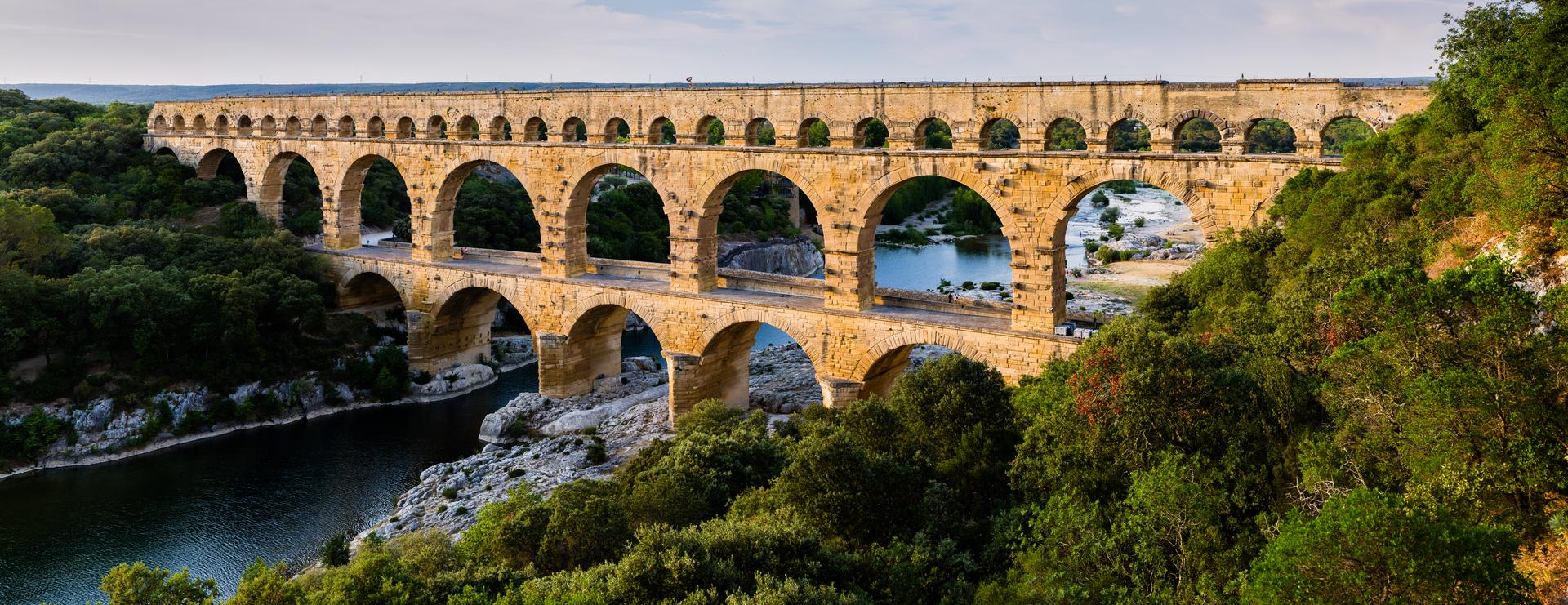
Discover the enchanting allure of Provence, France, where rolling lavender fields, historic towns, and Mediterranean coastline offer a perfect escape.
Tell me more about Provence
Discover the unique heritage of the Comtadin Jews at the Musée Juif Comtadin in Cavaillon, a beautifully preserved synagogue showcasing centuries of tradition and culture in Provence.

Discover the artistic heart of Gordes, a Provençal village famed for its inspiring beauty, galleries, and cultural heritage, attracting artists and art lovers for centuries.