

Alyscamps Travel Guide
Free Guide: Wander through a Roman necropolis immortalized by Van Gogh, where ancient tombs meet medieval spirituality in the heart of Provence, a UNESCO World Heritage site.


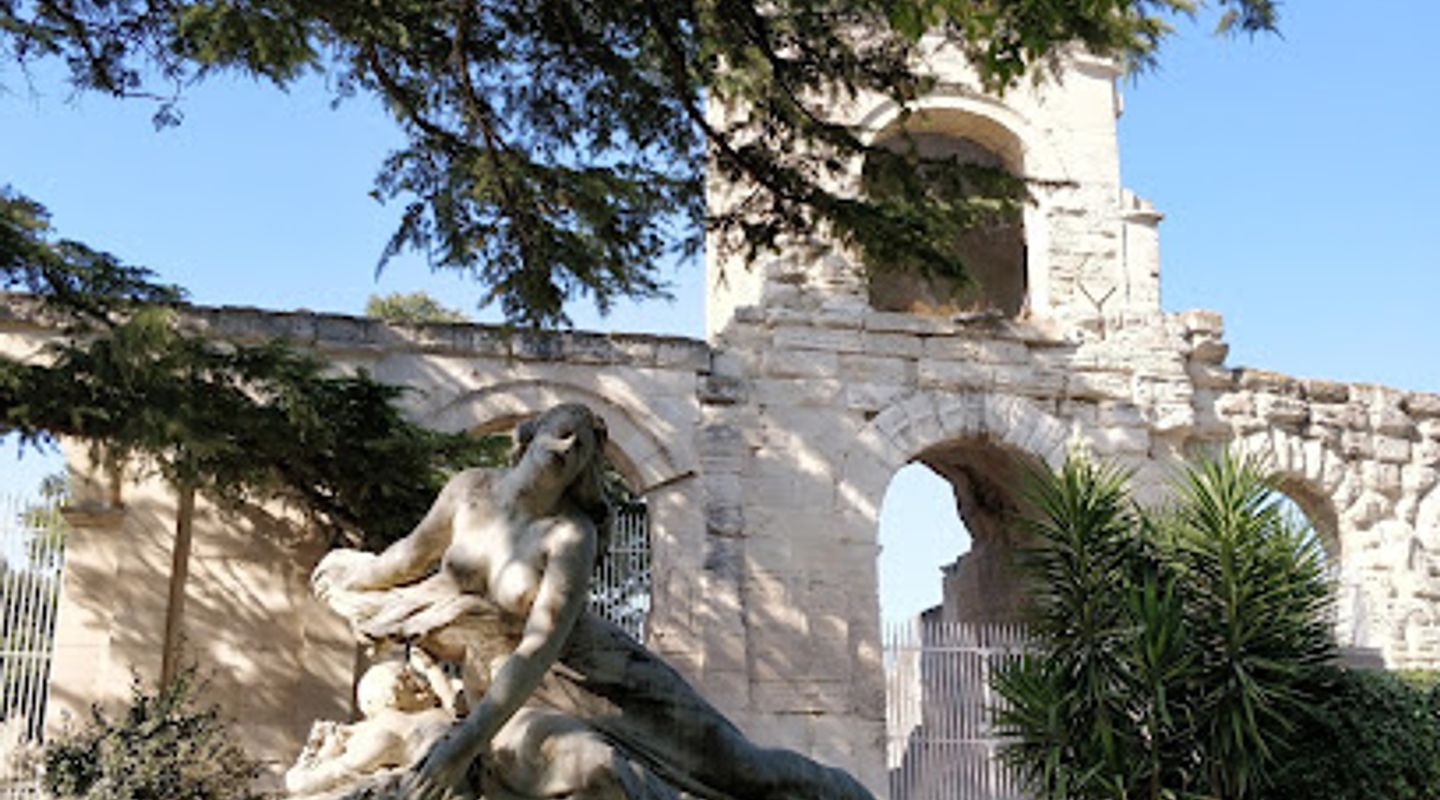
A brief summary of Alyscamps
Wander through a Roman necropolis immortalized by Van Gogh, where ancient tombs meet medieval spirituality in the heart of Provence, a UNESCO World Heritage site.
Step back in time at Alyscamps, a UNESCO World Heritage site and one of the most significant Roman burial grounds. Once located just outside the ancient city walls of Arles, this serene necropolis, whose name echoes the Elysian Fields, served as the city's main burial site for nearly 1,500 years. Wander along the avenue lined with weathered sarcophagi, remnants of a rich history that blends Roman, Christian, and medieval influences. The site's allure extends beyond its historical importance; it has captivated artists like Van Gogh and Gauguin, who immortalized its haunting beauty in their paintings. Today, Alyscamps offers a tranquil escape, inviting visitors to contemplate the passage of time amidst the silent stones and towering cypress trees. The adjacent Church of Saint-Honorat, dating back to the 12th century, marks the starting point of the Arles route to Santiago de Compostela, adding another layer of historical and spiritual significance to this remarkable site.
Opening hours
- Every day9 am–6:30 pm
Opening hours as listed on the venue’s Google Business Profile. Hours can change for services and special events, so check with the venue before you go.
- Address
- Av. des Alyscamps, 13200 Arles
- Phone
- Website
Getting there
Walking
Public Transport
Taxi/Ride-Share
Driving
Discover more about Alyscamps
Overview
Alyscamps, located a short distance from the center of Arles, stands as a poignant testament to the city's rich and layered past. This ancient necropolis, whose name derives from the Latin 'Elisii Campi' (Elysian Fields), served as Arles' primary burial ground for nearly 1,500 years, from Roman times well into the medieval period. Its history is a compelling blend of Roman tradition, early Christian significance, and artistic inspiration, making it a unique and evocative destination for travelers. In Roman times, it was customary to locate burial grounds outside city limits. The Alyscamps, situated along the Aurelian Way leading to the city gates, became the final resting place for Arles' well-to-do citizens. Elaborate monuments and simple sarcophagi lined the avenue, reflecting the social hierarchy of the time. Cremation was a common practice, with remains interred in mausoleums or beneath inscribed stones. With the Christianization of Arles in the 4th century, the Alyscamps took on new significance. The burial of Saint Genesius, a Roman civil servant martyred for his Christian faith, transformed the site into a pilgrimage destination. Saint Trophimus, the first bishop of Arles, was also interred here, further enhancing its religious importance. Legend held that Christ himself attended Saint Trophimus' funeral, leaving his knee imprint on a sarcophagus lid. The Alyscamps became so revered that bodies were shipped from across Europe to be buried in its sacred ground, with Rhône boatmen profiting handsomely from the trade. By the Middle Ages, the Alyscamps was a sprawling necropolis with thousands of tombs, some stacked several layers deep. However, its prestige began to decline in 1152 when Saint Trophimus' relics were moved to Arles Cathedral. The site suffered further desecration over the centuries, with city council members gifting sarcophagi to esteemed visitors and locals using the ancient stones for building materials. In the 18th century, monks created the pathway that exists today. Despite its decline, the Alyscamps retained a certain allure, capturing the imagination of artists and writers. Dante immortalized it in his *Inferno*, and in 1888, Vincent van Gogh and Paul Gauguin famously painted side-by-side at the Alyscamps, capturing its melancholic beauty in their distinctive styles. Van Gogh's *Falling Leaves (Les Alyscamps)* depicts the avenue of tombs under a canopy of autumn foliage, while Gauguin's works convey a similar sense of quiet contemplation. Today, the Alyscamps stands as an open-air museum, offering visitors a glimpse into the past. While many of the original sarcophagi have been moved to museums, the remaining weathered stones and towering cypress trees create a hauntingly beautiful atmosphere. The 12th-century Church of Saint-Honorat, located at the end of the avenue, marks the starting point of the Via Tolosana, one of the main French routes to Santiago de Compostela, underscoring the site's enduring spiritual significance. A visit to the Alyscamps is a journey through time, a chance to reflect on the ebb and flow of history, art, and faith. It is a place where the echoes of the past resonate, inviting contemplation and offering a unique perspective on the human experience. The site is open year-round, with varying hours depending on the season. A small admission fee is charged. To fully appreciate the history and significance of the Alyscamps, consider joining a guided tour or purchasing a pass that includes entry to other monuments and museums in Arles. As you wander through the Alyscamps, imagine the countless generations who have walked this path before you, from Roman citizens to Christian pilgrims to celebrated artists. Let the silent stones speak to you, and allow yourself to be transported to a world where the past and present converge.
Evendo Review Centre
 Google
Guest reviews
Explore Alyscamps on the map
A handpicked selection of must-see spots near Alyscamps, mapped for you.
Get your free copy of our complete guide to Alyscamps, delivered straight to you.
Everything on this page, from opening hours and how to get there to Eve’s tips and the best time to go, in one PDF you can read offline, print or share.
Already have an account? Sign in
Your Alyscamps guide is ready.
We'll send it to · Not you? Sign out

Getting your guide ready…
We are putting together a fresh copy of the Alyscamps guide. This can take up to a minute.
This can take a few moments. If your browser asks, choose Allow so the download can start. You'll find the guide in your Downloads folder.
Nothing happened? Download it again
Sorry, the guide is taking longer than usual. Please try again in a minute, or get it by email instead.
Unlock the best of Alyscamps
Skip-the-line tickets, guided tours with entry, and walking tours of the area, booked in a few clicks.


Other nearby places you may find interesting
The closest places of the same kind, if this one is not quite what you had in mind.
-
-
-
-
-


Swipe for more places
More to explore near Alyscamps

 Best experiences near Alyscamps
 Best hotels near Alyscamps
 Best landmarks near Alyscamps
 Best attractions near Alyscamps
 Best shops near Alyscamps
 Best restaurants near Alyscamps
 Best bars near Alyscamps
Do you manage this location?
Take control to get all the benefits, like improved information, better appearance, and stronger visibility across AI-powered discovery.
Explore more

Explore more of Camargue
Discover the wild beauty and rich heritage of Camargue, a unique region in southern France known for its wetlands, pink flamingos, and cultural traditions.
Explore Camargue
Explore more of France
Explore France: A land of romance, history, and unparalleled beauty, from the iconic streets of Paris to the serene landscapes of Provence and the luxury of the French Riviera.
Explore France
