

Vendée Coast Travel Guide - Free Web & App
Your ultimate guide to Vendée Coast. Discover top landmarks, proposed trips, and local tips. Free on the web or via the Evendo companion app.


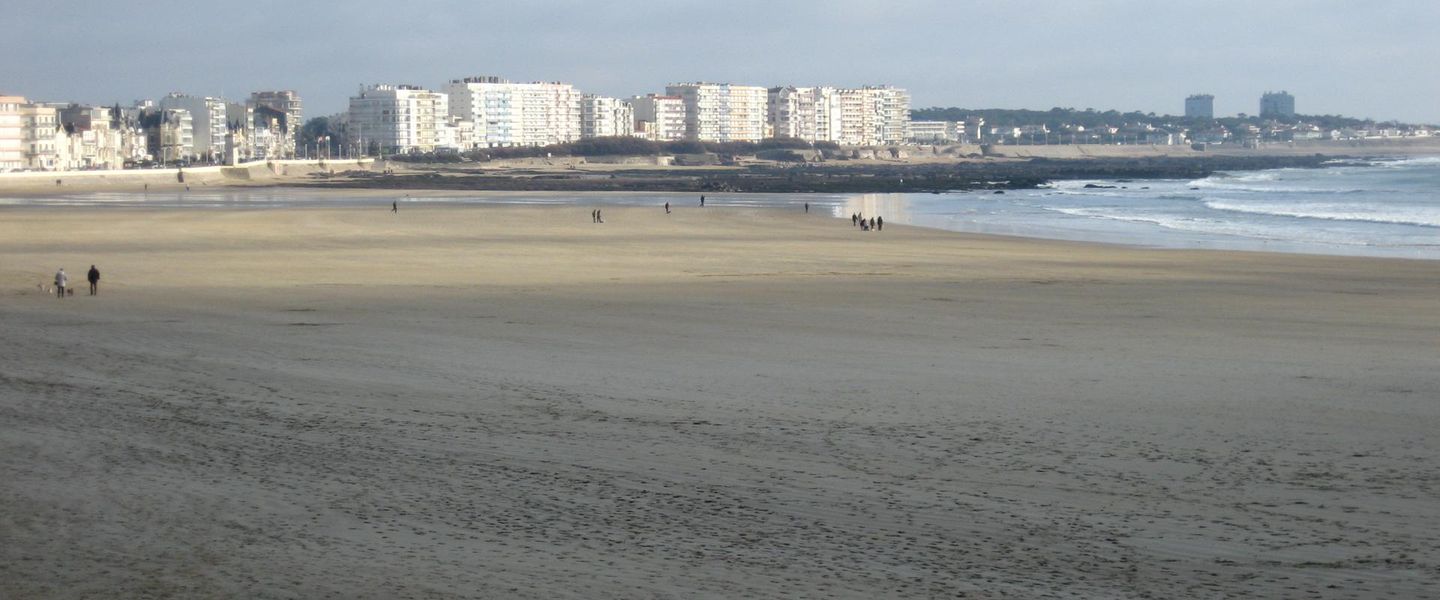


The Vendée Coast in France pairs Atlantic beaches, pine forests, islands and oyster villages with sailing, cycling, seafood and heritage towns.
Atlantic Landscapes and Island Horizons
The Vendée Coast follows the Atlantic edge of western France, combining long sandy beaches, dune systems, pine forests, tidal marshes and distinctive island landscapes. Its shore stretches from the island of Noirmoutier and the Passage du Gois in the north to the resort of La Tranche-sur-Mer near the Charente-Maritime border, with Île d'Yeu lying offshore. Between them, seaside towns such as Saint-Jean-de-Monts, Saint-Gilles-Croix-de-Vie, Les Sables-d'Olonne and Jard-sur-Mer provide different gateways to the coast. Some beaches face open ocean, while others are sheltered by islands, headlands or tidal inlets.Read more about Vendée Coast
Maritime Heritage and Coastal Character
Ways to Experience the Shore
When is the best time to visit Vendée Coast?
Best: June–August · 24–26°C| Month | High (°C) | Rainfall (mm) |
|---|---|---|
| January | 10 | 64 |
| February | 11 | 54 |
| March | 13 | 57 |
| April | 16 | 51 |
| May | 20 | 46 |
| June (best) | 24 | 37 |
| July (best) | 26 | 25 |
| August (best) | 26 | 28 |
| September | 24 | 40 |
| October | 19 | 69 |
| November | 15 | 76 |
| December | 12 | 71 |
Getting to and around Vendée Coast
How to get there
Transportation
Best attractions in Vendée Coast
The Vendée Coast's attractions range from the island landscapes of Noirmoutier to the broad beaches and pine-backed resorts of the mainland. Noirmoutier-en-l'Île, its salt marshes and oyster areas offer a close view of working coastal environments, while the Passage du Gois provides a remarkable tidal crossing when conditions allow. Saint-Gilles-Croix-de-Vie combines a working fishing harbour with seaside promenades, and Les Sables-d'Olonne brings together an urban beach, maritime museums, harbour life and the starting point of the Vendée Globe. Further south, the forests and beaches around Saint-Jean-de-Monts, La Faute-sur-Mer and La Tranche-sur-Mer suit walking, cycling and watersports, subject to local conditions. Île d'Yeu adds a more remote island experience, with small ports, coastal paths and varied shorelines reached by ferry from the mainland.
-
Historical landmark
L'île Penotte
Discover L'île Penotte in Les Sables-d'Olonne: a whimsical seaside neighborhood adorned with stunning seashell mosaics and artistic charm.
-
Amusement center
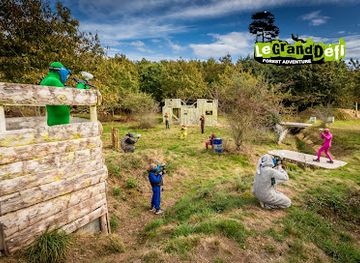
Parc accrobranche - Le Grand Défi - Saint-Julien-des-Landes - Vendée
Experience thrilling treetop adventures and outdoor fun for the whole family at Le Grand Défi in Saint-Julien-des-Landes, Vendée.
-
Zoo
Parc zoologique des Sables d'Olonnes
Discover a world of wildlife conservation at Zoo des Sables, home to 500+ animals in a beautiful, eco-conscious setting near the beaches of Vendée.
-
Aquarium
Aquarium de Vendée
Explore the depths of the ocean at Aquarium de Vendée, where marine wonders come alive in a family-friendly atmosphere.
Best landmarks in Vendée Coast
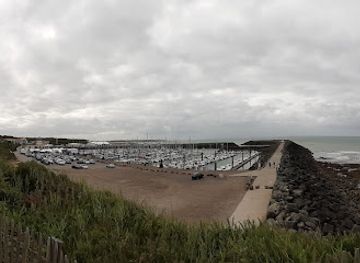
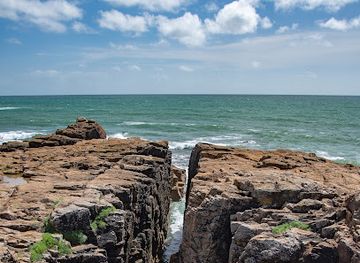
The Vendée Coast is defined by natural landmarks as much as by buildings. The Passage du Gois is its most distinctive tidal feature, a road across the bay toward Noirmoutier that disappears beneath the sea at high tide. The dunes, beaches and salt marshes of Noirmoutier express the close relationship between human work and coastal processes, while Île d'Yeu provides a contrasting island landscape of coves, rocky shores and maritime settlements. On the mainland, the long beachfront of Les Sables-d'Olonne and its harbour form a major urban landmark, closely associated with offshore sailing. Fishing ports at Saint-Gilles-Croix-de-Vie and other coastal towns preserve the working character of the shore, while pine forests, tidal channels and marsh basins remain important landscape markers between the resorts.
-
Castle
Castle Talmont
Explore the medieval splendor of Castle Talmont, where history meets stunning coastal views in Talmont-Saint-Hilaire.
-
Tourist attraction
Puits d'Enfer
Explore the captivating Puits d'Enfer in Les Sables-d'Olonne, a stunning observation deck revealing the wild beauty of the French Atlantic coast.
-
Art museum
Vendée Miniature
Explore breathtaking miniature replicas of Vendée's iconic landmarks in a unique art museum and amusement park experience at Vendée Miniature.
-
Amusement park
O’Fun Park
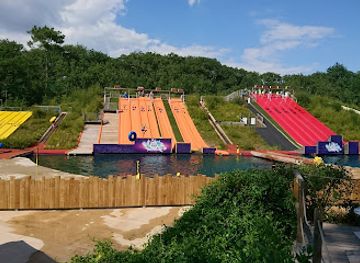
Discover the excitement of O’Fun Park, where thrilling rides and family-friendly attractions await in the heart of Le Bernard, France.
Explore Vendée Coast on the map
Plan your trip on one map. See where the top attractions, landmarks, restaurants and hotels are, and book hotels and experiences in a few clicks.
Best hotels in Vendée Coast
Best restaurants in Vendée Coast
Dining along the Vendée Coast reflects both the Atlantic and the productive lowlands behind it. Oysters, mussels, fish and other shellfish appear prominently in ports and coastal towns, while Noirmoutier is associated with its early potatoes and the island's salt marshes supply fleur de sel. Local markets, fishmongers, cafés and restaurants are concentrated in settlements such as Noirmoutier-en-l'Île, Saint-Gilles-Croix-de-Vie, Les Sables-d'Olonne and the larger southern resorts. Traditional restaurants and informal seafood establishments sit alongside crêperies, bakeries and seasonal beach cafés, although choices become more limited away from the resorts and outside the main holiday period. Farm shops and producers in the hinterland can provide regional ingredients for self-catering, and visitors may encounter local wines and other products from the wider Vendée rather than only from the immediate shoreline.
-
Restaurant
La Plage le Veillon
Discover La Plage le Veillon: A seaside French restaurant offering exquisite cuisine and breathtaking ocean views in Talmont-Saint-Hilaire.
-
Restaurant
Le KOU-DE-TA
Experience exquisite French dining at Le KOU-DE-TA in Jard-sur-Mer—where seasonal ingredients meet culinary artistry in a vibrant atmosphere.
-
Restaurant
Fleurs de Thym
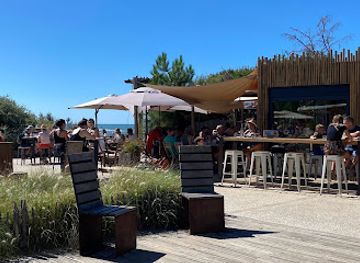
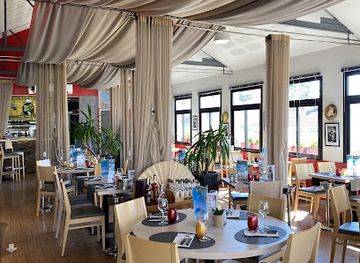
Experience exquisite French and Mediterranean dining at Fleurs de Thym, where culinary artistry meets stunning ocean views.
-
French
Les Régates
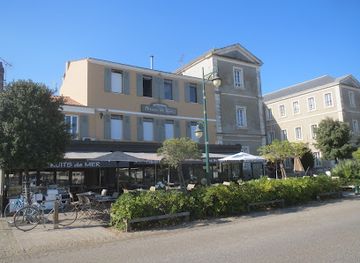
Experience authentic French cuisine at Les Régates in Les Sables-d'Olonne with stunning sea views and fresh local ingredients.
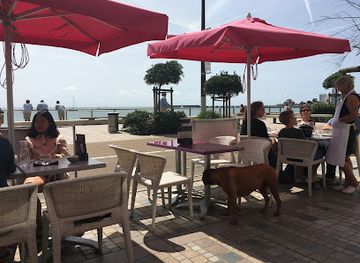
Best bars in Vendée Coast
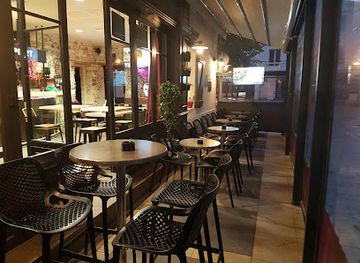
Evening life on the Vendée Coast is concentrated in the larger resorts rather than spread evenly along the shore. Les Sables-d'Olonne has the broadest choice of bars, cafés and seasonal entertainment, with a more active atmosphere around the seafront, harbour and town centre during summer. Saint-Jean-de-Monts, Saint-Gilles-Croix-de-Vie and La Tranche-sur-Mer also offer cafés, ice-cream shops, traditional bars and occasional seasonal entertainment, while smaller villages tend towards an early, convivial rhythm centred on local establishments. Noirmoutier and Île d'Yeu are better suited to quiet evening walks, harbour dining and village hospitality than to clubbing. Events and performances vary by season, so visitors should check local listings rather than assume that venues operate year-round.
-
Restaurant
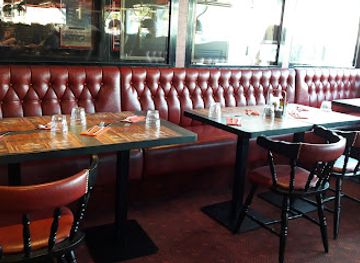
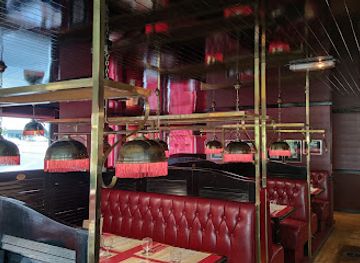
Buffalo Grill Olonne Sur Mer
Savor the flavors of America at Buffalo Grill Olonne Sur Mer, where hearty meals and a family-friendly atmosphere await in the heart of Les Sables-d'Olonne.
-
Restaurant
Buffalo Grill La Roche-sur-Yon
Experience the best of American barbecue at Buffalo Grill La Roche-sur-Yon, where hearty meals and a family-friendly atmosphere await.
-
Lounge
KF Du Port
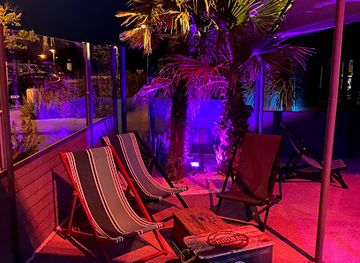
Experience the perfect blend of relaxation and seaside charm at KF Du Port, a premier lounge in Saint-Gilles-Croix-de-Vie.
-
Cocktail bar
L'Alambic St Jean de Monts
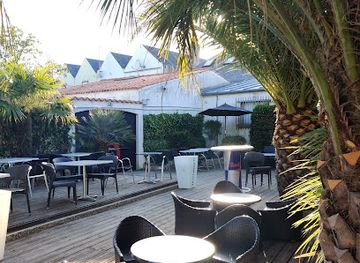
Experience the vibrant nightlife of L'Alambic in Saint-Jean-de-Monts, where exquisite cocktails and lively disco ambiance create unforgettable moments.
Best nightclubs in Vendée Coast
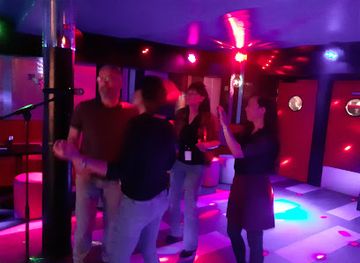
Evening life on the Vendée Coast is concentrated in the larger resorts rather than spread evenly along the shore. Les Sables-d'Olonne has the broadest choice of bars, cafés and seasonal entertainment, with a more active atmosphere around the seafront, harbour and town centre during summer. Saint-Jean-de-Monts, Saint-Gilles-Croix-de-Vie and La Tranche-sur-Mer also offer cafés, ice-cream shops, traditional bars and occasional seasonal entertainment, while smaller villages tend towards an early, convivial rhythm centred on local establishments. Noirmoutier and Île d'Yeu are better suited to quiet evening walks, harbour dining and village hospitality than to clubbing. Events and performances vary by season, so visitors should check local listings rather than assume that venues operate year-round.
-
Disco club
Le Silver Star
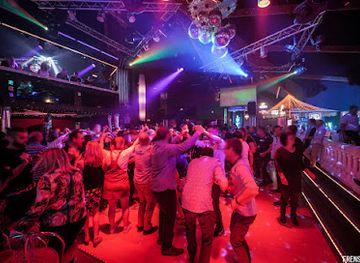
Discover the vibrant nightlife at Le Silver Star, the premier disco club in Les Sables-d'Olonne, where music, dancing, and fun never stop.
-
Disco club
Le Privé
Discover the electrifying nightlife at Le Privé, the premier disco club in Mouilleron-le-Captif, where music and dance come alive.
-
Night club
Paradise Club
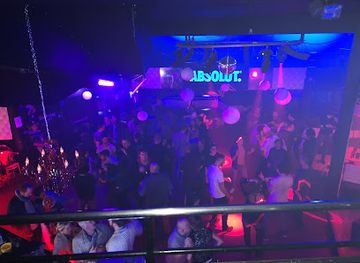
Discover the vibrant nightlife at Paradise Club, Les Sables-d'Olonne's ultimate party destination with electrifying music and energetic vibes.
-
Night club
Macumba-Club
Experience the vibrant nightlife of La Roche-sur-Yon at Macumba-Club, where music, dance, and excitement collide for an unforgettable evening.
Best shops in Vendée Coast
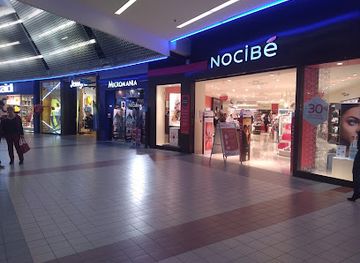
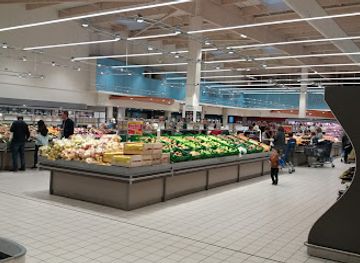
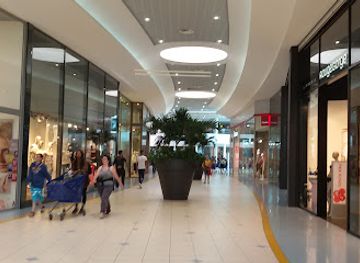
Shopping on the Vendée Coast is primarily local and practical rather than metropolitan. Markets in coastal towns provide places to buy seafood, seasonal produce, bread, regional specialities and, on Noirmoutier, island potatoes and salt-related products. Independent shops, bakeries, fishmongers and craft businesses are most numerous in Noirmoutier-en-l'Île, Saint-Gilles-Croix-de-Vie, Les Sables-d'Olonne and the larger resort centres. Visitors may also find ceramics, artwork, nautical goods and locally made gifts, although the range varies considerably between the summer resorts and smaller villages. Farm shops and direct producers in the surrounding countryside add regional food products, while larger supermarkets are generally located near established settlements. On Île d'Yeu, shopping is concentrated around the island's villages and harbour areas rather than along remote coastal paths.
-
Shopping mall
Centre commercial Les Flâneries
Explore Centre Commercial Les Flâneries, La Roche-sur-Yon's premier shopping destination with a variety of stores, dining, and entertainment options.
-
Hypermarket
E.Leclerc LA ROCHE SUR YON
Explore E.Leclerc La Roche Sur Yon: A hypermarket brimming with fresh produce, gourmet delights, and a unique shopping experience in the heart of France.
-
Shopping mall
COMMERCIAL PARK Oceanis
Discover the ultimate shopping experience at Commercial Park Oceanis in Saint-Gilles-Croix-de-Vie, featuring diverse shops, dining, and community events.
-
Shopping mall
Sud Avenue
Discover a shopping paradise at Sud Avenue in La Roche-sur-Yon, where retail therapy meets delightful dining and vibrant community events.
Get your free copy of our complete guide to Vendée Coast, delivered straight to you.
Everything on this page, from attractions and restaurants to essentials and local phrases, in one PDF you can read offline, print or share.
Already have an account? Sign in
Your Vendée Coast guide is ready.
We'll send it to · Not you? Sign out

Getting your guide ready…
We are putting together a fresh copy of the Vendée Coast guide. This can take up to a minute.
This can take a few moments. If your browser asks, choose Allow so the download can start. You'll find the guide in your Downloads folder.
Nothing happened? Download it again
Sorry, the guide is taking longer than usual. Please try again in a minute, or get it by email instead.
Vendée Coast essentials
Currency and Payment
Safety
Emergency Situations
Do's and Don'ts
Local Tips
From Eve
Local phrases worth knowing
You don't need to get them perfect. A few words go a long way, and locals appreciate the effort.
Basics
| English | Local | Say it |
|---|---|---|
| Hello | Bonjour | [bohn-zhoor] |
| Goodbye | Au revoir | [oh ruh-vwahr] |
| Yes | Oui | [wee] |
| No | Non | [nohn] |
| Please/You're welcome | S'il vous plaît | [seel voo pleh] |
| Thank you | Merci | [mehr-see] |
| Excuse me/Sorry | Excusez-moi | [ehk-skew-zay mwa] |
| How are you? | Comment ça va? | [koh-mohn sah vah] |
| Fine. And you? | Bien. Et vous? | [byen. ay voo] |
| Do you speak English? | Parlez-vous anglais? | [pahr-lay voo ahn-glay] |
| I don't understand | Je ne comprends pas | [zhuh nuh kohm-prahnd pah] |
Eating & Drinking
| English | Local | Say it |
|---|---|---|
| I'd like to see the menu, please | Je voudrais voir le menu, s'il vous plaît | [zhuh voo-dray vwah-r leh meh-noo, seel voo pleh] |
| I don't eat meat | Je ne mange pas de viande | [zhuh nuh mahnj pah duh vyand] |
| Cheers! | Santé! | [sahn-tay] |
| I would like to pay, please | Je voudrais payer, s'il vous plaît | [zhuh voo-dray peh-yay, seel voo pleh] |
Emergencies
| English | Local | Say it |
|---|---|---|
| Help! | À l'aide! | [ah lehde] |
| Go away! | Allez-vous en! | [ah-lay voo zahn] |
| Call the Police! | Appelez la police! | [ah-pay-lay lah poh-lees] |
| Call a doctor! | Appelez un médecin! | [ah-pay-lay uh mayd-sahn] |
| I'm lost | Je suis perdu | [zhuh swee pair-doo] |
| I'm ill | Je suis malade | [zhuh swee mah-lahd] |
Shopping
| English | Local | Say it |
|---|---|---|
| I'd like to buy... | Je voudrais acheter... | [zhuh voo-dray ash-tay...] |
| I'm just looking | Je regarde juste | [zhuh ruh-gahrd zhuhst] |
| How much is it? | Combien ça coûte? | [kohm-byen sah koot] |
| That's too expensive | C'est trop cher | [say troh shair] |
| Can you lower the price? | Pouvez-vous baisser le prix? | [poo-vay voo beh-say leh pree] |
Time & Numbers
| English | Local | Say it |
|---|---|---|
| What time is it? | Quelle heure est-il? | [kehl uhr ay-teel] |
| It's one o'clock | Il est une heure | [eel ay oon uhr] |
| Half past (10) | Dix et demie | [dees ay duh-mee] |
| Morning | Matin | [mah-tahn] |
| Afternoon | Après-midi | [ah-pray mee-dee] |
| Evening | Soir | [swahr] |
| Yesterday | Hier | [yehr] |
| Today | Aujourd'hui | [oh-zhoor-dwee] |
| Tomorrow | Demain | [duh-mahn] |
| 1 | Un | [uhn] |
| 2 | Deux | [duh] |
| 3 | Trois | [twah] |
| 4 | Quatre | [kah-truh] |
| 5 | Cinq | [sank] |
| 6 | Six | [sees] |
| 7 | Sept | [set] |
| 8 | Huit | [weet] |
| 9 | Neuf | [nurf] |
| 10 | Dix | [dees] |
Transport & Directions
| English | Local | Say it |
|---|---|---|
| Where's a/the...? | Où est... | [oo ehs] |
| What's the address? | Quelle est l'adresse? | [kehl ehs lah-dress] |
| Can you show me (on the map)? | Pouvez-vous me montrer (sur la carte)? | [poo-vay voo muh mohn-tray (soor lah kart)] |
| When's the next (bus)? | Quand est le prochain (bus)? | [kahnd ehs luh proh-shahn (boos)] |
| A ticket (to ....) | Un billet (pour ....) | [uhn bee-yay (poor)] |
History of Vendée Coast
A Coast Shaped by Sea and Sediment
The Vendée Coast is a relatively low-lying Atlantic shoreline formed through long-term marine, river and sedimentary processes. Sand barriers, dunes, tidal flats and marshes have continually changed under the influence of currents, storms and sea-level fluctuations. The islands of Noirmoutier and Yeu, together with the bays and estuaries of the coast, created sheltered environments for settlement and maritime activity, while exposed beaches and dune ridges remained more difficult to cultivate. This physical diversity explains the close relationship between the coast's communities and the sea, as well as the continuing importance of coastal management.
Early Settlement and Island Communities
Human occupation of the Vendée littoral reaches back into prehistoric periods, although the surviving evidence is uneven across the coast. Later communities exploited the shore, tidal wetlands and sheltered waters through fishing, shellfish gathering, agriculture and salt production. Noirmoutier developed a particularly distinctive island economy, with salt marshes and maritime trade shaping settlement patterns. Île d'Yeu likewise retained a strong seafaring identity, influenced by its offshore position and dependence on fishing and links with the mainland. Villages, churches, harbour areas and field systems preserve fragments of these long relationships with the coastal environment.
Salt, Fishing and Maritime Trade
For centuries, salt marshes were among the most important productive landscapes along the northern Vendée Coast, particularly on Noirmoutier. Salt workers managed shallow basins in which seawater evaporated, while fishing communities operated from ports and beaches along the mainland and islands. Saint-Gilles-Croix-de-Vie became strongly associated with sardine fishing, and Les Sables-d'Olonne grew as a port with fishing, commercial and maritime functions. Oyster farming and mussel cultivation later became important in suitable tidal waters. These industries connected the coast to wider Atlantic markets and left a cultural landscape of harbours, marshes, boats and processing traditions.
The Rise of Seaside Tourism
Seaside tourism expanded during the nineteenth and twentieth centuries as railways, improved roads and changing leisure habits brought visitors from inland France to the Atlantic shore. Les Sables-d'Olonne became the best-known urban resort, while newer holiday developments grew around beaches such as Saint-Jean-de-Monts, La Tranche-sur-Mer and Saint-Hilaire-de-Riez. The coastal economy consequently widened beyond fishing and agriculture to include hotels, campsites, villas, sailing and beach recreation. Tourism did not replace older activities entirely: markets, fishing ports, salt production and shellfish farming continued to shape the identity of individual towns.
Modern Maritime Identity and Conservation
The contemporary Vendée Coast balances intensive seasonal tourism with the protection of dunes, forests, marshes, islands and tidal habitats. Coastal paths, cycle routes and protected natural areas encourage lower-impact exploration, while erosion, storm exposure and pressure on fragile habitats remain important management concerns. Les Sables-d'Olonne's role in the Vendée Globe, first held in 1989, has given the coast a prominent place in modern offshore sailing. Today, maritime heritage, local food production and environmental stewardship sit alongside beach holidays, with communities adapting visitor access to a shoreline that remains physically dynamic.
Vendée Coast in Photos
Browse through our photo collection highlighting the charm and character of the destination.
Neighbouring destination travel guides
The closest destinations to Vendée Coast, if you have time for more than one.
-

-

-

-

-


Swipe for more destinations
Explore more

Explore more of Pays de la Loire
Explore Pays de la Loire: Where majestic châteaux, scenic trails, and culinary delights create the perfect French escape.
Explore Pays de la Loire
Explore more of France
Explore France: A land of romance, history, and unparalleled beauty, from the iconic streets of Paris to the serene landscapes of Provence and the luxury of the French Riviera.
Explore France