

Moorea, French Polynesia Travel Guide
Discover Moorea, where lush mountains meet turquoise lagoons, offering a perfect blend of natural beauty and Polynesian culture in the heart of French Polynesia.
Moorea is a stunning island in French Polynesia, renowned for its crystal-clear lagoons, lush green mountains, and vibrant marine life. Just a short ferry ride from Tahiti, Moorea offers a tranquil escape with a blend of natural beauty and Polynesian culture. Its iconic jagged peaks, such as Mount Rotui and Mount Tohivea, stand majestically against the backdrop of the azure Pacific Ocean, creating a picture-perfect landscape that attracts photographers and nature lovers alike. Moorea's beaches are a haven for relaxation and adventure. The island's pristine, white-sand shores are ideal for sunbathing, while the warm, turquoise waters invite visitors to snorkel, dive, and explore the colorful coral reefs teeming with tropical fish. For those seeking more excitement, activities like paddleboarding, kayaking, and even shark and ray feeding excursions are readily available. The island's interior is equally captivating, with lush rainforests and pineapple plantations providing scenic hiking and ATV trails. The local culture of Moorea is rich and welcoming. Visitors can experience traditional Polynesian music, dance, and cuisine at various cultural centers and events. The island's villages, such as Maharepa and Haapiti, offer charming shops and markets where tourists can purchase local crafts, black pearls, and other souvenirs. Moorea's laid-back atmosphere, combined with its breathtaking scenery and warm hospitality, makes it a must-visit destination for anyone traveling to French Polynesia.

Know before you go
Hi, I'm Eve. Here are a few practical things to know before exploring Moorea.
- Visit the Belvedere Lookout for panoramic views of Cook's Bay and Opunohu Bay.
- Rent a scooter or car to explore the island at your own pace.
- Try the local dish, Poisson Cru, a Polynesian ceviche made with fresh fish and coconut milk.
- Take a lagoon tour to swim with sharks and rays for an unforgettable experience.
- Visit the Tiki Village Cultural Centre to learn about traditional Polynesian culture and crafts.
Explore Moorea: Things to Do, Places to Eat, Hotels & More
Handpicked recommendations for top attractions, local dining, accommodations, and more

Best attractions in Moorea
Top-rated picks
Best Attractions
Browse the full guide
All Attractions

Franckyfranck tours moorea
Experience the enchanting beauty of Moorea with Franckyfranck Tours, your gateway to the island's stunning landscapes and vibrant culture.

Musée de la Perle Robert Wan
Explore the captivating world of Tahitian pearls at the Musée de la Perle Robert Wan, a free museum in Papeete showcasing exquisite pearl jewelry and history.

'Āfareaitu Waterfall
Experience the breathtaking beauty of Āfareaitu Waterfall in Mo'orea, a serene oasis surrounded by lush landscapes and cascading waters.

Belvedere Lookout
Experience Moorea's breathtaking beauty from Belvedere Lookout: panoramic views, lush valleys, and iconic mountain vistas await!

Best landmarks in Moorea
Top-rated picks
Best Landmarks
Browse the full guide
All Landmarks

Hilton Moorea Lagoon Resort & Spa
Experience luxury and natural beauty at Hilton Moorea Lagoon Resort & Spa, your tropical paradise in French Polynesia, where relaxation meets adventure.

Sofitel Kia Ora Moorea Beach Resort
Discover the ultimate luxurious getaway at Sofitel Kia Ora Moorea Beach Resort, where paradise meets exceptional service in the heart of French Polynesia.
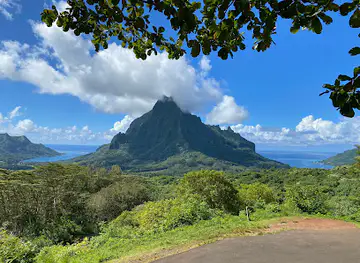
Belvedere Lookout
Discover the mesmerizing views at Belvedere Lookout, a scenic spot in Moorea that showcases the breathtaking beauty of French Polynesia's landscapes.
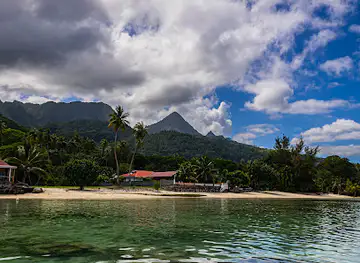
Tiki Village
Immerse yourself in the vibrant culture of Polynesia at Tiki Village, where traditions come alive through dance, crafts, and cuisine.

Best restaurants in Moorea
Top-rated picks
Best Restaurants
Browse the full guide
All Restaurants

Snack Mahana RESA
Experience authentic Polynesian cuisine at Snack Mahana RESA in Moorea – where every meal is complemented by stunning lagoon views.
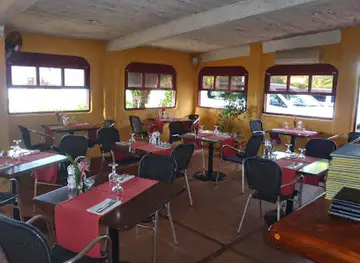
Rudy's
Experience exquisite French cuisine with stunning coastal views at Rudy's in Moorea-Maiao.

Moorea Beach Cafe by Bruno Jamais
Experience exquisite Japanese cuisine amidst stunning ocean views at Moorea Beach Cafe by Bruno Jamais.

HOLY STEAK HOUSE
Discover exquisite steaks and local flavors at Holy Steak House in Moorea-Maiao - a culinary gem in French Polynesia.

Best bars in Moorea
Top-rated picks
Best Bars
Browse the full guide
All Bars

Rudy's
Experience exquisite French cuisine in the heart of French Polynesia at Rudy's, where culinary delight meets breathtaking coastal views.

Moorea Beach Cafe by Bruno Jamais
Experience the perfect blend of Japanese cuisine and breathtaking ocean views at Moorea Beach Cafe, a culinary gem in French Polynesia.

Coco beach Moorea
Experience the culinary delights of Coco Beach Moorea, where local flavors meet breathtaking views in French Polynesia's paradise.

Casa Vincenzo Moorea
Discover authentic Italian pizza amidst the tropical beauty of Moorea at Casa Vincenzo, where flavor meets paradise.

Best nightclubs in Moorea
Top-rated picks
Best Nightclubs
Browse the full guide
All Nightclubs

Tiki Village
Experience the vibrant traditions of Polynesia at Tiki Village - cultural performances and authentic experiences await you in Moorea.

Moorea Beach Cafe by Bruno Jamais
Experience the flavors of Japan surrounded by the stunning beauty of Moorea at Moorea Beach Cafe by Bruno Jamais.

Coco beach Moorea
Discover delicious local cuisine amidst breathtaking views at Coco Beach Moorea, a hidden gem in the heart of French Polynesia.
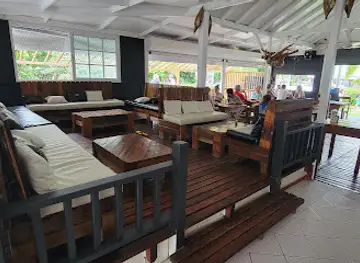
Sea You Soon Moorea - Le QG
Experience the vibrant flavors of Moorea at Sea You Soon Moorea - Le QG, where fresh ingredients meet Polynesian culinary traditions.

Best shops in Moorea
Top-rated picks
Best Shops
Browse the full guide
All Shops

Papeete Market
Discover the heart of Tahiti at Papeete Market, where local culture, vibrant colors, and delicious flavors come together in a unique shopping experience.

Vaima Shopping Center
Discover shopping, dining, and entertainment at the Vaima Shopping Center in Papeete, the heart of French Polynesia's capital.

P.Originals Pearls Moorea
Explore the finest Tahitian pearls at P. Originals Pearls Moorea, where beauty meets craftsmanship in a stunning island paradise.

Champion Moorea
Explore Champion Moorea, a vibrant supermarket in the heart of French Polynesia, offering fresh produce and local delicacies for tourists and locals alike.

Explore Moorea on the Map
A handpicked selection of must-see spots in Moorea, mapped for you.
Moorea Essentials
-
Moorea is easily accessible from Tahiti, the main island of French Polynesia. The most common way to get to Moorea is by taking a ferry from Papeete, Tahiti's capital. The ferry ride takes about 30 to 60 minutes, depending on the service. Alternatively, you can take a short domestic flight from Faa'a International Airport in Tahiti to Moorea Airport, which takes roughly 15 minutes.
-
Once on Moorea, you can get around by renting a car, scooter, or bicycle. Rental agencies are available near the ferry terminal and the airport. Taxis are also available, but they can be expensive. For a more budget-friendly option, consider using the local bus service, which runs along the coastal road and connects the main villages. Additionally, many hotels offer shuttle services to popular attractions.
-
The official currency in Moorea is the CFP Franc (XPF). Credit cards are widely accepted in hotels, restaurants, and larger shops, but it is advisable to carry some cash for smaller establishments and markets. ATMs are available on the island, particularly in the main villages of Maharepa and Papetoai.
-
Moorea is generally a safe destination for tourists, with low crime rates. However, it is still important to take standard precautions. Avoid leaving valuables unattended on beaches or in unlocked vehicles. There are no specific high-crime areas targeting tourists, but it's always best to stay vigilant and aware of your surroundings.
-
In case of emergency, dial 17 for the police, 15 for medical emergencies, and 18 for fire services. Moorea has a small hospital in Afareaitu that can handle minor medical issues. For serious health concerns, you may need to be transferred to Tahiti. It's recommended to have travel insurance that covers medical emergencies. Pharmacies are available in major villages for minor health issues and over-the-counter medications.
-
Fashion: Do dress modestly, especially when visiting religious sites. Avoid wearing beachwear away from the beach. Religion: Do respect local customs and traditions. It's customary to ask for permission before entering private land or traditional sites. Public Transport: Do be respectful and greet the driver. Don't eat or drink on public transport. Greetings: Do greet people with a friendly 'Ia Orana' (hello) or 'Mauruuru' (thank you). A smile goes a long way. Eating & Drinking: Do try local delicacies like poisson cru and fresh fruits. Don't refuse hospitality, as it is considered impolite.
-
To experience Moorea like a local, visit the local markets where you can buy fresh produce and handmade crafts. Engage with locals, who are often friendly and willing to share stories about their island. Don't miss out on attending a traditional dance show or participating in a cultural workshop. For a unique experience, consider taking a guided hike to one of Moorea's scenic viewpoints or exploring the island's lush interior by 4x4 safari.
When is the best time to visit Moorea?
Useful Local Phrases for Moorea
You don't need to speak the language perfectly. Even learning a few simple words can make conversations warmer—and locals usually appreciate the effort.
— Eve

Here are the phrases I use most often in Moorea. Try a few—you'll be surprised how far they go! 😊
❤️
-
- HelloIa ora na
[Yah-oh-rah-nah] - GoodbyeNana
[Nah-nah] - YesE
[Ay] - NoAita
[Eye-tah] - Please/You're welcomeMauruuru
[Mah-roo-roo] - Thank youMauruuru
[Mah-roo-roo] - Excuse me/SorryTahiti
[Tah-hee-tee] - How are you?Eaha te huru?
[Ay-ah-hah teh hoo-roo] - Fine. And you?Maita'i. O oe?
[My-tah-ee. Oh oh-ay] - Do you speak English?Ua haere oe i te reo angle?
[Oo-ah hah-eh-ray oh-ay ee teh ray-oh ahng-lay] - I don't understandAita au e marama
[Eye-tah oh ay mah-rah-mah]
- HelloIa ora na
-
- I'd like to see the menu, pleaseE parau atu au e hio i te meniu, maruuru
[Ay pah-rah-oo oh ay ay hee-oh ee teh meh-nee-oo mah-roo-roo] - I don't eat meatAita au e 'ai parari
[Eye-tah oh ay eye pah-rah-ree] - Cheers!Manuia!
[Mah-noo-ee-ah] - I would like to pay, pleaseE parau atu au e utu, maruuru
[Ay pah-rah-oo oh ay ay oo-too mah-roo-roo]
- I'd like to see the menu, pleaseE parau atu au e hio i te meniu, maruuru
-
- Help!Aide!
[Eye-day] - Go away!Haere atu!
[High-ray ah-too] - Call the Police!Tefea i te pouhila!
[Tay-feh-ah ee teh poo-hee-lah] - Call a doctor!Tefea i te taata here!
[Tay-feh-ah ee teh tah-ah-tah hay-ray] - I'm lostUa haehaa au
[Oo-ah high-hah-ah oh] - I'm illUa haere au i te pohe!
[Oo-ah hah-eh-ray oh ee teh poh-hay]
- Help!Aide!
-
- I'd like to buy...E parau atu au e hoko...
[Ay pah-rah-oo oh ay ay hoh-koh] - I'm just lookingTe pura faahou au
[Teh poo-rah fah-ah-hoo oh] - How much is it?Eaha te moni?
[Ay-ah-hah teh moh-nee] - That's too expensiveTe moni maitai roa
[Teh moh-nee my-tah-ee roh-ah] - Can you lower the price?E haamau i te moni?
[Ay hah-ah-mow ee teh moh-nee]
- I'd like to buy...E parau atu au e hoko...
-
- What time is it?Eaha te i te haamatau?
[Ay-ah-hah teh ee teh hah-ah-mah-tow] - It's one o'clockTe haamatau etahi
[Teh hah-ah-mah-tow ay-tah-hee] - Half past (10)Taiatai (10)
[Tie-ah-tie (ten)] - MorningPoipoi
[Poy-poy] - AfternoonApōpō
[Ah-poh-poh] - EveningAhiahi
[Ah-hee-ah-hee] - YesterdayIne
[Ee-nay] - TodayI teie po
[Ee teh-ee-ay poh] - TomorrowApa
[Ah-pah] - 1Ahitū
[Ah-hee-too] - 2Arua
[Ah-roo-ah] - 3Aritahi
[Ah-ree-tah-hee] - 4Ahiva
[Ah-hee-vah] - 5Arimaha
[Ah-ree-mah-hah] - 6Ariroa
[Ah-ree-roh-ah] - 7Ahitoa
[Ah-hee-toh-ah] - 8Ahiva
[Ah-hee-vah] - 9Ahuru
[Ah-hoo-roo] - 10Ahurea
[Ah-hoo-ray-ah]
- What time is it?Eaha te i te haamatau?
-
- Where's a/the...?E haere i te...
[Ay high-ray ee teh] - What's the address?Eaha te nūmera o teie?
[Ay-ah-hah teh noo-meh-rah oh teh-ee-ay] - Can you show me (on the map)?E haamata i te hio iau (i te plan)?
[Ay hah-ah-mah-tah ee teh hee-oh ee-ow (ee teh plahn)] - When's the next (bus)?Eaha te haamatau o te umu (autobus)?
[Ay-ah-hah teh hah-ah-mah-tow oh teh oo-moo (oh-toh-boos)] - A ticket (to ....)Te farere (i te ....)
[Teh fah-reh-ray (ee teh)]
- Where's a/the...?E haere i te...
History of Moorea
-
Moorea, like many other islands in French Polynesia, was first settled by Polynesians around 1000 AD. These early settlers were expert navigators and voyagers who traveled vast distances in canoes. They established small villages and lived off the abundant marine life and fertile lands. Archaeological evidence, such as marae (sacred stone structures), provides glimpses into their spiritual and social life.
-
The first recorded European to sight Moorea was Captain James Cook in the 18th century. During his voyages in the Pacific, Cook arrived in the Society Islands in 1769. Although he did not land on Moorea, his contact with the neighboring island of Tahiti marked the beginning of European interest in the region. Other explorers, such as Louis Antoine de Bougainville and Samuel Wallis, also sailed through these waters, contributing to the Western world's knowledge of Moorea.
-
In the early 19th century, Protestant missionaries from the London Missionary Society arrived in Moorea. They established missions, schools, and churches, playing a significant role in converting the local population to Christianity. This period saw profound changes in the social and cultural fabric of Moorean society, as traditional practices and beliefs were supplanted by Christian doctrines and Western customs.
-
Moorea, along with the rest of French Polynesia, became a French protectorate in the 19th century and was later fully annexed by France in 1880. The French administration introduced new economic activities, such as copra production and pearl farming, which altered the island's economy. Infrastructure improvements, including roads and ports, were also undertaken to better integrate Moorea into the colonial framework.
-
During World War II, Moorea, like other islands in the Pacific, gained strategic importance. The island was utilized by the Allied forces as a refueling and supply station. Although Moorea did not see direct combat, the presence of military forces brought about economic and social changes that would influence the island's post-war development.
-
Today, Moorea is known for its stunning landscapes, crystal-clear lagoons, and vibrant culture. Tourism plays a major role in the island's economy, attracting visitors from all over the world. Despite modern influences, Moorea has managed to retain much of its traditional charm and cultural heritage. Efforts to preserve the environment and promote sustainable tourism are ongoing, ensuring that future generations can continue to enjoy the island's natural and cultural treasures.
Cities near Moorea
The closest cities to Moorea, if you have time for more than one stop.


Your all‑in‑one travel companion app
Explore expert travel guides, compare and book tours, experiences, hotels, and more—all from the palm of your hand. Download now for seamless trip planning wherever your wanderlust takes you.


Moorea in Photos
Browse through our photo collection highlighting the charm and character of the destination.


Moorea: The Heart of French Polynesia's Tropical Splendor
Moorea is a stunning island in French Polynesia, renowned for its crystal-clear lagoons, lush green mountains, and vibrant marine life. Just a short ferry ride from Tahiti, Moorea offers a tranquil escape with a blend of natural beauty and Polynesian culture. Its iconic jagged peaks, such as Mount Rotui and Mount Tohivea, stand majestically against the backdrop of the azure Pacific Ocean, creating a picture-perfect landscape that attracts photographers and nature lovers alike. Moorea's beaches are a haven for relaxation and adventure. The island's pristine, white-sand shores are ideal for sunbathing, while the warm, turquoise waters invite visitors to snorkel, dive, and explore the colorful coral reefs teeming with tropical fish. For those seeking more excitement, activities like paddleboarding, kayaking, and even shark and ray feeding excursions are readily available. The island's interior is equally captivating, with lush rainforests and pineapple plantations providing scenic hiking and ATV trails. The local culture of Moorea is rich and welcoming. Visitors can experience traditional Polynesian music, dance, and cuisine at various cultural centers and events. The island's villages, such as Maharepa and Haapiti, offer charming shops and markets where tourists can purchase local crafts, black pearls, and other souvenirs. Moorea's laid-back atmosphere, combined with its breathtaking scenery and warm hospitality, makes it a must-visit destination for anyone traveling to French Polynesia.
Explore More of Windward Islands

Looking beyond Moorea? Discover Windward Islands for broader travel guides, local hot-spots, and regional highlights.
Explore Windward IslandsExplore More of French Polynesia

Looking beyond Moorea? Discover French Polynesia for broader travel guides, local hot-spots, and regional highlights.
Explore French Polynesia