

Sulfur Baths Travel Guide
Free Guide: Experience Tbilisi's historic sulfur baths in Abanotubani, a unique cultural and therapeutic tradition dating back to the city's founding.


A brief summary of Sulfur Baths
Experience Tbilisi's historic sulfur baths in Abanotubani, a unique cultural and therapeutic tradition dating back to the city's founding.
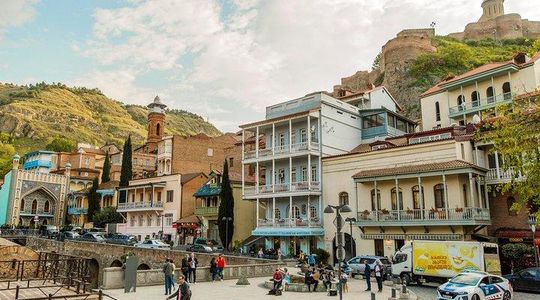
Abanotubani, Tbilisi's historic bath district, is famed for its unique, domed sulfur bathhouses. Legend says that the city was founded here in the 5th century after the discovery of the area's natural hot springs. For centuries, these baths have been a social and therapeutic hub, offering relaxation and healing to locals and visitors alike.
Opening hours
- Every day9 am–11 pm
Opening hours as listed on the venue’s Google Business Profile. Hours can change for services and special events, so check with the venue before you go.
- Address
- 0105, ქ, N 2 Abano St, Tbilisi
- Phone
- Website
Getting there
Walking
Public Transport
Taxi/Ride-Share
Discover more about Sulfur Baths
Overview
Abanotubani, meaning 'bath district,' is one of the oldest areas in Tbilisi, Georgia, renowned for its unique sulfur baths. Located on the eastern bank of the Mtkvari River, at the foot of the Narikala Fortress, this district is intrinsically linked to the city's origin. Legend has it that in the 5th century, King Vakhtang Gorgasali discovered these hot springs while hunting, leading to the founding of Tbilisi, whose name derives from the Georgian word 'tbili' meaning warm.For centuries, Abanotubani has been more than just a place to cleanse; it has been a social and cultural center. Historically, the baths served as gathering places for socializing, business dealings, and even matchmaking. The architecture of the bathhouses, influenced by Persian styles from the 17th and 18th centuries, features distinctive brick domes. One of the most iconic bathhouses is Chreli-Abano (Orbeliani Baths), known for its ornate, mosque-like facade.The sulfur-rich waters, with temperatures ranging from 38-45°C (100-113°F), are believed to have therapeutic benefits, including alleviating skin conditions and reducing joint pain. Visitors can choose from public communal baths or private rooms, with options for massages and scrubs. Today, Abanotubani remains a vibrant district, attracting locals and tourists seeking to experience this ancient Georgian tradition.
Evendo Review Centre
 Google
Guest reviews
Explore Sulfur Baths on the map
A handpicked selection of must-see spots near Sulfur Baths, mapped for you.
Get your free copy of our complete guide to Sulfur Baths, delivered straight to you.
Everything on this page, from opening hours and how to get there to Eve’s tips and the best time to go, in one PDF you can read offline, print or share.
Already have an account? Sign in
Your Sulfur Baths guide is ready.
We'll send it to · Not you? Sign out

Getting your guide ready…
We are putting together a fresh copy of the Sulfur Baths guide. This can take up to a minute.
This can take a few moments. If your browser asks, choose Allow so the download can start. You'll find the guide in your Downloads folder.
Nothing happened? Download it again
Sorry, the guide is taking longer than usual. Please try again in a minute, or get it by email instead.
Unlock the best of Sulfur Baths
Skip-the-line tickets, guided tours with entry, and walking tours of the area, booked in a few clicks.
 Tour with entry
Walk Taste Fall in Love with Tbilisi Local Stories 7 Wines Taste
from $5.70 Tour with entry
Tbilisi Walking Tour Including Cable Car and Traditional Bakery
from $18.05 Tour with entry
Tbilisi with all its glory and originality. (group walking tour)
from $20.90 Tour with entry
Tbilisi: Walking & Talking Tour with Wine & Boat Ride options
from $37.05



Other nearby places you may find interesting
The closest places of the same kind, if this one is not quite what you had in mind.
-
-
-
-
-


Swipe for more places
More to explore near Sulfur Baths

 Best experiences near Sulfur Baths
 Best hotels near Sulfur Baths
 Best landmarks near Sulfur Baths
 Best attractions near Sulfur Baths
 Best shops near Sulfur Baths
 Best restaurants near Sulfur Baths
 Best bars near Sulfur Baths
Do you manage this location?
Take control to get all the benefits, like improved information, better appearance, and stronger visibility across AI-powered discovery.
Explore more

Explore more of Kvemo Kartli
Discover Kvemo Kartli, a hidden gem in Georgia, where ancient history, stunning landscapes, and vibrant traditions await.
Explore Kvemo Kartli
Explore more of Georgia
Discover Georgia: A vibrant mix of ancient history, stunning landscapes, and warm hospitality at the crossroads of Europe and Asia.
Explore Georgia
