Romans' Northern Gate, Cologne Travel Guide
Free Guide: Discover Cologne's Roman origins at the reconstructed Northern Gate, a window into the ancient city of Colonia, nestled near the iconic Cologne Cathedral on vibrant Kardinal-Höffner-Platz.


A brief summary of Romans' Northern Gate
Discover Cologne's Roman origins at the reconstructed Northern Gate, a window into the ancient city of Colonia, nestled near the iconic Cologne Cathedral on vibrant Kardinal-Höffner-Platz.
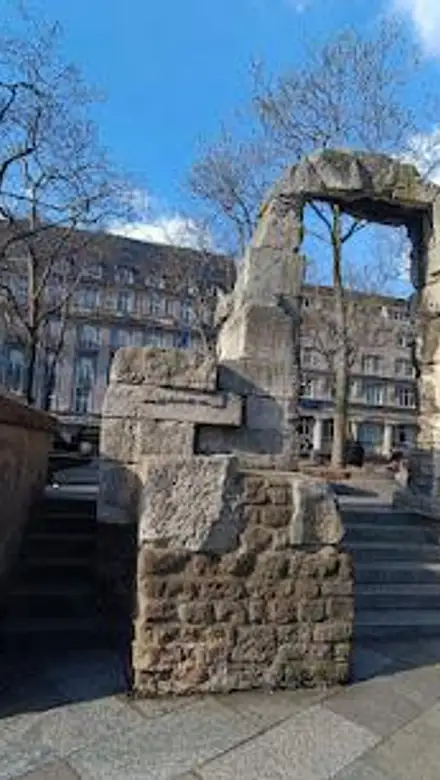
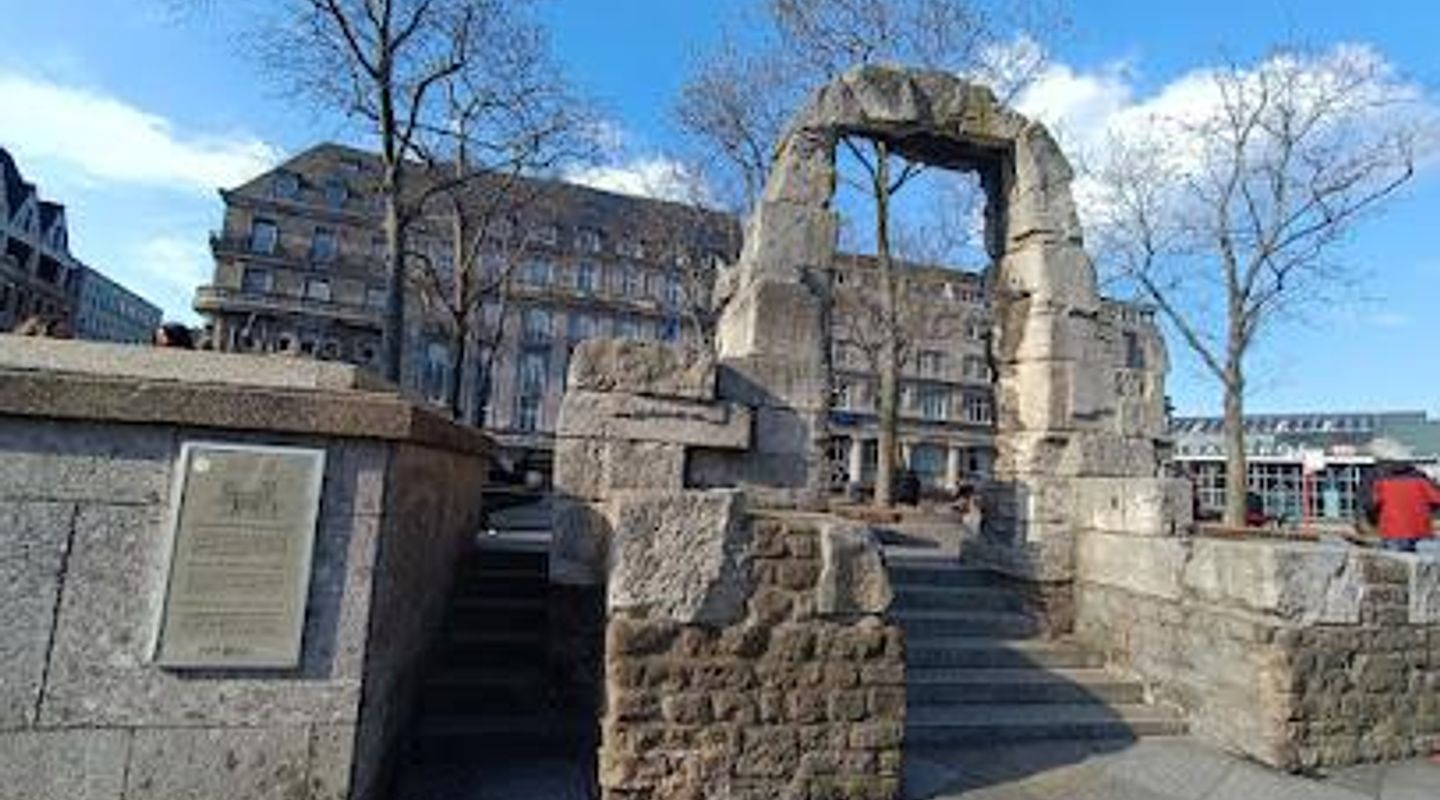
The Romans' Northern Gate, located on Kardinal-Höffner-Platz in Cologne, is a poignant reminder of the city's rich Roman history. What stands today is a reconstructed fragment of the original gate, which once marked the northern entrance to Colonia Claudia Ara Agrippinensium, modern-day Cologne. While not the original structure (which resides in the Romano-Germanic Museum), this stone arch offers a tangible connection to Cologne's origins as a vital Roman settlement. Situated near the iconic Cologne Cathedral, the gate serves as a starting point for exploring the city's Roman past, inviting visitors to imagine life within the ancient city walls. Its presence sparks curiosity about Cologne's evolution from a Roman outpost to a vibrant modern metropolis. The surrounding Kardinal-Höffner-Platz provides a bustling urban backdrop, contrasting the ancient relic with contemporary city life. The gate is easily accessible and provides a unique photo opportunity, blending history with the energy of Cologne.
Opening hours
- Every dayOpen 24 hours
Opening hours as listed on the venue’s Google Business Profile. Hours can change for services and special events, so check with the venue before you go.
- Address
- Kardinal-Höffner-Platz, 50667 Köln
- Website
Getting there
Walking
Public Transport
Taxi/Ride-Share
Discover more about Romans' Northern Gate
Overview
The Romans' Northern Gate, situated on Kardinal-Höffner-Platz in Cologne, offers a glimpse into the city's fascinating Roman past. This reconstructed archway represents a fragment of the original northern gate of Colonia Claudia Ara Agrippinensium (CCAA), the Roman name for Cologne. While the original arch is housed in the Romano-Germanic Museum, this reconstruction stands near the Cologne Cathedral, providing a tangible link to the city's ancient roots. Cologne's history stretches back over 2000 years, with its origins as a Roman settlement dating to 50 AD. The city's strategic location on the Rhine River made it a vital center for Roman power and trade in the region. Under the Roman Empire, Cologne flourished, becoming the capital of the province of Lower Germania. The city was fortified with a four-kilometer-long wall, featuring multiple gates and towers, including the impressive Northern Gate. The Northern Gate served as a primary entrance to the Roman city, controlling access and facilitating trade and movement. It was an imposing structure, a testament to Roman engineering and architectural prowess. The gate bore the city's Roman name, CCAA, proudly displaying Cologne's status as a Roman colony. Over time, the gate underwent various transformations, serving as a portal to the cathedral surroundings long after the Roman era. It was even referred to as the Pfaffenpforte. However, in 1826, the Northern Gate was demolished to accommodate the widening of nearby streets. Fortunately, one of the side archways was preserved and relocated several times before finding its current location on the Domplatte, close to its original site. Today, a plaque on the cathedral slab illustrates the Roman city wall's position within the modern cityscape, while another plaque near the archway depicts the gate's possible original form. Visiting the Romans' Northern Gate allows travelers to connect with Cologne's Roman heritage. Standing in the shadow of the magnificent Cologne Cathedral, one can envision the bustling Roman city that once thrived here. The gate serves as a starting point for exploring other Roman remnants scattered throughout Cologne, including sections of the city wall, the Roman Tower, and the archaeological site beneath the City Hall. Kardinal-Höffner-Platz, where the gate is located, is a vibrant public square that captures the essence of Cologne's urban life. The square is a hub for locals and tourists alike, offering a blend of historical charm and modern vibrancy. Visitors can stroll around the square, relax on a bench, or enjoy a coffee at one of the nearby cafes. The square also hosts small events and markets, providing opportunities to engage with the local community. The Romans' Northern Gate is more than just a historical artifact; it is a symbol of Cologne's enduring spirit and its ability to blend the past with the present. It invites visitors to delve into the city's rich history, explore its cultural treasures, and experience the vibrant atmosphere of modern Cologne. The gate stands as a reminder of the Roman legacy that continues to shape the city's identity, making it a must-see destination for history enthusiasts and travelers seeking a unique cultural experience. Exploring the area around the Northern Gate reveals further layers of Cologne's history. The nearby Cologne Cathedral, a UNESCO World Heritage site, stands as a testament to the city's medieval grandeur. The Old Town, with its narrow cobbled streets and traditional houses, offers a glimpse into Cologne's past. The Romano-Germanic Museum houses an extensive collection of Roman artifacts, providing a deeper understanding of Cologne's Roman heritage. The archaeological zone beneath the City Hall reveals the remains of the Roman praetorium, the seat of the Roman governor. Cologne's Roman past is not confined to museums and archaeological sites; it is woven into the fabric of the city. Street names, building foundations, and hidden remnants all bear witness to Cologne's Roman origins. By exploring these traces of the past, visitors can gain a richer appreciation for the city's unique character and its enduring connection to the Roman Empire. The Romans' Northern Gate serves as a gateway to this historical journey, inviting travelers to step back in time and discover the captivating story of Cologne's Roman past. It is a reminder that even in the midst of a modern metropolis, the echoes of ancient civilizations can still be heard, adding depth and meaning to the urban landscape.
Evendo Review Centre
 Google
Guest reviews
Explore Romans' Northern Gate on the map
A handpicked selection of must-see spots near Romans' Northern Gate, mapped for you.
Get your free copy of our complete guide to Romans' Northern Gate, delivered straight to you.
Everything on this page, from opening hours and how to get there to Eve’s tips and the best time to go, in one PDF you can read offline, print or share.
Already have an account? Sign in
Your Romans' Northern Gate guide is ready.
We'll send it to · Not you? Sign out

Getting your guide ready…
We are putting together a fresh copy of the Romans' Northern Gate guide. This can take up to a minute.
This can take a few moments. If your browser asks, choose Allow so the download can start. You'll find the guide in your Downloads folder.
Nothing happened? Download it again
Sorry, the guide is taking longer than usual. Please try again in a minute, or get it by email instead.
Unlock the best of Romans' Northern Gate
Skip-the-line tickets, guided tours with entry, and walking tours of the area, booked in a few clicks.


Other nearby places you may find interesting
The closest places of the same kind, if this one is not quite what you had in mind.
-
-
-

-
-


Swipe for more places
More to explore near Romans' Northern Gate

 Best experiences near Romans' Northern Gate
 Best hotels near Romans' Northern Gate
 Best landmarks near Romans' Northern Gate
 Best attractions near Romans' Northern Gate
 Best shops near Romans' Northern Gate
 Best restaurants near Romans' Northern Gate
 Best bars near Romans' Northern Gate
Do you manage this location?
Take control to get all the benefits, like improved information, better appearance, and stronger visibility across AI-powered discovery.
Explore more

Explore more of Cologne
Explore Cologne, Germany's vibrant city on the Rhine, known for its stunning cathedral, rich cultural scene, lively festivals, and delightful culinary offerings.
Explore Cologne
Explore more of Germany
Experience Germany: where history meets innovation, and urban energy blends with natural beauty. Discover diverse cultures, delicious cuisine, and stunning landscapes.
Explore Germany