
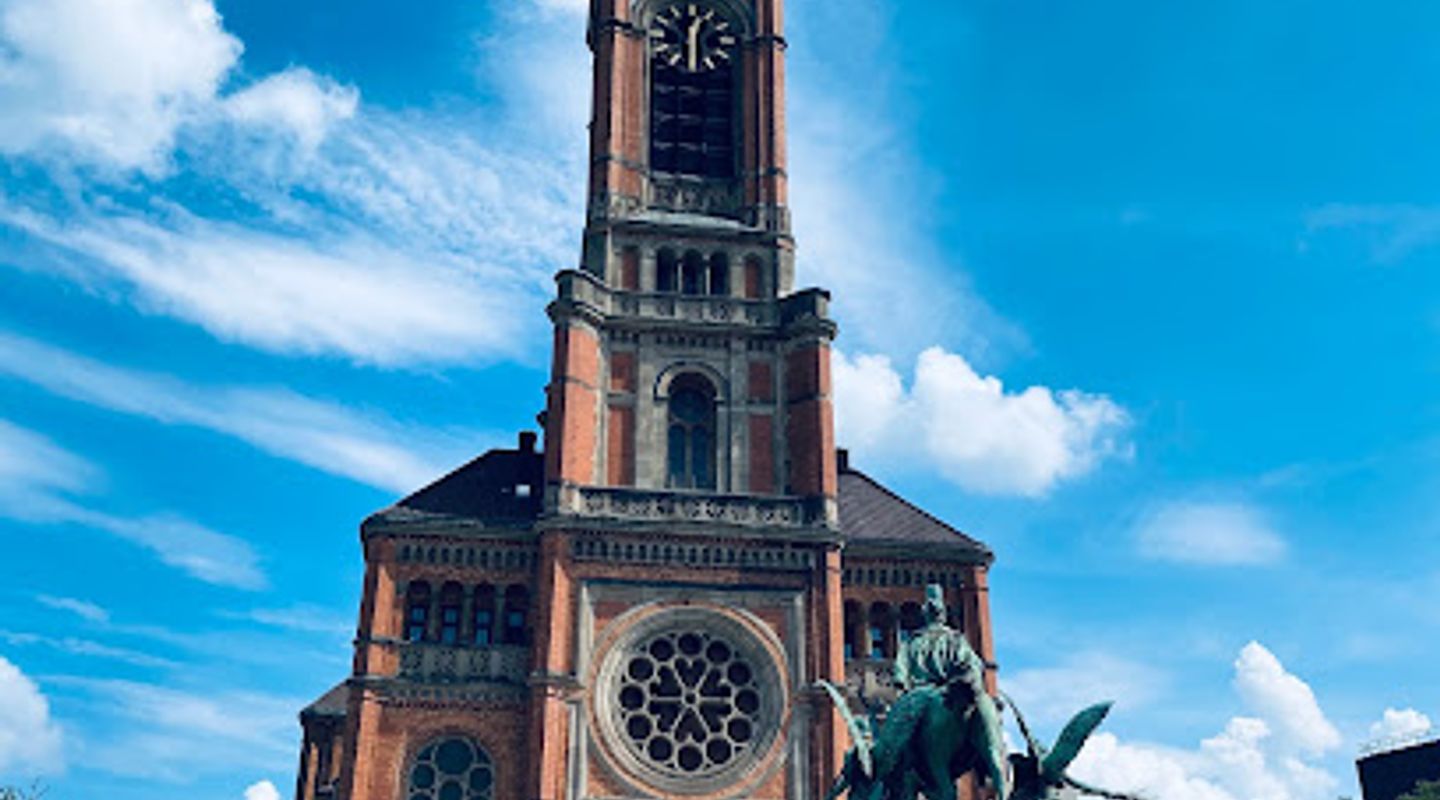
Bismarck Memorial, Dusseldorf Travel Guide
A historical landmark in Düsseldorf, the Bismarck Memorial commemorates Otto von Bismarck, the influential first Chancellor of the German Empire, reflecting a pivotal era in German unification.
The Bismarck Memorial in Düsseldorf is a bronze statue commemorating Otto von Bismarck, the first Chancellor of the German Empire. Erected in 1899, it originally stood in front of the Kunsthalle before being moved to Martin-Luther-Platz. The statue depicts Bismarck in a military coat with a Pickelhaube, symbolizing his role in German unification. Flanking the pedestal are allegorical figures representing the military and industrial strengths of the era. Today, the memorial serves as a reminder of Bismarck's complex legacy and the historical context of the late 19th century, offering visitors a glimpse into the period of German unification and industrial expansion. Its central location makes it easily accessible and a notable landmark within the city.
A brief summary to Bismarck Memorial
- Martin-Luther-Platz, Düsseldorf, Stadtbezirk 1, 40212, DE
- Click to display

Know before you go
Hi, I'm Eve. Here are a few practical things to know before exploring Bismarck Memorial.
- Combine your visit with a tour of the nearby Kaiser Wilhelm Monument and the historic Johanneskirche for a comprehensive exploration of Düsseldorf's historical landmarks.
- Take a moment to observe the allegorical figures on the pedestal, representing the military and industrial strengths of Bismarck's Germany.
- Visit during the day to fully appreciate the details of the bronze statue and its surroundings.
Do you manage this location?
Take control to get all the benefits, like improved information, better appearance, and stronger visibility across AI-powered discovery. Learn more about listing your business on Evendo
Activate your presenceOther nearby places you may find interesting
The closest places of the same kind, if this one is not quite what you had in mind.
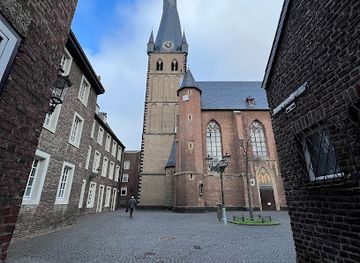
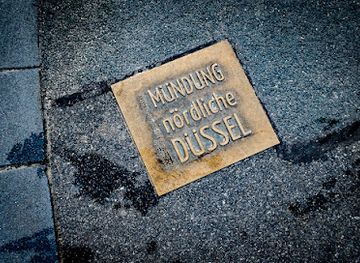
Explore Bismarck Memorial on the Map
A handpicked selection of must-see spots near Bismarck Memorial, mapped for you.
Getting There
-
Public Transport
The Bismarck Memorial is easily accessible via public transport. From Düsseldorf Hauptbahnhof (main station), take any of the U-Bahn lines U70, U74, U75, U76, U77, U78, or U79 to the Heinrich-Heine-Allee station. Alternatively, take the U71, U72, U73, or U83 to Schadowstraße station. From either station, it's a short walk to Martin-Luther-Platz. A single ticket for a short trip (Kurzstrecke) costs approximately €1.90.
-
Walking
From Königsallee, Düsseldorf's famous shopping street, walk north towards the Schadow Arkaden. Martin-Luther-Platz is located directly in front of the Schadow Arkaden. The Bismarck Memorial is situated on the square, near the Johanneskirche. This is a straightforward and pleasant walk through the city center.
-
Taxi/Ride-Share
A taxi or ride-share from Düsseldorf Hauptbahnhof to Martin-Luther-Platz will typically cost between €8 and €12, depending on traffic. The journey usually takes about 5-10 minutes. Be sure to specify 'Martin-Luther-Platz' as your destination.
-
Driving
If driving, be aware that parking in the immediate vicinity of Martin-Luther-Platz is limited. The Schadow Arkaden parking garage (Martin-Luther-Platz 26) offers convenient, though relatively expensive, parking. Expect to pay around €3 per hour, with a daily maximum of €30. Other nearby parking garages include Kö-Bogen (Königsallee 2) and Parkhaus KII/Schauspielhaus (Gustaf-Gründgens-Platz). Follow signs for 'Zentrum' and then for parking garages ('Parkhaus').
Discover more about Bismarck Memorial













Your all‑in‑one travel companion app
Explore expert travel guides, compare and book tours, experiences, hotels, and more—all from the palm of your hand. Download now for seamless trip planning wherever your wanderlust takes you.


Explore More of Dusseldorf
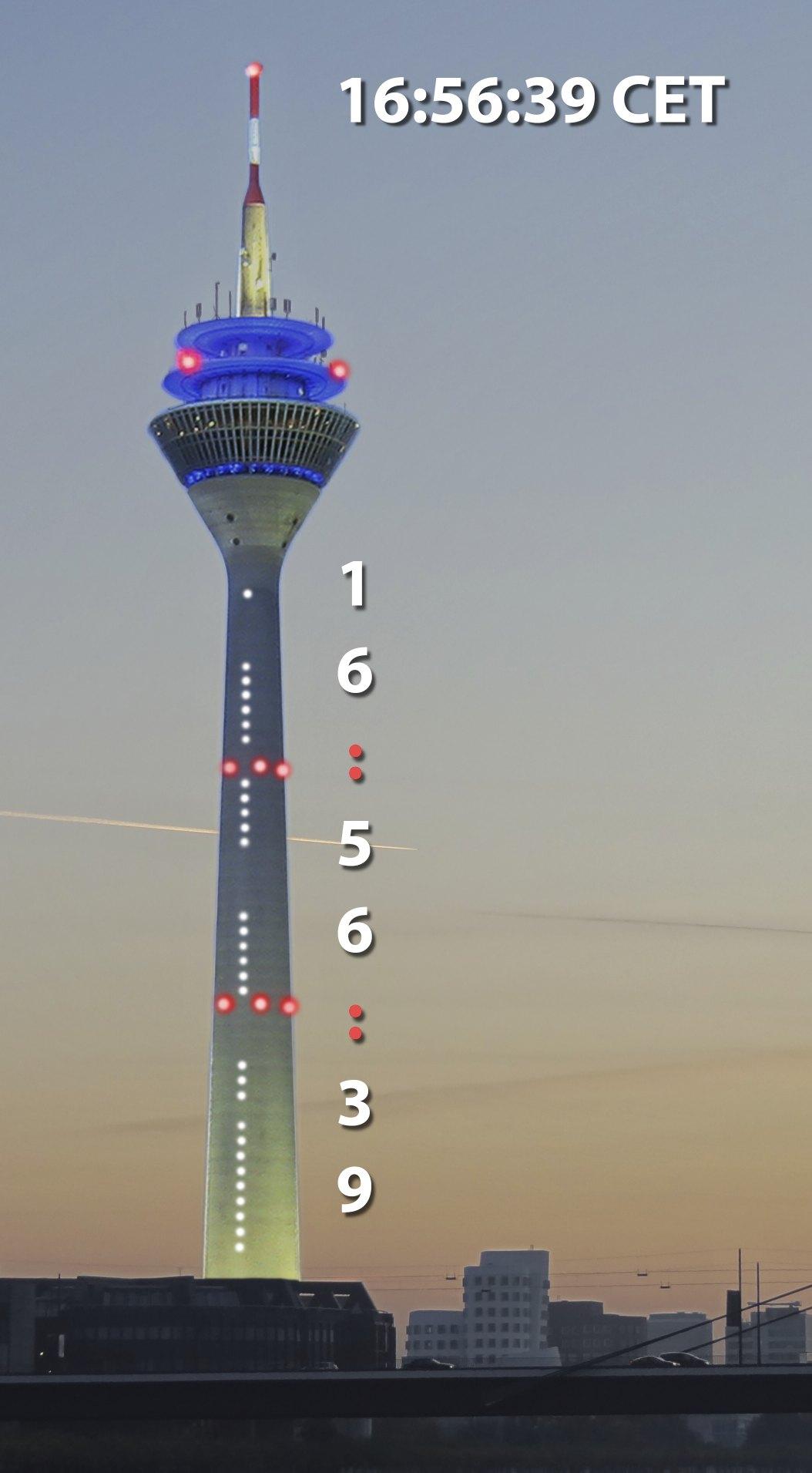
Looking beyond Bismarck Memorial? Discover Dusseldorf for broader travel guides, local hot-spots, and regional highlights.
Explore Dusseldorf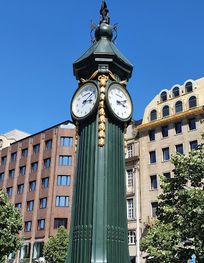
A timeless landmark on Düsseldorf's Königsallee, this iconic clock is a beloved meeting point and a symbol of the city's blend of luxury, history, and vibrant urban life.

Discover Düsseldorf's Martin-Luther-Platz: A serene urban oasis blending historical landmarks, vibrant events, and tranquil green spaces in the heart of the city, near Königsallee and the Rhine.
