Energiebunker, Hamburg Travel Guide
Free Guide: Explore Hamburg's Energiebunker: a WWII relic transformed into a renewable energy marvel with panoramic city views and a rooftop café, showcasing sustainable innovation.


A brief summary of Energiebunker
Explore Hamburg's Energiebunker: a WWII relic transformed into a renewable energy marvel with panoramic city views and a rooftop café, showcasing sustainable innovation.
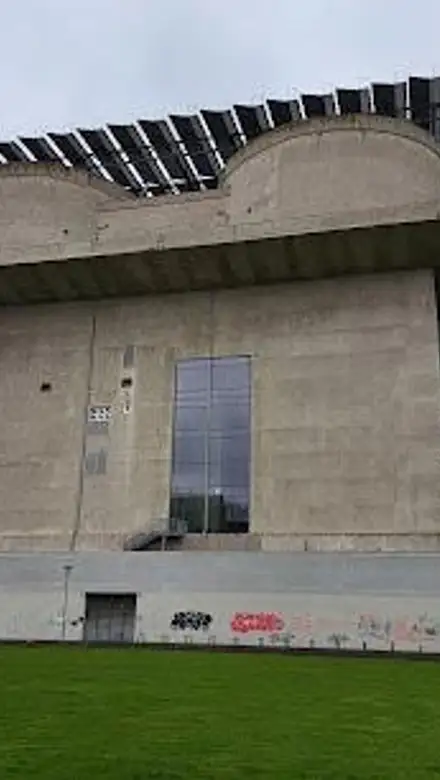
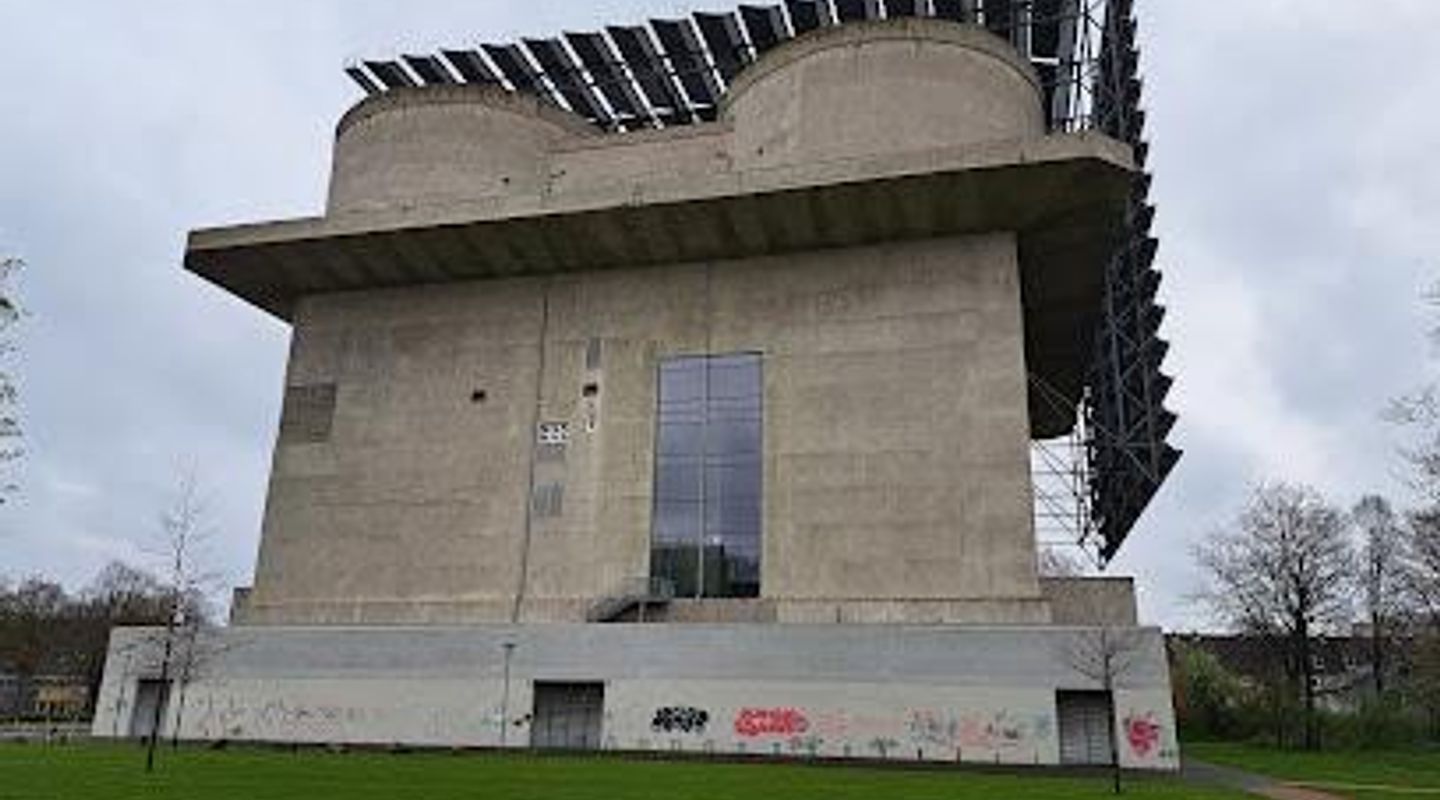
The Energiebunker in Hamburg's Wilhelmsburg district is a striking example of urban transformation, converting a massive World War II flak bunker into a cutting-edge renewable energy plant and a unique visitor attraction. Built in 1943, the bunker served as both an air-raid shelter and a military installation. After the war, attempts to demolish the imposing structure failed, leaving it abandoned for decades. Today, it stands as a symbol of Hamburg's commitment to sustainability, generating heat and electricity for the surrounding area using solar, biogas, wood chips, and waste heat. Visitors can explore the bunker's history through informative exhibits, ascend to the rooftop café for panoramic city views, and witness firsthand the innovative technologies driving Hamburg's green energy revolution. The Energiebunker offers a compelling blend of history, architecture, and environmental consciousness, making it a must-see destination for those interested in Hamburg's past and future.
Opening hours
- MonClosed
- TueClosed
- WedClosed
- ThuClosed
- FriClosed
- Sat11 am–6 pm
- Sun11 am–6 pm
Opening hours as listed on the venue’s Google Business Profile. Hours can change for services and special events, so check with the venue before you go.
- Address
- Neuhöfer Str. 17-7, 21107 Hamburg
- Website
Getting there
Public Transport
Taxi/Ride-Share
Ferry
Discover more about Energiebunker
Overview
The Energiebunker in Hamburg-Wilhelmsburg is more than just a historical landmark; it's a testament to innovative repurposing and a symbol of Hamburg's commitment to a sustainable future. Originally constructed in 1943, during the height of World War II, the massive concrete structure served as both a flak tower, housing anti-aircraft guns, and an air-raid shelter for thousands of civilians seeking refuge from Allied bombing raids. Its imposing presence was a statement of the Third Reich's perceived strength, a concrete behemoth designed to withstand the ravages of war. The bunker's construction, overseen by the Organisation Todt, involved the forced labor of prisoners of war and concentration camp inmates, a dark chapter in its history. The sheer scale of the building is staggering; its walls, several meters thick, required an immense amount of reinforced concrete. The Energiebunker was one of a pair of such towers in Hamburg, the other located in St. Pauli. These towers played a crucial role in the city's air defense, though they ultimately could not prevent the widespread destruction of Hamburg's harbor and residential areas. Following the war, the Allied forces sought to dismantle these symbols of Nazi power. However, the sheer size and robust construction of the Energiebunker made demolition impractical, as it would have endangered the surrounding residential buildings. Instead, the British Army opted to destroy the interior of the bunker through a controlled explosion in 1947, rendering it unusable for military purposes. For over six decades, the Energiebunker stood as a derelict monument, a haunting reminder of the war and a physical barrier within the Wilhelmsburg cityscape. The Internationale Bauausstellung (IBA) Hamburg, an international building exhibition held between 2006 and 2013, provided the impetus for the bunker's transformation. Recognizing its potential as a symbol of renewal and sustainability, the IBA initiated a project to convert the war relic into a renewable energy power plant. This ambitious undertaking involved clearing the rubble-filled interior, reinforcing the structure, and installing state-of-the-art energy generation and storage technologies. Today, the Energiebunker stands as a pioneering example of urban regeneration. It combines solar energy, biogas, wood chips, and waste heat from a nearby industrial plant to generate heat and electricity for the Reiherstieg district. The heart of the system is a massive two-million-liter water reservoir, acting as a thermal storage unit that buffers energy supply and demand. Solar panels adorn the bunker's roof and southern facade, capturing the sun's energy, while combined heat and power plants utilize biogas to produce both electricity and heat. The integration of these diverse energy sources allows the Energiebunker to supply a significant portion of the district's energy needs, reducing its carbon footprint and promoting a decentralized energy policy. Beyond its function as a power plant, the Energiebunker has become a popular visitor attraction. The
Evendo Review Centre
 Google
Guest reviews
Explore Energiebunker on the map
A handpicked selection of must-see spots near Energiebunker, mapped for you.
Get your free copy of our complete guide to Energiebunker, delivered straight to you.
Everything on this page, from opening hours and how to get there to Eve’s tips and the best time to go, in one PDF you can read offline, print or share.
Already have an account? Sign in
Your Energiebunker guide is ready.
We'll send it to · Not you? Sign out

Getting your guide ready…
We are putting together a fresh copy of the Energiebunker guide. This can take up to a minute.
This can take a few moments. If your browser asks, choose Allow so the download can start. You'll find the guide in your Downloads folder.
Nothing happened? Download it again
Sorry, the guide is taking longer than usual. Please try again in a minute, or get it by email instead.
Other nearby places you may find interesting
The closest places of the same kind, if this one is not quite what you had in mind.
-
-
-
-
-


Swipe for more places
More to explore near Energiebunker

 Best experiences near Energiebunker
 Best hotels near Energiebunker
 Best landmarks near Energiebunker
 Best attractions near Energiebunker
 Best shops near Energiebunker
 Best restaurants near Energiebunker
 Best bars near Energiebunker
Do you manage this location?
Take control to get all the benefits, like improved information, better appearance, and stronger visibility across AI-powered discovery.
Explore more

Explore more of Hamburg
Discover Hamburg: A vibrant port city blending rich maritime heritage, eclectic neighborhoods, and cultural treasures, offering unforgettable experiences for every traveler.
Explore Hamburg
Explore more of Germany
Experience Germany: where history meets innovation, and urban energy blends with natural beauty. Discover diverse cultures, delicious cuisine, and stunning landscapes.
Explore Germany