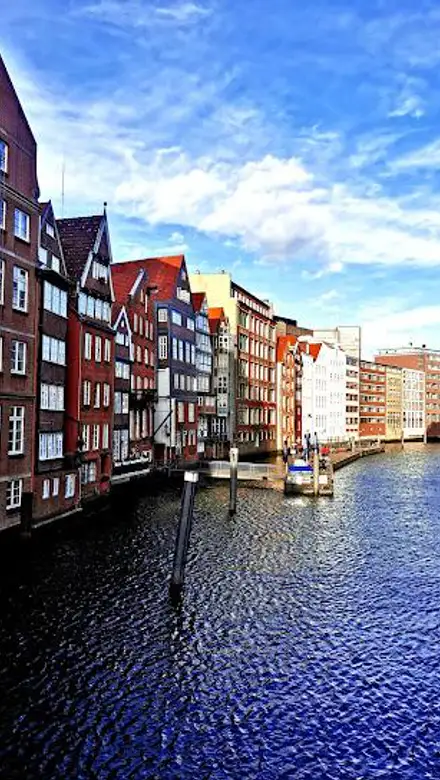
Hohe Brücke, Hamburg Travel Guide
Free Guide: Cross the historic Hohe Brücke in Hamburg's Old Town for stunning canal views and a glimpse into the city's rich maritime past, connecting you to the heart of Hamburg.


A brief summary of Hohe Brücke
Cross the historic Hohe Brücke in Hamburg's Old Town for stunning canal views and a glimpse into the city's rich maritime past, connecting you to the heart of Hamburg.
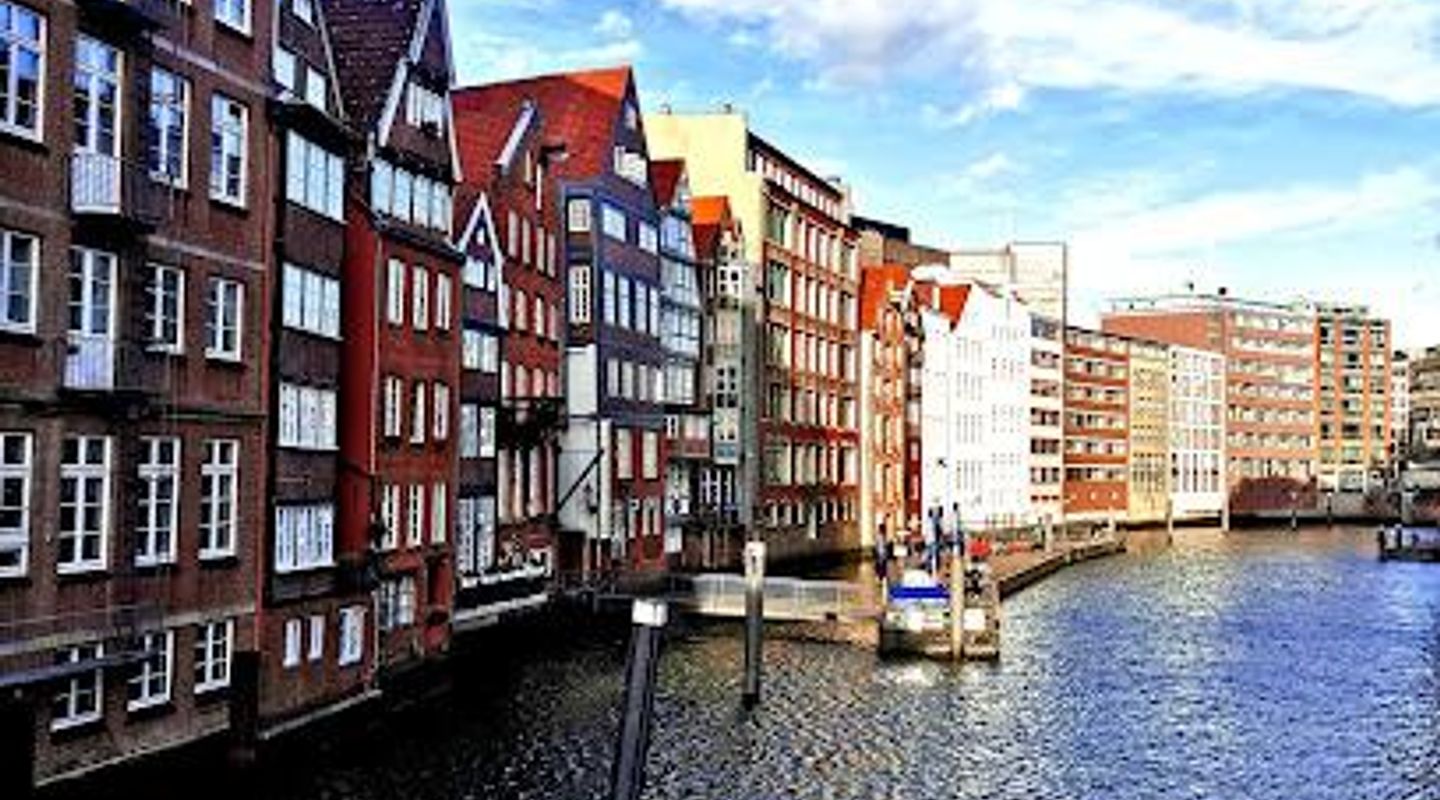
The Hohe Brücke, or High Bridge, is a historic bridge in Hamburg's Altstadt (Old Town), gracefully arching over the Nikolaifleet canal. Its origins trace back to a wooden bridge from the 13th century, later replaced by a stone structure. The current brick and granite bridge, adorned with wrought-iron lanterns, dates back to 1887, a time when the Speicherstadt warehouse district was being developed. The bridge's height allowed ships with masts to pass underneath, a crucial feature for Hamburg's bustling port. Today, it offers picturesque views of the Nikolaifleet and the surrounding historic buildings, serving as a reminder of Hamburg's rich maritime past and architectural evolution. It is a great place to take photos and enjoy the scenery of the canals.
- Address
- 20459 Hamburg
Getting there
Public Transport
Walking
Taxi/Ride-Share
Discover more about Hohe Brücke
Overview
The Hohe Brücke, a seemingly simple bridge in Hamburg, carries within it centuries of the city's vibrant history and maritime significance. Spanning the Nikolaifleet canal in the heart of Hamburg's Altstadt, this bridge is more than just a crossing point; it's a tangible link to the city's past, offering a glimpse into its evolution from a medieval trading hub to a modern metropolis. The bridge's story begins in the 13th century with a humble wooden structure that facilitated movement across the Nikolaifleet. As Hamburg grew in importance as a trading port, the need for a more robust crossing became apparent. In 1615, the wooden bridge was replaced by a stone construction, a testament to the city's increasing prosperity and ambition. However, this stone bridge was not to last, and by 1756, it had to be dismantled and replaced with a new wooden superstructure built upon the existing pillars. Throughout the centuries, the Hohe Brücke underwent numerous renovations and modifications, reflecting the changing needs of the city. In 1860, the roadway was paved, further solidifying its role as a vital transportation artery. However, the most significant transformation occurred in 1886 and 1887, during a period of intense development in Hamburg. As the Speicherstadt, the world's largest warehouse district, began to take shape, the Hohe Brücke was rebuilt in its current form. Designed by Franz Andreas Meyer, the new bridge was constructed with a brick facade, a granite balustrade, and ornate wrought-iron lanterns, reflecting the architectural style of the surrounding Speicherstadt. The name "Hohe Brücke," meaning "High Bridge," is derived from its elevated height, which was essential for allowing ships with masts to navigate the Nikolaifleet. This feature was crucial for Hamburg's maritime trade, as it enabled vessels to transport goods directly to the warehouses and businesses located along the canal. The bridge, therefore, played a vital role in facilitating the flow of commerce and contributing to Hamburg's economic success. Today, the Hohe Brücke stands as a testament to Hamburg's rich history and architectural heritage. Its location on the Nikolaifleet, the original nucleus of the Port of Hamburg, adds to its historical significance. The Nikolaifleet, which was designated as such in 1916, marks the spot where the development of the current Port of Hamburg began in 1188. The area between Holzbrücke and Hoher Brücke represents the last remaining section of the Fleet, showcasing the traditional architecture of old Hamburg. The narrow, tall fronts of the old outer dike houses on Deichstraße stand diagonally opposite those of four warehouses on Cremon. Only the foundations of the remaining historical Fleet buildings have been largely preserved. Until the 19th century, goods were loaded onto the warehouses here by waterway. Walking across the Hohe Brücke today, visitors can soak in the atmosphere of this historic area. The bridge offers stunning views of the Nikolaifleet, with its charming canals, historic buildings, and bustling activity. The nearby Speicherstadt, a UNESCO World Heritage Site, adds to the area's allure, with its impressive red-brick warehouses and intricate network of canals. The Hohe Brücke also provides easy access to other notable landmarks, such as St. Katharinen Church, a beautiful Baroque church that stands as a symbol of Hamburg's religious heritage. In addition to its historical and architectural significance, the Hohe Brücke also offers a glimpse into Hamburg's vibrant cultural scene. The area surrounding the bridge is home to numerous restaurants, cafes, and shops, offering a diverse range of culinary delights and retail experiences. Visitors can enjoy traditional German cuisine, sample international flavors, or browse through unique souvenirs and handicrafts. The Hohe Brücke is more than just a bridge; it is a living monument to Hamburg's past, present, and future. It is a place where history, architecture, culture, and commerce converge, offering visitors a unique and unforgettable experience. Whether you are a history buff, an architecture enthusiast, or simply looking for a picturesque spot to soak in the atmosphere of Hamburg, the Hohe Brücke is a must-see destination. After the North Sea flood of 1962, a barrier was built south of the bridge to protect the city from future flooding. South of the bridge, at house number 2, is a listed building built in 1887/88. The yellow brick building was used as a residence for a crane operator who operated four cranes that were a little further east. The New Crane from 1858 has been preserved of these.
Evendo Review Centre
 Google
Guest reviews
Explore Hohe Brücke on the map
A handpicked selection of must-see spots near Hohe Brücke, mapped for you.
Get your free copy of our complete guide to Hohe Brücke, delivered straight to you.
Everything on this page, from opening hours and how to get there to Eve’s tips and the best time to go, in one PDF you can read offline, print or share.
Already have an account? Sign in
Your Hohe Brücke guide is ready.
We'll send it to · Not you? Sign out

Getting your guide ready…
We are putting together a fresh copy of the Hohe Brücke guide. This can take up to a minute.
This can take a few moments. If your browser asks, choose Allow so the download can start. You'll find the guide in your Downloads folder.
Nothing happened? Download it again
Sorry, the guide is taking longer than usual. Please try again in a minute, or get it by email instead.
Unlock the best of Hohe Brücke
Skip-the-line tickets, guided tours with entry, and walking tours of the area, booked in a few clicks.


Other nearby places you may find interesting
The closest places of the same kind, if this one is not quite what you had in mind.
-
-
-
-
-


Swipe for more places
More to explore near Hohe Brücke

 Best experiences near Hohe Brücke
 Best hotels near Hohe Brücke
 Best landmarks near Hohe Brücke
 Best attractions near Hohe Brücke
 Best shops near Hohe Brücke
 Best restaurants near Hohe Brücke
 Best bars near Hohe Brücke
Do you manage this location?
Take control to get all the benefits, like improved information, better appearance, and stronger visibility across AI-powered discovery.
Explore more

Explore more of Hamburg
Discover Hamburg: A vibrant port city blending rich maritime heritage, eclectic neighborhoods, and cultural treasures, offering unforgettable experiences for every traveler.
Explore Hamburg
Explore more of Germany
Experience Germany: where history meets innovation, and urban energy blends with natural beauty. Discover diverse cultures, delicious cuisine, and stunning landscapes.
Explore Germany