Background

Joseph-Görres Monument: A Homage to a Koblenz Son

Discover the Joseph-Görres Monument in Koblenz: a tribute to a visionary journalist and a symbol of German intellectual history, nestled in the scenic Kaiserin-Augusta-Anlagen along the Rhine.

4.4

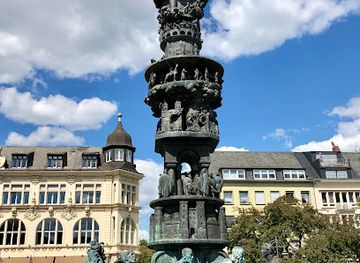
The Joseph-Görres Monument, nestled within Koblenz's scenic Kaiserin-Augusta-Anlagen, commemorates Johann Joseph Görres, a prominent figure in German journalism and political thought. Born in Koblenz in 1776, Görres significantly impacted the intellectual landscape of the 19th century. The monument, a bronze sculpture erected in 1928, portrays Görres as a youthful figure gazing towards the Rhine, symbolizing his advocacy for a free and unified Germany. Surrounded by lush greenery and situated near the Electoral Palace, the monument offers a serene space for reflection on Görres's legacy and the historical context of Koblenz. It stands as a testament to the city's rich cultural heritage and its connection to influential figures who shaped German history. Visitors can appreciate the artistry of the sculpture, the tranquility of the surrounding gardens, and the monument's symbolic representation of Görres's ideals. The monument serves as a reminder of the importance of freedom of expression and the pursuit of justice, values that remain relevant today.

A brief summary to Joseph-Görres-Denkmal

Local tips

  • Visit early in the morning or late afternoon for the best lighting for photographs of the monument and the surrounding gardens.
  • Combine your visit with a stroll through the Kaiserin-Augusta-Anlagen to fully appreciate the beauty of the park and its other attractions.
  • Take a guided tour of Koblenz to learn more about the history of the city and the significance of the Joseph-Görres Monument.
widget icon

Getting There

  • Walking

    From Koblenz city center (e.g., Görresplatz), the Joseph-Görres-Denkmal is easily accessible by foot. Head east towards the Rhine River and follow the Kaiserin-Augusta-Anlagen promenade south. The monument is located behind the Kurfürstliches Schloss (Electoral Palace), approximately a 15-20 minute walk. The path is flat and well-maintained.

  • Public Transport

    If arriving by public transport, take a bus to the 'Bastion' stop, which is the closest to the Kaiserin-Augusta-Anlagen. From there, walk south along the Rhine promenade for about 5 minutes until you reach the Kurfürstliches Schloss. The Joseph-Görres-Denkmal is located behind the palace. A single bus fare within Koblenz is approximately €2.80. Alternatively, the KoblenzCard offers free travel on buses within the city.

  • Taxi/Ride-Share

    A taxi or ride-share from Koblenz city center to the Kaiserin-Augusta-Anlagen and the Joseph-Görres-Denkmal will cost approximately €8-€12, depending on traffic. Ask the driver to drop you off near the Kurfürstliches Schloss.

  • Driving

    If driving, parking is available along the Kaiserin-Augusta-Anlagen. However, spaces can be limited, especially during peak season. Parking fees vary, but expect to pay around €2-€3 per hour. Consider parking in the Moltkestrasse area and walking a short distance to the monument. Free parking is available on weekdays after 5 PM and on weekends at the parking area Traubenträgerbrunnen, a 10-minute walk away.

Unlock the Best of Joseph-Görres-Denkmal

Buy tickets

    No tickets available

Book tours with entry

    No tours available

Book tours without entry

    No tours available

Discover more about Joseph-Görres-Denkmal

The Joseph-Görres Monument, prominently situated within the Kaiserin-Augusta-Anlagen in Koblenz, stands as a lasting tribute to Johann Joseph Görres, a Koblenz native who rose to prominence as a pivotal figure in German journalism, political philosophy, and the broader intellectual discourse of the 19th century. Born in 1776, Görres's life and work were deeply intertwined with the political and social upheavals of his time, leaving an indelible mark on the development of German national identity and the pursuit of liberal ideals. The monument itself, unveiled on June 24, 1928, is a striking bronze sculpture crafted by the Düsseldorf sculptor Richard Langer. It depicts Görres as a young man, his gaze fixed upon the flowing waters of the Rhine River. In his left hand, he holds a book close to his chest, while his right arm is raised in a gesture that suggests both contemplation and a call to action. This pose encapsulates Görres's dual role as a scholar and a passionate advocate for social and political change. The choice of location for the monument is particularly significant. It stands behind the Kurfürstliches Schloss (Electoral Palace) within the Rheinanlagen, a picturesque park that stretches along the Rhine's bank. This placement connects Görres to the historical context of Koblenz, a city that served as a crossroads of political and cultural influences for centuries. The monument's proximity to the Rhine, a vital artery of trade and communication, further emphasizes Görres's vision of a unified and prosperous Germany. The base of the sculpture is constructed from Rochlitzer Porphyr, a reddish-purple stone that adds to the monument's visual appeal. A bronze medallion featuring Görres's profile is affixed to the base, bearing the inscription "Der Rhein ist Teutschlands hochschlagende Pulsader" ("The Rhine is Germany's high-beating artery"). This inscription encapsulates Görres's deep connection to the Rhineland and his belief in the river's importance to German national identity. Görres's life was marked by intellectual curiosity and a commitment to public service. He initially worked as a teacher in Koblenz before embracing journalism as a means of disseminating his ideas. In 1814, he founded the Rheinischer Merkur, a newspaper that quickly gained influence due to its critical analysis of political events and its advocacy for greater freedom of expression. The Rheinischer Merkur became a platform for leading intellectuals and reformers, earning Görres both admiration and the ire of conservative authorities. His advocacy for a constitution and popular representation led to increasing scrutiny, and in 1816, the Prussian government suppressed the Rheinischer Merkur. Facing persecution, Görres fled to Switzerland and later accepted a professorship at the University of Munich. Despite the challenges he faced, Görres remained a prolific writer and thinker, exploring themes of history, mythology, and Christian mysticism. The Joseph-Görres Monument serves as a focal point within the Kaiserin-Augusta-Anlagen, a park designed in the mid-19th century by Peter Joseph Lenné, a renowned landscape architect. The park's gardens, promenades, and scenic vistas provide a tranquil setting for visitors to reflect on Görres's legacy and the historical context of Koblenz. The monument is also situated near the Schlossstufen, a series of steps leading down to the Rhine, offering panoramic views of the river and the Ehrenbreitstein Fortress on the opposite bank. The monument's location within the Rheinanlagen makes it easily accessible to visitors exploring Koblenz. The park is a popular destination for locals and tourists alike, offering a respite from the bustle of the city. The Joseph-Görres Monument stands as a reminder of the importance of freedom of expression and the pursuit of justice, values that remain relevant in contemporary society. It invites visitors to engage with the intellectual and political history of Germany and to consider the role of individuals in shaping the course of events. Visiting the Joseph-Görres Monument offers a multifaceted experience. It is an opportunity to appreciate the artistry of Richard Langer's sculpture, to immerse oneself in the tranquility of the Kaiserin-Augusta-Anlagen, and to learn about the life and work of Johann Joseph Görres. The monument serves as a tangible link to the past, connecting visitors to the intellectual and political currents that shaped modern Germany. It is a place for reflection, contemplation, and a celebration of the enduring power of ideas. Beyond its historical and cultural significance, the Joseph-Görres Monument also offers practical benefits to visitors. Its central location within Koblenz makes it easily accessible by public transportation and on foot. The surrounding park provides ample opportunities for relaxation and recreation, making it an ideal destination for families, couples, and solo travelers alike. The monument is also situated near other notable landmarks, such as the Electoral Palace and the Deutsches Eck, allowing visitors to combine their visit with other sightseeing activities. The Joseph-Görres Monument is more than just a statue; it is a symbol of Koblenz's rich cultural heritage and its connection to influential figures who shaped German history. It is a place where visitors can connect with the past, appreciate the present, and contemplate the future. Whether you are a history buff, an art enthusiast, or simply seeking a peaceful escape, the Joseph-Görres Monument is a destination that will leave a lasting impression.

Popular Experiences near Joseph-Görres-Denkmal

Popular Hotels near Joseph-Görres-Denkmal

Select Currency