

Schwerin Castle Travel Guide
Free Guide: Discover Schwerin Castle, the 'Neuschwanstein of the North,' a fairytale palace on an island with opulent interiors, stunning gardens, and centuries of captivating history.


A brief summary of Schwerin Castle
Discover Schwerin Castle, the 'Neuschwanstein of the North,' a fairytale palace on an island with opulent interiors, stunning gardens, and centuries of captivating history.
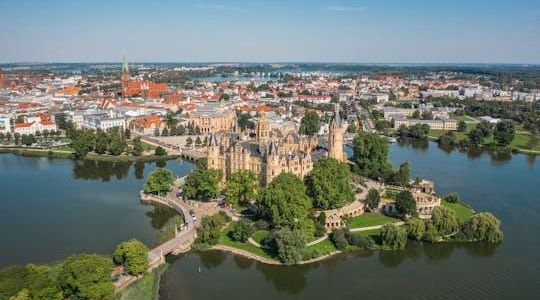
Schwerin Castle, often dubbed the "Neuschwanstein of the North," is a breathtaking palace on an island in Lake Schwerin. Its stunning architecture, a blend of Gothic Revival, Renaissance, and Baroque styles, creates a fairytale ambiance. Originally a Slavic fortress dating back to the 10th century, the castle evolved over centuries into the magnificent structure seen today. It served as a residence for the Dukes and Grand Dukes of Mecklenburg and now houses the Mecklenburg-Vorpommern state parliament and a museum. Visitors can explore opulent rooms, admire art collections, and stroll through the beautiful gardens, making it a must-see destination in northern Germany. The castle's reflection shimmering on the lake is an iconic image, embodying romance and history.
Opening hours
- MonClosed
- Tue10 am–6 pm
- Wed10 am–6 pm
- Thu10 am–6 pm
- Fri10 am–6 pm
- Sat10 am–6 pm
- Sun10 am–6 pm
Opening hours as listed on the venue’s Google Business Profile. Hours can change for services and special events, so check with the venue before you go.
- Address
- Lennéstraße 1, 19053 Schwerin
- Phone
- Website
Getting there
Walking
Public Transport
Taxi/Ride-Share
Driving
Discover more about Schwerin Castle
Overview
Schwerin Castle, a jewel of Mecklenburg-Vorpommern, stands majestically on an island in Lake Schwerin, captivating visitors with its fairytale charm and rich history. Often called the "Neuschwanstein of the North," this iconic palace is a masterpiece of architectural fusion, blending Gothic Revival, Renaissance, and Baroque elements into a harmonious and visually stunning whole. The castle's origins trace back to the Slavic Middle Ages, with the first fortress on the island documented in 942. This early stronghold was built by the Obotrites, a Slavic tribe who ruled the Mecklenburg region. In 1160, Henry the Lion, Duke of Bavaria and Saxony, conquered the area, marking a significant turning point in the castle's history. He erected a new fortress on the same site, laying the foundation for what would eventually become Schwerin Castle. Over the centuries, the castle underwent numerous transformations, reflecting the changing tastes and power dynamics of the region. It served as a ducal residence, witnessing periods of prosperity, conflict, and architectural innovation. In the 16th century, Duke Johann Albrecht I initiated significant construction, incorporating Renaissance styles into the existing structure. However, the Thirty Years' War brought these efforts to a halt. The castle's present appearance largely dates back to the 19th century, when Grand Duke Frederick Francis II commissioned a comprehensive reconstruction between 1845 and 1857. Inspired by French Renaissance architecture, particularly the Château de Chambord in the Loire Valley, the Grand Duke transformed Schwerin Castle into a symbol of his dynasty's power and prestige. The result was a romantic and imposing palace with numerous towers, turrets, and ornate details. Today, Schwerin Castle serves a dual purpose. It is the seat of the Mecklenburg-Vorpommern state parliament, representing the region's political heart. Additionally, a significant portion of the castle is open to the public as a museum, allowing visitors to explore its opulent interiors and learn about its fascinating history. The castle's interior is as impressive as its exterior. The museum showcases a vast collection of paintings, sculptures, and historical artifacts, providing insights into the lives of the dukes and grand dukes who once resided here. Highlights include the throne room, adorned with gilded cast-iron and marble, and the ancestral gallery, displaying portraits of Mecklenburg's rulers. The porcelain collection and the silver chamber are also notable attractions, showcasing exquisite craftsmanship and artistry. Beyond the castle walls, the surrounding gardens offer a tranquil escape. Designed in the style of an English landscape garden, the expansive parkland features winding pathways, charming gazebos, and meticulously manicured flower beds. The gardens provide stunning views of the castle from various angles, enhancing the overall visitor experience. The Orangery, a delicate construction of cast iron and glass, is another architectural gem within the gardens. Schwerin Castle is not only a historical monument but also a cultural hub. Throughout the year, the castle and its gardens host various events, including concerts, festivals, and exhibitions. These events add to the castle's vibrant atmosphere and attract visitors from near and far. One of the unique aspects of Schwerin Castle is the legend of Petermännchen, the castle's friendly ghost. According to local folklore, Petermännchen roams the castle halls, identifiable by his 17th-century attire and jingling keys. While sightings are rare, the legend adds a touch of mystery and intrigue to the castle's already captivating story. Visiting Schwerin Castle is an immersive experience that combines history, architecture, art, and natural beauty. Whether you're exploring the opulent interiors, strolling through the picturesque gardens, or simply admiring the castle's reflection on the lake, Schwerin Castle is sure to leave a lasting impression. The castle is open to visitors from Tuesday to Sunday. From mid-April to mid-October, the opening hours are from 10 am to 6 pm. From mid-October to mid-April, the opening hours are from 10 am to 5 pm. The castle is closed on Mondays. The admission fee for adults is €8.50. Reduced admission is €6.50. Children under 18 years have free admission. Audio guides are available for €2.00. Schwerin Castle is easily accessible by various modes of transportation. The closest train stations, Schwerin Mitte and Schwerin Central Station, are both a 20-minute walk from the castle. A bus line also operates to Schwerin Central Station. If you prefer to drive, there are ample parking facilities near the castle. Whether you're a history enthusiast, an architecture lover, or simply seeking a fairytale escape, Schwerin Castle is a destination that should not be missed. Its stunning beauty, rich history, and cultural significance make it a true gem of northern Germany.
Evendo Review Centre
 Google
Guest reviews
Explore Schwerin Castle on the map
A handpicked selection of must-see spots near Schwerin Castle, mapped for you.
Get your free copy of our complete guide to Schwerin Castle, delivered straight to you.
Everything on this page, from opening hours and how to get there to Eve’s tips and the best time to go, in one PDF you can read offline, print or share.
Already have an account? Sign in
Your Schwerin Castle guide is ready.
We'll send it to · Not you? Sign out

Getting your guide ready…
We are putting together a fresh copy of the Schwerin Castle guide. This can take up to a minute.
This can take a few moments. If your browser asks, choose Allow so the download can start. You'll find the guide in your Downloads folder.
Nothing happened? Download it again
Sorry, the guide is taking longer than usual. Please try again in a minute, or get it by email instead.
Unlock the best of Schwerin Castle
Skip-the-line tickets, guided tours with entry, and walking tours of the area, booked in a few clicks.


Other nearby places you may find interesting
The closest places of the same kind, if this one is not quite what you had in mind.
-
-
-
-
-


Swipe for more places
More to explore near Schwerin Castle

 Best experiences near Schwerin Castle
 Best hotels near Schwerin Castle
 Best landmarks near Schwerin Castle
 Best attractions near Schwerin Castle
 Best shops near Schwerin Castle
 Best restaurants near Schwerin Castle
 Best bars near Schwerin Castle
Do you manage this location?
Take control to get all the benefits, like improved information, better appearance, and stronger visibility across AI-powered discovery.
Explore more

Explore more of Mecklenburg
Discover the serene landscapes, historical treasures, and outdoor adventures of Mecklenburg, Germany's hidden gem in the northeast.
Explore Mecklenburg
Explore more of Germany
Experience Germany: where history meets innovation, and urban energy blends with natural beauty. Discover diverse cultures, delicious cuisine, and stunning landscapes.
Explore Germany
