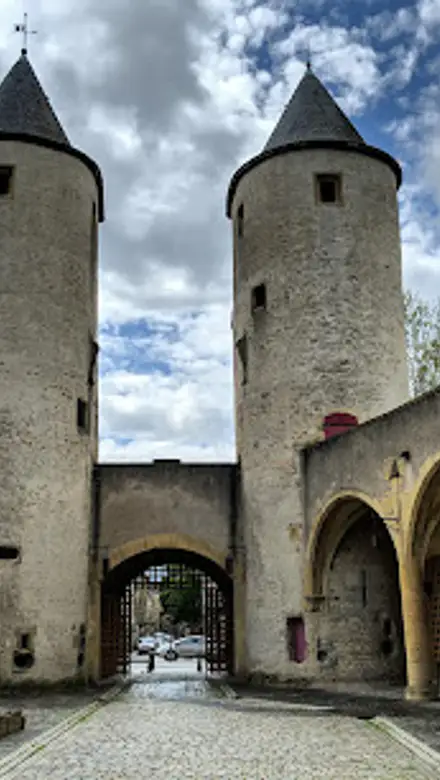
German Gate Travel Guide
Free Guide: Explore the German Gate in Metz, a medieval marvel blending Gothic architecture with centuries of military history, offering scenic river views and cultural insights.


A brief summary of German Gate
Explore the German Gate in Metz, a medieval marvel blending Gothic architecture with centuries of military history, offering scenic river views and cultural insights.
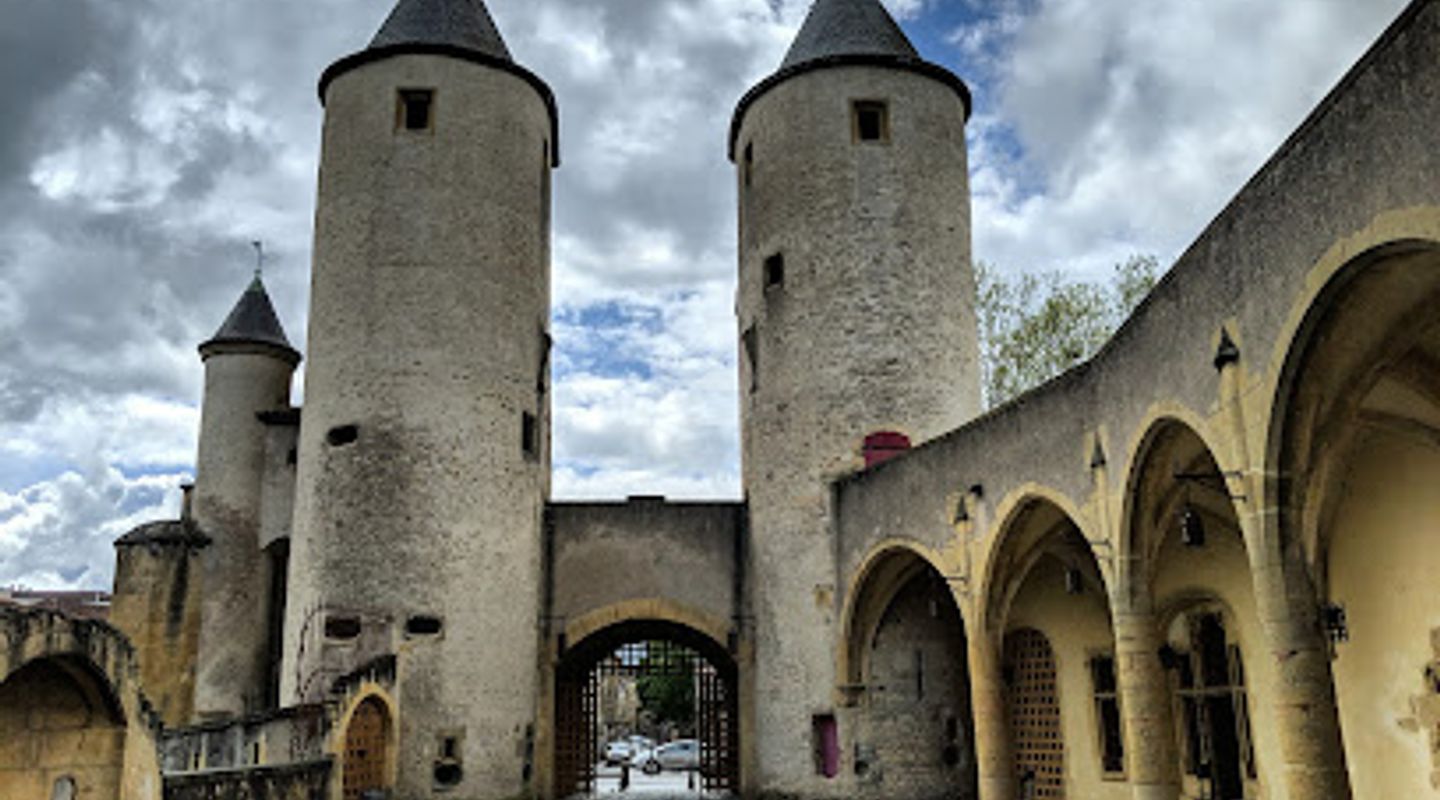
The German Gate (Porte des Allemands) in Metz is a remarkable medieval bridge castle and city gate, a relic of the city's fortifications. Dating back to the 13th century, with later additions in the 15th century, it stands as the most significant remaining structure of the medieval ramparts. Named after the Teutonic Knights who founded a nearby hospital, the gate served a crucial defensive role throughout Metz's history. Its imposing architecture, featuring round towers and gun bastions, offers a glimpse into the city's military past. Visitors can explore the gate, walk across the bridge spanning the Seille River, and enjoy scenic views of the surrounding area. The German Gate is not only a historical monument but also an important cultural landmark, symbolizing Metz's complex heritage and strategic importance. Today, it hosts exhibitions and guided tours, providing insights into its rich history and architectural significance. A visit to the German Gate is a journey through time, offering a unique perspective on Metz's enduring connection to European history.
Opening hours
- MonClosed
- Tue2 pm–7 pm
- Wed2 pm–7 pm
- Thu2 pm–7 pm
- Fri2 pm–7 pm
- Sat2 pm–7 pm
- Sun2 pm–7 pm
Opening hours as listed on the venue’s Google Business Profile. Hours can change for services and special events, so check with the venue before you go.
- Address
- Bd André Maginot, 57000 Metz, France
- Phone
- Website
Getting there
Walking
Public Transport
Taxi/Ride-Share
Driving
Discover more about German Gate
Overview
The German Gate, or Porte des Allemands, in Metz, France, is a captivating historical monument that vividly narrates the city's medieval and military past. Situated along the banks of the River Seille, this imposing structure has been an iconic feature of Metz for centuries, serving as a crucial entry point into the fortified city. Its name derives from the Teutonic Knights, also known as the Hospitaller Brothers of Our Lady of the Germans, who established a hospital nearby in the 13th century. Constructed in the 13th century as part of Metz's defensive walls, the German Gate was designed to protect the city from invaders and secure its strategic position. Today, it stands as an architectural landmark that encapsulates Metz's rich and complex history, from its Roman origins to its time as part of the German Empire and its eventual re-incorporation into France. The gate exemplifies medieval military architecture, blending defensive design with Gothic aesthetics. Its robust structure comprises thick stone walls, a series of towers, and a central archway that facilitated passage through the city's fortifications. The gate's two large round towers, rising high above the landscape, functioned as both defensive structures and watchtowers, enabling soldiers to monitor potential threats. These towers are connected by a stone bridge spanning a moat, adding to the gate's imposing presence. Visitors can still traverse this bridge and explore the surrounding area, gaining firsthand experience of its historical significance. Throughout its history, the German Gate has witnessed the changing tides of Metz's political and military landscape. During the Middle Ages, it played a central role in safeguarding the city from invasions. In the 19th and 20th centuries, the gate gained further significance when Metz became part of the German Empire following the Franco-Prussian War. This period saw extensive military fortifications and the construction of new defensive structures in the region. Despite these shifts in power, the German Gate has remained a symbol of Metz's resilience and its connection to both French and German heritage. The German Gate is not merely a relic of the past; it is a living monument that continues to resonate with visitors. The site often hosts exhibitions and cultural events, providing insights into its history and architectural features. Guided tours are available, offering in-depth knowledge about the gate's construction, its role in various historical events, and its significance to the city of Metz. Walking along the ramparts and exploring the gate's surroundings offers panoramic views of the River Seille and the adjacent gardens, creating a serene and picturesque experience. The blend of historical architecture and natural beauty makes the German Gate a unique and compelling destination. The German Gate's architecture is a testament to the ingenuity and craftsmanship of the medieval period. The gate's design reflects the military strategies of the time, with its thick walls, towers, and strategic placement along the river. The Gothic elements add an aesthetic appeal, making it a visually striking structure. Visiting the German Gate provides a tangible connection to Metz's past, allowing visitors to step back in time and imagine the city during its medieval heyday. The site is easily accessible from the city center, making it a convenient and essential stop for anyone exploring Metz's historical heart. The German Gate stands as a reminder of Metz's complex past and its enduring connection to European history. A visit to this iconic structure offers a fascinating journey through time, providing insight into the city's strategic importance and cultural heritage. The German Gate is more than just a monument; it is a symbol of Metz's identity and its place in the broader narrative of European history. Today, the German Gate is a popular tourist attraction and an essential stop for anyone exploring the historic heart of Metz. Located near the city center, it is easily accessible for visitors looking to delve into the city's past. The surrounding area is also home to scenic views of the Moselle River, making it an ideal spot for leisurely walks and photography. The German Gate is not only a significant historical monument but also an important cultural landmark in Metz. It remains a powerful reminder of the city's complex past and its enduring connection to European history. A visit to this iconic structure offers a fascinating journey through time, providing insight into the city's strategic importance and cultural heritage.
Evendo Review Centre
 Google
Guest reviews
Explore German Gate on the map
A handpicked selection of must-see spots near German Gate, mapped for you.
Get your free copy of our complete guide to German Gate, delivered straight to you.
Everything on this page, from opening hours and how to get there to Eve’s tips and the best time to go, in one PDF you can read offline, print or share.
Already have an account? Sign in
Your German Gate guide is ready.
We'll send it to · Not you? Sign out

Getting your guide ready…
We are putting together a fresh copy of the German Gate guide. This can take up to a minute.
This can take a few moments. If your browser asks, choose Allow so the download can start. You'll find the guide in your Downloads folder.
Nothing happened? Download it again
Sorry, the guide is taking longer than usual. Please try again in a minute, or get it by email instead.
Unlock the best of German Gate
Skip-the-line tickets, guided tours with entry, and walking tours of the area, booked in a few clicks.


Other nearby places you may find interesting
The closest places of the same kind, if this one is not quite what you had in mind.
-
-
-
-
-


Swipe for more places
More to explore near German Gate

 Best experiences near German Gate
 Best hotels near German Gate
 Best landmarks near German Gate
 Best attractions near German Gate
 Best shops near German Gate
 Best restaurants near German Gate
 Best bars near German Gate
Do you manage this location?
Take control to get all the benefits, like improved information, better appearance, and stronger visibility across AI-powered discovery.
Explore more

Explore more of Moselle
Discover the Moselle Valley in Germany: a scenic paradise of vineyards, historic castles, and charming villages nestled along the serene Moselle River.
Explore Moselle
Explore more of Germany
Experience Germany: where history meets innovation, and urban energy blends with natural beauty. Discover diverse cultures, delicious cuisine, and stunning landscapes.
Explore Germany