

Oberammergau Travel Guide - Free Web & App
Your ultimate guide to Oberammergau. Discover top landmarks, proposed trips, and local tips. Free on the web or via the Evendo companion app.


Discover Oberammergau, a Bavarian village of historic tradition, captivating art, and stunning alpine landscapes, perfect for cultural enthusiasts and nature lovers alike.
Read more about Oberammergau
When is the best time to visit Oberammergau?
Best: June–August · 21–23°C| Month | High (°C) | Rainfall (mm) |
|---|---|---|
| January | 3 | 40 |
| February | 4 | 40 |
| March | 9 | 50 |
| April | 13 | 50 |
| May | 18 | 60 |
| June (best) | 21 | 70 |
| July (best) | 23 | 80 |
| August (best) | 22 | 80 |
| September | 18 | 70 |
| October | 13 | 60 |
| November | 8 | 50 |
| December | 4 | 40 |
Getting to and around Oberammergau
How to get there
Transportation
Best attractions in Oberammergau
Oberammergau, a picturesque village in Germany, is a treasure trove of history and culture waiting to be explored. From the world-renowned Passion Play to the charming frescoed houses and traditional woodcarving workshops, visitors are immersed in the rich heritage of this Bavarian town. Take a leisurely stroll through the cobblestone streets, marvel at the intricate designs of the Lüftlmalerei, and sample delicious local cuisine at cozy restaurants. Nature lovers can hike through the surrounding Alps or take a scenic drive to nearby castles and lakes. With its unique blend of art, history, and natural beauty, Oberammergau offers a truly unforgettable experience for travelers of all interests.
-
Tourist attraction
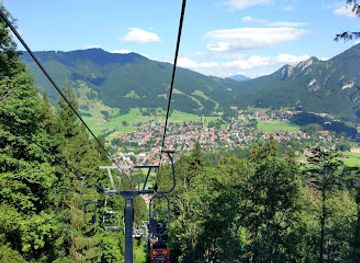
Kolbensesselbahn
Explore the stunning Bavarian Alps at Kolbensesselbahn, a premier mountain cable car attraction offering thrilling outdoor adventures year-round.
-
Tourist attraction
Reptilienhaus/Zoo Oberammergau
Explore the enchanting world of reptiles at Reptilienhaus Zoo Oberammergau, a family-friendly attraction in the heart of Bavaria, showcasing exotic wildlife.
-
Tourist attraction
Schleifmühlklamm
Explore the stunning landscapes of Schleifmühlklamm, a breathtaking gorge in Unterammergau, perfect for nature lovers and adventurous spirits.
-
Tourist attraction
Ettaler Weidmoos
Explore Ettaler Weidmoos, a serene nature preserve in Bavaria, perfect for hiking, biking, and connecting with nature.


Best landmarks in Oberammergau
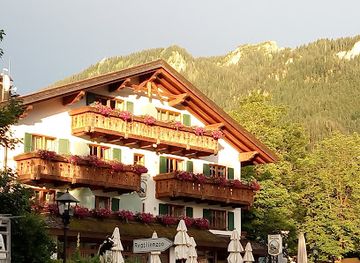
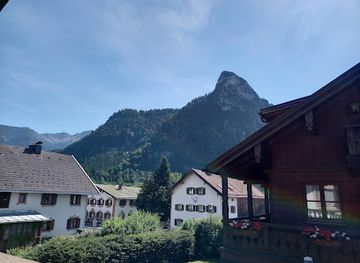
Oberammergau offers visitors a captivating mix of historical and cultural landmarks. From the world-renowned Passion Play theater to the beautifully painted frescoes on every building, the town is a visual feast for the eyes. Explore the intricate woodcarvings at the Pilatushaus, visit the Ettal Abbey with its stunning Baroque architecture, or take a leisurely stroll through the lush Kofel mountain trails. Don't miss the opportunity to witness the traditional craft of woodcarving at local workshops or indulge in delicious Bavarian cuisine at charming cafes and restaurants. Oberammergau is a destination that seamlessly blends history, art, and natural beauty, promising an unforgettable experience for every visitor.
-
Performing arts theater
Oberammergauer Passionstheater
Discover the Oberammergauer Passion Theater, a cultural landmark in Bavaria renowned for its historical Passion Play and stunning performances set against the Alps.
-
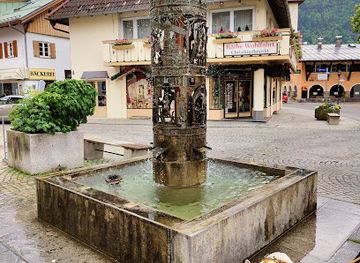
Historical landmark
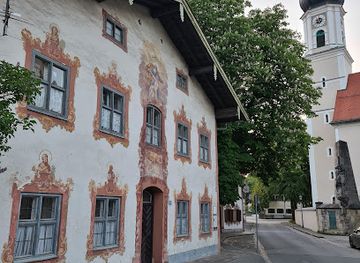
Oberammergau Zentrum
Discover the enchanting Oberammergau Zentrum, a historical landmark in the Bavarian Alps, known for its stunning frescoes, vibrant culture, and rich traditions.
-
Mountain cable car
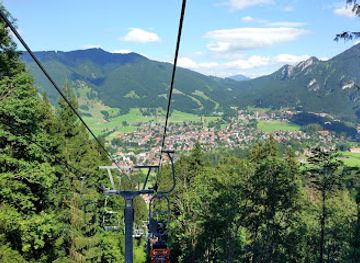
Kolbensesselbahn
Discover breathtaking views and thrilling adventures at Kolbensesselbahn, the ultimate alpine cable car experience in Oberammergau.
-
Restaurant
Ammergauer Maxbräu
Experience authentic Bavarian cuisine and locally brewed beers at Ammergauer Maxbräu, a must-visit restaurant in Oberammergau.
Explore Oberammergau on the map
Plan your trip on one map. See where the top attractions, landmarks, restaurants and hotels are, and book hotels and experiences in a few clicks.
Best hotels in Oberammergau
Best restaurants in Oberammergau
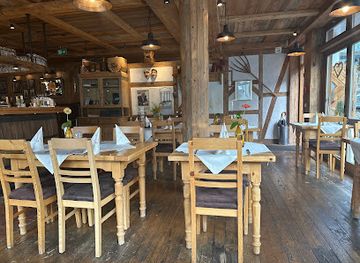
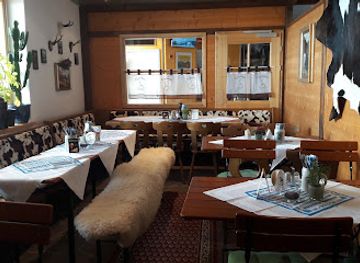
Oberammergau offers a delightful dining scene for visitors, with traditional Bavarian cuisine served in cozy taverns and charming beer gardens. From hearty schnitzels and savory sausages to creamy spaetzle and sweet apple strudel, there is something for every palate to enjoy. Local breweries offer refreshing beers to accompany your meal, while friendly locals provide a warm and welcoming atmosphere. Don't miss the opportunity to savor authentic German dishes in this picturesque village surrounded by the stunning Bavarian Alps.
-
Restaurant
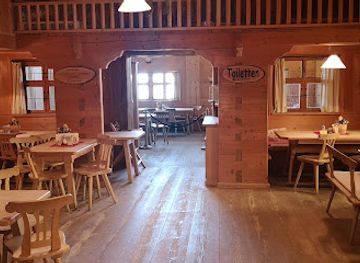
Kolbensattelhütte
Discover traditional Bavarian cuisine at Kolbensattelhütte with stunning mountain views in Oberammergau.
-
Mexican
El Puente Mexikanisches Restaurant Oberammergau
Discover authentic Mexican flavors at El Puente in Oberammergau – where vibrant cuisine meets Bavarian charm.
-
Restaurant
Ammergauer Maxbräu
Discover Ammergauer Maxbräu: A Bavarian restaurant and brewpub offering authentic cuisine and locally brewed beers in Oberammergau.
-
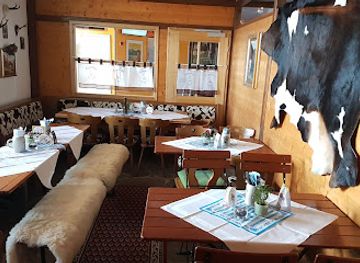
Bavarian restaurant
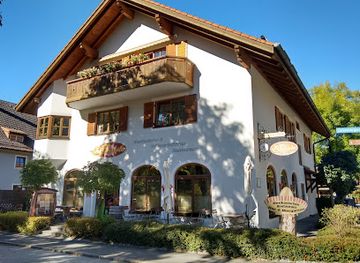
Die Laberei
Experience authentic Bavarian cuisine at Die Laberei in Oberammergau - where tradition meets taste in a cozy alpine setting.
Best bars in Oberammergau
Oberammergau's nightlife scene offers a charming mix of traditional Bavarian beer gardens, cozy pubs, and lively bars where visitors can unwind and experience the local culture after a day of exploring. From sipping on local brews and enjoying live music to mingling with friendly locals and fellow travelers, the town's nightlife caters to a range of tastes and preferences. Whether you're looking for a relaxed evening or a vibrant night out, Oberammergau's nightlife has something for everyone to enjoy.
-
Mexican
El Puente Mexikanisches Restaurant Oberammergau
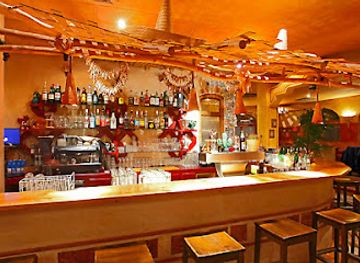
Discover authentic Mexican cuisine and a lively atmosphere at El Puente in Oberammergau. Enjoy delicious dishes and refreshing cocktails in a charming setting.
-
Restaurant
Ammergauer Maxbräu
Ammergauer Maxbräu: Experience the heart of Bavarian cuisine and craft beer in Oberammergau's charming brewpub.
-
Bavarian restaurant
Die Laberei
Experience the heart of Bavarian cuisine at Die Laberei in Oberammergau, where every dish tells a story.
-
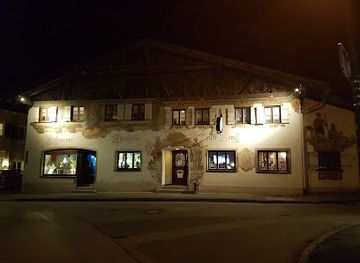
 Hotel
HotelHOTEL ALTE POST
Discover the charm of Bavarian hospitality at Hotel Alte Post, your gateway to the beauty of Oberammergau and its rich cultural heritage.
Best nightclubs in Oberammergau
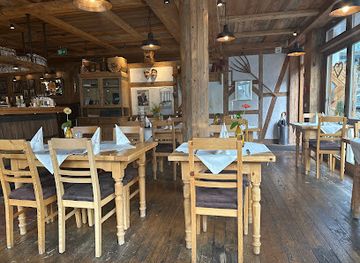
Oberammergau's nightlife scene offers a charming mix of traditional Bavarian beer gardens, cozy pubs, and lively bars where visitors can unwind and experience the local culture after a day of exploring. From sipping on local brews and enjoying live music to mingling with friendly locals and fellow travelers, the town's nightlife caters to a range of tastes and preferences. Whether you're looking for a relaxed evening or a vibrant night out, Oberammergau's nightlife has something for everyone to enjoy.
-
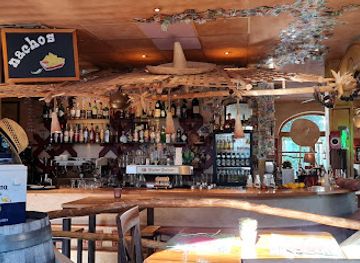
Mexican
El Puente Mexikanisches Restaurant Oberammergau
Discover the vibrant taste of Mexico at El Puente in Oberammergau, where authentic cuisine meets a warm and inviting atmosphere.
-
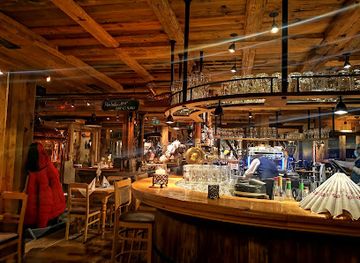
Restaurant
Ammergauer Maxbräu
Experience authentic Bavarian flavors and locally brewed beer at Ammergauer Maxbräu in Oberammergau, a culinary gem in the heart of Bavaria.
-
American
Bems'l - Music Bar & Grill
Discover the ultimate dining and entertainment experience at Bems'l - Music Bar & Grill in Oberammergau, where flavors meet lively tunes.
-
Bar
MachBar
Discover the lively charm of MachBar in Oberammergau, where delicious drinks and Bavarian hospitality create unforgettable memories.
Best shops in Oberammergau
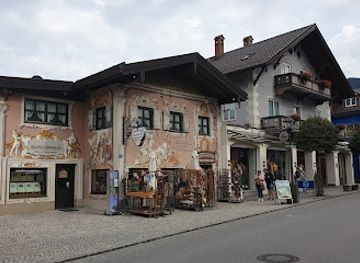
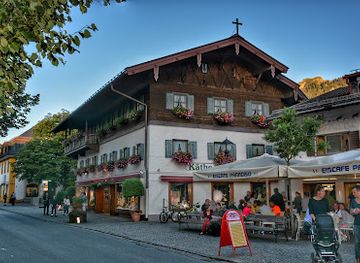
Oberammergau's shopping scene is a delightful mix of traditional Bavarian craftsmanship and modern boutiques. Visitors can expect to find intricate wood carvings, colorful ceramics, and beautifully crafted cuckoo clocks, all made by local artisans. The town's charming streets are lined with quaint shops selling unique souvenirs, clothing, and accessories, making it a shopper's paradise. Don't miss the opportunity to browse through the local markets and pick up some authentic Bavarian treasures to take home with you.
-
Clothing store
Modehaus HAAG
Explore Modehaus HAAG in Oberammergau for stylish clothing that blends local tradition with modern flair, making your shopping experience unforgettable.
-
Gift shop
Käthe Wohlfahrt
Discover the magic of Christmas at Käthe Wohlfahrt, Oberammergau's enchanting gift shop filled with unique seasonal treasures and festive cheer.
-
Grocery store
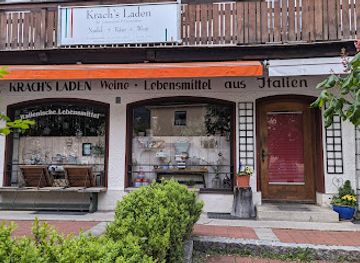
Krachs Laden
Explore Krachs Laden in Oberammergau for a delightful selection of local produce and authentic Bavarian delicacies.
-
Clothing store
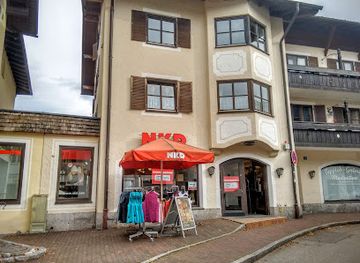
NKD
Discover stylish clothing for the whole family at NKD in Oberammergau, where affordability meets quality in a charming shopping atmosphere.
Get your free copy of our complete guide to Oberammergau, delivered straight to you.
Everything on this page, from attractions and restaurants to essentials and local phrases, in one PDF you can read offline, print or share.
Already have an account? Sign in
Your Oberammergau guide is ready.
We'll send it to · Not you? Sign out

Getting your guide ready…
We are putting together a fresh copy of the Oberammergau guide. This can take up to a minute.
This can take a few moments. If your browser asks, choose Allow so the download can start. You'll find the guide in your Downloads folder.
Nothing happened? Download it again
Sorry, the guide is taking longer than usual. Please try again in a minute, or get it by email instead.
Oberammergau essentials
Currency and Payment
Safety
Emergency Situations
Do's and Don'ts
Local Tips
From Eve
Local phrases worth knowing
You don't need to get them perfect. A few words go a long way, and locals appreciate the effort.
Basics
| English | Local | Say it |
|---|---|---|
| Hello | Griaß di | [Gree-ass dee] |
| Goodbye | Pfiat di | [Pfee-aht dee] |
| Yes | Ja | [Yah] |
| No | Naa | [Nah] |
| Please/You're welcome | Bitte | [Bee-teh] |
| Thank you | Danke | [Dahn-keh] |
| Excuse me/Sorry | Entschuldigung | [Ent-shool-dee-goong] |
| How are you? | Wie geht es dir? | [Vee gate ess deer] |
| Fine. And you? | Gut. Und dir? | [Goot. Oond deer] |
| Do you speak English? | Sprechen Sie Englisch? | [Shpre-khen zee Eng-leesh] |
| I don't understand | Ich verstehe nicht | [Eekh fair-shteh-eh neekt] |
Eating & Drinking
| English | Local | Say it |
|---|---|---|
| I'd like to see the menu, please | Ich möchte bitte die Speisekarte sehen | [Eekh mer-khe-teh bee-teh dee Shpy-suh-kahr-teh zay-en] |
| I don't eat meat | Ich esse kein Fleisch | [Eekh ess-eh kine Fly-sh] |
| Cheers! | Prost! | [Prohst] |
| I would like to pay, please | Ich möchte bitte bezahlen | [Eekh mer-khe-teh bee-teh beh-tzah-len] |
Emergencies
| English | Local | Say it |
|---|---|---|
| Help! | Hilfe! | [Hil-fuh] |
| Go away! | Geh weg! | [Gay vehg] |
| Call the Police! | Rufen Sie die Polizei! | [Roo-fen zee dee Poh-lee-tsye] |
| Call a doctor! | Rufen Sie einen Arzt! | [Roo-fen zee ine-en ahrts] |
| I'm lost | Ich habe mich verirrt | [Eekh hah-buh meekh fair-eert] |
| I'm ill | Ich bin krank | [Eekh been krunk] |
Shopping
| English | Local | Say it |
|---|---|---|
| I'd like to buy... | Ich möchte ... kaufen | [Eekh mer-khe-teh ... kow-fen] |
| I'm just looking | Ich schaue nur | [Eekh shou-eh noor] |
| How much is it? | Wie viel kostet das? | [Vee feel koh-stet dahs] |
| That's too expensive | Das ist zu teuer | [Dahs ist tsoo toy-er] |
| Can you lower the price? | Können Sie den Preis senken? | [Kern-en zee dehn prees zeng-ken] |
Time & Numbers
| English | Local | Say it |
|---|---|---|
| What time is it? | Wie spät ist es? | [Vee shpate ist ess] |
| It's one o'clock | Es ist ein Uhr | [Ess ist ine oor] |
| Half past (10) | Halb zehn | [Hahlb tsayn] |
| Morning | Morgen | [Mawr-gen] |
| Afternoon | Nachmittag | [Nahkh-mee-tahk] |
| Evening | Abend | [Ah-bent] |
| Yesterday | Gestern | [Ges-tern] |
| Today | Heute | [Hoy-teh] |
| Tomorrow | Morgen | [Mawr-gen] |
| 1 | Eins | [I-ns] |
| 2 | Zwei | [Tzv-eye] |
| 3 | Drei | [Dry] |
| 4 | Vier | [Feer] |
| 5 | Fünf | [Fewn-f] |
| 6 | Sechs | [Zex] |
| 7 | Sieben | [Zee-ben] |
| 8 | Acht | [Ahkht] |
| 9 | Neun | [Noy-n] |
| 10 | Zehn | [Tsayn] |
Transport & Directions
| English | Local | Say it |
|---|---|---|
| Where's a/the...? | Wo ist ein/der...? | [Voh ist i-ne/dehr] |
| What's the address? | Was ist die Adresse? | [Vahs ist dee Ah-drehs-seh] |
| Can you show me (on the map)? | Können Sie mir das zeigen (auf der Karte)? | [Kern-en zee meer dahs tsay-gen (ouf dehr Kahr-teh)] |
| When's the next (bus)? | Wann kommt der nächste (Bus)? | [Vahn kommt dehr nay-khste (Boos)] |
| A ticket (to ....) | Eine Fahrkarte (nach ....) | [I-ne Fah-kahr-teh (nahkh)] |
History of Oberammergau
The Origins of Oberammergau
The roots of Oberammergau trace back to the early Middle Ages, with the first documented mention dating to 1330. Nestled in the Bavarian Alps, the village was primarily a settlement of farmers and woodcarvers. Its picturesque location and the surrounding natural beauty played a significant role in shaping the community’s culture and traditions.
The Plague Vow of 1633
In 1633, Oberammergau was struck by a devastating plague. In their desperation, the villagers made a solemn vow that if God spared them from the plague, they would perform a Passion Play every ten years. Miraculously, the plague receded, and the villagers honored their vow. This marked the beginning of the world-renowned Oberammergau Passion Play, first performed in 1634.
The Passion Play Tradition
Since the vow in 1633, the Oberammergau Passion Play has been performed every decade, with few exceptions. The play, which depicts the life and death of Jesus Christ, involves nearly half of the village's population and attracts visitors from around the globe. It has become a significant cultural and religious event, deeply embedded in the identity of Oberammergau.
Woodcarving Heritage
Oberammergau is famed for its long-standing tradition of woodcarving. This craft dates back to at least the 16th century and has been passed down through generations. The village is home to numerous woodcarving shops and the renowned Oberammergau School of Woodcarving, where artisans create intricate religious figures, nativity scenes, and various other artworks.
The Lüftlmalerei
A distinctive feature of Oberammergau is its Lüftlmalerei, or fresco painting, which adorns many of the village’s buildings. This art form, which flourished in the 18th century, involves painting colorful, often religious or pastoral scenes directly onto the exteriors of houses. These vibrant murals add to the village’s charm and reflect its cultural heritage.
Nazi Influence and World War II
During the Nazi era, Oberammergau was not immune to the influences of the time. The Passion Play script was altered to align with Nazi ideology, and some villagers suffered persecution. During World War II, the region saw the establishment of a military training center and a POW camp. Post-war, Oberammergau returned to its cultural roots and continued its traditions.
Modern-Day Oberammergau
Today, Oberammergau is a blend of rich history and modern tourism. Its reputation for the Passion Play and woodcarving continues to draw visitors. The village has embraced its role as a cultural beacon, offering a unique glimpse into Bavarian traditions and history. The local economy thrives on tourism, with events, museums, and artistic endeavors celebrating Oberammergau’s heritage.
Oberammergau in Photos
Browse through our photo collection highlighting the charm and character of the destination.
Neighbouring destination travel guides
The closest destinations to Oberammergau, if you have time for more than one.
-

-

-
-

-


Swipe for more destinations
Explore more

Explore more of Swabia
Discover Swabia: A picturesque region in southwestern Germany, offering medieval architecture, scenic landscapes, and a rich culinary tradition.
Explore Swabia
Explore more of Germany
Experience Germany: where history meets innovation, and urban energy blends with natural beauty. Discover diverse cultures, delicious cuisine, and stunning landscapes.
Explore Germany