

Oberpfälzer Wald Travel Guide - Free Web & App
Your ultimate guide to Oberpfälzer Wald. Discover top landmarks, proposed trips, and local tips. Free on the web or via the Evendo companion app.


Oberpfälzer Wald in Germany offers granite hills, forest paths, castle ruins, villages, wildlife and quiet outdoor adventures near the Czech border.
A Forested Borderland
The Oberpfälzer Wald, or Upper Palatinate Forest, occupies eastern Bavaria between the medieval towns of Weiden in der Oberpfalz, Schwandorf and Waldmünchen, reaching towards the Czech border. It is not a single enclosed park but a broad landscape of wooded ridges, granite outcrops, clear streams, agricultural clearings and small settlements. The region's quieter character comes from its low population density and folded terrain, where forest roads and footpaths connect villages, castles and viewpoints rather than large resort centres.Read more about Oberpfälzer Wald
Granite, Valleys and Wildlife
Castles, Towns and Living Heritage
When is the best time to visit Oberpfälzer Wald?
Best: June–August · 23–25°C| Month | High (°C) | Rainfall (mm) |
|---|---|---|
| January | 6 | 40 |
| February | 5 | 35 |
| March | 10 | 30 |
| April | 15 | 25 |
| May | 19 | 20 |
| June (best) | 23 | 15 |
| July (best) | 25 | 15 |
| August (best) | 24 | 20 |
| September | 19 | 20 |
| October | 13 | 30 |
| November | 8 | 35 |
| December | 3 | 40 |
Getting to and around Oberpfälzer Wald
How to get there
Transportation
Best attractions in Oberpfälzer Wald
The Oberpfälzer Wald is best explored as a sequence of landscapes and heritage sites rather than a single attraction. The Waldnaab Valley near Windischeschenbach is known for its wooded gorge, granite formations and streamside paths, while the hills around Flossenbürg combine forest scenery with castle ruins, historic quarries and the Flossenbürg concentration camp memorial. Leuchtenberg Castle rises above the market town and hosts cultural events, and Falkenberg Castle overlooks the village and the Waldnaab corridor. Around Nabburg, the Oberpfälzer Freilandmuseum Neusath-Perschen presents rural buildings and farming traditions from the Upper Palatinate. Waldsassen adds an important architectural and cultural dimension with its Basilica and historic library. Further south, the area around Oberviechtach, Tännesberg and Waldmünchen offers wooded roads, village landscapes and extensive walking and cycling country close to the Czech frontier.
-
Tourist attraction
Höllohe Nature Park
Explore the enchanting Höllohe Nature Park in Teublitz, Germany, a family-friendly destination teeming with wildlife and serene walking trails.
-
Tourist attraction
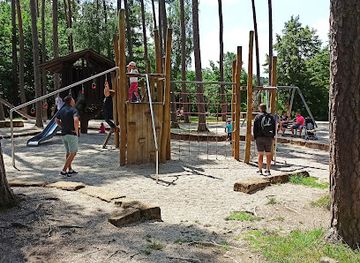
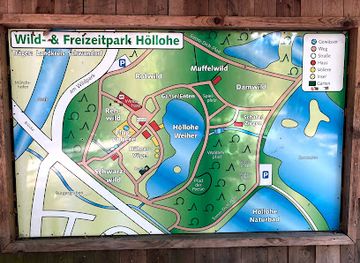
Wild- und Freizeitpark Höllohe
Explore the enchanting Wild- und Freizeitpark Höllohe in Teublitz, where wildlife encounters and exciting rides create a perfect family adventure.
-
Amusement park
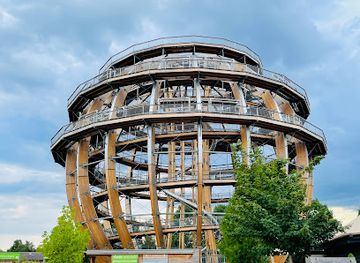
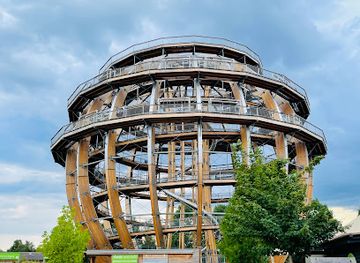
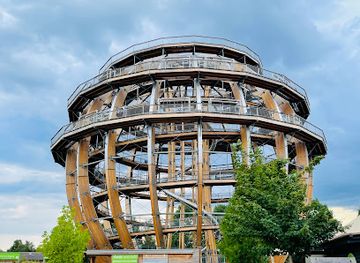
Erlebnisholzkugel
Experience the thrilling rides and beautiful nature at Erlebnisholzkugel, a top amusement park in Steinberg am See, perfect for families and adventure seekers.
-
Castle
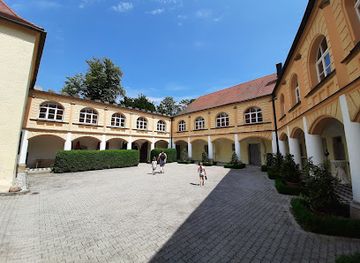
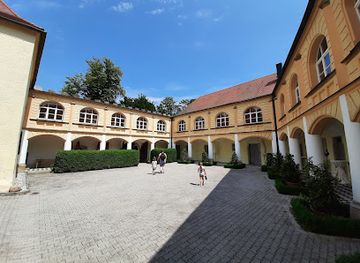
Schloß Guteneck
Experience the charm of Schloß Guteneck, a historic castle in Germany featuring beautiful gardens, live music, and delightful dining options.
Best landmarks in Oberpfälzer Wald
The Oberpfälzer Wald's defining landmarks are as much geological and landscape-based as architectural. The granite formations and wooded gorge of the Waldnaab Valley demonstrate the hard rock landscape of the Bohemian Massif, while the exposed quarry faces around Flossenbürg document the region's long association with granite working. Flossenbürg Castle occupies a high rocky position above the village, and Leuchtenberg Castle is a prominent medieval stronghold overlooking the Upper Palatinate countryside. Falkenberg Castle is closely associated with the Waldnaab valley and the settlement below it. In Waldsassen, the Basilica and historic Cistercian library represent the area's religious and intellectual heritage. The Flossenbürg concentration camp memorial is a landmark of profound historical importance, requiring a respectful visit rather than casual sightseeing.
-
Tourist attraction
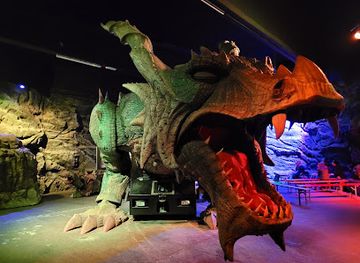
Drachenhöhle
Discover the enchanting Drachenhöhle in Furth im Wald, a breathtaking underground marvel filled with stunning formations and rich local folklore.
-
Historical landmark
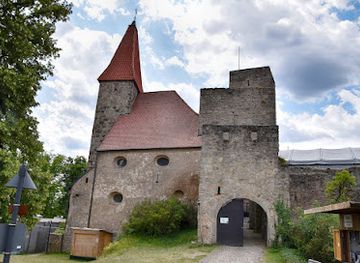
Burgruine Leuchtenberg
Experience history and nature at Burgruine Leuchtenberg, a captivating castle ruin offering breathtaking views and scenic hiking trails in Oberpfalz, Germany.
-
Scenic spot
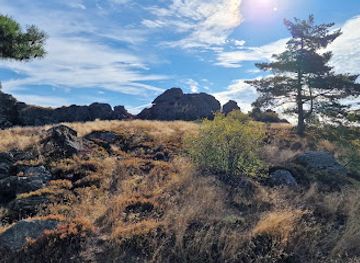
Naturdenkmal Hochfels
Explore the stunning landscapes and breathtaking views at Naturdenkmal Hochfels in Stadlern, an unmissable scenic spot for all nature lovers.
-
Club
Naturpark Nördlicher Oberpfälzer Wald e.V.
Explore the breathtaking landscapes and rich biodiversity of Naturpark Nördlicher Oberpfälzer Wald, a must-visit destination for nature lovers in Germany.
Explore Oberpfälzer Wald on the map
Plan your trip on one map. See where the top attractions, landmarks, restaurants and hotels are, and book hotels and experiences in a few clicks.
Best hotels in Oberpfälzer Wald
Best restaurants in Oberpfälzer Wald
Dining in the Oberpfälzer Wald is rooted in the substantial cooking of the Upper Palatinate, with regional inns and village restaurants serving dishes based on potatoes, pork, seasonal vegetables, freshwater fish and locally produced meat. Sausages, dumplings, soups and baked specialities are common features of Bavarian menus, while local breweries contribute wheat beer, lager and darker regional styles. Options are concentrated in towns such as Weiden, Nabburg, Neustadt an der Waldnaab, Oberviechtach, Waldsassen and Schwandorf, with traditional Gasthäuser and cafés also found in smaller settlements. Farm shops and small producers provide opportunities to buy bread, dairy products, meat, preserves and seasonal produce, but visitors should not expect a continuous restaurant scene along forest trails. In rural areas, meal planning is sensible, particularly when combining a long walk with visits to dispersed castles or nature sites.
-
Restaurant
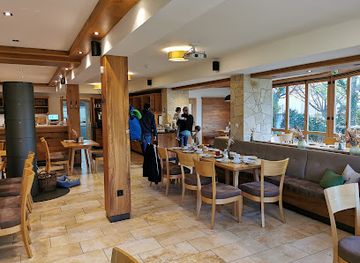
Erlebnisholzkugel
Discover Erlebnisholzkugel: A perfect fusion of traditional German dining and family-friendly amusement amidst stunning natural beauty.
-
German
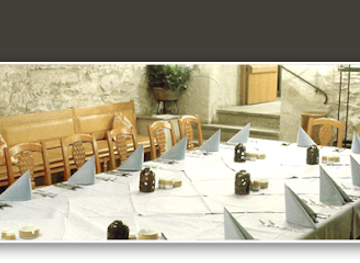
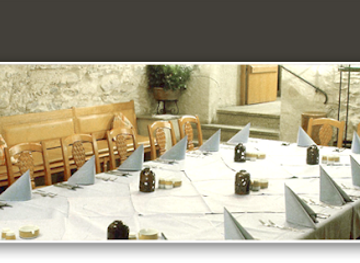
BräuWirt - Brauereigaststätte
Discover BräuWirt: A Bavarian gem offering hearty cuisine and locally brewed beers in Weiden in der Oberpfalz.
-
Restaurant
Brauereigasthof Jakob
Discover authentic Bavarian flavors at Brauereigasthof Jakob in Nittenau - where tradition meets hospitality.
-
Restaurant
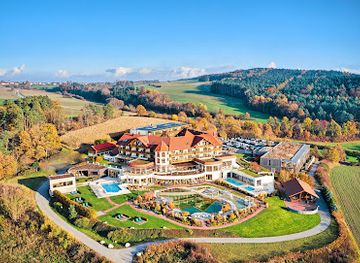
Der Birkenhof Spa & Genuss Resort
Discover unparalleled relaxation and gourmet dining at Der Birkenhof Spa & Genuss Resort in Neunburg vorm Wald.
Best bars in Oberpfälzer Wald
Evenings in the Oberpfälzer Wald are generally quiet and community-focused rather than centred on clubs or late-night entertainment. Traditional village Gasthäuser, brewery inns and hotel bars provide the most characteristic places for an evening drink, often serving local beer alongside simple regional food. Larger choices are found in Weiden in der Oberpfalz, Schwandorf and other market towns, where cafés, pubs and occasional cultural events create a livelier atmosphere than in the forest villages. Historic towns such as Waldsassen and Nabburg are suited to an early evening walk followed by dinner, while rural accommodation often offers a peaceful base rather than organised nightlife. Events and performances vary by season, so current local listings are more reliable than assuming regular entertainment in small settlements.
-
Amusement park
Erlebnisholzkugel
Discover the magic of Erlebnisholzkugel, a delightful amusement park with thrilling rides, beautiful nature, and delicious dining options in Steinberg am See.
-
Castle
Schloß Guteneck
Discover the enchanting Schloß Guteneck, a historical castle in Bavaria, blending rich heritage with delightful dining and vibrant entertainment.
-
Fast Food
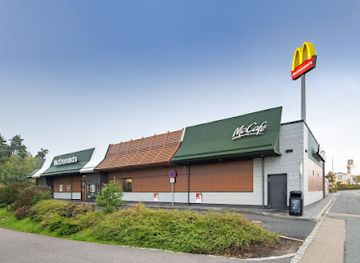
McDonald's
Discover convenience and flavor at McDonald's Wernberg-Köblitz, the perfect stop for a quick meal in the heart of Bavaria.
-
German
BräuWirt - Brauereigaststätte
Discover the heart of Bavarian hospitality at BräuWirt - a brewpub serving traditional German cuisine and freshly crafted beers in Weiden.
Best nightclubs in Oberpfälzer Wald
Evenings in the Oberpfälzer Wald are generally quiet and community-focused rather than centred on clubs or late-night entertainment. Traditional village Gasthäuser, brewery inns and hotel bars provide the most characteristic places for an evening drink, often serving local beer alongside simple regional food. Larger choices are found in Weiden in der Oberpfalz, Schwandorf and other market towns, where cafés, pubs and occasional cultural events create a livelier atmosphere than in the forest villages. Historic towns such as Waldsassen and Nabburg are suited to an early evening walk followed by dinner, while rural accommodation often offers a peaceful base rather than organised nightlife. Events and performances vary by season, so current local listings are more reliable than assuming regular entertainment in small settlements.
-
Disco club
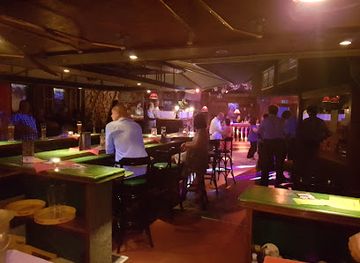
Atemlos Tanzstodl Diskothek Café
Atemlos Tanzstodl Diskothek Café: Where the Night Comes Alive with Unforgettable Music and Dance in Weiden.
-
Night club
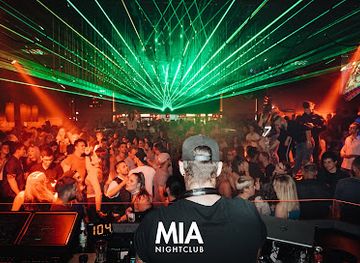
MIA Nightclub
Discover the electric atmosphere at MIA Nightclub, Cham's top spot for nightlife, music, and unforgettable experiences every Saturday night.
-
Night club
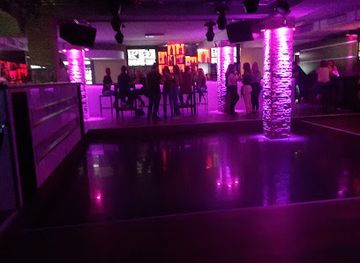
Hashtag / Club & Lifestyle
Discover the electrifying nightlife at Hashtag Club & Lifestyle, the premier destination for unforgettable nights in Weiden in der Oberpfalz.
-
Disco club
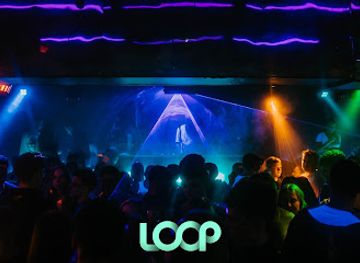
Loop Club & Diskothek
Unleash your energy at Loop Club & Diskothek, Weiden's hottest disco club offering unforgettable nights of music, dancing, and vibrant nightlife.
Best shops in Oberpfälzer Wald
Shopping in the Oberpfälzer Wald is concentrated in its towns rather than in the forest itself. Weiden, Schwandorf, Nabburg, Waldsassen and Oberviechtach provide everyday retail, bakeries, cafés and independent businesses, while village shops and farm outlets serve smaller communities. Visitors can look for Upper Palatinate food products, regional beer, bread, preserves, honey and seasonal farm produce, alongside locally made crafts and souvenirs connected with castles, geology and rural heritage. The Oberpfälzer Freilandmuseum near Neusath-Perschen provides context for traditional rural life, although it should not be confused with a large shopping centre. Markets and seasonal events occur in several towns but are not necessarily daily, so current municipal or tourist information is useful. Practical outdoor equipment is easier to find in the larger gateway towns than near remote trailheads.
-
Truck stop
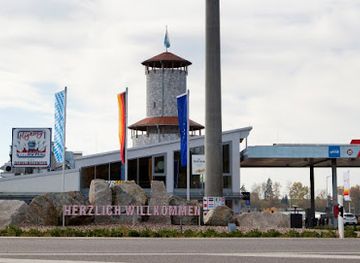
Autohof Neuhaus, Fa. Bergler
Discover Autohof Neuhaus, the perfect truck stop in Windischeschenbach with café, playground, car wash, and electric vehicle charging station.
-
Shopping mall
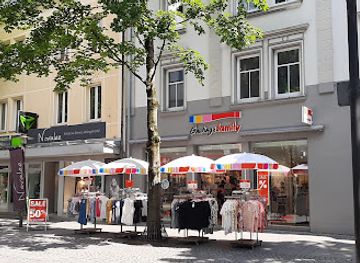
City Center Weiden
Explore the vibrant City Center Weiden, a shopping paradise filled with diverse stores, delightful dining, and dynamic events in the heart of Weiden in der Oberpfalz.
-
Shopping mall
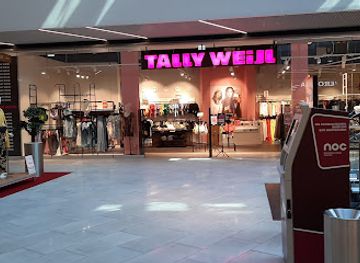
NOC
Explore NOC Shopping Mall in Weiden for a unique shopping experience filled with diverse stores and dining options, perfect for all travelers.
-
Supermarket
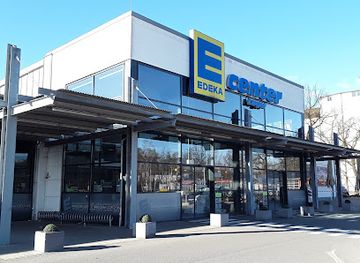
E center Legat
Explore E center Legat in Weiden, your go-to supermarket for fresh produce, local specialties, and daily essentials during your travels.
Get your free copy of our complete guide to Oberpfälzer Wald, delivered straight to you.
Everything on this page, from attractions and restaurants to essentials and local phrases, in one PDF you can read offline, print or share.
Already have an account? Sign in
Your Oberpfälzer Wald guide is ready.
We'll send it to · Not you? Sign out

Getting your guide ready…
We are putting together a fresh copy of the Oberpfälzer Wald guide. This can take up to a minute.
This can take a few moments. If your browser asks, choose Allow so the download can start. You'll find the guide in your Downloads folder.
Nothing happened? Download it again
Sorry, the guide is taking longer than usual. Please try again in a minute, or get it by email instead.
Oberpfälzer Wald essentials
Currency and Payment
Safety
Emergency Situations
Do's and Don'ts
Local Tips
From Eve
Local phrases worth knowing
You don't need to get them perfect. A few words go a long way, and locals appreciate the effort.
Basics
| English | Local | Say it |
|---|---|---|
| Hello | Servus | [Zer-voos] |
| Goodbye | Pfiat di | [Pfee-aht dee] |
| Yes | Ja | [Yah] |
| No | Naa | [Nah] |
| Please/You're welcome | Bitte | [Bit-teh] |
| Thank you | Danke | [Dahn-keh] |
| Excuse me/Sorry | Entschuldigung | [Ent-shool-dee-goong] |
| How are you? | Wie geht's? | [Vee geyts] |
| Fine. And you? | Gut. Und dir? | [Goot. Oond deer] |
| Do you speak English? | Sprechen Sie Englisch? | [Shpre-khen zee Eng-leesh] |
| I don't understand | I versteh ned | [Ee fair-shtay ned] |
Eating & Drinking
| English | Local | Say it |
|---|---|---|
| I'd like to see the menu, please | I hätt gern die Karte, bitte | [Ee hat gairn dee kar-teh, bit-teh] |
| I don't eat meat | I ess koa Fleisch | [Ee ess koh-ah Fl-eye-sh] |
| Cheers! | Prost! | [Prohst] |
| I would like to pay, please | I möcht bitte zahlen | [Ee merkht bit-teh tsah-len] |
Emergencies
| English | Local | Say it |
|---|---|---|
| Help! | Hilfe! | [Hil-feh] |
| Go away! | Geh weg! | [Gey vekh] |
| Call the Police! | Ruf die Polizei! | [Roof dee Po-lee-tsey] |
| Call a doctor! | Ruf'n Doktor! | [Roof'n Dohk-tor] |
| I'm lost | I bin verloren | [Ee been fair-loh-ren] |
| I'm ill | I bin krank | [Ee been krahngk] |
Shopping
| English | Local | Say it |
|---|---|---|
| I'd like to buy... | Ich möcht ... kaufen | [Ikh merkht ... kow-fen] |
| I'm just looking | I schau nur | [Ee sh-ow noor] |
| How much is it? | Was kostet das? | [Vahs kohstet dahs] |
| That's too expensive | Des is z' teier | [Des is tseer] |
| Can you lower the price? | Geht da Preis runter? | [Geyt dah prees roon-ter] |
Time & Numbers
| English | Local | Say it |
|---|---|---|
| What time is it? | Wie spät ist es? | [Vee sh-payt ist es] |
| It's one o'clock | Es ist ein Uhr | [Es ist iyn oor] |
| Half past (10) | Halb elf | [Halb elf] |
| Morning | Morgn | [Mohr-gn] |
| Afternoon | Noon | [Noon] |
| Evening | Obnd | [Oh-bnd] |
| Yesterday | Gestern | [Geh-shtern] |
| Today | Heid | [Haid] |
| Tomorrow | Morgn | [Mohr-gn] |
| 1 | Eins | [Iyns] |
| 2 | Zwei | [Tsv-eye] |
| 3 | Drei | [Dr-eye] |
| 4 | Vier | [Fee-er] |
| 5 | Fünf | [Foonf] |
| 6 | Sechs | [Zeks] |
| 7 | Sieben | [Zee-ben] |
| 8 | Acht | [Akht] |
| 9 | Neun | [Noy-n] |
| 10 | Zehn | [Tsayn] |
Transport & Directions
| English | Local | Say it |
|---|---|---|
| Where's a/the...? | Wo ist ein/der...? | [Voh ist iyn/dehr] |
| What's the address? | Wie ist die Adresse? | [Vee ist dee Ah-dreh-suh] |
| Can you show me (on the map)? | Kannst du mir zeigen (auf der Karte)? | [Kahnst doo meer tsigh-en (ouf dehr kar-teh)] |
| When's the next (bus)? | Wann kommt der nächste (Bus)? | [Vahn kohmt dehr nekhs-teh (Boos)] |
| A ticket (to ....) | Eine Fahrkarte (nach ...) | [Iyn-eh Fahr-kar-teh (nakh ...)] |
History of Oberpfälzer Wald
An Ancient Granite Landscape
The Oberpfälzer Wald belongs to the Bohemian Massif, a very old geological region extending across parts of central Europe. Its resistant crystalline rocks help explain the area's rounded ridges, exposed granite blocks, narrow valleys and historic quarries. Geological features are especially apparent around Flossenbürg and in the Waldnaab Valley, where erosion has shaped striking rock formations and steep wooded slopes. This deep geological foundation is not a human historical episode, but it has strongly influenced settlement, road building, forestry and the extraction industries that later became characteristic of the region.
Medieval Settlement and Fortification
During the medieval period, settlements and fortifications developed along routes linking the Upper Palatinate with Bohemia. Hilltop castles such as Flossenbürg, Leuchtenberg, Falkenberg and Murach controlled local territories and communications, while market towns including Nabburg and Oberviechtach became centres for trade and administration. The border position gave the region a history shaped by movement across the Bohemian frontier, although the forested uplands remained comparatively rural. Churches, town layouts and castle remains preserve elements of this medieval and early modern landscape.
Forestry, Farming and Granite Working
For centuries, life in the Oberpfälzer Wald depended on a mixed economy of small-scale farming, forestry, craft production and regional trade. Woodland supplied timber and fuel, while streams and rural clearings supported mills, livestock and cultivation. Granite working became particularly important in places such as Flossenbürg, where quarries produced durable stone for construction and memorials. The industry left visible scars and working landscapes, but it also provided employment and connected remote communities with wider markets. Many villages still reflect this close relationship between managed forest, farmland and local craftsmanship.
War, Borders and Industrial Change
The Upper Palatinate was affected by the political and military upheavals that repeatedly crossed central Europe, including the wider conflicts of the early modern period. Its border location made routes, castles and market towns strategically significant, while later improvements in roads and railways connected the region more closely to Bavaria and Bohemia. The twentieth century brought industrial change, population movement and the eventual decline of some traditional rural industries. The former Flossenbürg concentration camp, established by Nazi Germany during the Second World War, remains an essential site of remembrance and historical education.
Conservation and Regional Tourism
In the post-war period, the forested hills, valleys and cultural sites increasingly became valued as a recreational landscape as well as a working countryside. The Naturpark Oberpfälzer Wald framework supports the protection and interpretation of natural and cultural features across a broad regional area, while local communities maintain paths, viewpoints, castles and heritage attractions. Cross-border cooperation with Czech regions has reinforced the area's identity as a historic landscape linking Bavaria and Bohemia. Tourism remains relatively low-key, centred on walking, cycling, heritage visits and appreciation of the countryside rather than large-scale resort development.
Oberpfälzer Wald in Photos
Browse through our photo collection highlighting the charm and character of the destination.
Neighbouring destination travel guides
The closest destinations to Oberpfälzer Wald, if you have time for more than one.
-

-

-

-

-


Swipe for more destinations
Explore more

Explore more of Upper Palatinate
Discover Upper Palatinate: A Bavarian treasure trove of medieval charm, natural beauty, and vibrant cultural festivities.
Explore Upper Palatinate
Explore more of Germany
Experience Germany: where history meets innovation, and urban energy blends with natural beauty. Discover diverse cultures, delicious cuisine, and stunning landscapes.
Explore Germany