
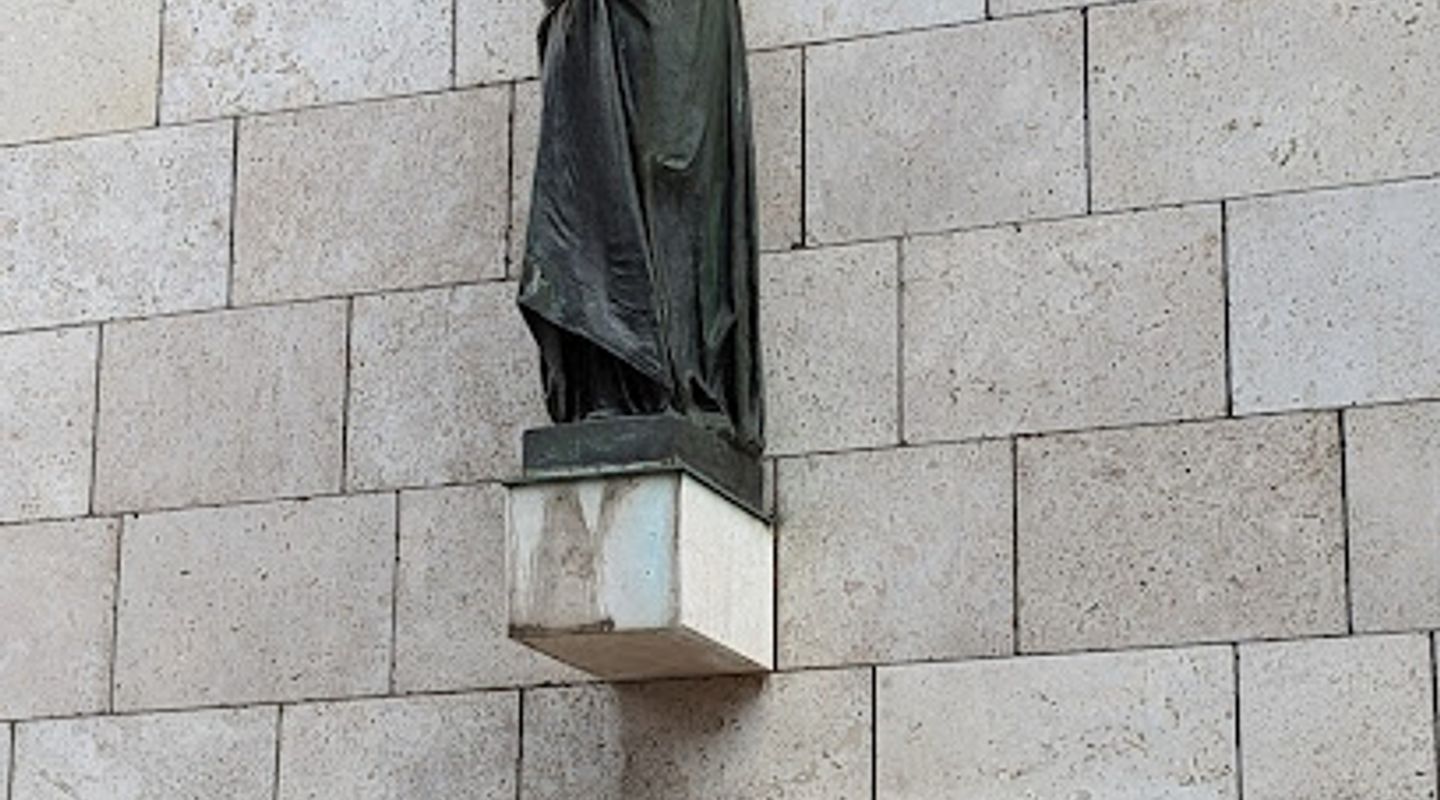
Stuttgardia Skulptur, Stuttgart Travel Guide
Discover the Stuttgardia sculpture on Stuttgart's Marktplatz, a symbol of the city's resilience, history, and the enduring spirit of its people, embodying Stuttgart's pride.
The Stuttgardia sculpture, a bronze statue standing at 2.41 meters, graces the side facade of Stuttgart's Rathaus (City Hall) on Marktplatz. Created in 1905 by Heinz Fritz, it represents the allegorical protector of the city. The statue depicts a strong female figure, modeled after Else Weil, a local Jewish woman, holding an oak branch in her right hand, symbolizing Germany, and a miniature of the old Rathaus in her left. Originally adorning the main portal of the old City Hall, the Stuttgardia survived the bombings of World War II and was later moved to its current location. It stands as a symbol of Stuttgart's resilience and the pride of its citizens, embodying the spirit of the city's self-governance and historical identity. A visit to Marktplatz offers a chance to admire this iconic sculpture and learn about its fascinating history.
A brief summary to Stuttgardia Skulptur
- Marktpl. 1, Stuttgart, Stuttgart-Mitte, 70173, DE
- Click to display

Know before you go
Hi, I'm Eve. Here are a few practical things to know before exploring Stuttgardia Skulptur.
- Time your visit to coincide with the Glockenspiel (carillon) performance at the Rathaus for a delightful auditory experience.
- Explore the Markthalle, a short walk from Marktplatz, for a culinary adventure and a taste of local and international delicacies.
- Take a guided city tour that includes Marktplatz to gain deeper insights into the history and significance of the Stuttgardia sculpture.
Do you manage this location?
Take control to get all the benefits, like improved information, better appearance, and stronger visibility across AI-powered discovery. Learn more about listing your business on Evendo
Activate your presenceOther nearby places you may find interesting
The closest places of the same kind, if this one is not quite what you had in mind.
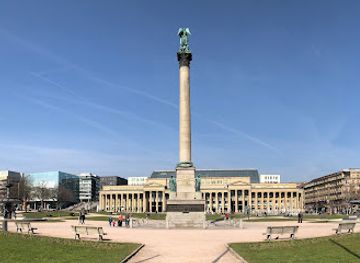


Explore Stuttgardia Skulptur on the Map
A handpicked selection of must-see spots near Stuttgardia Skulptur, mapped for you.
Getting There
-
Public Transport
Marktplatz is easily accessible via Stuttgart's efficient public transport system. Several U-Bahn (subway) lines (U1, U4, U5, U6, U7) stop at Rathaus, a short walk from the sculpture. Alternatively, the Schlossplatz stop, served by numerous U-Bahn and bus lines (42, 43, 45, 92, X2), is also within easy walking distance. A single VVS zone 1 fare costs approximately €2.60.
-
Walking
From Schlossplatz, a central square in Stuttgart, walk east towards the Rathaus. The Stuttgardia sculpture is located on the side facade of the Rathaus, facing Hirschstraße. The walk is approximately 5 minutes and offers views of other historical buildings in the city center.
-
Taxi/Ride-Share
A taxi or ride-share from Stuttgart Hauptbahnhof (main train station) to Marktplatz typically costs between €10-€15, depending on traffic. The journey takes approximately 5-10 minutes. Note that traffic can be heavy during peak hours.
-
Driving
Parking near Marktplatz is limited and can be expensive. Several parking garages are located within walking distance, including Tiefgarage Schillerplatz and Parkhaus City Garage. Hourly parking rates typically range from €3 to €4. Consider using public transport or a taxi/ride-share to avoid parking hassles. The Dorotheen Quartier parking garage charges €2.00 per 30 minutes.
Discover more about Stuttgardia Skulptur













Your all‑in‑one travel companion app
Explore expert travel guides, compare and book tours, experiences, hotels, and more—all from the palm of your hand. Download now for seamless trip planning wherever your wanderlust takes you.


Explore More of Stuttgart
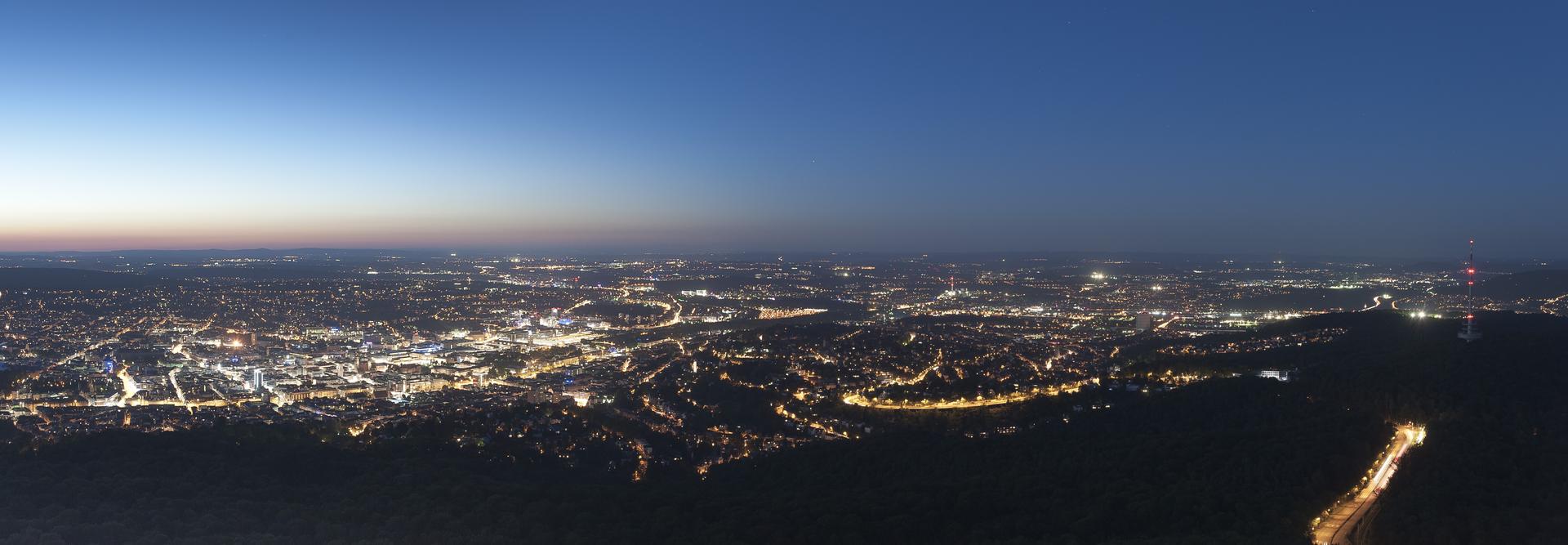
Looking beyond Stuttgardia Skulptur? Discover Stuttgart for broader travel guides, local hot-spots, and regional highlights.
Explore Stuttgart
Discover a tranquil oasis in Stuttgart-Süd at the Himmelfahrtsbrunnen, a charming fountain offering a peaceful escape and a touch of natural beauty in the heart of the city.
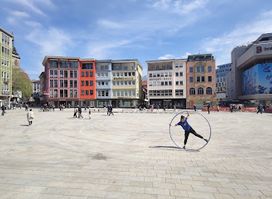
Discover Stuttgart's Marktplatz: A historic square where medieval markets meet modern life, surrounded by iconic architecture and vibrant cultural events in the heart of the city.
