Ratinger Tor Travel Guide
Free Guide: Discover Düsseldorf's last city gate, a neoclassical masterpiece blending history and art at the entrance to the vibrant Altstadt and the serene Hofgarten.


A brief summary of Ratinger Tor
Discover Düsseldorf's last city gate, a neoclassical masterpiece blending history and art at the entrance to the vibrant Altstadt and the serene Hofgarten.
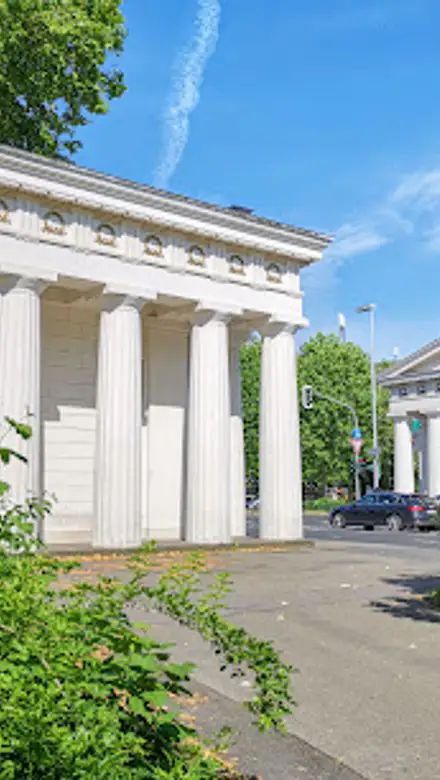
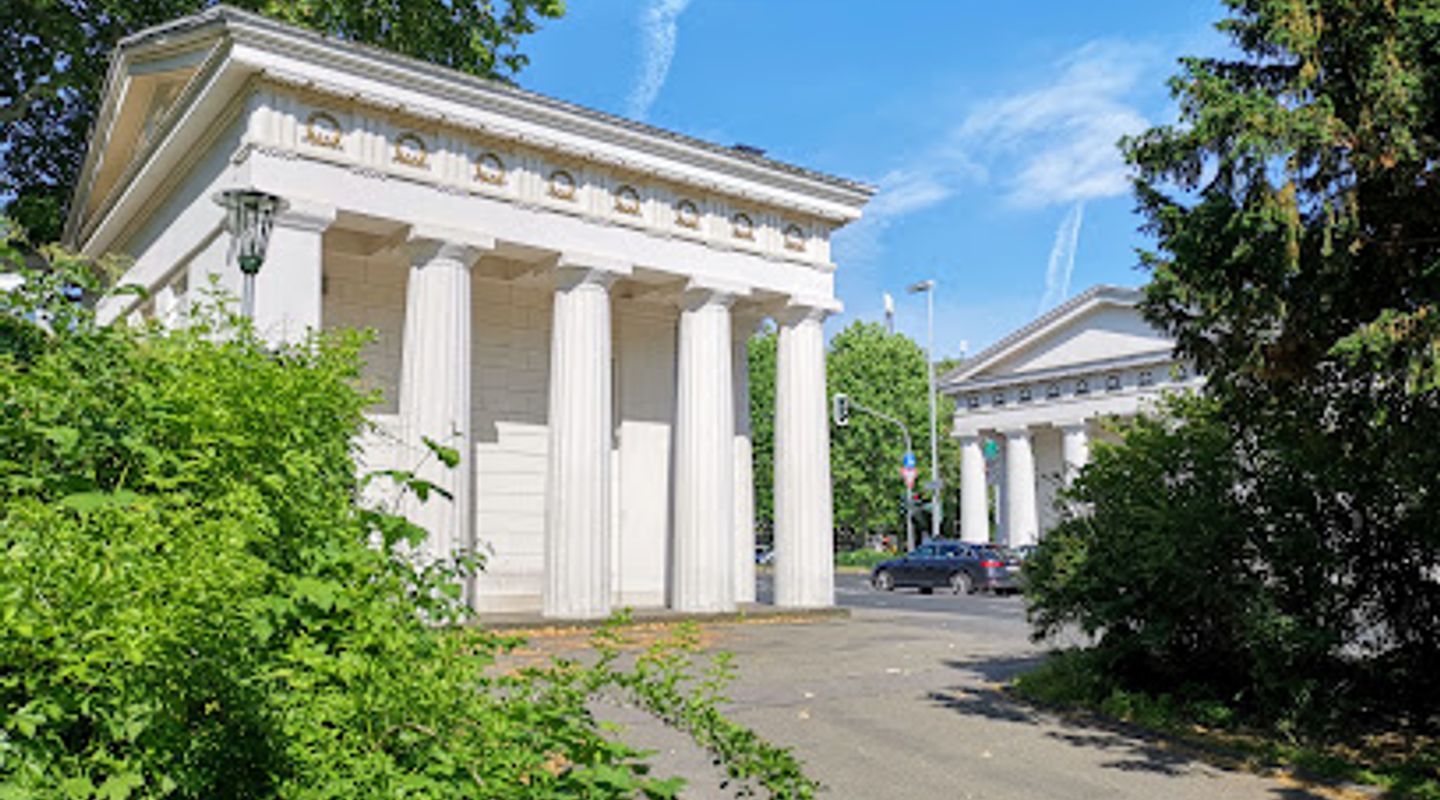
The Ratinger Tor, Düsseldorf's last remaining city gate, offers a glimpse into the city's transformation from a fortified town to a modern metropolis. Built between 1811 and 1815 in a Neoclassical style by Adolph von Vagedes, a student of Schinkel, it replaced a medieval gate that fell victim to the demolition of the city's fortifications. Inspired by the Propylaea in Athens, the gate consists of two almost identical buildings adorned with Doric columns and metopes decorated with golden laurel wreaths. Situated at the intersection of Heinrich-Heine-Allee and Maximilian-Weyhe-Allee, the Ratinger Tor serves as a symbolic entrance to the Altstadt (Old Town) and a reminder of Düsseldorf's rich history. Its location near the Hofgarten and the vibrant Ratinger Straße makes it a popular spot for both locals and tourists, offering a blend of historical significance and urban energy. The gate stands as a testament to Düsseldorf's ability to adapt and innovate, blending its past with the present.
Opening hours
- Every dayOpen 24 hours
Opening hours as listed on the venue’s Google Business Profile. Hours can change for services and special events, so check with the venue before you go.
- Address
- Maximilian-Weyhe-Allee 1, 40213 Düsseldorf
- Phone
- Website
Getting there
Walking
Public Transport
Taxi/Ride-Share
Driving
Discover more about Ratinger Tor
Overview
Ratinger Tor, standing proudly at the edge of Düsseldorf's city center, is more than just a historical monument; it's a portal connecting the city's vibrant present with its rich and complex past. This iconic structure, the last remaining city gate of Düsseldorf, offers visitors a unique opportunity to step back in time and imagine the city as a fortified stronghold. Originally, the Ratinger Tor was part of Düsseldorf's medieval fortifications, guarding the entrance to the city along the Ratinger Straße. However, as Düsseldorf grew and evolved, the need for these fortifications diminished. In the early 19th century, following the Peace Treaty of Lunéville, the city's walls were demolished to make way for urban expansion. The original Ratinger Tor, deemed obsolete, was torn down along with the rest of the fortifications. But the story doesn't end there. Recognizing the importance of maintaining a connection to the city's heritage, Düsseldorf commissioned a new gate to be built. Between 1811 and 1815, the Ratinger Tor was rebuilt in its current Neoclassical style. The task was entrusted to Adolph von Vagedes, a renowned architect and student of Karl Friedrich Schinkel, one of the most influential architects of Prussia. Vagedes drew inspiration from the Propylaea in Athens, creating a gate that was both functional and aesthetically pleasing. The new Ratinger Tor was strategically moved approximately 115 meters to the east of its original location. This relocation allowed for the extension of Ratinger Straße by 60 meters, paving the way for the creation of Heinrich-Heine-Allee, a grand boulevard that remains a vital artery of the city today. This move symbolizes Düsseldorf's forward-thinking approach, blending historical preservation with urban development. The Ratinger Tor consists of two nearly identical, almost square buildings designed in the classicist style, reminiscent of ancient temples. Each building features Doric columns on three sides, with metopes adorned with gold-painted laurel wreaths. The tympanums, however, remain unadorned, adding a touch of understated elegance to the structure. These architectural details reflect the Neoclassical movement's emphasis on symmetry, proportion, and the revival of classical forms. Today, the Ratinger Tor stands at the intersection of Heinrich-Heine-Allee and Maximilian-Weyhe-Allee, marking the boundary between the city districts of Pempelfort and Stadtmitte. Maximilian-Weyhe-Allee leads through the Hofgarten, Düsseldorf's central park, connecting the Altstadt with Schloss Jägerhof, a beautiful palace that houses the Goethe Museum. This strategic location makes the Ratinger Tor a natural starting point for exploring Düsseldorf's cultural attractions. The northern gatehouse is leased to the local heritage association Düsseldorfer Jonges, who renovated it in 2012. The ground floor houses a representative Heinz-Schmöle-Zimmer, featuring a bust of Schmöle. The building is used for board meetings and club celebrations and is open to the public once a year on Open Monument Day. In October 2022, a bronze sculpture called "Tanz zu Zweit" (Dance for Two), created and donated by Markus Lüpertz, was placed in front of the southern gate. It commemorates the musician couple Clara and Robert Schumann, who lived and worked in Düsseldorf for several years. This addition further enhances the cultural significance of the Ratinger Tor. Visiting the Ratinger Tor offers a multifaceted experience. History enthusiasts will appreciate the gate's architectural details and its role in Düsseldorf's urban development. Art lovers will be drawn to the sculpture by Markus Lüpertz and the gate's overall aesthetic appeal. And those simply looking for a pleasant stroll will enjoy the gate's location near the Hofgarten and the bustling Ratinger Straße. The Ratinger Tor is more than just a monument; it's a living testament to Düsseldorf's ability to embrace its past while forging ahead into the future. It's a place where history, art, and urban life converge, creating a unique and memorable experience for all who visit. Whether you're a seasoned traveler or a first-time visitor to Düsseldorf, the Ratinger Tor is a must-see destination that will leave you with a lasting impression of this dynamic and culturally rich city. Take a moment to appreciate the architectural details, imagine the city as a fortified stronghold, and reflect on the events that have shaped Düsseldorf into the vibrant metropolis it is today. The Ratinger Tor is a reminder that even in the midst of modernity, the echoes of the past can still be heard, providing context and meaning to the present. As you stand beneath the shadow of the Ratinger Tor, you're not just looking at a historical monument; you're stepping into a story that spans centuries. It's a story of transformation, resilience, and the enduring spirit of Düsseldorf.
Evendo Review Centre
 Google
Guest reviews
Explore Ratinger Tor on the map
A handpicked selection of must-see spots near Ratinger Tor, mapped for you.
Get your free copy of our complete guide to Ratinger Tor, delivered straight to you.
Everything on this page, from opening hours and how to get there to Eve’s tips and the best time to go, in one PDF you can read offline, print or share.
Already have an account? Sign in
Your Ratinger Tor guide is ready.
We'll send it to · Not you? Sign out

Getting your guide ready…
We are putting together a fresh copy of the Ratinger Tor guide. This can take up to a minute.
This can take a few moments. If your browser asks, choose Allow so the download can start. You'll find the guide in your Downloads folder.
Nothing happened? Download it again
Sorry, the guide is taking longer than usual. Please try again in a minute, or get it by email instead.
Unlock the best of Ratinger Tor
Skip-the-line tickets, guided tours with entry, and walking tours of the area, booked in a few clicks.


Other nearby places you may find interesting
The closest places of the same kind, if this one is not quite what you had in mind.
-
-
-
-
-


Swipe for more places
More to explore near Ratinger Tor

 Best experiences near Ratinger Tor
 Best hotels near Ratinger Tor
 Best landmarks near Ratinger Tor
 Best attractions near Ratinger Tor
 Best shops near Ratinger Tor
 Best restaurants near Ratinger Tor
 Best bars near Ratinger Tor
Do you manage this location?
Take control to get all the benefits, like improved information, better appearance, and stronger visibility across AI-powered discovery.
Explore more

Explore more of Westphalia
Discover Westphalia: A blend of medieval charm, cultural heritage, and natural beauty in the heart of northwestern Germany.
Explore Westphalia
Explore more of Germany
Experience Germany: where history meets innovation, and urban energy blends with natural beauty. Discover diverse cultures, delicious cuisine, and stunning landscapes.
Explore Germany