

Free Katerini Travel Guide & Mobile App
Plan your Katerini trip with Evendo. Get free guides to top attractions, restaurants, hotels, and bars. Web access or download the mobile app.


Katerini, Greece blends Macedonian history, lively squares, nearby beaches and easy access to Mount Olympus, Dion and Pieria’s cultural sights.
A Macedonian City Between Mountain and Sea
Katerini lies in Pieria, in the southern part of Central Macedonia, between the foothills of Mount Olympus and the Thermaic Gulf. It is a practical, lived-in Greek city rather than a purely resort destination, with a compact centre of pedestrian streets, cafés, shops and leafy public spaces. The coast is close by, particularly the resort settlements of Paralia Katerinis and Olympic Beach, while the mountain landscape rises dramatically to the south-west.Read more about Katerini
Urban Life and Local Character
Exploring the Wider Region
When is the best time to visit Katerini?
Best: April–May, October · 24–29°C| Month | High (°C) | Rainfall (mm) |
|---|---|---|
| January | 16 | 69 |
| February | 17 | 67 |
| March | 19 | 62 |
| April (best) | 24 | 50 |
| May (best) | 29 | 37 |
| June | 36 | 24 |
| July | 40 | 16 |
| August | 40 | 17 |
| September | 33 | 30 |
| October (best) | 27 | 59 |
| November | 22 | 64 |
| December | 17 | 68 |
Getting to and around Katerini
How to get there
Transportation
Best attractions in Katerini
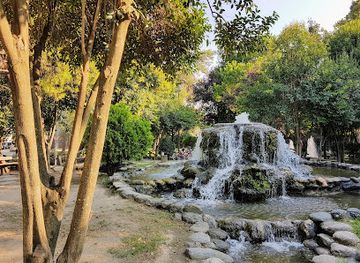
Katerini's principal attractions are best understood alongside the wider Pierian landscape. In the city, Katerini Municipal Park provides a spacious green setting for walking, public events and local cultural activity, while the central pedestrian streets reveal the everyday rhythm of cafés, shops and civic life. The coast is close enough for excursions to Paralia Katerinis and Olympic Beach, where broad sands and resort promenades create a contrasting seaside environment. Outside the city, the archaeological site of Dion presents sanctuaries, theatres, baths and mosaics in a setting beneath Mount Olympus, with the Archaeological Museum of Dion adding essential context. Olympus National Park offers forested routes, viewpoints and access towards the mountain's legendary landscapes, although trailheads and higher routes require separate planning. Together, these places give Katerini a varied sightseeing profile spanning urban life, ancient Macedonia, beaches and mountain scenery.
-
Archaeological museum
Museum of the Royal Tombs at Aigai (Aegae)
Explore the rich history of ancient Macedon at the Museum of the Royal Tombs at Aigai, home to stunning royal artifacts and burial sites.
45 min drive · 25 km from city centre
-
Tourist attraction
Katerini Municipal Park
Explore the serene beauty of Katerini Municipal Park, a lush oasis perfect for relaxation and enjoying nature's splendor in Katerini, Greece.
31 min drive · 11 km from city centre
-
Hiking area
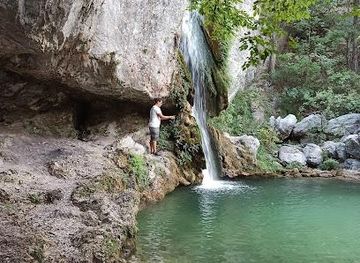
Orlias Stream
Explore the enchanting Orlias Stream in Dio-Olympos, a paradise for hikers with stunning landscapes and serene natural beauty.
34 min drive · 14 km from city centre
-
Monastery
New Holy Monastery of Saint Dionysios of Olympus
Discover the serene beauty and spiritual heritage of the New Holy Monastery of Saint Dionysios of Olympus in Litochoro, Greece's sacred mountain retreat.
39 min drive · 19 km from city centre


Best landmarks in Katerini
Katerini's landmarks express its role as a modern regional centre rather than an ancient monumental city. The Church of Saint Catherine, associated with the city's name and identity, is an important religious reference point, while the Church of the Divine Ascension serves the Orthodox community in the urban centre. Katerini Municipal Park is a civic landmark as well as a green space, bringing together open lawns, cultural facilities and public gathering areas. The railway station represents the city's connection to Greece's north-south transport corridor and to the economic development of modern Pieria. For deeper historical architecture, the most significant monuments lie beyond the city: the sanctuaries, theatre and Roman remains of Dion reveal ancient Macedonian civilisation, while Olympus's landscape supplies the powerful natural landmark that has shaped the region's cultural imagination.
-
City park
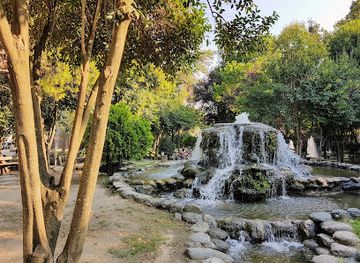
Katerini Municipal Park
Escape to Katerini's green heart: a historic park with lush nature, cultural events, and family-friendly activities in a tranquil setting.
31 min drive · 11 km from city centre
-
Historical landmark
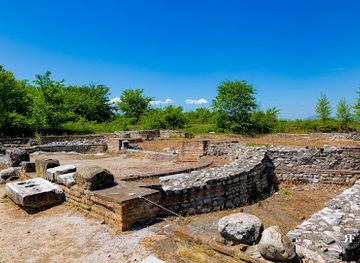
Archaeological Site of Dion
Discover the ancient Macedonian city of Dion at the foot of Mount Olympus, with its sanctuaries, theaters, and fascinating museum.
34 min drive · 14 km from city centre
-
Archaeological museum
Archaeological Museum of Dion
Discover ancient Macedonia at the Archaeological Museum of Dion, home to remarkable finds from the sacred city of Zeus, near Mount Olympus.
34 min drive · 14 km from city centre
-
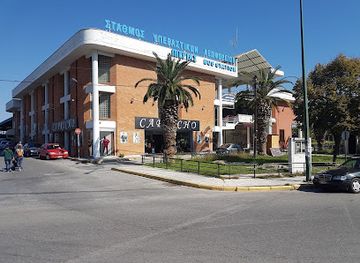
Bus company
Intercity Bus Pieria
Your reliable and affordable transportation hub in Katerini, connecting you to Pieria's wonders and beyond.
32 min drive · 12 km from city centre

Explore Katerini on the map
Plan your Katerini trip on one map. See where the top attractions, landmarks, restaurants, bars and hotels are, find what's near where you're staying, and book hotels and experiences in a few clicks.
Best hotels in Katerini
Best restaurants in Katerini
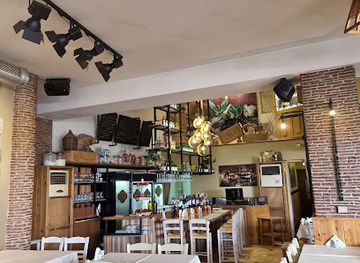
Katerini's dining scene reflects the produce and traditions of Pieria and wider Macedonia. Tavernas and family-run eateries serve familiar Greek dishes such as grilled meats, moussaka, stuffed vegetables, pulses, salads, local cheeses and seafood brought from the Thermaic Gulf. In the centre, cafés and casual restaurants occupy pedestrian streets and squares, while village-style establishments on the outskirts tend to offer a more leisurely meal with regional cooking. The nearby coast adds fish, prawns and simple meze to the regional repertoire, particularly in Paralia Katerinis and other seaside settlements. Bakery counters and sweet shops provide a practical introduction to bougatsa, pies and syrup-based pastries. Refugee communities established in Macedonia during the twentieth century also influenced local foodways, contributing recipes and tastes that sit comfortably alongside older mainland Greek traditions.
-
Restaurant
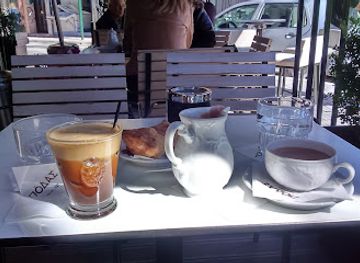
PODAS RestoBarTisserie
Experience authentic Greek cuisine with a modern twist at PODAS RestoBarTisserie in Katerini – where every meal tells a story.
31 min drive · 11 km from city centre
-
Restaurant
Freud
Discover the rich flavors of Greece at Freud Restaurant in Katerini—where culinary tradition meets modern taste.
31 min drive · 11 km from city centre
-
Restaurant
Το Μπαχάρι
Discover authentic Greek flavors at Το Μπαχάρι in Katerini - where every dish tells a story.
31 min drive · 11 km from city centre
-
Restaurant
Oliver's Pub
Discover the vibrant culinary scene at Oliver's Pub in Katerini - where delicious food meets warm hospitality.
32 min drive · 12 km from city centre
Best bars in Katerini
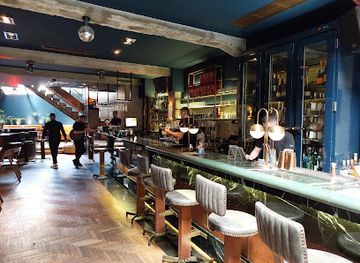
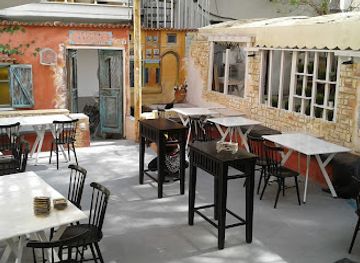
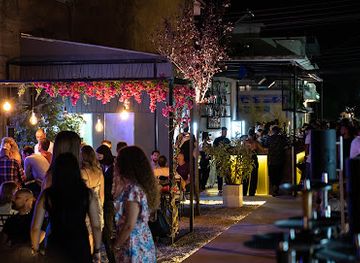
Evenings in Katerini are centred more on cafés, bars and taverna terraces than on a large club scene. The pedestrian centre and streets around the main squares fill with residents meeting for coffee, beer, wine or cocktails, and the atmosphere typically becomes livelier after dinner. Music may range from contemporary Greek selections to international pop, while some venues host occasional live performances without presenting themselves as major concert halls. During summer, the coastal resorts of Paralia Katerinis and Olympic Beach offer a more overtly holiday-oriented nightlife, with bars along the promenades and beach areas. Katerini itself retains the feel of a regional city, so late-night entertainment is seasonal and concentrated rather than spread across a vast nightlife district.
-
Bar
Freud
Discover Freud, Katerini's vibrant bar and café offering a delightful blend of Greek cuisine, refreshing drinks, and a lively atmosphere.
31 min drive · 11 km from city centre
-
Pub
Oliver's Pub
Discover the lively atmosphere of Oliver's Pub in Katerini, where great food, drinks, and entertainment come together for an unforgettable experience.
32 min drive · 12 km from city centre
-
Bar
Kartell Bar
Experience the lively ambiance and delightful drinks at Kartell Bar, Katerini's vibrant café and bar destination.
31 min drive · 11 km from city centre
-
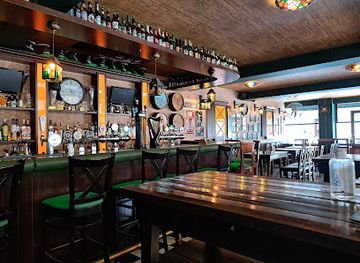
Irish pub
Irish Pub Rain
Discover the heart of Ireland in Katerini at Irish Pub Rain, where great food, drinks, and warm hospitality await.
31 min drive · 11 km from city centre
Best nightclubs in Katerini
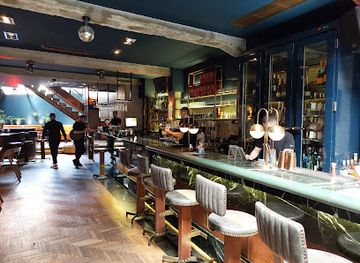
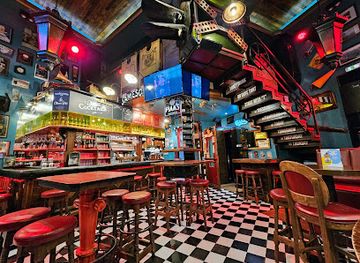
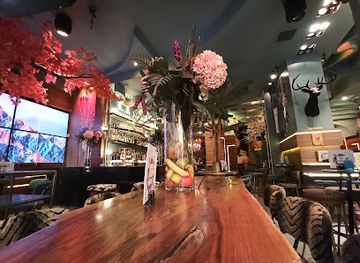
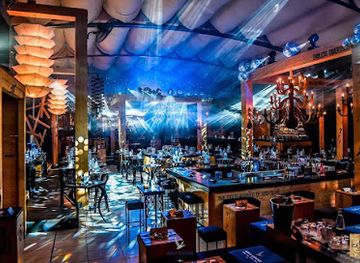
Evenings in Katerini are centred more on cafés, bars and taverna terraces than on a large club scene. The pedestrian centre and streets around the main squares fill with residents meeting for coffee, beer, wine or cocktails, and the atmosphere typically becomes livelier after dinner. Music may range from contemporary Greek selections to international pop, while some venues host occasional live performances without presenting themselves as major concert halls. During summer, the coastal resorts of Paralia Katerinis and Olympic Beach offer a more overtly holiday-oriented nightlife, with bars along the promenades and beach areas. Katerini itself retains the feel of a regional city, so late-night entertainment is seasonal and concentrated rather than spread across a vast nightlife district.
-
Night club
Club Gold
Discover the electrifying nightlife at Club Gold, Paralia's premier night club featuring diverse music, themed events, and a lively atmosphere.
38 min drive · 18 km from city centre
-
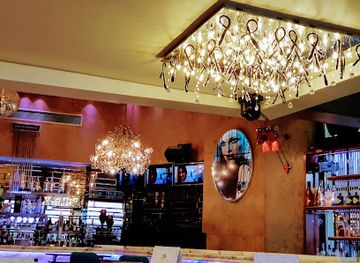
Bar
Boga Bar
Experience the vibrant nightlife and cozy daytime ambiance at Boga Bar in Katerini, a must-visit destination for tourists seeking local flavor.
31 min drive · 11 km from city centre
-
Bar
Keri Rock Bar
Experience the vibrant nightlife of Katerini at Keri Rock Bar, the perfect blend of cafe and bar for tourists seeking a lively atmosphere.
31 min drive · 11 km from city centre
-
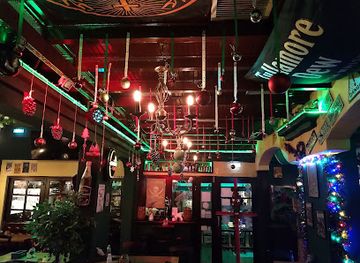
Bar
RAVAL cocktail yard
Discover Katerini's nightlife at RAVAL Cocktail Yard, where exquisite cocktails meet a vibrant atmosphere in the heart of the city.
32 min drive · 12 km from city centre
Best shops in Katerini
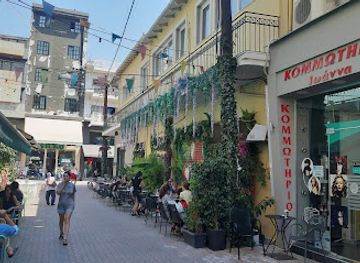
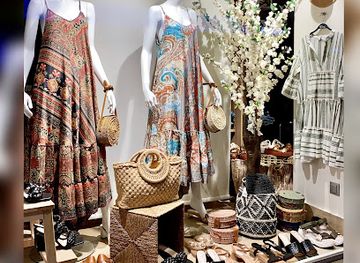
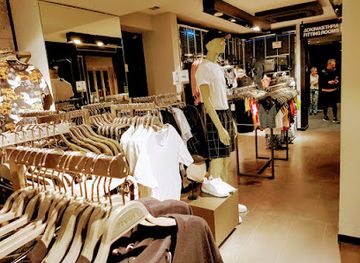
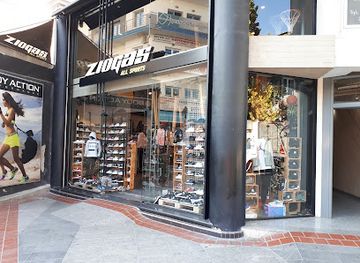
Shopping in Katerini is concentrated in the central pedestrian streets and around roads such as 25is Martiou and Megalou Alexandrou, where independent shops, footwear retailers, bakeries, cafés and everyday Greek businesses serve local residents. The city is more useful for practical shopping and regional food products than for a specialised luxury scene. Visitors can look for olive oil, honey, herbs, preserves, cheeses, wine and packaged produce from Pieria, alongside Greek leather goods, sandals and small craft items. Regular markets and seasonal stalls may offer fruit, vegetables, textiles and household goods, although their exact location and schedule can vary. The coastal resorts provide beachwear and holiday retail, while the centre of Katerini offers a more authentic impression of the area's ordinary commercial life.
-
Electronics store
Public Κατερίνης
Discover the ultimate shopping experience at Public Κατερίνης, where electronics, books, and games come together in a vibrant atmosphere.
31 min drive · 11 km from city centre
-
Women's clothing store
elenastore.gr
Discover Elenastore in Katerini, a fashion destination offering exquisite women's clothing, accessories, and shoes for every style.
32 min drive · 12 km from city centre
-
Clothing store
Bershka
Discover the latest trends in fashion at Bershka Katerini, where style meets affordability for every fashion enthusiast.
32 min drive · 12 km from city centre
-
Sporting goods store
ZIOGAS ALL SPORTS
Discover top-quality sporting goods and apparel at ZIOGAS ALL SPORTS in Katerini - your one-stop shop for outdoor adventures and fitness gear.
32 min drive · 12 km from city centre
Get your free copy of our complete guide to Katerini, delivered straight to you.
Everything on this page, from attractions and restaurants to essentials and local phrases, in one PDF you can read offline, print or share.
Already have an account? Sign in
Your Katerini guide is ready.
We'll send it to · Not you? Sign out

Getting your guide ready…
We are putting together a fresh copy of the Katerini guide. This can take up to a minute.
This can take a few moments. If your browser asks, choose Allow so the download can start. You'll find the guide in your Downloads folder.
Nothing happened? Download it again
Sorry, the guide is taking longer than usual. Please try again in a minute, or get it by email instead.
Katerini essentials
Currency and Payment
Safety
Emergency Situations
Do's and Don'ts
Local Tips
From Eve
Local phrases worth knowing
You don't need to get them perfect. A few words go a long way, and locals appreciate the effort.
Basics
| English | Local | Say it |
|---|---|---|
| Hello | Γεια σας | [Ya sas] |
| Goodbye | Αντίο | [Adio] |
| Yes | Ναι | [Neh] |
| No | Όχι | [Ohi] |
| Please/You're welcome | Παρακαλώ | [Parakalo] |
| Thank you | Ευχαριστώ | [Efharisto] |
| Excuse me/Sorry | Συγνώμη | [Signomi] |
| How are you? | Πώς είσαι; | [Pos ise;] |
| Fine. And you? | Καλά. Εσύ; | [Kala. Esi;] |
| Do you speak English? | Μιλάς Αγγλικά; | [Milas Anglika;] |
| I don't understand | Δεν καταλαβαίνω | [Den katalaveno] |
Eating & Drinking
| English | Local | Say it |
|---|---|---|
| I'd like to see the menu, please | Θα ήθελα να δω το μενού, παρακαλώ | [Tha ithela na do to menou, parakalo] |
| I don't eat meat | Δεν τρώω κρέας | [Den troo kreas] |
| Cheers! | Υγεία! | [Ygeia!] |
| I would like to pay, please | Θα ήθελα να πληρώσω, παρακαλώ | [Tha ithela na plirosos, parakalo] |
Emergencies
| English | Local | Say it |
|---|---|---|
| Help! | Βοήθεια! | [Voitheia!] |
| Go away! | Πήγαινε μακριά! | [Pigaine makria!] |
| Call the Police! | Καλέστε την Αστυνομία! | [Kaleste tin Astinomia!] |
| Call a doctor! | Καλέστε γιατρό! | [Kaleste giatro!] |
| I'm lost | Έχω χαθεί | [Eho hatei] |
| I'm ill | Είμαι άρρωστος | [Eimai arrostos] |
Shopping
| English | Local | Say it |
|---|---|---|
| I'd like to buy... | Θα ήθελα να αγοράσω... | [Tha ithela na agoraso...] |
| I'm just looking | Απλά κοιτάω | [Apla kitao] |
| How much is it? | Πόσο κοστίζει; | [Poso kostizi;] |
| That's too expensive | Αυτό είναι πολύ ακριβό | [Afto ine poli akribo] |
| Can you lower the price? | Μπορείτε να μειώσετε την τιμή; | [Borite na miosete tin timi;] |
Time & Numbers
| English | Local | Say it |
|---|---|---|
| What time is it? | Τι ώρα είναι; | [Ti ora ine;] |
| It's one o'clock | Είναι μία ώρα | [Ine mia ora] |
| Half past (10) | Μισή (10) | [Misi (Deka)] |
| Morning | Πρωί | [Proi] |
| Afternoon | Απόγευμα | [Apoyevma] |
| Evening | Βράδυ | [Vradi] |
| Yesterday | Χθες | [Hthes] |
| Today | Σήμερα | [Simera] |
| Tomorrow | Αύριο | [Avrio] |
| 1 | Ένα | [Ena] |
| 2 | Δύο | [Dyo] |
| 3 | Τρία | [Tria] |
| 4 | Τέσσερα | [Tessera] |
| 5 | Πέντε | [Pente] |
| 6 | Έξι | [Exi] |
| 7 | Επτά | [Epta] |
| 8 | Οχτώ | [Ochto] |
| 9 | Εννιά | [Ennia] |
| 10 | Δέκα | [Deka] |
Transport & Directions
| English | Local | Say it |
|---|---|---|
| Where's a/the...? | Πού είναι ένας/η... | [Pou ine enas/i...] |
| What's the address? | Ποια είναι η διεύθυνση; | [Pia ine i diefthinsi;] |
| Can you show me (on the map)? | Μπορείτε να μου δείξετε (στο χάρτη); | [Borite na mou deksete (sto charti);] |
| When's the next (bus)? | Πότε είναι το επόμενο (λεωφορείο); | [Pote ine to epomeno (leoforeio);] |
| A ticket (to ....) | Ένα εισιτήριο (για ....) | [Ena isitirio (gia ....)] |
History of Katerini
A Settlement in Ancient Pieria
Katerini stands in the historic region of Pieria, a landscape long connected with the ancient Macedonian world and the religious centre of Dion at the foot of Mount Olympus. The modern city itself is not an ancient urban centre on the scale of Dion, but its surrounding plain formed part of the wider agricultural and strategic environment between Macedonia and Thessaly. Nearby settlements, roads and sanctuaries linked the coast, the Olympus foothills and the interior. Archaeological discoveries across Pieria provide the deeper historical setting for Katerini, whose importance emerged much later as a regional administrative and commercial centre.
Ottoman-Era Rural Origins
The settlement that developed into modern Katerini grew during the Ottoman period within a fertile plain served by farming and local trade. Its position between the coast, the mountain routes and the larger centres of Macedonia encouraged gradual expansion, although it remained a modest regional settlement rather than a major imperial city. The name is commonly associated with Saint Catherine, whose veneration was widespread in the area. Ottoman-era Pieria was socially and religiously diverse, and the region's later history was shaped by the changing political boundaries and population movements of the Balkans.
Incorporation into the Greek State
Katerini became part of the Greek state during the Balkan Wars in 1912, when Ottoman rule in Macedonia came to an end. Its position in the newly incorporated territory gave it increasing administrative importance, while roads and rail connections strengthened links with Thessaloniki, Larissa and the wider national economy. The interwar decades brought major demographic change across Macedonia. Refugees arriving after the Greco-Turkish population exchange of 1923 contributed to the growth of settlements, agriculture and commerce throughout Pieria, leaving a lasting influence on local society and food traditions.
Railways, Agriculture and Growth
During the twentieth century Katerini developed as the commercial centre of a productive agricultural region. The railway connection along Greece's main north-south corridor supported the movement of people and goods, while farming, trade and public administration sustained the expanding town. The surrounding plain produced crops and livestock, and the coast gradually became more significant through tourism. Katerini's urban fabric consequently grew beyond its earlier core, with new residential districts and civic infrastructure replacing the scale of a small rural settlement.
A Modern Regional Centre
Post-war migration, improved roads and the expansion of domestic tourism transformed Katerini into the principal urban centre of Pieria. The city benefited from its proximity to both the Aegean coast and Mount Olympus, while nearby Dion gained importance as an archaeological and cultural destination. Today Katerini combines municipal services, education, retail and everyday urban life with a strong relationship to regional tourism. Its identity reflects several overlapping histories: ancient Pieria, Ottoman and Macedonian regional development, refugee settlement, agricultural modernisation and the growth of the Olympus and coastal visitor economies.
Travel experiences inspired by this city
-
 7 Day Trip
Solo Odyssey to the Mythical Mount Olympus
Embark on a solo adventure to Mount Olympus, exploring the mythical landscapes and rich history of Greece in a unique, sustainable way.
7 Day Trip
Solo Odyssey to the Mythical Mount Olympus
Embark on a solo adventure to Mount Olympus, exploring the mythical landscapes and rich history of Greece in a unique, sustainable way.
 10 Mar 2026
By Marko Novak -
 11 Day Trip
Family Adventure to Mount Olympus: Exploring Myths and Nature
Embark on a family journey to Mount Olympus, blending mythological exploration with breathtaking natural beauty and adventure.
11 Day Trip
Family Adventure to Mount Olympus: Exploring Myths and Nature
Embark on a family journey to Mount Olympus, blending mythological exploration with breathtaking natural beauty and adventure.
 10 Dec 2025
By Shota Tanaka -
 11 Day Trip
Journey to the Mythical Mount Olympus
Explore the mythical landscapes of Mount Olympus with Juan and Sophie, delving into history, culture, and natural wonders in Greece.
11 Day Trip
Journey to the Mythical Mount Olympus
Explore the mythical landscapes of Mount Olympus with Juan and Sophie, delving into history, culture, and natural wonders in Greece.
 1 Dec 2025
By Juan Quispe
Swipe for more travel diaries
Katerini in Photos
Browse through our photo collection highlighting the charm and character of the destination.
Cities near Katerini
The closest cities to Katerini, if you have time for more than one stop.
-

-

-
-

-


Swipe for more cities
Explore more
Explore more of Greece
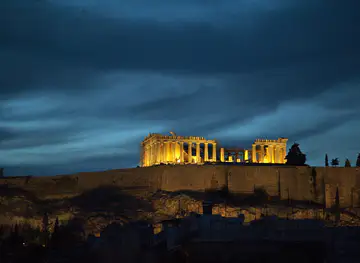
Discover Greece: A land where ancient history meets modern vibrancy, offering stunning islands, crystal-clear seas, and unforgettable cultural experiences.
Explore Greece