

La Sagesse Beach, Grenada Travel Guide
Discover La Sagesse Beach in Grenada: A tranquil paradise with golden sands, calm waters, and lush greenery, perfect for relaxation, swimming, and savoring local cuisine.
Nestled on the southeastern coast of Grenada, La Sagesse Beach offers a serene escape from the bustle of more crowded tourist spots. This hidden gem boasts a tranquil ambiance, making it the perfect spot for relaxation and reflection. The beach is framed by lush greenery and coconut palms, providing a picturesque backdrop for your tropical getaway. The calm, clear waters of La Sagesse Beach are ideal for swimming and snorkeling. The natural bay ensures gentle waves, making it a safe spot for families and less experienced swimmers. The soft golden sand invites you to lounge under the sun, while the surrounding nature trails are perfect for a leisurely hike, offering stunning views of the coastline. La Sagesse Beach is also home to a charming boutique hotel and a rustic beachside restaurant. Here, you can savor fresh seafood and local dishes while enjoying the soothing sounds of the ocean. The area's rich biodiversity includes various bird species, making it a haven for birdwatchers. Whether you're looking to unwind, explore, or indulge in local cuisine, La Sagesse Beach promises a memorable experience.

Know before you go
Hi, I'm Eve. Here are a few practical things to know before exploring La Sagesse Beach.
- Visit early in the morning or late afternoon to avoid the midday heat and enjoy a more peaceful experience.
- Bring your own snorkeling gear to explore the calm waters teeming with marine life.
- Don't miss the nature trails around the beach; they offer stunning views and a chance to see local bird species.
- Try the fresh seafood at the beachside restaurant for an authentic taste of Grenadian cuisine.
- Bring cash as credit card facilities may not always be available at the local establishments.
Explore La Sagesse Beach: Things to Do, Places to Eat, Hotels & More
Handpicked recommendations for top attractions, local dining, accommodations, and more

Best attractions in La Sagesse Beach
Top-rated picks
Best Attractions

Fort Matthew
Explore Grenada's largest fort, Fort Matthew, offering panoramic views and a journey through colonial and social history.

Grenada National Cricket Stadium
Experience the thrill of cricket and vibrant Grenadian culture at the iconic Grenada National Cricket Stadium in St. George's.

3rd Beach
Discover 3rd Beach on Hog Island, Grenada: A secluded paradise with pristine sands, turquoise waters, and tranquil vibes for the ultimate Caribbean escape.

Baillies Bacolet Point
Discover coastal serenity at Baillies Bacolet Point in Grenada, a peaceful park with stunning views and a rich historical backdrop.

Best landmarks in La Sagesse Beach
Top-rated picks
Best Landmarks

Leapers Hill
Discover the rich history and breathtaking views at Leapers Hill, a must-see landmark in Grenada that showcases the island's cultural heritage.

Grand Anse Beach
Experience the beauty of Grand Anse Beach in Grenada: pristine sands, turquoise waters, and a vibrant Caribbean atmosphere await!

Grenada Underwater Sculpture Park
Discover an evolving underwater art gallery that blends creativity with marine conservation in Grenada's stunning Molinere Bay.

Annandale Waterfall & Forest Park
Discover Grenada's natural beauty at Annandale Waterfall & Forest Park: a 30-foot waterfall, lush gardens, and tranquil pools await just minutes from St. George's.

Best restaurants in La Sagesse Beach
Top-rated picks
Best Restaurants

Coconut Beach Restaurant & Bar
Experience delightful dining at Coconut Beach Restaurant & Bar on Grand Anse Beach in Grenada with breathtaking ocean views and delicious cuisine.

61° West Restaurant + Beach bar
Experience the flavors of Grenada at 61° West Restaurant + Beach Bar on Grand Anse Beach – where culinary delights meet stunning ocean views.

La Sagesse Boutique Hotel, Restaurant and Beach Bar
Discover paradise at La Sagesse Boutique Hotel - your gateway to exquisite dining, stunning beaches, and authentic Caribbean experiences in Grenada.

Patrick's Local Homestyle Restaurant
Experience authentic Caribbean cuisine at Patrick's Local Homestyle Restaurant in St. George's – where every dish tells a story.

Best bars in La Sagesse Beach
Top-rated picks
Best Bars

Umbrella's Beach Bar
Experience the vibrant atmosphere and delicious offerings at Umbrella's Beach Bar, the perfect Caribbean retreat on Grand Anse Beach.

Esther's Bar
Experience the vibrant atmosphere and breathtaking views at Esther's Bar on Grand Anse Beach, Grenada's ultimate tropical getaway.

61° West Restaurant + Beach bar
Experience the vibrant essence of Grenada at 61° West Restaurant + Beach Bar, where culinary delights meet stunning ocean views.

The Junction Bar And Grill
Experience Caribbean cuisine and vibrant nightlife at The Junction Bar And Grill in beautiful L'anse Aux Epines, Grenada.

Best nightclubs in La Sagesse Beach
Top-rated picks
Best Nightclubs

Umbrella's Beach Bar
Experience the ultimate beachside retreat at Umbrella's Beach Bar—where delicious cuisine meets vibrant nightlife in stunning Grenada.

Esther's Bar
Discover the vibrant atmosphere of Esther's Bar on Grand Anse Beach, where refreshing drinks and live music await you in Grenada's tropical paradise.

La Sagesse Boutique Hotel, Restaurant and Beach Bar
Discover the serene beauty of La Sagesse Boutique Hotel, Restaurant and Beach Bar, where Caribbean culture meets luxurious relaxation in Grenada.

La Plywood Beach Bar Café
La Plywood Beach Bar Café in Grenada offers a vibrant atmosphere for cocktails, local cuisine, and live music by the beach.

Best shops in La Sagesse Beach
Top-rated picks
Best Shops

Jack & Jessie
Experience the charm of Grenada at Jack & Jessie, a unique grocery store and bar offering local flavors and a welcoming atmosphere.

Skinny mini mart
Experience the local flavor and convenience at Skinny Mini Mart, your essential grocery stop in Corinth, Grenada.

Art Fabrik
Discover the vibrant creativity of Grenada at Art Fabrik, where unique fashion meets local artistry in a stunning array of handcrafted designs.

Wendy's Variety Store
Explore Wendy's Variety Store in Birch Grove, Grenada for unique home goods and local crafts to remember your journey.

Explore La Sagesse Beach on the Map
A handpicked selection of must-see spots in La Sagesse Beach, mapped for you.
La Sagesse Beach Essentials
-
La Sagesse Beach is located on the southeastern coast of Grenada, about 30 minutes' drive from Maurice Bishop International Airport (GND). Upon arrival, you can rent a car, book a taxi, or arrange for a private transfer to La Sagesse Beach. Alternatively, you can use local bus services that run from St. George's to various parts of the island, including the La Sagesse area.
-
Getting around La Sagesse Beach and its surrounding areas can be done through various means. Car rentals are popular for the convenience of exploring at your own pace. Taxis are readily available, and fares are generally reasonable. Local buses and minibuses (known as 'Reggae buses') are an affordable option but can be less frequent. Walking is also a viable option for short distances, especially along the beach and nearby attractions.
-
The official currency in Grenada is the Eastern Caribbean Dollar (XCD), but US dollars are widely accepted. Credit and debit cards are accepted in most hotels, restaurants, and shops near La Sagesse Beach. However, it's advisable to carry some cash for smaller establishments and local vendors. ATMs are available in St. George's and other major towns.
-
La Sagesse Beach is generally safe for tourists. However, standard precautions should be taken. Avoid leaving valuables unattended on the beach and be cautious when walking alone at night. While Grenada has a low crime rate, it's advisable to stay vigilant in crowded places. Areas with higher crime rates include parts of St. George's and some urban neighborhoods, but these rarely affect tourists if they stick to well-frequented locations.
-
In case of emergency, dial 911 for police, fire, or medical assistance. The nearest medical facilities are in St. George's, about 30 minutes away by car. It's recommended to have travel insurance that covers medical emergencies. Pharmacies are available in nearby towns for minor health issues and over-the-counter medications.
-
Fashion: Do wear light, comfortable clothing suitable for the tropical climate. Swimwear is appropriate for the beach but not in towns or villages. Religion: Do respect local customs and dress modestly when visiting religious sites. Public Transport: Do be patient, as local buses may not run on a strict schedule. Don't expect air conditioning in public buses. Greetings: Do greet people with a smile and a friendly 'Good morning' or 'Good afternoon.' Eating & Drinking: Do try local dishes and seafood. Don't refuse hospitality; it is considered impolite.
-
To experience La Sagesse Beach like a local, visit during early mornings or late afternoons when it's less crowded. Try local foods at nearby eateries, such as oil down (the national dish) and fresh seafood. Engage with locals, who are often friendly and willing to share tips and stories about the area. For a peaceful and scenic experience, take a walk along the nature trails that surround the beach.
When is the best time to visit La Sagesse Beach?
Useful Local Phrases for La Sagesse Beach
You don't need to speak the language perfectly. Even learning a few simple words can make conversations warmer—and locals usually appreciate the effort.
— Eve

Here are the phrases I use most often in La Sagesse Beach. Try a few—you'll be surprised how far they go! 😊
❤️
-
- HelloBonjour
[Bon-zhoor] - GoodbyeAu revoir
[Oh reh-vwah] - YesWi
[Wee] - NoNon
[Nohn] - Please/You're welcomeS'il vous plaît
[Seel voo pleh] - Thank youMerci
[Mehr-see] - Excuse me/SorryExcusez-moi
[Ex-kew-zay mwah] - How are you?Kòman ou ye?
[Koh-mahn oo yay] - Fine. And you?Byen. E ou?
[Byen. Ay oo?] - Do you speak English?Eske ou pale angle?
[Ess-kay oo pah-lay ahn-glay] - I don't understandMwen pa konprann
[Mwehn pah kohn-prahn]
- HelloBonjour
-
- I'd like to see the menu, pleaseMwen ta renmen wè meni a, tanpri
[Mwehn tah ren-mehn way meh-nee ah, tahn-pree] - I don't eat meatM pa manje vyann
[M pah mahn-jay vee-ahn] - Cheers!Santé!
[San-tay] - I would like to pay, pleaseMwen ta renmen peye, tanpri
[Mwehn tah ren-mehn pay-yay, tahn-pree]
- I'd like to see the menu, pleaseMwen ta renmen wè meni a, tanpri
-
- Help!Ed!
[Ehd] - Go away!Ale!
[Ah-leh] - Call the Police!Rele lapòl!
[Ray-lay lah-pohl] - Call a doctor!Rele yon doktè!
[Ray-lay yohn dohk-tay] - I'm lostMwen pedi
[Mwehn peh-dee] - I'm illMwen malad
[Mwehn mah-lad]
- Help!Ed!
-
- I'd like to buy...Mwen ta renmen achte...
[Mwehn tah ren-mehn asht] - I'm just lookingMwen jis gade
[Mwehn zjee gahd] - How much is it?Konbyen sa koute?
[Kohn-byen sah koo-tay] - That's too expensiveSa twò chè
[Sah twah chay] - Can you lower the price?Ou kapab ba pri a?
[Oo kah-pah bah pree ah]
- I'd like to buy...Mwen ta renmen achte...
-
- What time is it?Kisa lè sa ye?
[Key-sah lay sah yay] - It's one o'clockLi senkè
[Lee sahn-kay] - Half past (10)Demi pase (10)
[Deh-mee pah-say] - MorningMaten
[Mah-ten] - AfternoonApremidi
[Ah-pray-mee-dee] - EveningAswè
[Ah-sway] - YesterdayYe
[Yay] - TodayJodi a
[Zho-dee ah] - TomorrowDemen
[Day-mehn] - 1Yon
[Yohn] - 2De
[Day] - 3Twaz
[Tway] - 4Kat
[Kaht] - 5Senk
[Sank] - 6Sis
[Sees] - 7Sèt
[Set] - 8Uit
[Weet] - 9Nèf
[Nef] - 10Dis
[Dees]
- What time is it?Kisa lè sa ye?
-
- Where's a/the...?Kote... ye?
[Koh-tay... yay] - What's the address?Kisa adrès la ye?
[Key-sah ah-dress lah yay] - Can you show me (on the map)?Eske ou kapab montre mwen (sou kat la)?
[Ess-kay oo kah-pah mohn-tray mwehn (so kah lah)] - When's the next (bus)?Kile pwochen (bis la)?
[Keel poo-shen (bees lah)] - A ticket (to ....)Yon tikè (pou ....)
[Yohn tee-kay (poo)]
- Where's a/the...?Kote... ye?
History of La Sagesse Beach
-
Before the arrival of European settlers, the area that is now known as La Sagesse Beach was inhabited by the indigenous Arawak and Carib peoples. These native tribes thrived in Grenada, living off the rich marine life and fertile land. Evidence of their presence, such as pottery shards and tools, has been found in the area.
-
During the 17th century, the French and later the British colonized Grenada, leading to significant changes in the landscape around La Sagesse Beach. The area became part of a large sugar plantation, integral to the colonial economy. The remnants of old plantation houses and sugar mills can still be found in the vicinity, offering a glimpse into the island's colonial past.
-
In the late 18th century, Grenada became a battleground during the American Revolutionary War. The Battle of Grenada in 1779 saw the French recapturing the island from the British. While La Sagesse Beach itself was not a primary site of conflict, the strategic importance of the island meant that the entire region, including La Sagesse, was significantly influenced by these military maneuvers.
-
Grenada remained under British control until it gained independence in 1974. During the early 20th century, the area around La Sagesse Beach was primarily used for agriculture, including the cultivation of cocoa and nutmeg, which Grenada is famously known for. The beach itself began to gain popularity as a local retreat, cherished for its natural beauty.
-
In recent decades, La Sagesse Beach has become a focal point for both tourism and conservation. Efforts have been made to protect the natural environment, including the mangrove forests and coral reefs that line the coast. The beach is now part of the La Sagesse Nature Center, which aims to balance ecological preservation with sustainable tourism.
-
La Sagesse Beach holds a special place in the cultural landscape of Grenada. The beach hosts various local festivals and events, celebrating Grenadian culture, music, and cuisine. It is also a popular spot for weddings and local gatherings, cementing its role as a beloved community landmark.
Neighbouring destination travel guides
Browse our curated selection of top destinations, scenic points, and must-visit spots in the area.


Your all‑in‑one travel companion app
Explore expert travel guides, compare and book tours, experiences, hotels, and more—all from the palm of your hand. Download now for seamless trip planning wherever your wanderlust takes you.


Explore More of Saint David

Looking beyond La Sagesse Beach? Discover Saint David for broader travel guides, local hot-spots, and regional highlights.
Explore Saint DavidExplore More of Grenada
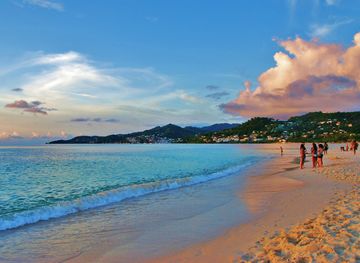
Looking beyond La Sagesse Beach? Discover Grenada for broader travel guides, local hot-spots, and regional highlights.
Explore GrenadaLa Sagesse Beach in Photos
Browse through our photo collection highlighting the charm and character of the destination.
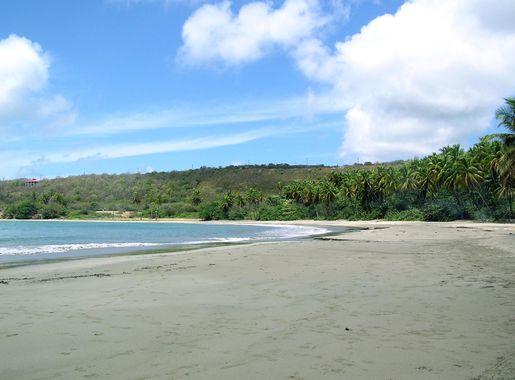

La Sagesse Beach: Grenada's Tranquil Haven
Nestled on the southeastern coast of Grenada, La Sagesse Beach offers a serene escape from the bustle of more crowded tourist spots. This hidden gem boasts a tranquil ambiance, making it the perfect spot for relaxation and reflection. The beach is framed by lush greenery and coconut palms, providing a picturesque backdrop for your tropical getaway. The calm, clear waters of La Sagesse Beach are ideal for swimming and snorkeling. The natural bay ensures gentle waves, making it a safe spot for families and less experienced swimmers. The soft golden sand invites you to lounge under the sun, while the surrounding nature trails are perfect for a leisurely hike, offering stunning views of the coastline. La Sagesse Beach is also home to a charming boutique hotel and a rustic beachside restaurant. Here, you can savor fresh seafood and local dishes while enjoying the soothing sounds of the ocean. The area's rich biodiversity includes various bird species, making it a haven for birdwatchers. Whether you're looking to unwind, explore, or indulge in local cuisine, La Sagesse Beach promises a memorable experience.