

Pilis Mountains Travel Guide - Free Web & App
Your ultimate guide to Pilis Mountains. Discover top landmarks, proposed trips, and local tips. Free on the web or via the Evendo companion app.


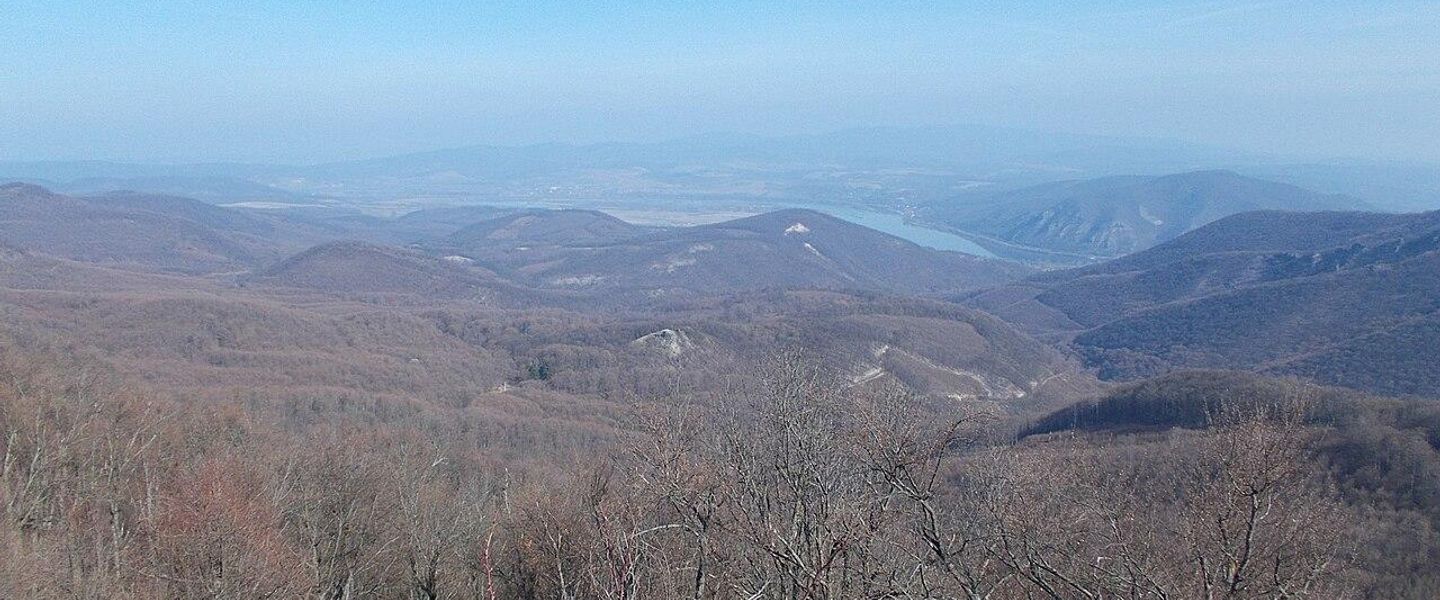


Pilis Mountains in Hungary offer forest trails, limestone gorges, Dobogókő views, medieval heritage and peaceful walks near Budapest and the Danube Bend.
Landscape and Setting
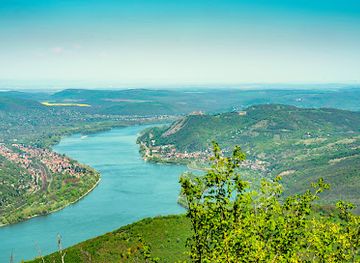
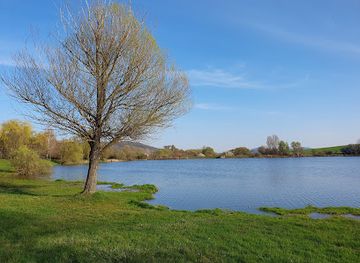
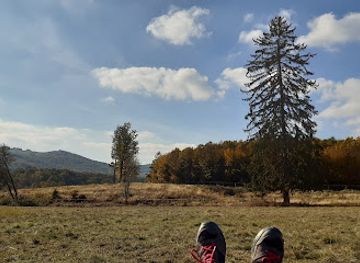
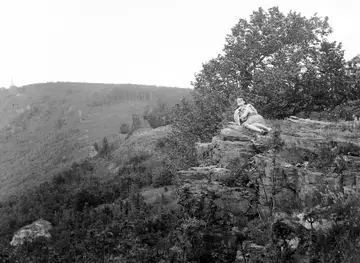
The Pilis Mountains rise between Budapest and the Danube Bend, forming a wooded limestone upland within the wider Transdanubian Mountains. Their ridges and valleys lie close to the capital yet feel distinctly rural, with beech and oak forests, karst formations, rocky viewpoints and quiet village roads creating a varied landscape for walking and cycling. The highest point is Pilis-tető, at 756 metres, while Dobogókő, on the eastern side of the range, is the best-known mountain resort and a popular viewpoint over the surrounding hills and the Danube valley.Read more about Pilis Mountains
Villages, History and Nature
Exploring the Range
When is the best time to visit Pilis Mountains?
Best: May–June, September · 23–28°C| Month | High (°C) | Rainfall (mm) |
|---|---|---|
| January | 3 | 30 |
| February | 4 | 25 |
| March | 9 | 25 |
| April | 16 | 20 |
| May (best) | 23 | 15 |
| June (best) | 28 | 10 |
| July | 30 | 10 |
| August | 29 | 10 |
| September (best) | 24 | 15 |
| October | 17 | 20 |
| November | 9 | 25 |
| December | 3 | 30 |
Getting to and around Pilis Mountains
How to get there
Transportation
Best attractions in Pilis Mountains
The Pilis Mountains offer a network of forested ridges, limestone plateaux and deep valleys rather than a single headline attraction. Dobogókő is the best-known excursion centre, with viewpoints towards the Danube Bend and routes leading into the surrounding woodland. Higher in the range, Pilis-tető and the Boldog Özséb Lookout provide wide views across the wooded uplands, while the Dera Gorge near Pilisszentkereszt is known for its narrow, rocky valley and streamside walking. Klastrompuszta, near Kesztölc, combines forest scenery with the remains of an early Pauline monastery. Pilisszántó offers access to mountain paths and open limestone landscapes, and the roads through the villages reveal a quieter side of the region. The nearby Danube Bend, Esztergom and Visegrád are often visited on the same journey, but they belong to the wider surroundings rather than to the central Pilis Mountains themselves.
-
Park
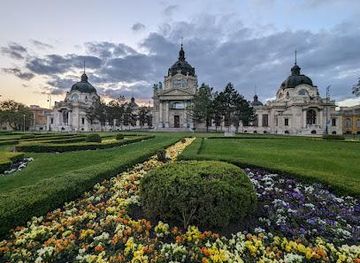
City Park
Explore City Park in Budapest: A serene escape filled with historical landmarks, lush landscapes, and vibrant cultural experiences for every traveler.
-
Tourist attraction
IKONO Budapest
Discover the essence of Budapest at IKONO, where art, culture, and technology converge for an unforgettable experience.
-
Cafe
Café Gerbeaud
Experience the elegance of Café Gerbeaud, Budapest's historic café, where exquisite pastries and rich coffee blend in a timeless atmosphere.
-
Cultural center
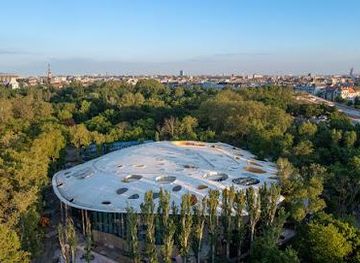
House of Music Hungary
Experience the vibrant rhythms and rich melodies of Hungary at the House of Music in Budapest, a cultural landmark celebrating music's transformative power.

Best landmarks in Pilis Mountains
The defining landmarks of the Pilis are largely natural: the limestone summit and plateau of Pilis-tető, the wooded heights around Dobogókő, and the narrow Dera Gorge near Pilisszentkereszt. The Boldog Özséb Lookout is an important modern viewing point on the highest part of the range, linking the mountain landscape with wide vistas towards surrounding hills and the Danube region. At Klastrompuszta, the surviving remains of the early Pauline monastery mark one of the Pilis's most important medieval religious sites. The villages themselves add cultural landmarks, particularly through their churches, traditional settlement patterns and links with Hungarian and Slovak communities. These features are significant together because they show how geology, forest use, religious history and mountain recreation have shaped the identity of the range.
Explore Pilis Mountains on the map
Plan your trip on one map. See where the top attractions, landmarks, restaurants and hotels are, and book hotels and experiences in a few clicks.
Best hotels in Pilis Mountains
Best restaurants in Pilis Mountains
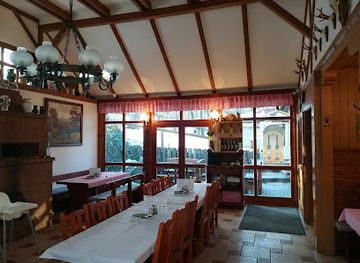
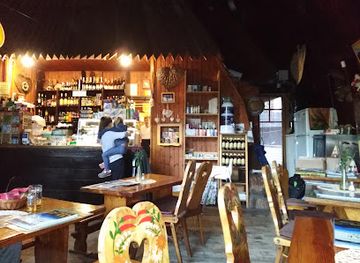
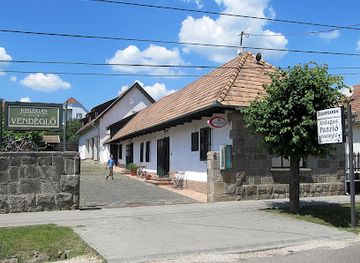
Dining in the Pilis is concentrated in its villages, mountain resort areas and surrounding gateway towns rather than distributed throughout the forest. Dobogókő and Pilisszentkereszt provide the most natural places to look for meals during a walking day, while Piliscsaba, Pilisvörösvár, Kesztölc and Esztergom offer a broader choice of restaurants, cafés and everyday food shops. Menus in the region commonly draw on Hungarian home cooking, including soups, stews, grilled meats, seasonal vegetables, pastries and dairy products, with Slovak and Central European influences present in the traditions of some settlements. Village inns and family-run eateries may be more significant than formal dining rooms, and opening arrangements can vary. Hikers should carry provisions for longer routes, since forest paths do not have a continuous network of cafés or refreshment stands.
-
Restaurant
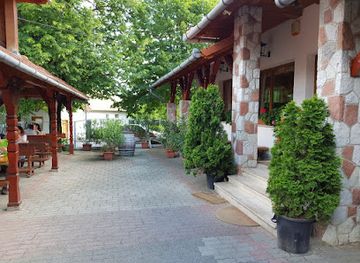
Kis Rigó Vendéglő
Experience authentic Hungarian cuisine at Kis Rigó Vendéglő in Pilisszentlászló - where tradition meets taste in every dish.
-
Restaurant
Zsindelyes Vendégház
Experience authentic Hungarian cuisine amidst nature's beauty at Zsindelyes Vendégház in Pilisszentkereszt.
-
Restaurant
Kislugas Panzió és Vendéglő
Experience authentic Hungarian cuisine at Kislugas Panzió és Vendéglő in beautiful Pilisszentkereszt – where comfort meets culinary delight.
-
Restaurant
Emma vendéglő
Discover authentic Hungarian flavors at Emma Vendéglő in Pilisszentkereszt - where culinary tradition meets stunning nature.
Best bars in Pilis Mountains
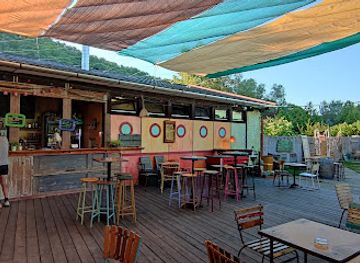
The Pilis Mountains do not have a significant nightclub scene or a concentrated nightlife district. Evenings are generally quiet, centred on the restaurants, pubs and accommodation venues of settlements such as Pilisszentkereszt, Pilisszántó, Piliscsaba and the Dobogókő resort area. Traditional village pubs offer a more authentic social setting than late-night entertainment, while larger choices can be found in Pilisvörösvár, Esztergom, Szentendre or Budapest outside the mountain area. Cultural programmes and community events may take place seasonally, but they should be checked locally rather than assumed to run regularly. Visitors staying in rural accommodation usually come for early walks, forest scenery and village hospitality, with the hills becoming notably dark and peaceful after sunset.
-
Pub
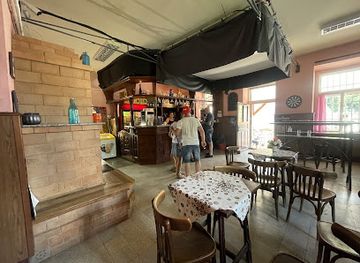
Teca Kocsmája
Discover Teca Kocsmája, a cozy pub in Esztergom, offering a taste of local culture and a diverse selection of Hungarian beverages.
-
Bar
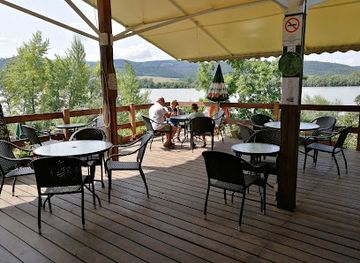
Kerékbár
Discover Kerékbár in Zebegény - a charming bar with stunning views and a vibrant atmosphere, perfect for unwinding after a day of exploration.
-
Bar
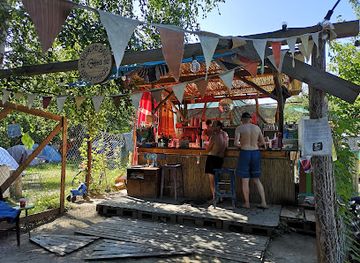
nomad Bar
Discover Nomad Bar in Nagymaros: a scenic riverside bar offering delightful drinks, local flavors, and a warm atmosphere for all visitors.
-
Bar
Tandem
Discover Tandem, a vibrant bar in Nagymaros offering stunning views of the Danube and a delightful selection of local beverages for every taste.
Best nightclubs in Pilis Mountains
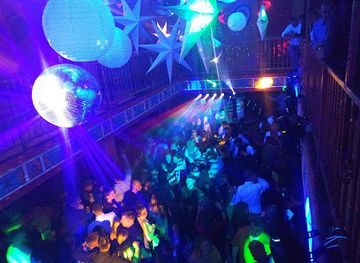
The Pilis Mountains do not have a significant nightclub scene or a concentrated nightlife district. Evenings are generally quiet, centred on the restaurants, pubs and accommodation venues of settlements such as Pilisszentkereszt, Pilisszántó, Piliscsaba and the Dobogókő resort area. Traditional village pubs offer a more authentic social setting than late-night entertainment, while larger choices can be found in Pilisvörösvár, Esztergom, Szentendre or Budapest outside the mountain area. Cultural programmes and community events may take place seasonally, but they should be checked locally rather than assumed to run regularly. Visitors staying in rural accommodation usually come for early walks, forest scenery and village hospitality, with the hills becoming notably dark and peaceful after sunset.
-
Night club
Pilisszántó
Discover the electrifying nightlife of Pilisszántó, a premier night club offering unforgettable experiences in a vibrant atmosphere.
-
Night club
Galaxy disco
Dive into the vibrant nightlife at Galaxy Disco in Piliscsév, where electrifying music and unforgettable moments await every party lover.
-
Night club
Pilisszentlászló
Experience the vibrant nightlife of Pilisszentlászló at its premier night club, where local culture meets energetic entertainment.
-
Night club
Som-hegyi Mesterséges Kocka Tisztás
Discover the electrifying nightlife at Som-hegyi Mesterséges Kocka Tisztás, where stunning nature meets vibrant entertainment in Pilisszántó.
Best shops in Pilis Mountains
Shopping in the Pilis is modest and practical, with village shops, small food businesses and occasional local producers more characteristic than dedicated retail streets. Pilisszentkereszt, Pilisszántó, Piliscsaba and Pilisvörösvár can provide everyday supplies, while larger selections are available in Szentendre, Esztergom or Budapest. Visitors may find regional food products, baked goods, preserves, honey, wine from surrounding areas and small-scale crafts, although availability varies by settlement and season. Outdoor equipment and provisions are easier to obtain in the larger towns than at mountain trailheads. The area is not known for a single signature craft market, so shopping is best understood as part of village life and local food networks rather than a major tourism activity.
-
Dessert shop
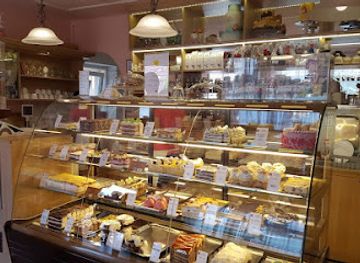
Hilda Cukrászda
Discover the sweet side of Pilisszentkereszt at Hilda Cukrászda, where delicious desserts and frozen yogurt await in a cozy setting.
-
Gift shop
Szputnyik shop D20
Explore the unique treasures at Szputnyik Shop D20, a vintage gift shop in Budapest offering one-of-a-kind clothing and accessories.
-
Art gallery
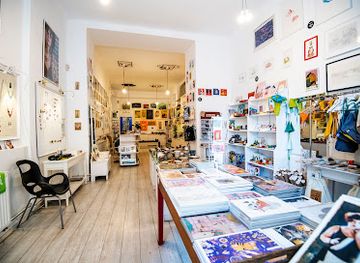
Rododendron Art & Design Shop
Explore unique handcrafted art, fashion accessories, and souvenirs at Rododendron Art & Design Shop in the heart of Budapest.
-
Serviced accommodation
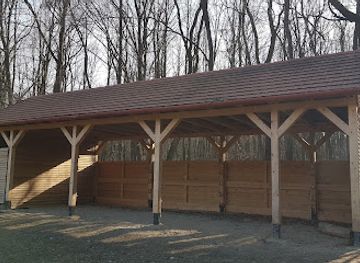
Apátkúti Vadászház Étterem és Fogadó
Experience authentic Hungarian cuisine and cozy accommodations in the beautiful Apát-Kúti Valley, a perfect retreat for nature lovers and food enthusiasts.

Get your free copy of our complete guide to Pilis Mountains, delivered straight to you.
Everything on this page, from attractions and restaurants to essentials and local phrases, in one PDF you can read offline, print or share.
Already have an account? Sign in
Your Pilis Mountains guide is ready.
We'll send it to · Not you? Sign out

Getting your guide ready…
We are putting together a fresh copy of the Pilis Mountains guide. This can take up to a minute.
This can take a few moments. If your browser asks, choose Allow so the download can start. You'll find the guide in your Downloads folder.
Nothing happened? Download it again
Sorry, the guide is taking longer than usual. Please try again in a minute, or get it by email instead.
Pilis Mountains essentials
Currency and Payment
Safety
Emergency Situations
Do's and Don'ts
Local Tips
From Eve
Local phrases worth knowing
You don't need to get them perfect. A few words go a long way, and locals appreciate the effort.
Basics
| English | Local | Say it |
|---|---|---|
| Hello | Szia | [see-ah] |
| Goodbye | Viszontlátásra | [vee-zont-la-taash-ra] |
| Yes | Igen | [ee-gen] |
| No | Nem | [nem] |
| Please/You're welcome | Kérem | [kae-rem] |
| Thank you | Köszönöm | [koe-s-nyoem] |
| Excuse me/Sorry | Elnézést | [el-ne-zesht] |
| How are you? | Hogy vagy? | [hog-e vaag] |
| Fine. And you? | Jól vagyok. És te? | [yole vaa-yok. aesh te] |
| Do you speak English? | Beszélsz angolul? | [be-sails ang-o-lool] |
| I don't understand | Nem értem | [nem aert-em] |
Eating & Drinking
| English | Local | Say it |
|---|---|---|
| I'd like to see the menu, please | Szeretnék látni az étlapot, kérem | [se-reht-naek laat-nee az eat-lopot, kaer-em] |
| I don't eat meat | Nem eszem húst | [nem es-em hoost] |
| Cheers! | Egészségedre! | [e-gees-she-ged-re] |
| I would like to pay, please | Szeretnék fizetni, kérem | [se-reht-naek fee-zeht-nee, kaer-em] |
Emergencies
| English | Local | Say it |
|---|---|---|
| Help! | Segítség! | [she-geet-saeg] |
| Go away! | Menj el! | [meny el] |
| Call the Police! | Hívd a rendőrséget! | [heed a ren-dœr-sae-get] |
| Call a doctor! | Hívd az orvost! | [heed az or-vost] |
| I'm lost | El vagyok tévedve | [el vaag-yok te-ve-dve] |
| I'm ill | Beteg vagyok | [be-teg vaag-yok] |
Shopping
| English | Local | Say it |
|---|---|---|
| I'd like to buy... | Szeretnék vásárolni... | [se-reht-naek va-shaor-ol-nee] |
| I'm just looking | Csak nézelődöm | [chaak ne-zeh-loe-dœm] |
| How much is it? | Mennyi az ára? | [men-yee az aa-ra] |
| That's too expensive | Túl drága | [tool draa-ga] |
| Can you lower the price? | Le tudnád csökkenteni az árat? | [le tud-naad choe-kkehn-teh-nee az aa-rat] |
Time & Numbers
| English | Local | Say it |
|---|---|---|
| What time is it? | Mennyi az idő? | [men-yee az ee-dœ] |
| It's one o'clock | Egy óra van | [edj o-ra van] |
| Half past (10) | Fél tizenegy van | [fel tee-zen-edj van] |
| Morning | Reggel | [red-jel] |
| Afternoon | Délután | [de-lu-taan] |
| Evening | Este | [es-te] |
| Yesterday | Tegnap | [teg-nap] |
| Today | Ma | [ma] |
| Tomorrow | Holnap | [hol-nap] |
| 1 | Egy | [edj] |
| 2 | Kettő | [ket-toe] |
| 3 | Három | [haa-rom] |
| 4 | Négy | [neyj] |
| 5 | Öt | [œt] |
| 6 | Hat | [haat] |
| 7 | Hét | [heyt] |
| 8 | Nyolc | [nyoltz] |
| 9 | Kilenc | [ke-lents] |
| 10 | Tíz | [teeez] |
Transport & Directions
| English | Local | Say it |
|---|---|---|
| Where's a/the...? | Hol van a...? | [hol van a] |
| What's the address? | Mi a cím? | [mee aa cheem] |
| Can you show me (on the map)? | Meg tudnád mutatni (a térképen)? | [meg tud-naad moo-taat-nee a tehr-ke-pehn] |
| When's the next (bus)? | Mikor jön a következő (busz)? | [mee-kor yœn a ke-vet-ke-zœ (boos)] |
| A ticket (to ....) | Egy jegyet (....-ra) | [edj ye-geyt ra] |
History of Pilis Mountains
Limestone Uplands and Karst Landscapes
The Pilis Mountains are a limestone upland shaped by geological processes that produced plateaux, fissures, caves and narrow wooded valleys. The range belongs to the Transdanubian Mountains and forms part of the varied upland landscape north-west of Budapest. Karst drainage and erosion have influenced both the vegetation and the pattern of human use, while exposed limestone surfaces supplied building material and helped create the rocky scenery associated with the area. The geological character is especially evident around Pilis-tető, Klastrompuszta and the limestone valleys near Pilisszentkereszt.
Early Settlement and Royal Forests
Human occupation in and around the Pilis extends back to prehistoric periods, although the surviving historical identity of the mountains is particularly closely connected with the medieval Hungarian kingdom. The forests lay near the royal centre at Esztergom and were used as hunting grounds and sources of timber and other natural resources. Settlements developed along the surrounding valleys and routes, while the hills remained comparatively sparsely populated. Their proximity to Esztergom and the Danube made the range part of an important historical landscape linking royal, ecclesiastical and commercial centres.
The Pauline Foundation at Klastrompuszta
A defining episode in Pilis history is associated with Blessed Eusebius, a canon of Esztergom who is traditionally credited with bringing together hermits in the Pilis during the thirteenth century. The Pauline order, the only monastic order founded in medieval Hungary, established an early centre at Klastrompuszta near Kesztölc. The monastery's remains stand within a forested setting and connect the modern landscape with the religious life of medieval Hungary. The site is a significant historical destination even though only archaeological ruins survive.
Villages, Forestry and Rural Change
Over later centuries, communities around the Pilis combined agriculture, livestock keeping, woodland use and small-scale local industries. Villages such as Pilisszentkereszt and Pilisszántó developed distinctive identities within a landscape shaped by both Slavic and Hungarian settlement histories. Forestry became an important influence on the appearance and management of the hills, while roads and improving regional connections gradually linked the mountain settlements more closely with Budapest and Esztergom. The forests remained working landscapes rather than untouched wilderness.
Tourism and Landscape Protection
Organised recreation expanded as Budapest grew and the Pilis became accessible for day excursions from the capital. Dobogókő developed into a prominent mountain resort and hiking centre, while marked trails, lookout points and forestry roads encouraged walking and winter recreation. Much of the range is now included within the Duna-Ipoly National Park, established to protect important landscapes and habitats in the Danube region. Modern tourism therefore takes place alongside forest management, conservation and the need to protect limestone terrain, wildlife and sensitive paths from excessive disturbance.
Pilis Mountains in Photos
Browse through our photo collection highlighting the charm and character of the destination.
Cities in Pilis Mountains
The towns and cities of Pilis Mountains, and the easiest places to base yourself.
-

-

-


Swipe for more cities
Neighbouring destination travel guides
The closest destinations to Pilis Mountains, if you have time for more than one.
-

-
-

-


Swipe for more destinations
Explore more
Explore more of Central Hungary
Central Hungary brings together Budapest’s thermal baths and heritage with Danube Bend towns, royal estates, wine country and accessible countryside.
Explore Central Hungary
Explore more of Hungary
Discover Hungary: A land of historic cities, scenic landscapes, thermal baths, and rich culinary traditions in the heart of Europe.
Explore Hungary