

Free Sopron Travel Guide & Mobile App
Plan your Sopron trip with Evendo. Get free guides to top attractions, restaurants, hotels, and bars. Web access or download the mobile app.


Sopron, Hungary, pairs Roman heritage, medieval streets, the Firewatch Tower and celebrated wine culture with walks near the Austrian border and forested hills.
Roman Foundations and Medieval Streets
Sopron stands in western Hungary close to the Austrian border, where the wooded slopes of the Sopron Mountains meet a compact historic centre. Its story reaches back to the Roman settlement of Scarbantia, and traces of that past survive beneath and around the medieval town. Within the old walls, narrow lanes open on to Baroque squares, colourful façades and courtyards shaped by centuries of civic, religious and commercial life. The Firewatch Tower, rising above the main square, is the city's defining landmark and an enduring symbol of Sopron.Read more about Sopron
A City of Bells, Cellars and Forests
When is the best time to visit Sopron?
Best: June, August–September · 24–28°C| Month | High (°C) | Rainfall (mm) |
|---|---|---|
| January | 3 | 35 |
| February | 4 | 30 |
| March | 10 | 30 |
| April | 16 | 35 |
| May | 22 | 40 |
| June (best) | 27 | 55 |
| July | 29 | 50 |
| August (best) | 28 | 45 |
| September (best) | 24 | 40 |
| October | 18 | 40 |
| November | 10 | 40 |
| December | 2 | 35 |
Getting to and around Sopron
How to get there
Transportation
Best attractions in Sopron
Sopron's compact historic centre rewards slow exploration, beginning at Fö tér beneath the Firewatch Tower and continuing through lanes lined with painted Baroque houses. The tower's lookout gives a useful overview of the old town, while the Roman remains beneath the main square reveal the city's earlier identity as Scarbantia. Storno House introduces local collecting and historic interiors, and Fabricius House combines domestic architecture with archaeological displays. The Goat Church remains an important cultural and religious landmark, while the old walls offer a quieter route around the medieval core. Museum visitors can also seek out the Roman archaeological area and the Lenck Villa, whose exhibitions explore regional decorative arts. Beyond the centre, the Sopron Mountains provide wooded walking trails and viewpoints, and the nearby wine country places the city within a landscape of vineyards, cellars and rural settlements.
-
Amusement park
Familypark Neusiedlersee
Experience the enchantment of Familypark Neusiedlersee, Austria's premier amusement park for families, packed with rides, shows, and fairy-tale magic.
34 min drive · 14 km from city centre
-
Historical landmark
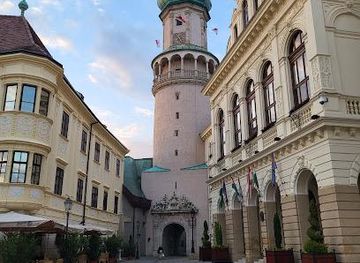
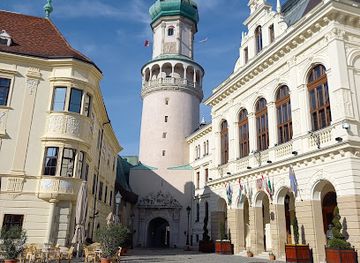
Fire Tower
Discover the rich history and stunning views of Sopron's iconic Fire Tower, a must-see landmark steeped in cultural significance.
8 min walk · 0.7 km from city centre
-
Castle
Esterházy Palace
Discover the grandeur of Esterházy Palace in Eisenstadt, a Baroque masterpiece filled with history, music, and stunning gardens.
39 min drive · 19 km from city centre
-
Fortress
Forchtenstein Castle
Discover the allure of Forchtenstein Castle, a historical fortress showcasing Austria's regal heritage and breathtaking views of the surrounding landscape.
39 min drive · 19 km from city centre



Best landmarks in Sopron
The Firewatch Tower is Sopron's most recognisable landmark, rising above Fö tér from a medieval gate complex and symbolising the city's civic identity. Nearby, the Church of the Assumption, better known as the Goat Church, preserves Gothic origins beneath later Baroque alterations and remains one of the old town's principal religious buildings. Storno House, with its ornate façade and historic collection, illustrates the wealth of Sopron's nineteenth-century civic culture, while the adjoining Fabricius House retains the character of a substantial medieval and early modern town residence. The preserved town walls and the Caesar House area point to the city's Roman and medieval development, with archaeological remains linked to Scarbantia beneath the modern streets. Together these buildings show how Roman foundations, fortified urban life and Baroque reconstruction shaped Sopron's distinctive centre.
-
Historical landmark
Fire Tower
Explore the stunning Fire Tower in Sopron, an iconic historical landmark offering breathtaking views and deep cultural insights.
8 min walk · 0.7 km from city centre
-
Vista point
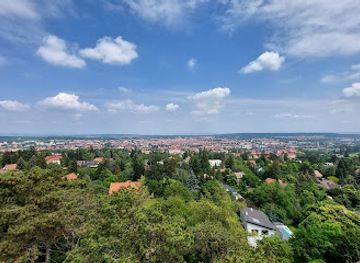
Sörházdombi-kilátó
Discover the breathtaking views of Sopron at Sörházdombi-kilátó, your gateway to nature's beauty and serene landscapes.
18 min walk · 1.5 km from city centre
-
Tourist attraction
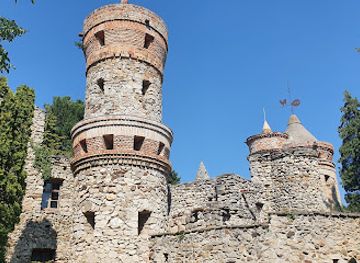
Taródi vár
Explore the enchanting Taródi Vár in Sopron, Hungary—an architectural wonder surrounded by stunning landscapes and rich history.
6 min drive · 1.9 km from city centre
-
Historical landmark
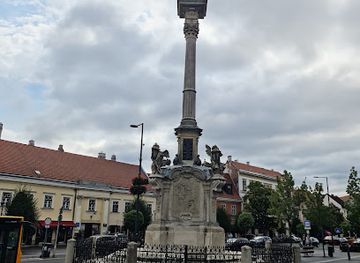
Mária-oszlop
Discover the Mária-oszlop, a stunning Baroque column in Sopron, symbolizing the city's rich history and resilience against adversity.
10 min walk · 0.8 km from city centre
Explore Sopron on the map
Plan your Sopron trip on one map. See where the top attractions, landmarks, restaurants, bars and hotels are, find what's near where you're staying, and book hotels and experiences in a few clicks.
Best hotels in Sopron
Best restaurants in Sopron
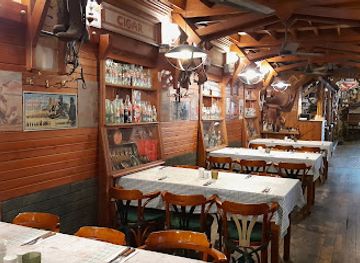
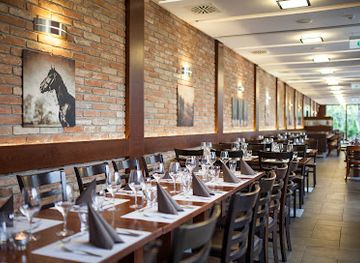
Sopron's food culture reflects western Hungarian traditions and the city's close relationship with Austria, while local wine remains central to the dining experience. Regional restaurants commonly draw on dishes such as goulash, paprikás and hearty soups, alongside roast meats, seasonal vegetables and pastries familiar across Hungary. The Sopron wine region is especially associated with Kékfrankos, a red wine often served with local dishes, while white varieties and rosé also feature in cellar tastings. The historic centre contains cafés, bakeries and restaurants suited to an unhurried meal, and wine bars provide an introduction to nearby producers. Farmers' markets and smaller food shops are useful for fruit, preserves, bread and regional specialities, although the scale and schedule of markets can change. Balf and the surrounding villages offer further opportunities to connect dining with the vineyard landscape.
-
Steak
Papa Joe's Saloon & Steakhouse
Discover exceptional steaks and vibrant American dining at Papa Joe's Saloon & Steakhouse in Sopron - where flavor meets hospitality.
8 min walk · 0.7 km from city centre
-
Restaurant
Tercia Hubertus Étterem és Panzió
Discover authentic Hungarian cuisine at Tercia Hubertus Étterem és Panzió, where tradition meets modernity in the heart of Sopron.
14 min walk · 1.1 km from city centre
-
Restaurant
Deák Étterem
Discover authentic Hungarian flavors at Deák Étterem in Sopron - a perfect blend of tradition and modernity awaits you.
6 min walk · 0.5 km from city centre
-
Restaurant
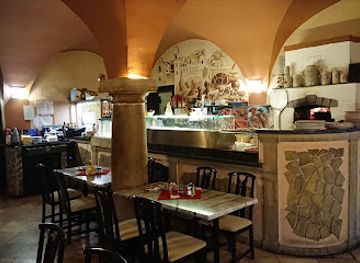
Fórum Pizzéria
Discover the best Italian cuisine at Fórum Pizzéria in Sopron - where authentic flavors meet warm hospitality.
8 min walk · 0.6 km from city centre

Best bars in Sopron
Sopron's evening scene is relatively restrained, centred on wine bars, cafés, restaurants and student-oriented venues rather than a large concentration of nightclubs. The historic centre around Fö tér and the streets leading towards Várkerület provide the main setting for an evening drink, with local Kékfrankos and other regional wines a natural choice. Traditional Hungarian beer and pálinka may also appear, although tastings should be approached carefully. The university population brings occasional live music, cultural events and busier social nights, while theatres and concert programmes provide alternatives to bar-hopping. During festivals and seasonal celebrations, public squares can host performances and temporary events. Outside central streets, nightlife becomes quiet quickly, so evening transport and dining plans are worth arranging in advance, particularly when staying in outer neighbourhoods or visiting the surrounding wine villages.
-
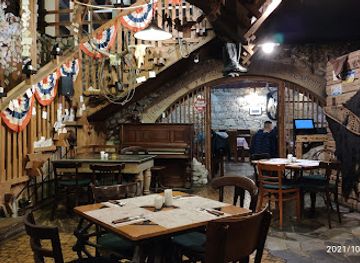
Bar
Papa Joe's Saloon & Steakhouse
Dive into a Taste of America at Papa Joe's Saloon & Steakhouse in Sopron – Where Flavor Meets Fun!
8 min walk · 0.7 km from city centre
-
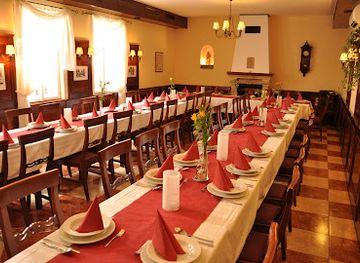
Restaurant
White Rose
Discover authentic Hungarian cuisine and exceptional wines at White Rose, a charming restaurant and wine bar in the heart of Sopron.
13 min walk · 1.1 km from city centre
-
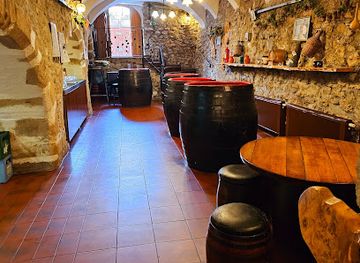
Wine bar
Gyógygödör Borozó
Discover the exquisite wines and delicious local dishes at Gyógygödör Borozó, Sopron's charming wine bar and restaurant.
7 min walk · 0.6 km from city centre
-
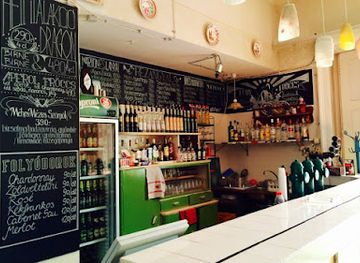
Bar
Gázfröccs
Experience the lively atmosphere and unique flavors of Sopron at Gázfröccs, a bar renowned for its refreshing local drinks and vibrant culture.
6 min walk · 0.5 km from city centre
Best nightclubs in Sopron
Sopron's evening scene is relatively restrained, centred on wine bars, cafés, restaurants and student-oriented venues rather than a large concentration of nightclubs. The historic centre around Fö tér and the streets leading towards Várkerület provide the main setting for an evening drink, with local Kékfrankos and other regional wines a natural choice. Traditional Hungarian beer and pálinka may also appear, although tastings should be approached carefully. The university population brings occasional live music, cultural events and busier social nights, while theatres and concert programmes provide alternatives to bar-hopping. During festivals and seasonal celebrations, public squares can host performances and temporary events. Outside central streets, nightlife becomes quiet quickly, so evening transport and dining plans are worth arranging in advance, particularly when staying in outer neighbourhoods or visiting the surrounding wine villages.
-
Night club
762 Smokehouse
Discover the heart of Sopron's nightlife and dining scene at 762 Smokehouse, where culinary delights meet vibrant entertainment.
7 min walk · 0.6 km from city centre
-
Disco club
CNTRL Sopron
Discover the pulsating nightlife of Sopron at CNTRL, where vibrant music and an electrifying atmosphere await every visitor.
7 min walk · 0.6 km from city centre
-
Disco club
Club Ibiza
Experience the electrifying nightlife at Club Ibiza, Sopron's premier disco destination for unforgettable parties and vibrant entertainment.
7 min drive · 2.2 km from city centre
-
Night club
Pelikán Borozó
Discover the lively nightlife of Sopron at Pelikán Borozó, where music, dancing, and great drinks come together for an unforgettable experience.
13 min walk · 1.0 km from city centre


Best shops in Sopron
Shopping in Sopron is concentrated around the historic centre, Várkerület and the streets radiating from Fö tér, where independent shops, cafés, bakeries and everyday services occupy historic buildings. The central market area is useful for seasonal produce and ordinary Hungarian food shopping, while specialist stores may offer wine from the Sopron region, pálinka, preserves, paprika and confectionery suitable for taking home. Visitors interested in crafts can look for locally made ceramics, textiles, woodwork and small-scale artisan goods, although the selection varies between shops and markets. Larger retail outlets and supermarkets are found outside the old centre, serving local residents rather than functioning as attractions. Wine purchased from a producer or specialist retailer offers a more direct connection with the surrounding vineyards than generic souvenirs, and checking labelling and transport rules is sensible when carrying bottles across borders.
-
Shopping mall
Sopron Plaza
Discover a vibrant shopping experience at Sopron Plaza, where local culture meets modern retail in the heart of Hungary.
5 min drive · 1.5 km from city centre
-
Shopping mall
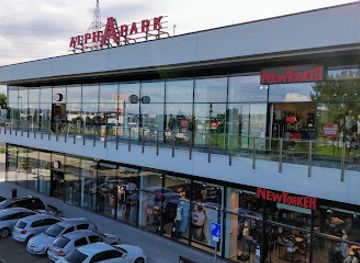
Alphapark
Discover Alphapark in Sopron: Your ultimate destination for shopping, dining, and family fun in Hungary.
8 min drive · 2.5 km from city centre
-
Shopping mall
Family Center
Explore the Family Center in Sopron: A family-friendly shopping mall with diverse stores, dining options, and entertainment for all ages.
8 min drive · 2.6 km from city centre
-
Dollar store
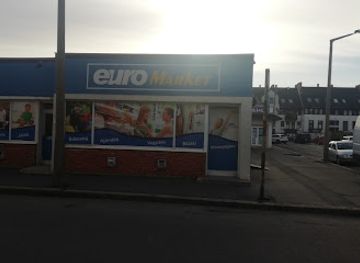
EuroMarket
Explore EuroMarket in Sopron for unbeatable deals on a wide range of products, making it the perfect stop for budget-conscious travelers.
4 min walk · 0.3 km from city centre
Get your free copy of our complete guide to Sopron, delivered straight to you.
Everything on this page, from attractions and restaurants to essentials and local phrases, in one PDF you can read offline, print or share.
Already have an account? Sign in
Your Sopron guide is ready.
We'll send it to · Not you? Sign out

Getting your guide ready…
We are putting together a fresh copy of the Sopron guide. This can take up to a minute.
This can take a few moments. If your browser asks, choose Allow so the download can start. You'll find the guide in your Downloads folder.
Nothing happened? Download it again
Sorry, the guide is taking longer than usual. Please try again in a minute, or get it by email instead.
Sopron essentials
Currency and Payment
Safety
Emergency Situations
Do's and Don'ts
Local Tips
From Eve
Local phrases worth knowing
You don't need to get them perfect. A few words go a long way, and locals appreciate the effort.
Basics
| English | Local | Say it |
|---|---|---|
| Hello | Helló | [heh-loh] |
| Goodbye | Viszontlátásra | [vee-sont-la-taash-ra] |
| Yes | Igen | [ee-gen] |
| No | Nem | [nem] |
| Please/You're welcome | Kérem | [kay-rem] |
| Thank you | Köszönöm | [koes-noem] |
| Excuse me/Sorry | Elnézést | [el-nay-zayst] |
| How are you? | Hogy vagy? | [hoj vahdj] |
| Fine. And you? | Jól vagyok. És te? | [yol vahdj-ohk. ays teh] |
| Do you speak English? | Beszélsz angolul? | [bes-ayl-s ang-oh-lool] |
| I don't understand | Nem értem | [nem ayrt-em] |
Eating & Drinking
| English | Local | Say it |
|---|---|---|
| I'd like to see the menu, please | Szeretnék megnézni a menüt, kérem | [seh-reh-tneik meh-nyez-nee ah meh-noot, kay-rem] |
| I don't eat meat | Nem eszem húst | [nem es-em hoost] |
| Cheers! | Egészségedre! | [eg-ay-sheh-ged-reh] |
| I would like to pay, please | Fizetnék, kérem | [fee-zeht-neik, kay-rem] |
Emergencies
| English | Local | Say it |
|---|---|---|
| Help! | Segítség! | [sheh-geet-saeg] |
| Go away! | Menj el! | [men yel] |
| Call the Police! | Hívd a rendőrséget! | [heevd ah rehn-dur-say-get] |
| Call a doctor! | Hívd az orvost! | [heevd ozz or-vosht] |
| I'm lost | Elvesztem | [el-veh-stem] |
| I'm ill | Beteg vagyok | [beh-tehg vahdj-ohk] |
Shopping
| English | Local | Say it |
|---|---|---|
| I'd like to buy... | Vennék... | [ven-neyk] |
| I'm just looking | Csak nézelődöm | [chak nay-zeh-loe-dum] |
| How much is it? | Mennyibe kerül? | [men-nyee-beh keh-ryool] |
| That's too expensive | Túl drága | [tool draa-ga] |
| Can you lower the price? | Le tudnád engedni az árat? | [leh too-dnaad eng-ed-nee ahz ah-raht] |
Time & Numbers
| English | Local | Say it |
|---|---|---|
| What time is it? | Mennyi az idő? | [men-yee ahz ee-d-oh] |
| It's one o'clock | Egy óra van | [edj oh-ra van] |
| Half past (10) | Fél tizenegy | [fayl tee-zen-ayg] |
| Morning | Reggel | [re-ggel] |
| Afternoon | Délután | [del-oo-taan] |
| Evening | Este | [es-teh] |
| Yesterday | Tegnap | [teg-nap] |
| Today | Ma | [mah] |
| Tomorrow | Holnap | [hol-nap] |
| 1 | Egy | [edj] |
| 2 | Kettő | [ket-toe] |
| 3 | Három | [haa-rom] |
| 4 | Négy | [neyg] |
| 5 | Öt | [oet] |
| 6 | Hat | [haht] |
| 7 | Hét | [hayt] |
| 8 | Nyolc | [nyolts] |
| 9 | Kilenc | [keel-ents] |
| 10 | Tíz | [teaze] |
Transport & Directions
| English | Local | Say it |
|---|---|---|
| Where's a/the...? | Hol van a...? | [hol van ah] |
| What's the address? | Mi a cím? | [mee ah cheem] |
| Can you show me (on the map)? | Megmutatnád (a térképen)? | [meg-moo-tat-naad ah tare-kaypen] |
| When's the next (bus)? | Mikor jön a következő (busz)? | [mee-kor yoen ah koe-vet-ke-zo (boos)] |
| A ticket (to ....) | Egy jegyet (....-ra) | [edj ye-geh-et rah] |
History of Sopron
Scarbantia and Roman Beginnings
Sopron developed on the site of Scarbantia, a Roman settlement established along the Amber Road, the major trading route linking the Baltic region with Italy and the Adriatic. The town occupied a strategically useful position near the western edge of Roman Pannonia and possessed a forum, public buildings and defensive works. Archaeological remains beneath the modern centre, including sections associated with the Roman forum and town wall, reveal the scale of this early urban community. After Roman rule weakened in the fifth century, the settlement changed in character, but its location continued to support regional commerce and movement between the Danube basin and the Alpine lands.
The Medieval Town Emerges
During the medieval period, Sopron became a fortified town with growing political and economic importance. The settlement was known in German as Ödenburg and attracted German-speaking settlers alongside the Hungarian population, creating a multilingual urban culture that endured for centuries. Its walls, gates and churches developed as trade expanded, while royal privileges strengthened the town's municipal position. The medieval street plan remains legible in the old centre, particularly around today's Fö tér and the lanes leading towards the former fortifications. Religious institutions and merchant houses helped establish the architectural framework later transformed by Baroque rebuilding.
Ottoman Frontier and Habsburg Rule
Sopron was not occupied by the Ottoman Empire, but its position near the frontier made the sixteenth and seventeenth centuries politically and militarily unsettled. The town served as an important western Hungarian centre during the period when much of the kingdom was divided between Ottoman, Habsburg and Hungarian-held territories. Fires and warfare caused repeated damage, while the walls remained central to its defence. Under Habsburg rule, Catholic institutions expanded and the town's appearance gradually changed. The Gothic Church of the Assumption, commonly called the Goat Church, acquired much of its present Baroque character during later rebuilding.
Baroque Reconstruction and Civic Life
A major fire in 1676 destroyed large parts of Sopron and prompted extensive reconstruction. Rebuilding introduced the Baroque façades, stucco details and orderly civic architecture that now define much of the historic centre. Wealthy merchant and civic families reshaped houses around Fö tér, while churches and public buildings were repaired or remodelled. The resulting town retained its medieval street pattern but gained a more coherent early modern appearance. Houses now known as Storno House and Fabricius House reflect the prosperity and cultural ambitions of Sopron's urban elite, as well as the close relationship between domestic architecture, trade and municipal life.
Industry, Railways and Modernisation
The nineteenth century brought administrative reform, industrial change and improved connections with the wider region. Railway links strengthened Sopron's commercial role and made movement towards Vienna and other Hungarian towns easier, while new institutions and civic buildings appeared beyond the medieval core. The city remained marked by the coexistence of Hungarian and German cultural traditions, a characteristic of western Hungary that shaped education, commerce and public life. Urban expansion took place outside the walls, yet the historic centre continued to dominate Sopron's identity. Its wine production and surrounding forests also remained important elements of the local economy and landscape.
The 1921 Plebiscite and Shared Heritage
After the First World War, the Treaty of Trianon assigned Sopron and its surrounding area to Austria, but a plebiscite held in December 1921 resulted in the city remaining in Hungary. Sopron subsequently became known as the Civitas Fidelissima, or the Most Loyal City, a title referring to the vote. The event remains central to local civic memory and is commemorated in the city. The twentieth century also brought war, border restrictions during the socialist period and later renewed cross-border contact. Since Hungary joined the European Union, Sopron's position beside Austria has again encouraged regional mobility while its historic architecture and cultural institutions have gained wider recognition.
Travel experiences inspired by this city

Swipe for more travel diaries
Sopron in Photos
Browse through our photo collection highlighting the charm and character of the destination.
Cities near Sopron
The closest cities to Sopron, if you have time for more than one stop.
-

-

-

-

-


Swipe for more cities
Explore more

Explore more of Hungary
Discover Hungary: A land of historic cities, scenic landscapes, thermal baths, and rich culinary traditions in the heart of Europe.
Explore Hungary