

Free Elkhart Travel Guide & Mobile App
Plan your Elkhart trip with Evendo. Get free guides to top attractions, restaurants, hotels, and bars. Web access or download the mobile app.


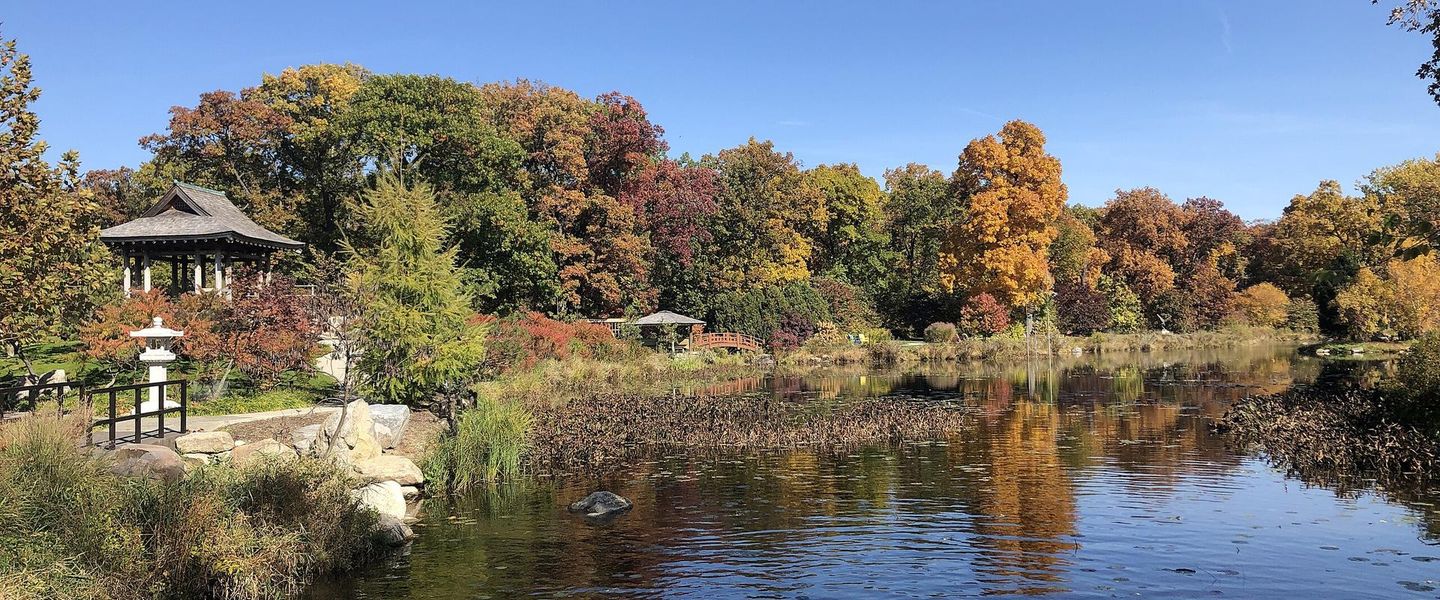


Elkhart, Indiana blends RV heritage, railroad history, live arts, gardens and riverside parks with easy access to northern Indiana’s heritage landscapes.
Railroads, Rivers and Reinvention
Elkhart occupies a meeting point of the St Joseph River and the Elkhart River in northern Indiana, a setting that helped shape its history as a transport, manufacturing and commercial centre. The city grew rapidly after rail connections arrived in the nineteenth century, and its industrial identity remains visible in the recreational-vehicle companies and specialist manufacturers that earned Elkhart County a national reputation. Yet the city is not defined by industry alone. Its historic streets, riverfront parks, museums and performance venues reveal a place that has repeatedly adapted to changing technologies and tastes.Read more about Elkhart
Music, Architecture and Local Culture
Green Space and Northern Indiana Landscapes
When is the best time to visit Elkhart?
Best: June, August–September · 23–28°C| Month | High (°C) | Rainfall (mm) |
|---|---|---|
| January | 3 | 50 |
| February | 4 | 45 |
| March | 10 | 65 |
| April | 16 | 85 |
| May | 21 | 95 |
| June (best) | 26 | 105 |
| July | 29 | 100 |
| August (best) | 28 | 95 |
| September (best) | 23 | 90 |
| October | 16 | 80 |
| November | 8 | 70 |
| December | 3 | 55 |
Getting to and around Elkhart
How to get there
Transportation
Best attractions in Elkhart
Elkhart’s attractions range from transport history to gardens, art and performance. The National New York Central Railroad Museum occupies the city’s former railway landscape and uses locomotives, rolling stock and interpretive displays to explain the importance of rail travel to the community. At Ruthmere Mansion, visitors can explore an early twentieth-century house whose interiors reflect the prosperity created by local industry. The Midwest Museum of American Art presents changing exhibitions and a substantial collection in a revitalised downtown setting, while the Lerner Theatre provides a restored venue for concerts, touring productions and community events. Wellfield Botanic Gardens offers a contrasting experience, with planted landscapes, sculpture, water features and walking paths beside the Elkhart River. Riverfront parks and trails add open-air viewpoints, and seasonal events such as the Elkhart Jazz Festival extend sightseeing into the city’s musical and civic life.
-
Tourist attraction
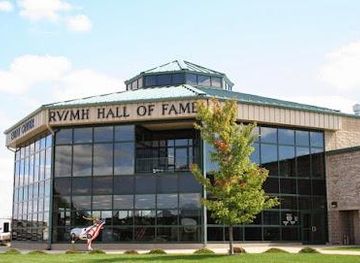
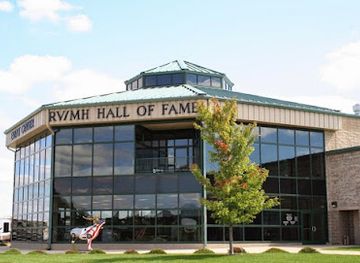
RV Hall of Fame & Museum
Explore the RV Hall of Fame & Museum in Elkhart, Indiana, and dive into the captivating history of recreational vehicles and road travel.
24 min drive · 8.1 km from city centre
-
Tourist attraction
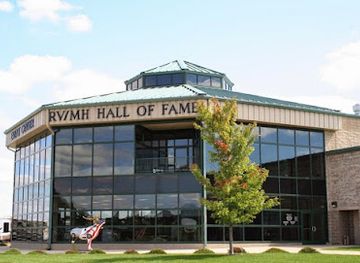
RV Hall of Fame & Museum
Explore the fascinating history of recreational vehicles at the RV Hall of Fame & Museum, a must-visit attraction in Elkhart, Indiana.
24 min drive · 8.1 km from city centre
-
Tourist attraction
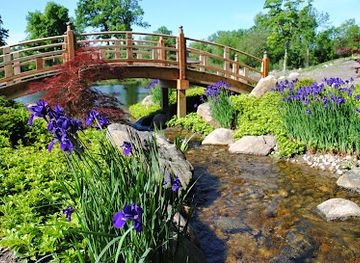
Wellfield Botanic Gardens
Discover the enchanting Wellfield Botanic Gardens in Elkhart, Indiana, a serene oasis of vibrant flora and artistic beauty perfect for nature lovers and event celebrations.
16 min walk · 1.3 km from city centre
-
Tourist attraction
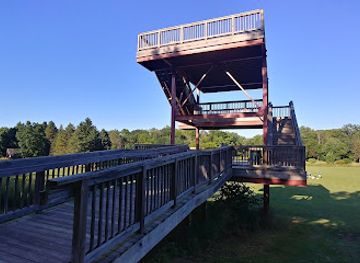
Ox Bow Park
Explore the beauty of Ox Bow Park in Goshen, Indiana, where nature meets adventure in a serene outdoor setting.
25 min drive · 8.4 km from city centre
Best landmarks in Elkhart
The Lerner Theatre is Elkhart’s most prominent civic and cultural landmark, a carefully restored downtown theatre whose ornate interior and continuing programme recall the city’s early twentieth-century prosperity. Ruthmere Mansion represents the architectural confidence of the same period, combining a substantial residential design with period furnishings and landscaped grounds. The old railway environment around the National New York Central Railroad Museum points to Elkhart’s transformation into a major transport and manufacturing centre. Downtown commercial buildings and civic structures add layers of late nineteenth- and early twentieth-century architecture, while the St Joseph River remains the geographical landmark around which the settlement developed. Wellfield Botanic Gardens contributes a contemporary landscape landmark, using water, planting and sculpture to give the river corridor a distinctive public character.
-
Heritage museum
RV Hall of Fame & Museum
Uncover the history and culture of recreational vehicles at the RV Hall of Fame & Museum in Elkhart, Indiana, a unique heritage museum for travel lovers.
24 min drive · 8.1 km from city centre
-
Botanical garden
Wellfield Botanic Gardens
Explore the enchanting Wellfield Botanic Gardens in Elkhart, Indiana, where nature, serenity, and beauty come together in perfect harmony.
16 min walk · 1.3 km from city centre
-
Restaurant
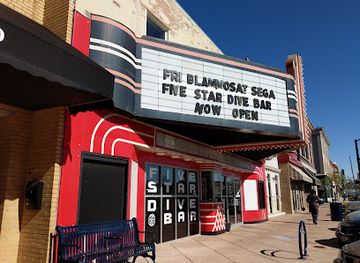
Five Star Dive Bar
Discover the lively spirit of Elkhart at Five Star Dive Bar, where delicious food meets vibrant live music in a charming setting.
15 min walk · 1.2 km from city centre
-
Event venue
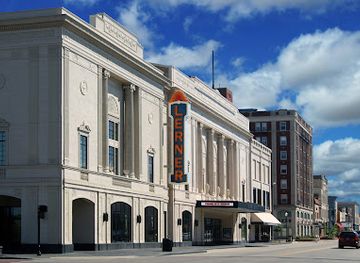
The Lerner Theatre
Explore the historic Lerner Theatre in Elkhart, Indiana, a vibrant venue for concerts, theater productions, and cherished cultural events.
14 min walk · 1.1 km from city centre

Explore Elkhart on the map
Plan your Elkhart trip on one map. See where the top attractions, landmarks, restaurants, bars and hotels are, find what's near where you're staying, and book hotels and experiences in a few clicks.
Best hotels in Elkhart
Best restaurants in Elkhart
Elkhart’s dining scene reflects northern Indiana’s Midwestern foundations, with familiar American comfort food, locally owned cafés, bakeries, diners and casual restaurants sitting alongside contemporary kitchens. The wider county’s Amish and Mennonite heritage influences regional food culture through baked goods, preserves, noodles and hearty country cooking, although those traditions are more strongly associated with nearby rural communities than with every city restaurant. Downtown provides the most concentrated choice of independent dining and evening cafés, while neighbourhood and roadside establishments offer burgers, sandwiches, pizza and other informal staples. Farmers’ markets and seasonal events bring locally grown produce, handmade foods and baked items into the public realm. Craft beer and modern American menus appear alongside long-established family dining, giving visitors a useful sense of both the area’s agricultural background and its manufacturing-era working culture.
-
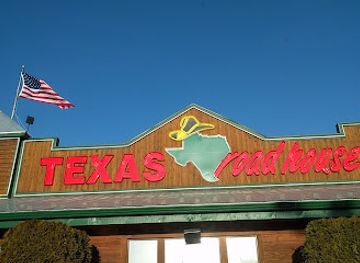
Steak
Texas Roadhouse
Experience the best of American cuisine at Texas Roadhouse in Elkhart – where delicious steaks meet lively atmosphere.
13 min drive · 4.3 km from city centre
-
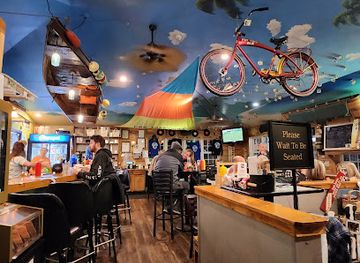
American
Flippin Cow
Discover Flippin Cow in Elkhart: Where American Cuisine Meets Vibrant Atmosphere and Exceptional Service.
19 min drive · 6.3 km from city centre
-
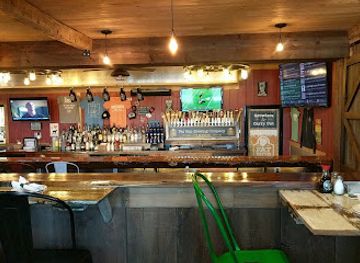
Seafood
Chubby Trout
Experience an unforgettable culinary journey at Chubby Trout in Elkhart, Indiana - where fresh seafood meets innovative flavors.
16 min drive · 5.2 km from city centre
-
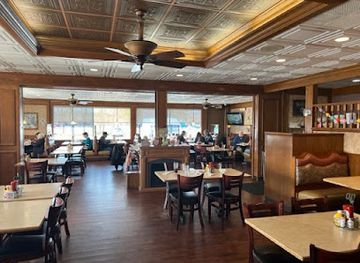
American
Callahan's Restaurant
Savor American and Greek delights at Callahan's Restaurant in Elkhart - a family-friendly destination with something for everyone!
12 min drive · 4.1 km from city centre
Best bars in Elkhart
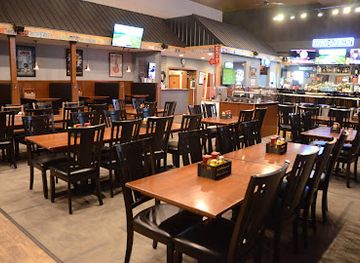
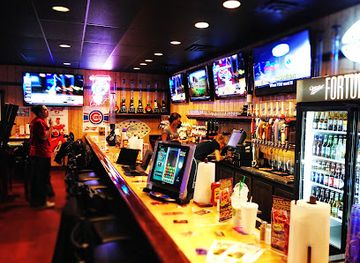
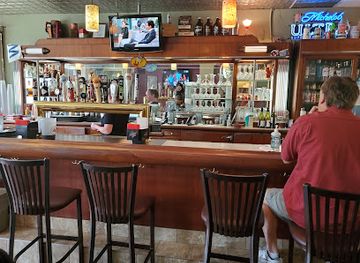
Elkhart’s evening life is modest and locally oriented rather than built around a large nightclub district. Downtown bars, brew-focused venues and casual restaurants provide places for conversation, drinks and occasional live music, with the most concentrated activity near the central arts and entertainment area. The Lerner Theatre anchors a broader cultural night out through concerts, theatrical productions and touring performances, while the Elkhart Jazz Festival brings musicians and audiences into several venues during its programme. Community concerts, seasonal events and performances at local arts spaces can be more characteristic of the city after dark than late-night clubbing. Visitors should check current event calendars, as entertainment varies by season and many venues operate around scheduled performances rather than maintaining continuous nightlife hours.
-
Bar
Five Star Dive Bar
Experience the vibrant atmosphere of Five Star Dive Bar in Elkhart, Indiana, where delicious food and live music create unforgettable memories.
15 min walk · 1.2 km from city centre
-
Grill
Wings Etc.
Experience the ultimate American grill and sports bar in Elkhart, where mouthwatering wings and a lively atmosphere await.
24 min drive · 8.1 km from city centre
-
Fine Dining
523 Tap & Grill
Experience fine dining at 523 Tap & Grill in Elkhart, Indiana, where flavorful grilled dishes meet a warm and inviting atmosphere.
16 min walk · 1.3 km from city centre
-
Restaurant
Cappy's Northside Bar and Grill
Experience the best of American dining at Cappy's Northside Bar and Grill in Elkhart, Indiana, where flavorful food meets a friendly atmosphere.
6 min drive · 1.9 km from city centre

Best nightclubs in Elkhart
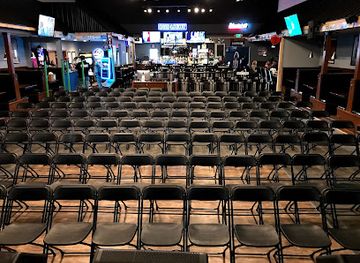
Elkhart’s evening life is modest and locally oriented rather than built around a large nightclub district. Downtown bars, brew-focused venues and casual restaurants provide places for conversation, drinks and occasional live music, with the most concentrated activity near the central arts and entertainment area. The Lerner Theatre anchors a broader cultural night out through concerts, theatrical productions and touring performances, while the Elkhart Jazz Festival brings musicians and audiences into several venues during its programme. Community concerts, seasonal events and performances at local arts spaces can be more characteristic of the city after dark than late-night clubbing. Visitors should check current event calendars, as entertainment varies by season and many venues operate around scheduled performances rather than maintaining continuous nightlife hours.
-
Night club
Five Star Dive Bar
Discover Elkhart's vibrant nightlife at Five Star Dive Bar, featuring live music, delicious food, and a welcoming atmosphere for all visitors.
15 min walk · 1.2 km from city centre
-
Sports bar
Galley Sports Pub - Elkhart
Experience the best of sports and pub dining at Galley Sports Pub in Elkhart, Indiana, where every game is a celebration.
14 min drive · 4.7 km from city centre
-
Bar
Phyls Corner
Discover Phyl's Corner: A lively bar and Latin American restaurant in Elkhart, Indiana, offering great food, drinks, and nightly entertainment.
14 min drive · 4.6 km from city centre
-
Bar
Hardy's Bar
Discover Hardy's Bar in Elkhart, Indiana, where vibrant nightlife meets friendly service and affordable drinks.
16 min walk · 1.3 km from city centre

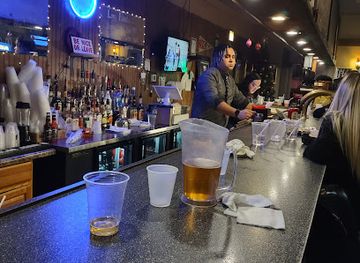

Best shops in Elkhart
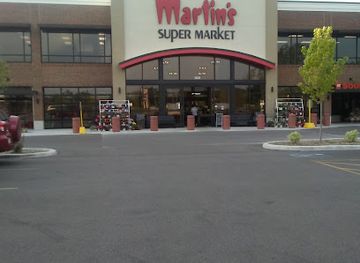
Shopping in Elkhart is centred on practical local commerce, independent downtown businesses, seasonal markets and the wider retail areas serving residents rather than on a concentrated luxury district. The Elkhart Farmers Market is a useful place to encounter regional produce, baked goods, preserves and handmade items when its seasonal programme is operating. Downtown shops and galleries offer gifts, art, homewares and locally produced goods, while museum shops can provide more place-specific souvenirs connected with railways, American art and regional history. Visitors interested in the county’s countryside may encounter farm stands, quilt-related goods and traditional food products around nearby Amish and Mennonite communities, although these are outside Elkhart proper. Instrument and recreational-vehicle heritage also informs the city’s identity, even when it is experienced through museums and specialist businesses rather than conventional souvenir retail.
-
Shopping mall
Concord Mall
Explore Concord Mall, Elkhart - Your ultimate shopping destination with diverse stores, delightful dining, and family-friendly entertainment.
18 min drive · 5.9 km from city centre
-
Clothing store
Ross Dress for Less
Discover unbeatable deals on clothing, shoes, and home decor at Ross Dress for Less in Elkhart, Indiana, the perfect shopping destination for budget-conscious travelers.
11 min drive · 3.7 km from city centre
-
Shopping mall
Hart City Supercenter
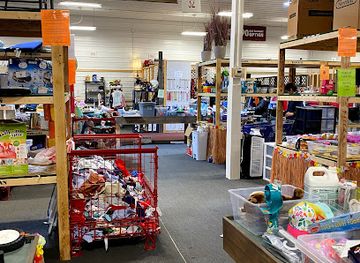
Explore Hart City Supercenter in Elkhart: A unique shopping mall with furniture, thrift treasures, and delightful Mexican cuisine.
14 min drive · 4.6 km from city centre
-
Gift shop
Five Below
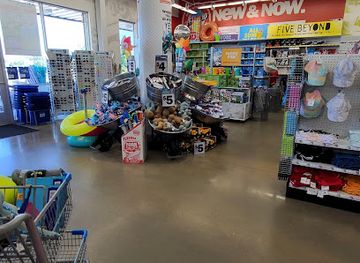
Discover a world of fun at Five Below in Elkhart, where every item is $5 or less, perfect for souvenirs, gifts, and trendy finds!
11 min drive · 3.6 km from city centre

Get your free copy of our complete guide to Elkhart, delivered straight to you.
Everything on this page, from attractions and restaurants to essentials and local phrases, in one PDF you can read offline, print or share.
Already have an account? Sign in
Your Elkhart guide is ready.
We'll send it to · Not you? Sign out

Getting your guide ready…
We are putting together a fresh copy of the Elkhart guide. This can take up to a minute.
This can take a few moments. If your browser asks, choose Allow so the download can start. You'll find the guide in your Downloads folder.
Nothing happened? Download it again
Sorry, the guide is taking longer than usual. Please try again in a minute, or get it by email instead.
Elkhart essentials
Currency and Payment
Safety
Emergency Situations
Do's and Don'ts
Local Tips
From Eve
Local phrases worth knowing
You don't need to get them perfect. A few words go a long way, and locals appreciate the effort.
Basics
| English | Local | Say it |
|---|---|---|
| Hello | Howdy | [haw-dee] |
| Goodbye | See ya | [see yah] |
| Yes | Yep | [yep] |
| No | Nah | [nah] |
| Please/You're welcome | Please/No problem | [pleez/no problem] |
| Thank you | Thanks | [thanks] |
| Excuse me/Sorry | Pardon me/My bad | [par-dn me/my bad] |
| How are you? | Howdy | [haw-dee] |
| Fine. And you? | Doing good. You? | [doo-ing good. yoo?] |
| Do you speak English? | Ya speak English? | [yah speak ing-glish?] |
| I don't understand | I don't get it | [i dohnt get it] |
Eating & Drinking
| English | Local | Say it |
|---|---|---|
| I'd like to see the menu, please | Can I see the menu, please | [can i see the menu, please] |
| I don't eat meat | I don't eat meat | [i dohnt eat meet] |
| Cheers! | Cheers! | [cheers!] |
| I would like to pay, please | I'll pay now, please | [i'll pay now, please] |
Emergencies
| English | Local | Say it |
|---|---|---|
| Help! | Help! | [help!] |
| Go away! | Get lost! | [get lost!] |
| Call the Police! | Call the cops! | [call the cops!] |
| Call a doctor! | Get a doc! | [get a doc!] |
| I'm lost | I'm lost | [i'm lost] |
| I'm ill | I'm sick | [i'm sick] |
Shopping
| English | Local | Say it |
|---|---|---|
| I'd like to buy... | I wanna buy... | [i wanna buy] |
| I'm just looking | I'm just browsing | [i'm just bro-zing] |
| How much is it? | How much does it cost? | [how much duz it cost?] |
| That's too expensive | That's pricey | [that's prye-see] |
| Can you lower the price? | Can ya make it cheaper? | [can yah make it chee-per?] |
Time & Numbers
| English | Local | Say it |
|---|---|---|
| What time is it? | What time is it? | [what time is it?] |
| It's one o'clock | It's one | [it's one] |
| Half past (10) | Half past ten | [half past ten] |
| Morning | Morning | [morning] |
| Afternoon | Afternoon | [afternoon] |
| Evening | Evening | [evening] |
| Yesterday | Yesterday | [yesterday] |
| Today | Today | [today] |
| Tomorrow | Tomorrow | [tomorrow] |
| 1 | One | [wun] |
| 2 | Two | [too] |
| 3 | Three | [three] |
| 4 | Four | [for] |
| 5 | Five | [five] |
| 6 | Six | [siks] |
| 7 | Seven | [sev-en] |
| 8 | Eight | [ate] |
| 9 | Nine | [nine] |
| 10 | Ten | [ten] |
Transport & Directions
| English | Local | Say it |
|---|---|---|
| Where's a/the...? | Where's the...? | [where's the...?] |
| What's the address? | What's the address? | [what's the address?] |
| Can you show me (on the map)? | Can you show me (on the map)? | [can you show me (on the map)?] |
| When's the next (bus)? | When's the next (bus)? | [when's the next (bus)?] |
| A ticket (to ....) | A ticket (to ....) | [a ticket (to ....)] |
History of Elkhart
Indigenous Landscapes and River Crossings
Long before Elkhart became a city, the rivers and woodland corridors of northern Indiana were used by Indigenous peoples, including Potawatomi communities. The St Joseph River formed part of a wider network of routes linking the Great Lakes and the interior, supporting travel, trade and seasonal settlement. European-American accounts later associated the area with figures known as Chief Elkhart and Pierre Moran, although the historical record surrounding those names is complex. The river junction remained central to the settlement that emerged in the early nineteenth century, and the name Elkhart was applied to the river, the county and eventually the city.
Settlement and County Formation
Elkhart County was established in 1830, and the town of Elkhart developed soon afterwards at the confluence of the St Joseph and Elkhart rivers. Early settlers were drawn by fertile land, waterways and opportunities connected with regional trade. The community was formally platted in the 1830s and incorporated as a town in 1840, before receiving city status in 1875. Roads, mills, shops and civic buildings gradually gave the settlement an urban character. The displacement of Indigenous communities formed part of the wider federal and state policies that opened northern Indiana to American settlement.
Railways Transform the Community
Railway construction in the 1850s changed Elkhart’s position within northern Indiana. Lines linking Chicago with the eastern Great Lakes and beyond brought passengers, raw materials and markets closer to local businesses, while the city became an important railway point. The new connections encouraged population growth and industrial investment, and they helped establish the commercial importance that Elkhart retains today. The National New York Central Railroad Museum interprets this period through equipment, photographs and railway artefacts. Rail transport also supported the movement of manufactured goods from local factories into a much wider American market.
Industry, Instruments and Civic Prosperity
In the late nineteenth and early twentieth centuries, Elkhart developed a varied manufacturing economy. Musical-instrument production became particularly influential, with band instruments and related businesses contributing to the city’s reputation as a centre of American instrument making. Other factories produced furniture, machinery and consumer goods. Industrial wealth shaped the built environment, from commercial blocks downtown to substantial residences such as Ruthmere Mansion, completed in 1910 for Albert and Elizabeth Beardsley. Churches, schools and civic institutions expanded alongside private industry, giving the city many of the architectural contrasts visible today.
The Rise of Recreational Vehicles
After the Second World War, Elkhart County became closely associated with the manufacture of recreational vehicles. The industry grew from earlier local experience in vehicle bodies, furniture and specialised manufacturing, then expanded as American leisure travel and motor touring became more popular. Factories and suppliers created jobs throughout the county, while the sector linked Elkhart to national patterns of mobility, seasonal travel and suburban prosperity. The recreational-vehicle industry remains an important part of the area’s economic identity, although the city’s heritage also reflects rail transport, music manufacturing, commerce and river-based settlement.
A Contemporary Cultural City
Late twentieth- and early twenty-first-century Elkhart have brought efforts to preserve historic buildings, strengthen the downtown core and broaden the city’s cultural offer. The restoration and continued use of the Lerner Theatre, the development of the Midwest Museum of American Art and the creation of Wellfield Botanic Gardens complement established museums and riverfront parks. Festivals, concerts and arts programming add public life to a city still shaped by manufacturing. Contemporary Elkhart therefore presents its past not as a single story, but as a combination of Indigenous geography, transport, industry, music, architecture and civic renewal.
Elkhart in Photos
Browse through our photo collection highlighting the charm and character of the destination.
Cities near Elkhart
The closest cities to Elkhart, if you have time for more than one stop.
-

-

-

-

-


Swipe for more cities
Explore more

Explore more of Indiana
Explore Indiana: From the bustling streets of Indianapolis to the serene beauty of Indiana Dunes, discover the diverse experiences that make Indiana the Crossroads of America.
Explore Indiana