

Free West Papua Travel Guide & Mobile App
Explore West Papua with free travel guides. Discover regional history, expert tips, proposed trips, and audio guides on web or mobile app.


Explore West Papua for cloud forests, endemic wildlife, historic Manokwari, mangrove coasts and the marine landscapes of Kaimana and Cenderawasih Bay.
Read more about West Papua
When is the best time to visit West Papua?
Best: June–August · 30°C| Month | High (°C) | Rainfall (mm) |
|---|---|---|
| January | 31 | 250 |
| February | 31 | 230 |
| March | 31 | 250 |
| April | 31 | 250 |
| May | 31 | 200 |
| June (best) | 30 | 170 |
| July (best) | 30 | 160 |
| August (best) | 30 | 150 |
| September | 30 | 170 |
| October | 31 | 200 |
| November | 31 | 230 |
| December | 31 | 250 |
Getting to and around West Papua
How to get there
Transportation
Best attractions in West Papua
West Papua’s attractions are defined by ecological variety and the effort required to reach places beyond the main towns. Around Manokwari, visitors can combine the city’s coastal setting with Doreri Bay, Mansinam Island and Gunung Meja Nature Park, while the Arfak Mountains offer forest walks, Lake Anggi and opportunities to look for birds-of-paradise with community guides. The highlands are a destination for nature-focused travel rather than a collection of easily accessed viewpoints. In the west and south, Fakfak’s coastal scenery and historical connections contrast with Kaimana’s Triton Bay, where limestone islands, reefs, mural-like rock formations and seasonal marine wildlife are explored by boat. Teluk Bintuni is notable for extensive mangroves and estuarine environments, while the Wondama coast provides access to the marine ecosystems of Cenderawasih Bay. Activities include snorkelling, diving, birdwatching, forest trekking, kayaking and village-based cultural visits. Facilities can be basic, and the quality of an excursion depends heavily on local knowledge, sea conditions and responsible access arrangements.
-
National park
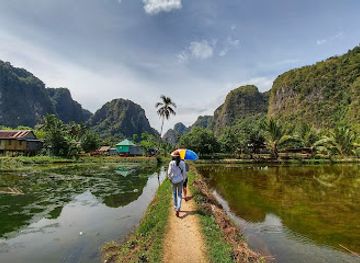
Taman Nasional Bantimurung Bulusaraung
Explore the lush landscapes and vibrant biodiversity of Taman Nasional Bantimurung Bulusaraung, a national park that captivates every nature lover.
-
Recreation center
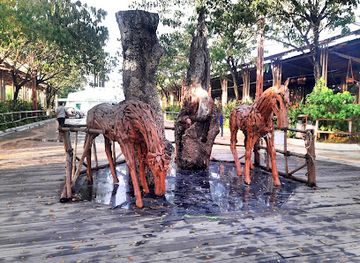
Khatulistiwa Park
Explore Khatulistiwa Park in Pontianak, a cultural haven at the equator, blending relaxation and local heritage in lush surroundings.
-
Scenic spot
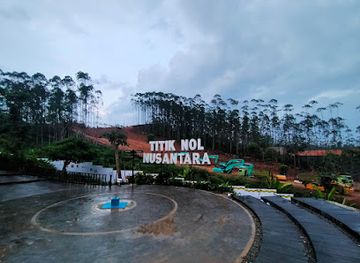
Titik Nol IKN Nusantara
Explore the breathtaking landscapes and cultural significance of Titik Nol IKN, the future capital of Indonesia, in East Kalimantan.
-
National park
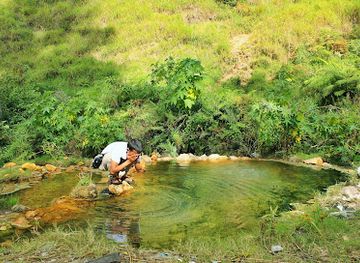
Mount Rinjani National Park
Discover the wonders of Mount Rinjani National Park, a hiker's paradise in Lombok, featuring breathtaking landscapes, diverse wildlife, and rich culture.
Best landmarks in West Papua
Mansinam Island, reached from Manokwari across Doreri Bay, is one of West Papua’s most significant cultural and religious landmarks because of its association with the beginning of sustained Protestant missionary activity in the region in 1855. The Arfak Mountains form a natural landmark behind Manokwari, with steep forested slopes and the paired highland lakes of Anggi creating a landscape markedly different from the coast. Kaimana’s Triton Bay is recognised for its dramatic limestone islands, sheltered waters and rock surfaces bearing ancient painted motifs, although access should be arranged with local authorities and communities. Fakfak’s coastal hills and old maritime connections give the town a distinctive setting, while Teluk Bintuni’s broad mangrove environment is a landmark of landscape rather than masonry. Along the Wondama coast, forested islands, reefs and bays form part of the wider Cenderawasih Bay seascape, whose importance is both geographical and ecological.
-
Tourist attraction
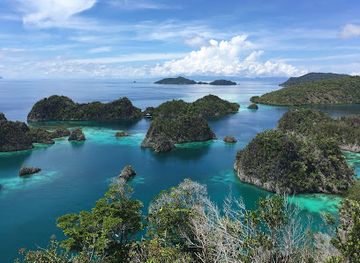
Piaynemo Raja Ampat
Explore the mesmerizing landscapes and vibrant marine life at Piaynemo Raja Ampat, a top destination for nature lovers and adventure seekers.
-
Monument
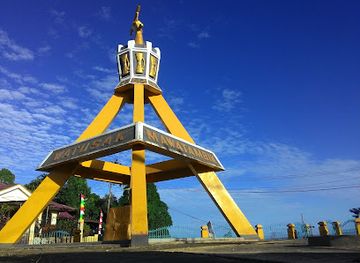
Tugu Pawibili
Discover the cultural heart of Sorong at Tugu Pawibili, a monument that embodies the spirit of West Papua's rich heritage and community.
-
National park
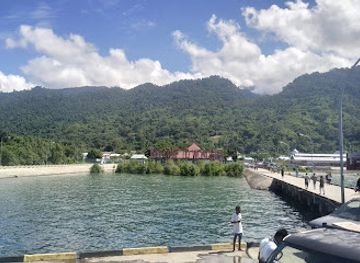
Taman Nasional Teluk Cenderawasih
Discover the largest national park in Indonesia, featuring breathtaking landscapes, diverse wildlife, and rich marine life in Taman Nasional Teluk Cenderawasih.
-
Resort hotel
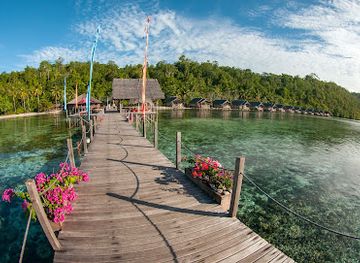
Papua Explorers Dive Resort
Experience the vibrant marine life and rich culture at Papua Explorers Dive Resort in the stunning Raja Ampat region of West Papua.
Explore West Papua on the map
Plan your trip on one map. See where the top cities, national parks and sights are, and book hotels and experiences in a few clicks.
Best hotels in West Papua
Best restaurants in West Papua
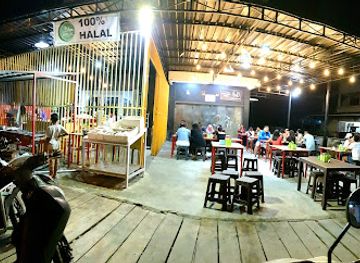
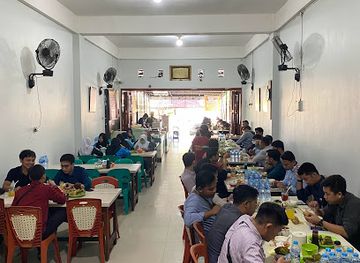
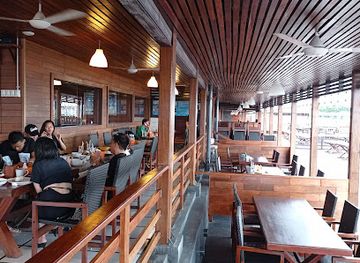
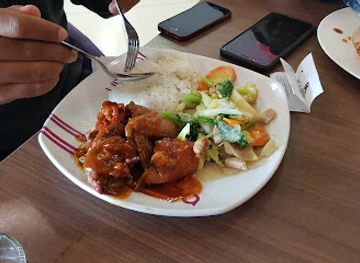
Dining in West Papua is centred on Indonesian staples, locally caught fish, sago and produce from forest, garden and coastal communities rather than on a highly formalised regional restaurant cuisine. In Manokwari, markets and simple warungs offer rice, noodles, grilled fish, soups and dishes influenced by wider eastern Indonesian cooking, while coastal towns such as Kaimana and Fakfak provide access to seafood when supply and weather permit. Sago remains an important food tradition in Papua and may appear as a staple or in preparations such as papeda, commonly served with a strongly flavoured fish soup. Nutmeg has long been associated with the Fakfak area, and local fruits and vegetables vary with altitude and season. Rural inns, guesthouses and homestays may provide meals if requested in advance; visitors should not expect extensive choice in remote villages. Carrying snacks and confirming meal arrangements is sensible on boat and mountain journeys.
-
Seafood
REPUBLIC SEAFOOD
Experience the best seafood dining at Republic Seafood in Sorong City—fresh flavors from West Papua's bountiful waters await.
-
South Sulawesi restaurant
Coto HB’eNG
Experience authentic South Sulawesi flavors at Coto HB’eNG in Sorong - a must-visit dining destination for every food enthusiast.
-
Seafood
Marina Star Restaurant Seafood
Experience exquisite seafood dining at Marina Star Restaurant in Sorong, where fresh flavors meet breathtaking views in West Papua.
-
Restaurant
Solaria Restaurant
Discover authentic Indonesian flavors at Solaria Restaurant in Sorong - where every meal tells a story.
Best bars in West Papua
West Papua does not have a large, concentrated nightclub scene. Evening life is most visible in Manokwari, where hotel lounges, cafés, restaurants and small entertainment venues provide a modest urban choice, while some other district capitals have simple eateries and places for socialising after work. In many communities, evenings centre on family life, church activities, conversation and local gatherings rather than late-night commercial entertainment. Alcohol availability and attitudes vary between communities, and visitors should follow local guidance, especially in villages and around religious sites. Kaimana, Fakfak and Bintuni may offer relaxed waterfront or town-centre dining, but opening arrangements can change and should be checked locally. In the Arfak Mountains and remote coastal areas, the evening experience is generally quiet, with guesthouse meals, conversation and the sounds of the surrounding forest or sea replacing organised nightlife.
-
Hotel
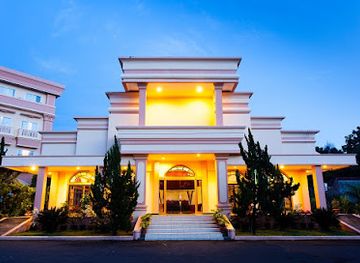
ASTON Niu Manokwari Hotel and Conference Center
Experience luxury and local charm at ASTON Niu Manokwari Hotel, the perfect base for exploring West Papua's natural beauty and cultural richness.
-
Restaurant
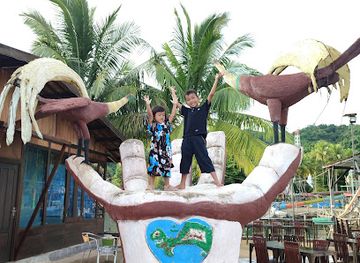
MOOIpark Sorong
Experience the vibrant blend of dining, relaxation, and adventure at MOOIpark Sorong, a must-visit destination in West Papua.
-
Seafood
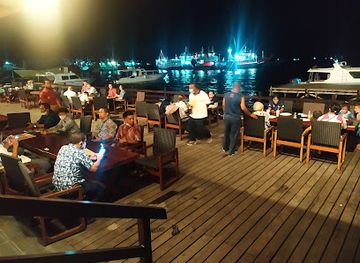
Marina Star Restaurant Seafood
Savor the fresh flavors of the sea at Marina Star Restaurant Seafood in Sorong, where every dish tells a story of local culinary tradition.
-
Night club
BLUE ANGELS CLUB
Dive into the vibrant nightlife of Jayapura at Blue Angels Club, where karaoke and excitement come alive every night.

Best nightclubs in West Papua
West Papua does not have a large, concentrated nightclub scene. Evening life is most visible in Manokwari, where hotel lounges, cafés, restaurants and small entertainment venues provide a modest urban choice, while some other district capitals have simple eateries and places for socialising after work. In many communities, evenings centre on family life, church activities, conversation and local gatherings rather than late-night commercial entertainment. Alcohol availability and attitudes vary between communities, and visitors should follow local guidance, especially in villages and around religious sites. Kaimana, Fakfak and Bintuni may offer relaxed waterfront or town-centre dining, but opening arrangements can change and should be checked locally. In the Arfak Mountains and remote coastal areas, the evening experience is generally quiet, with guesthouse meals, conversation and the sounds of the surrounding forest or sea replacing organised nightlife.
-
Night club
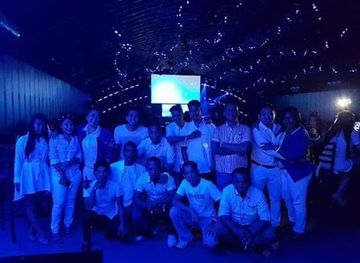
BLUE ANGELS CLUB
Dive into the nightlife of Jayapura at Blue Angels Club, a top-rated night club and karaoke bar that guarantees fun and excitement till dawn.
-
Karaoke bar
MONALISA CLUB (KARAOKE)
Experience the vibrant nightlife of Sorong City at Monalisa Club, the ultimate karaoke and disco destination for fun and entertainment.
-
Bar
Kangaroo Club
Discover the energetic nightlife of Papua at Kangaroo Club, a vibrant bar offering a unique blend of local culture and nightlife excitement.
-
Night club
STARLIGHT EXECUTIVE CLUB
Discover the vibrant nightlife of Starlight Executive Club in Sorong, where music, dancing, and unforgettable moments await.


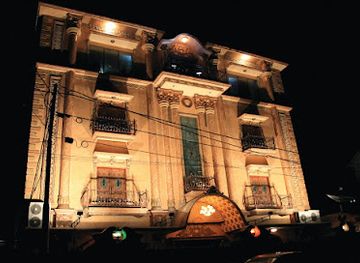
Best shops in West Papua
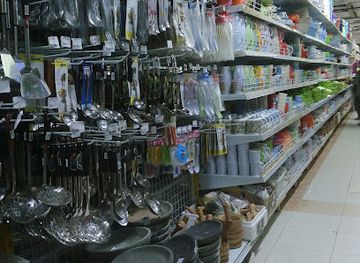
Shopping in West Papua is primarily practical and local, with the broadest choice found in Manokwari’s markets, small shopping streets and supermarkets. Traditional markets sell vegetables, fruit, fish, cooked food and household goods, while district-town shops provide basic clothing, medicines and travel supplies rather than an extensive range of international brands. Appropriate regional purchases may include packaged nutmeg products from the Fakfak area, coffee and other foods when clearly labelled and legally sourced, as well as locally made woven goods or small handicrafts bought directly from artisans or community-run outlets. Craft traditions and designs vary between Papuan communities, so visitors should ask about meaning, materials and customary permission rather than treating cultural objects as generic souvenirs. Wildlife products, including feathers, shells and items made from protected species, should be avoided. Remote expeditions require shopping before departure because villages and islands may have limited supplies.
-
Shopping mall
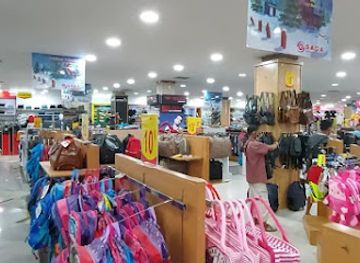
SAGA Supermarket & Dept. Store
Explore the vibrant SAGA Supermarket & Dept. Store in Sorong City for a unique shopping experience that captures the spirit of local culture and flavors.
-
Shopping mall
RAMAYANA Mall Sorong
Discover shopping, dining, and entertainment at RAMAYANA Mall Sorong, your ultimate destination in West Papua for a vibrant experience.
-
Shopping mall
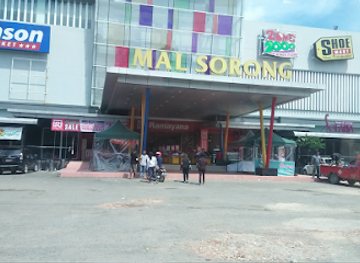
Mega Mall Sorong
Discover shopping, dining, and entertainment at Mega Mall Sorong, the heartbeat of Sorong City in West Papua.
-
Supermarket
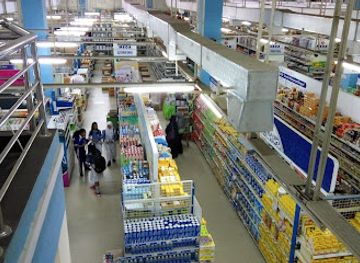
Papua Supermarket
Discover the vibrant flavors and unique souvenirs at Papua Supermarket, your essential shopping destination in Sorong, West Papua.
Get your free copy of our complete guide to West Papua, delivered straight to you.
Everything on this page, from attractions and restaurants to essentials and local phrases, in one PDF you can read offline, print or share.
Already have an account? Sign in
Your West Papua guide is ready.
We'll send it to · Not you? Sign out

Getting your guide ready…
We are putting together a fresh copy of the West Papua guide. This can take up to a minute.
This can take a few moments. If your browser asks, choose Allow so the download can start. You'll find the guide in your Downloads folder.
Nothing happened? Download it again
Sorry, the guide is taking longer than usual. Please try again in a minute, or get it by email instead.
West Papua essentials
Currency and Payment
Safety
Emergency Situations
Do's and Don'ts
Local Tips
From Eve
Local phrases worth knowing
You don't need to get them perfect. A few words go a long way, and locals appreciate the effort.
Basics
| English | Local | Say it |
|---|---|---|
| Hello | Salam | [sah-lahm] |
| Goodbye | Selamat tinggal | [seh-lah-maht teen-gahl] |
| Yes | Iya | [ee-yah] |
| No | Tidak | [tee-dahk] |
| Please/You're welcome | Silakan | [see-lah-kahn] |
| Thank you | Terima kasih | [teh-ree-mah kah-see] |
| Excuse me/Sorry | Maaf | [mah-ahf] |
| How are you? | Apa kabar? | [ah-pah kah-bar] |
| Fine. And you? | Baik. Dan kamu? | [bah-eek. dahn kah-moo] |
| Do you speak English? | Apakah kamu berbicara bahasa Inggris? | [ah-pah-kah kah-moo ber-bee-chah-rah bah-sah ing-gris] |
| I don't understand | Saya tidak mengerti | [sah-yah tee-dahk men-ger-tee] |
Eating & Drinking
| English | Local | Say it |
|---|---|---|
| I'd like to see the menu, please | Saya ingin melihat menu, silakan | [sah-yah een-gin meh-lih-hat meh-noo, see-lah-kahn] |
| I don't eat meat | Saya tidak makan daging | [sah-yah tee-dahk mah-kahn dah-ging] |
| Cheers! | Selamat makan! | [seh-lah-maht mah-kahn] |
| I would like to pay, please | Saya ingin membayar, silakan | [sah-yah een-gin mem-bah-yar, see-lah-kahn] |
Emergencies
| English | Local | Say it |
|---|---|---|
| Help! | Tolong! | [toh-long] |
| Go away! | Pergi jauh! | [per-gee jah-oo] |
| Call the Police! | Panggil Polisi! | [pahn-gee-l poh-lee-see] |
| Call a doctor! | Panggil dokter! | [pahn-gee-l dok-ter] |
| I'm lost | Saya tersesat | [sah-yah ter-seh-saht] |
| I'm ill | Saya sakit | [sah-yah sah-kit] |
Shopping
| English | Local | Say it |
|---|---|---|
| I'd like to buy... | Saya ingin membeli... | [sah-yah een-gin mem-beh-lee] |
| I'm just looking | Saya hanya melihat | [sah-yah han-yah meh-lih-hat] |
| How much is it? | Berapa harganya? | [beh-rah-pah har-gah-nya] |
| That's too expensive | Itu terlalu mahal | [ee-too ter-lah-loo mah-hal] |
| Can you lower the price? | Bisakah kamu menurunkan harga? | [bee-sah-kah kah-moo meh-noo-run-kahn har-gah] |
Time & Numbers
| English | Local | Say it |
|---|---|---|
| What time is it? | Jam berapa? | [jahm beh-rah-pah] |
| It's one o'clock | Jam satu | [jahm sah-too] |
| Half past (10) | Setengah (10) | [seh-teng-ah (sepuluh)] |
| Morning | Pagi | [pah-gee] |
| Afternoon | Sore | [so-reh] |
| Evening | Malam | [mah-lahm] |
| Yesterday | Kemarin | [keh-mah-reen] |
| Today | Hari ini | [hah-ree ee-nee] |
| Tomorrow | Besok | [beh-sok] |
| 1 | Satu | [sah-too] |
| 2 | Dua | [doo-ah] |
| 3 | Tiga | [tee-gah] |
| 4 | Empat | [em-paht] |
| 5 | Lima | [lee-mah] |
| 6 | Enam | [eh-nahm] |
| 7 | Tujuh | [too-joo] |
| 8 | Delapan | [deh-lah-pahn] |
| 9 | Sembilan | [sem-bee-lahn] |
| 10 | Sepuluh | [seh-poo-looh] |
Transport & Directions
| English | Local | Say it |
|---|---|---|
| Where's a/the...? | Di mana ...? | [dee mah-nah] |
| What's the address? | Apa alamatnya? | [ah-pah ah-lah-maht-nya] |
| Can you show me (on the map)? | Bisa tunjukkan di peta? | [bee-sah toon-jook-kahn dee peh-tah] |
| When's the next (bus)? | Kapan bus berikutnya? | [kah-pahn boos beh-ri-koot-nya] |
| A ticket (to ....) | Tiket (ke ...) | [tee-ket (keh ...)] |
History of West Papua
Papuan settlement and enduring customary societies
West Papua has been inhabited for many thousands of years by Papuan peoples whose languages, exchange networks and customary land systems remain central to regional life. Communities developed varied relationships with mountain forests, river valleys, islands, reefs and mangrove coasts rather than forming a single political culture. Archaeological evidence across New Guinea points to deep histories of plant management, hunting, fishing and long-distance movement. In the present province, these older relationships remain visible in customary ownership, village authority and locally governed use of forests and marine resources.
Maritime exchange and Tidore’s influence
Before European colonial rule, coastal West Papua was connected to trading networks reaching through the Moluccas and the wider eastern Indonesian seas. The Sultanate of Tidore exercised influence over parts of the Bird’s Head and adjacent coasts through tribute relationships, alliances and commerce, although control varied greatly and did not erase the authority of local communities. Forest products, birds-of-paradise plumes and other valuable goods moved through these networks. Fakfak’s history particularly reflects the region’s links with the Moluccan world and the circulation of Islam, trade and political influence across the sea.
European mapping and Dutch colonial rule
European interest in New Guinea expanded from the sixteenth century, but sustained Dutch involvement developed gradually through exploration, missions and administrative stations. The Dutch incorporated western New Guinea into the Netherlands East Indies while exercising limited and uneven authority over its large interior. Manokwari became an important colonial and mission centre, and coastal posts connected the territory to shipping routes around the Bird’s Head Peninsula. Colonial boundaries and institutions later shaped Indonesia’s provincial geography, even though many areas remained governed in practice through local customary systems.
Missionary activity at Mansinam and Manokwari
Christian missionary work became a major influence in the Manokwari area from the nineteenth century. German missionaries Carl Wilhelm Ottow and Johann Gottlob Geissler are traditionally associated with arriving on Mansinam Island in 1855, an event commemorated by local Christian communities. Mission stations introduced schools, churches and new forms of administration, while conversion unfolded through complex local encounters rather than a single uniform process. Mansinam and Manokwari consequently hold an important place in the history of Christianity in Papua, alongside the continuing significance of older beliefs and customary institutions.
The Second World War and post-war transition
The Pacific War altered the strategic importance of western New Guinea, bringing military activity, disruption and new infrastructure to parts of the territory. After the war, the Netherlands retained control of Dutch New Guinea while Indonesia increasingly asserted that the territory should become part of the Indonesian state. The New York Agreement of 1962 created a United Nations-administered transition, followed by the transfer of administration to Indonesia in 1963. These events established the political framework for the region’s later history, although their interpretation remains contested.
Integration into Indonesia and provincial change
The 1969 Act of Free Choice resulted in West New Guinea remaining within Indonesia, and the territory was subsequently administered as Irian Jaya before later becoming Papua and West Papua. The process remains a sensitive subject, with differing interpretations among Indonesian authorities, Papuan communities and international observers. West Papua province was created in 2003, initially under the name West Irian Jaya, and its boundaries have changed as new provinces were formed. Contemporary debates continue to involve political representation, customary land, resource development, environmental protection and regional autonomy.
Conservation, resource development and contemporary West Papua
In recent decades, West Papua has become increasingly associated with marine conservation, forest protection and community-based tourism, while also facing pressures from roads, plantations, logging, mining and large-scale development. Cenderawasih Bay, the Arfak Mountains, Kaimana’s Triton Bay and the mangroves of Teluk Bintuni illustrate the province’s ecological importance. Conservation is not simply a question of setting aside landscapes: customary owners, local governments, churches, researchers and businesses all influence how resources are managed. This balance between economic change and stewardship shapes the region’s contemporary identity.
West Papua in Photos
Browse through our photo collection highlighting the charm and character of the destination.
Neighbouring regions of West Papua
The closest regions to West Papua, if you have time for more than one.
-

-

-

-

-


Swipe for more regions
Explore more

Explore more of Indonesia
Explore Indonesia: An archipelago of diverse cultures, stunning landscapes, and endless adventures from bustling cities to serene beaches.
Explore Indonesia