

Free Papua Travel Guide & Mobile App
Explore Papua with free travel guides. Discover regional history, expert tips, proposed trips, and audio guides on web or mobile app.


Explore Papua’s bays, islands, forests and Indigenous cultures from Jayapura to Biak, with local guidance for responsible journeys.
Read more about Papua
When is the best time to visit Papua?
Best: June–August · 30°C| Month | High (°C) | Rainfall (mm) |
|---|---|---|
| January | 31 | 250 |
| February | 30 | 230 |
| March | 31 | 240 |
| April | 31 | 220 |
| May | 31 | 210 |
| June (best) | 30 | 200 |
| July (best) | 30 | 190 |
| August (best) | 30 | 200 |
| September | 31 | 210 |
| October | 31 | 220 |
| November | 31 | 230 |
| December | 31 | 240 |
Getting to and around Papua
How to get there
Transportation
Best attractions in Papua
Papua’s attractions combine northern New Guinea’s coastal landscapes with living cultural and historical experiences. Around Jayapura, Lake Sentani is the province’s most accessible natural focus, with broad water, wooded shores and island communities whose artistic traditions include carving and painting. The Cyclops Mountains rise behind the lake and city, offering forest scenery and walking opportunities where access is locally approved and guides are used. Jayapura’s waterfront, bays and viewpoints provide a sense of the province’s maritime setting, while nearby coastal areas are suited to informal swimming and boat excursions when conditions are safe. Biak and Supiori broaden the picture with coral reefs, beaches, forest, caves and smaller island communities. Biak is especially important for Second World War history, with defensive positions and wartime remains that should be visited only with local advice because of unstable structures and possible unexploded ordnance. Visitors interested in wildlife can seek birdwatching and reef experiences, although specialist trips require advance arrangements and realistic expectations about facilities. Cultural visits are most rewarding when organised through local hosts and approached as exchanges rather than staged displays. The province has no single concentrated sightseeing circuit; its appeal lies in combining water, forest, island travel, Indigenous heritage and history at a measured pace.
-
Tourist attraction
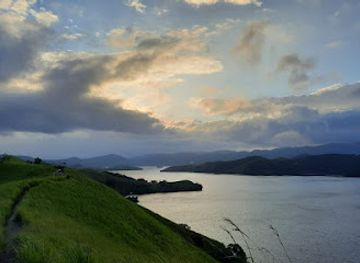
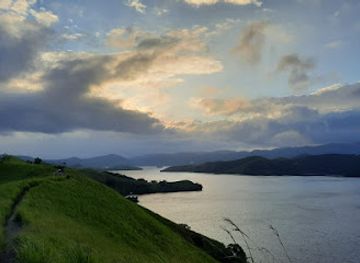
Tungku Wiri Hill
Experience the breathtaking vistas and serene beauty of Tungku Wiri Hill, a must-visit tourist attraction in Jayapura Regency, Papua.
-
Tourist attraction
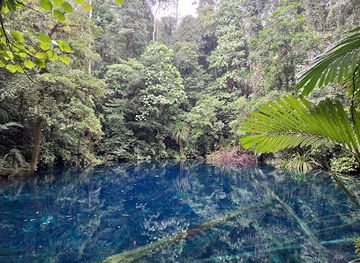
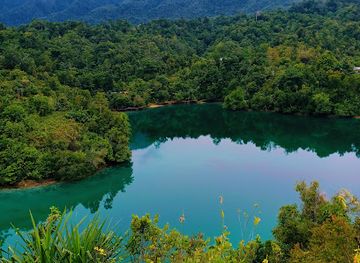
Telaga Biru
Unveil the natural allure of Telaga Biru, a captivating blue lake in Papua, offering serenity and breathtaking landscapes for every traveler.
-
Tourist attraction
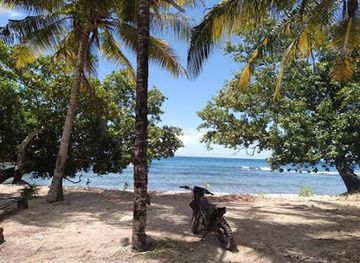
Pantai Sarawandori
Experience the untouched beauty of Pantai Sarawandori, a hidden gem in Papua's Yapen Islands with stunning beaches and vibrant local culture.
-
Tourist attraction
Pantai Pasir 6 Jayapura
Discover the beauty of Pantai Pasir 6 in Jayapura, where pristine sands and tranquil waters create the perfect beach getaway in Papua.
Best landmarks in Papua
Lake Sentani is Papua’s defining geographical landmark, a wide inland lake whose islands, villages and surrounding hills form a distinctive landscape south of Jayapura. The Cyclops Mountains provide the province capital and Sentani basin with a dramatic forested backdrop and are also important for water catchments and local ecology. In Jayapura itself, Humboldt Bay and the city’s steep coastal setting explain the area’s historic importance as a port and administrative centre. Biak’s wartime caves, tunnels and defensive positions are significant physical reminders of the Pacific War, although many are unsafe without informed local supervision and some areas may contain unexploded ordnance. The wider Biak and Supiori island landscapes are marked by limestone, reefs, beaches and forest rather than monumental architecture, with coastal villages and canoe or boat traditions expressing the region’s maritime identity. Lake Sentani’s island settlements and cultural sites are also important landmarks of living heritage, but visitors should seek permission before entering customary areas or photographing sacred objects. Together, these places reveal Papua through geography and memory: water routes, forested ridges, island communities and military history are more characteristic of its landmark landscape than a dense collection of grand buildings.
-
Tourist attraction
Tungku Wiri Hill
Experience the breathtaking views and serene beauty of Tungku Wiri Hill in Papua, a must-visit destination for nature lovers and adventure seekers.
-
Tourist attraction
Bukit Jokowi
Explore Bukit Jokowi in Jayapura: a breathtaking tourist attraction boasting stunning landscapes, rich biodiversity, and serene hiking trails in Papua.
-
Tourist attraction
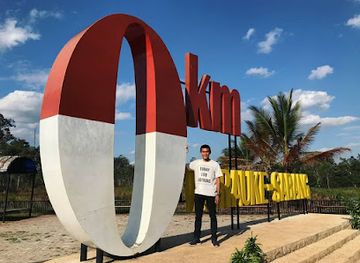
Tugu 0 KM Merauke - Sabang
Experience the unity and beauty of Indonesia at Tugu 0 KM Merauke - Sabang, the easternmost point of the archipelago.
-
Mountain peak
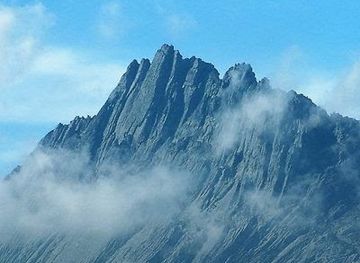
Puncak Jaya
Discover the breathtaking beauty of Puncak Jaya, the highest peak in Oceania and a thrilling adventure for nature lovers and explorers.

Explore Papua on the map
Plan your trip on one map. See where the top cities, national parks and sights are, and book hotels and experiences in a few clicks.
Best hotels in Papua
Best restaurants in Papua
Papua’s dining culture is shaped by coastal fishing, forest and garden produce, local markets and the culinary habits of communities from across Indonesia. Sago is an important traditional staple in many Papuan societies and may appear as a dense accompaniment, pancake or other preparation, while grilled or fried fish, smoked seafood, leafy vegetables, sweet potatoes and seasonal tropical fruit are common in local cooking. Around Jayapura and Sentani, visitors will find Indonesian dishes alongside foods associated with Papuan communities, including preparations using sago and fresh lake or sea produce. Biak’s island setting gives seafood a prominent place, although menus depend on the catch and supply chains. Small warungs and market stalls are generally more useful for regional flavours than formal dining rooms, while hotels and larger town restaurants offer broader Indonesian menus and more predictable facilities. Coffee, sweet drinks and packaged snacks are widely available, but visitors should carry water on excursions. Food choices can narrow sharply outside the provincial capital, so longer journeys require planning rather than relying on restaurants at every stop.
-
Seafood
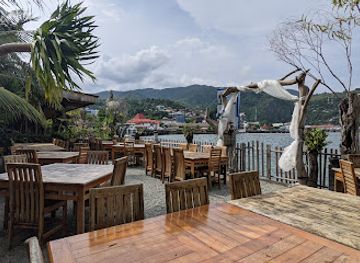
Rumah Laut restaurant
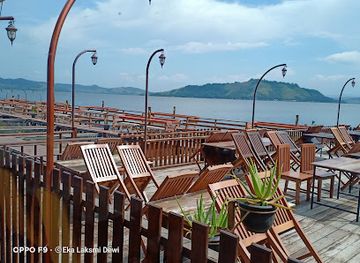
Experience the best of Papua's seafood at Rumah Laut restaurant, where every dish is a celebration of local flavors amidst stunning vistas.
-
Family-friendly
Cristho Resto
Experience authentic Manado cuisine at Cristho Resto in Papua – perfect for families seeking delicious local flavors.
-
Seafood
Restaurant Yougwa
Discover the best seafood dining experience in Papua at Restaurant Yougwa, where fresh flavors meet stunning views.
-
Restaurant
Rimba Papua Golf Restaurant & Bar
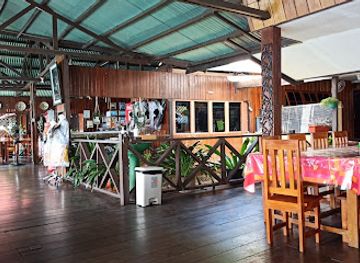
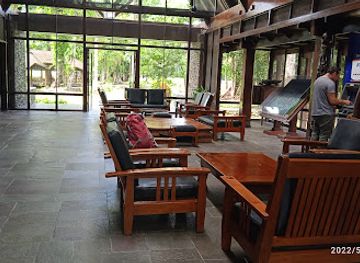
Experience fine dining at Rimba Papua Golf Restaurant & Bar, where exquisite cuisine meets breathtaking rainforest views in Papua.
Best bars in Papua
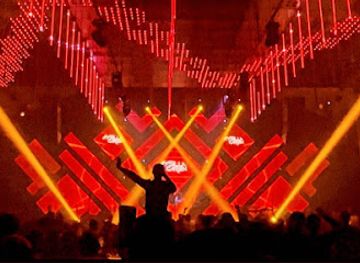
Papua does not have a large, concentrated nightclub scene, and evening life is generally quieter and more locally oriented than in Indonesia’s major metropolitan destinations. Jayapura has the widest choice of hotel lounges, cafés, karaoke venues and restaurants that remain open after dark, with activity concentrated around established commercial areas rather than a single nationally known nightlife district. In Sentani and Biak, evenings commonly centre on family restaurants, cafés, hotel facilities and informal gatherings. Traditional and contemporary music, church activities and community events may be more significant locally than clubbing, but their timing and accessibility should be confirmed through hosts. Alcohol is available in some licensed venues, though Papua’s communities vary in religious practice and local expectations, so visitors should drink discreetly and follow venue rules. Outside the main towns, the practical evening experience is often a meal, conversation and an early start for the following day rather than late-night entertainment.
-
Night club
BLUE ANGELS CLUB
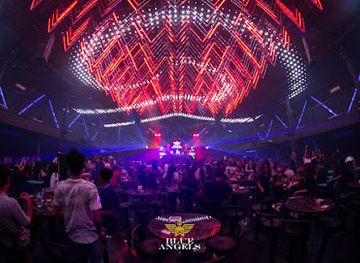
Discover the electrifying nightlife at Blue Angels Club in Jayapura, where karaoke and dancing create unforgettable memories.
-
Restaurant
Rimba Papua Golf Restaurant & Bar
Experience the blend of exquisite dining and breathtaking natural scenery at Rimba Papua Golf Restaurant & Bar in Papua.
-
Bar
HANGOVER RESTO & LOUNGE
Experience the vibrant nightlife and culinary delights of Hangover Resto & Lounge in Jayapura, where every visit is a celebration of taste and entertainment.
-
Bar
Kemangi Cafe & Resto
Discover the vibrant flavors and stunning views at Kemangi Cafe & Resto in Jayapura, Papua's culinary gem.
Best nightclubs in Papua
Papua does not have a large, concentrated nightclub scene, and evening life is generally quieter and more locally oriented than in Indonesia’s major metropolitan destinations. Jayapura has the widest choice of hotel lounges, cafés, karaoke venues and restaurants that remain open after dark, with activity concentrated around established commercial areas rather than a single nationally known nightlife district. In Sentani and Biak, evenings commonly centre on family restaurants, cafés, hotel facilities and informal gatherings. Traditional and contemporary music, church activities and community events may be more significant locally than clubbing, but their timing and accessibility should be confirmed through hosts. Alcohol is available in some licensed venues, though Papua’s communities vary in religious practice and local expectations, so visitors should drink discreetly and follow venue rules. Outside the main towns, the practical evening experience is often a meal, conversation and an early start for the following day rather than late-night entertainment.
-
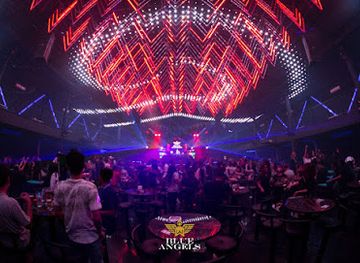
Night club
BLUE ANGELS CLUB
Discover the pulsating nightlife of Jayapura at Blue Angels Club, where music, karaoke, and dancing come together for an unforgettable experience.
-
Night club
SCARLET CLUB
Experience the vibrant nightlife of Jayapura at SCARLET CLUB, where music, dance, and unforgettable memories await.
-
Night club
CLOUD9 CLUB JAYAPURA
Dive into the vibrant nightlife at Cloud9 Club Jayapura, where music, dance, and culture unite for an unforgettable experience.
-
Night club
Diva Family Karaoke
Experience the vibrant nightlife of Mimika at Diva Family Karaoke, the perfect spot for singing and socializing in Papua.

Best shops in Papua
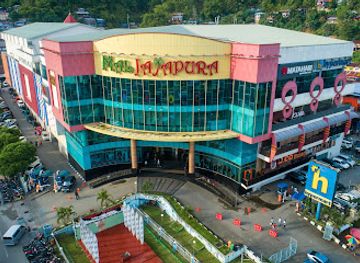
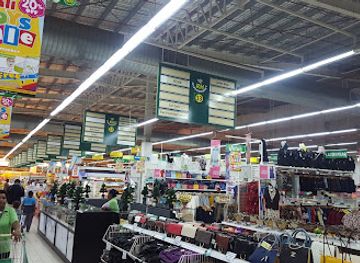
Shopping in Papua is centred on markets, small independent stores and locally made crafts rather than large retail districts. Jayapura and Sentani provide the broadest choice of clothing, household goods, Indonesian food products and practical travel supplies, while Biak town has a more compact commercial scene. Visitors may find carvings, woven items, shell or fibre work, paintings and other handicrafts associated with Papuan communities, though quality, cultural significance and provenance vary. Ask sellers about the maker and intended use, and favour purchases made through recognised cooperatives, galleries or community organisations. Markets are useful for seasonal fruit, fish, sago products and packaged snacks, but travellers should not assume that every item is suitable for transport overseas. Never buy protected wildlife, feathers, coral, archaeological material, human remains or objects described vaguely as old or sacred. Outside the main towns, retail choice is limited and supplies should be bought before remote excursions. Crafts are most meaningful when acquired respectfully and without bargaining in a way that ignores the maker’s labour or customary ownership.
-
Shopping mall
Mall Jayapura
Discover the vibrant shopping experience at Mall Jayapura, where modern retail meets the rich culture of Papua.
-
Shopping mall
Vision City Mega Mall
Discover the ultimate shopping experience at Vision City Mega Mall, featuring diverse stores, delightful dining, and exciting entertainment in Port Moresby.
-
Shopping mall
SAGA MALL
Discover the vibrant shopping experience at SAGA MALL, the ultimate destination for retail therapy in Jayapura City, Papua.
-
Shopping mall
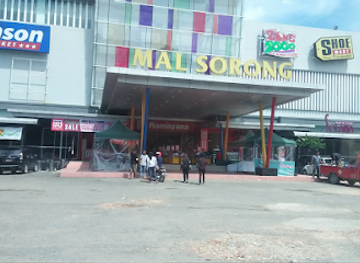
RAMAYANA Mall Sorong
Experience shopping, dining, and entertainment at RAMAYANA Mall Sorong, a lively retail destination in West Papua with something for everyone.
Get your free copy of our complete guide to Papua, delivered straight to you.
Everything on this page, from attractions and restaurants to essentials and local phrases, in one PDF you can read offline, print or share.
Already have an account? Sign in
Your Papua guide is ready.
We'll send it to · Not you? Sign out

Getting your guide ready…
We are putting together a fresh copy of the Papua guide. This can take up to a minute.
This can take a few moments. If your browser asks, choose Allow so the download can start. You'll find the guide in your Downloads folder.
Nothing happened? Download it again
Sorry, the guide is taking longer than usual. Please try again in a minute, or get it by email instead.
Papua essentials
Currency and Payment
Safety
Emergency Situations
Do's and Don'ts
Local Tips
From Eve
Local phrases worth knowing
You don't need to get them perfect. A few words go a long way, and locals appreciate the effort.
Basics
| English | Local | Say it |
|---|---|---|
| Hello | Selamat datang | [suh-lah-maht dah-tahng] |
| Goodbye | Selamat tinggal | [suh-lah-maht ting-gahl] |
| Yes | Ya | [yah] |
| No | Tidak | [tee-dahk] |
| Please/You're welcome | Silakan | [see-lah-kahn] |
| Thank you | Terima kasih | [teh-ree-mah kah-see] |
| Excuse me/Sorry | Maaf | [mah-ahf] |
| How are you? | Apa kabar? | [ah-pah kah-bar] |
| Fine. And you? | Baik. Dan kamu? | [bye-eek. dahn kah-moo] |
| Do you speak English? | Apakah kamu berbicara bahasa Inggris? | [ah-pah-kah kah-moo ber-bee-chah-rah bah-hah-sah ing-gris] |
| I don't understand | Saya tidak mengerti | [sah-yah tee-dahk meng-er-tee] |
Eating & Drinking
| English | Local | Say it |
|---|---|---|
| I'd like to see the menu, please | Saya ingin melihat menu, silakan | [sah-yah een-geen meh-lih-hat meh-noo, see-lah-kahn] |
| I don't eat meat | Saya tidak makan daging | [sah-yah tee-dahk mah-kahn dah-ging] |
| Cheers! | Selamat! | [suh-lah-maht] |
| I would like to pay, please | Saya ingin membayar, silakan | [sah-yah een-geen mem-bah-yar, see-lah-kahn] |
Emergencies
| English | Local | Say it |
|---|---|---|
| Help! | Tolong! | [toh-long] |
| Go away! | Pergi! | [per-gee] |
| Call the Police! | Panggil polisi! | [pahn-gil poh-lee-see] |
| Call a doctor! | Panggil dokter! | [pahn-gil dok-ter] |
| I'm lost | Saya tersesat | [sah-yah ter-seh-saht] |
| I'm ill | Saya sakit | [sah-yah sah-kit] |
Shopping
| English | Local | Say it |
|---|---|---|
| I'd like to buy... | Saya ingin membeli... | [sah-yah een-geen mem-beh-lee] |
| I'm just looking | Saya hanya melihat | [sah-yah han-yah meh-lih-hat] |
| How much is it? | Berapa harganya? | [ber-ah-pah har-gah-nya] |
| That's too expensive | Itu terlalu mahal | [ee-too ter-lah-loo mah-hahl] |
| Can you lower the price? | Bisakah kamu menurunkan harga? | [bee-sah-kah kah-moo meh-noo-run-kahn har-gah] |
Time & Numbers
| English | Local | Say it |
|---|---|---|
| What time is it? | Jam berapa? | [jahm ber-ah-pah] |
| It's one o'clock | Jam satu | [jahm sah-too] |
| Half past (10) | Setengah (10) | [seh-teng-ah] |
| Morning | Pagi | [pah-gee] |
| Afternoon | Sore | [soh-reh] |
| Evening | Malam | [mah-lahm] |
| Yesterday | Kemarin | [keh-mah-reen] |
| Today | Hari ini | [hah-ree ee-nee] |
| Tomorrow | Besok | [beh-sohk] |
| 1 | Satu | [sah-too] |
| 2 | Dua | [doo-ah] |
| 3 | Tiga | [tee-gah] |
| 4 | Empat | [em-pah-t] |
| 5 | Lima | [lee-mah] |
| 6 | Enam | [eh-nahm] |
| 7 | Tujuh | [too-joo] |
| 8 | Delapan | [deh-lah-pahn] |
| 9 | Sembilan | [sem-bee-lahn] |
| 10 | Sepuluh | [seh-poo-looh] |
Transport & Directions
| English | Local | Say it |
|---|---|---|
| Where's a/the...? | Di mana ...? | [dee mah-nah] |
| What's the address? | Apa alamatnya? | [ah-pah ah-lah-maht-nya] |
| Can you show me (on the map)? | Bisakah kamu menunjukkan (di peta)? | [bee-sah-kah kah-moo men-unjuk-kahn] |
| When's the next (bus)? | Kapan bus selanjutnya? | [kah-pahn boos se-lanjut-nya] |
| A ticket (to ....) | Tiket (ke ...) | [tee-ket] |
History of Papua
Ancient Papuan Settlement and Maritime Cultures
The northern coast and islands of Papua have been inhabited for many thousands of years by Papuan peoples whose societies developed through farming, fishing, hunting, forest use and exchange. The islands of Biak, Numfor and Supiori supported strong seafaring traditions, while communities around Lake Sentani developed distinctive artistic and social practices. Austronesian-speaking maritime influences reached parts of the north over a long period, contributing to exchange networks that connected New Guinea with islands to the west. Archaeological and linguistic evidence points to a complex history of movement and interaction rather than a single, uniform culture.
Biak and the Northern Trading World
Before European colonial rule, communities in the northern islands participated in regional trading and voyaging networks. Biak and Numfor were particularly associated with maritime travel, exchange and raiding traditions recorded in later historical accounts. Trade connected coastal societies with the Moluccas and other parts of eastern Indonesia, bringing forest products, shell goods and other commodities into wider circulation. These networks helped shape local political relationships and cultural identities, while inland and coastal communities retained different patterns of settlement and resource use.
Dutch New Guinea and Missionary Expansion
The Netherlands gradually consolidated colonial authority in western New Guinea during the nineteenth and twentieth centuries, although control remained uneven and many communities continued to govern their affairs through customary institutions. Hollandia, now Jayapura, became an important administrative and military centre. Christian missions established schools, churches and medical services in parts of the region, affecting education and social life while also participating in colonial structures. The colonial period introduced new roads, ports and administrative boundaries, but it did not erase the province’s many languages, customary laws and local identities.
The Pacific War and the Battle of Biak
During the Second World War, northern Papua became a major military theatre because of its position between the Pacific and Southeast Asian fronts. Japanese forces occupied Biak and constructed defensive positions, including caves and fortified areas. Allied forces attacked the island in 1944 in the Battle of Biak, one of the fierce campaigns of the New Guinea war. Remnants of wartime tunnels, memorials and unexploded ordnance remain reminders of the conflict. Military history is particularly visible on Biak, although visitors should never enter abandoned sites or handle suspected wartime material.
The End of Dutch Rule and Integration into Indonesia
After Indonesia’s independence, the future of western New Guinea remained disputed between Indonesia and the Netherlands. The territory was transferred through the United Nations Temporary Executive Authority in 1962 and passed to Indonesian administration in 1963. In 1969, the Act of Free Choice resulted in the territory’s continued integration into Indonesia, a process that remains politically contested and historically sensitive. Jayapura and other administrative centres expanded as Indonesian state institutions developed, while Papuan political movements continued to express demands concerning representation, rights and self-determination.
Special Autonomy and Provincial Reorganisation
Papua received a special-autonomy framework in the early twenty-first century intended to increase regional representation, public investment and recognition of Papuan interests. Implementation has been debated, particularly in relation to governance, resource management and the protection of Indigenous rights. In the 2020s, Indonesia created additional provinces from the former Papua and West Papua areas, changing administrative boundaries and official travel references. Today’s Papua Province is centred on Jayapura and the northern island districts, and its contemporary identity reflects both long-established communities and substantial migration from other parts of Indonesia.
Papua in Photos
Browse through our photo collection highlighting the charm and character of the destination.
Neighbouring regions of Papua
The closest regions to Papua, if you have time for more than one.
-

-

-

-

-


Swipe for more regions
Explore more

Explore more of Indonesia
Explore Indonesia: An archipelago of diverse cultures, stunning landscapes, and endless adventures from bustling cities to serene beaches.
Explore Indonesia