

Free Casentino Travel Guide & Mobile App
Explore Casentino with free travel guides. Discover regional history, expert tips, proposed trips, and audio guides on web or mobile app.


Explore Casentino in Tuscany for medieval castles, La Verna, Camaldoli, mountain villages and the ancient forests of the Apennines.
Read more about Casentino
When is the best time to visit Casentino?
Best: June, August–September · 24–28°C| Month | High (°C) | Rainfall (mm) |
|---|---|---|
| January | 7 | 60 |
| February | 10 | 50 |
| March | 13 | 55 |
| April | 17 | 65 |
| May | 21 | 70 |
| June (best) | 25 | 60 |
| July | 29 | 50 |
| August (best) | 28 | 60 |
| September (best) | 24 | 70 |
| October | 19 | 80 |
| November | 13 | 75 |
| December | 8 | 65 |
Getting to and around Casentino
How to get there
Transportation
Top city travel guides in Casentino
The cities of Casentino, and the easiest places to base yourself.

Swipe for more cities
Best attractions in Casentino
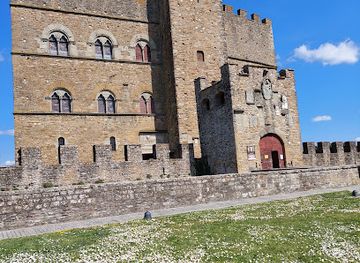
Casentino's attractions combine medieval heritage, sacred places and extensive mountain landscapes. Poppi is the principal historic centre, with the Guidi castle overlooking the valley and a compact old town nearby. Around Pratovecchio and Stia, Romanesque churches, old settlements and the former wool-making tradition provide a cultural counterpoint to the forests. The Sanctuary of La Verna offers religious art, Franciscan history and mountain scenery, while Camaldoli brings together a monastery, hermitage and centuries-old woodland setting. The Casentino Forests, Monte Falterona and Campigna National Park is the region's largest outdoor attraction, with marked walking routes, quiet roads and habitats supporting deer, birds and other Apennine wildlife. Visitors can also explore the ruins of Romena Castle, the Pieve di Romena and hill villages such as Raggiolo, where stone architecture and chestnut traditions remain visible. The best experiences often combine a modest cultural site with a walk, picnic or meal rather than treating the valley as a checklist of isolated monuments.
-
Science museum
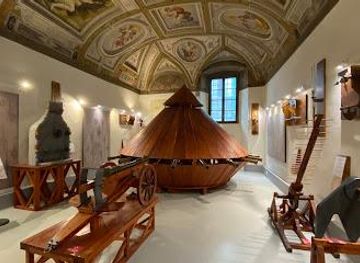
Leonardo Da Vinci Museum
Discover the genius of Leonardo Da Vinci at the museum dedicated to his inventions and artistic brilliance in the heart of Florence.
-
Sanctuary
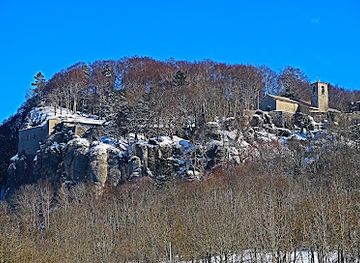
La Verna - Franciscan Sanctuary
Discover the spiritual heart of Tuscany at La Verna, a tranquil Franciscan Sanctuary surrounded by breathtaking nature and rich history.
-
Fortress
Fortress of San Leo
Explore the Fortress of San Leo: A historical marvel with stunning views and rich tales of Italy's past.
-
Wellness hotel
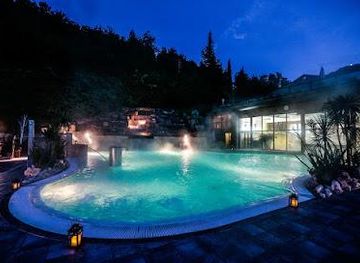
Ròseo Euroterme Wellness Resort
Experience ultimate relaxation at Ròseo Euroterme Wellness Resort, where thermal baths and spa treatments rejuvenate your body and soul in beautiful Bagno di Romagna.

Best landmarks in Casentino
Poppi Castle is Casentino's most recognisable architectural landmark, a well-preserved medieval stronghold associated with the Guidi counts and prominent above the valley. At Romena, the remains of the Guidi castle occupy a wooded hill, while the nearby Pieve di Romena is an important example of Tuscan Romanesque architecture. The Sanctuary of La Verna is both an imposing mountain complex and a place of major Franciscan significance, built around the rocky site associated with Saint Francis's stigmata. Camaldoli's monastery and higher hermitage mark a different religious landscape, shaped by centuries of Benedictine and Camaldolese life. In Stia, the former wool mill represents the valley's industrial past, while the stone villages of Raggiolo, Castel San Niccolò and other hill communities express the durable relationship between settlement and mountain terrain. The forests of the national park, particularly around the upper Arno and Falterona, are natural landmarks in their own right: extensive, historic and central to Casentino's identity.
-
Sanctuary
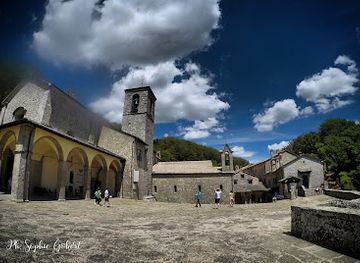
La Verna - Franciscan Sanctuary
Experience the tranquility and spiritual beauty of La Verna, a historic Franciscan sanctuary nestled in the scenic hills of Tuscany.
-
Castle
Castle of the Earls Guidi
Discover the stunning Castle of the Earls Guidi in Poppi, Tuscany, where history and breathtaking views come together in a captivating experience.
-
National park
Parco Nazionale delle Foreste Casentinesi, Monte Falterona e Campigna
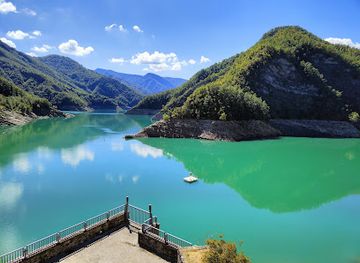
Explore the breathtaking landscapes and rich biodiversity of Parco Nazionale delle Foreste Casentinesi, a haven for nature lovers and adventure seekers alike.
-
Monastery
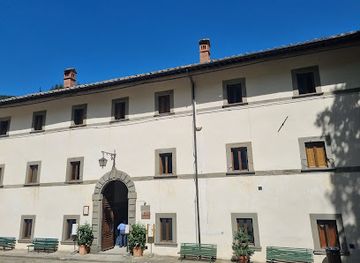
Monastery of Camaldoli
Experience spiritual tranquility and stunning natural beauty at the historic Monastery of Camaldoli in Tuscany, a must-visit destination for every traveler.
Explore Casentino on the map
Plan your trip on one map. See where the top cities, national parks and sights are, and book hotels and experiences in a few clicks.
Best hotels in Casentino
Best restaurants in Casentino
Casentino's food reflects mountain agriculture, woodland produce and Tuscan country cooking. Look for tortello alla lastra, a filled pastry traditionally cooked on a hot stone or griddle, as well as soups, handmade pasta, beans, game and locally produced cured meats. Chestnuts are important in the valley's culinary culture, appearing as flour, sweets and seasonal specialities, while mushrooms, truffles, honey and forest herbs feature in local cooking when available. Rural inns, trattorias, village restaurants and traditional cafés provide the most direct introduction to these flavours, with Bibbiena, Poppi, Stia and Pratovecchio offering the broadest choice. Menus may also include Tuscan staples associated with the wider region, so not every dish labelled Tuscan is specific to Casentino. Local wine is available, but the valley is especially well suited to food paired with regional olive oil, pecorino, bread and simple seasonal produce.
-
Coffee shop
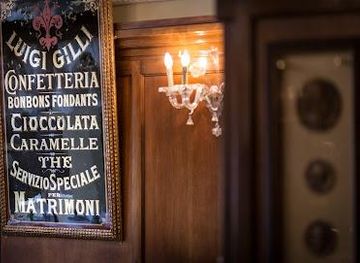
Caffè Gilli
Florence's 1733 café icon: Art Nouveau elegance, divine pastries, timeless cocktails, and historic charm in Piazza della Repubblica's heart.
-
Tuscan
La Corte Dell'Oca
Experience authentic Tuscan flavors at La Corte Dell'Oca in Subbiano - where tradition meets culinary excellence.
-
Italian
Il Capanno
Experience authentic Tuscan cuisine at Il Capanno in Poppi – where every meal is a celebration of Italy's rich culinary heritage.
-
Restaurant
Hotel Ristorante La Torricella
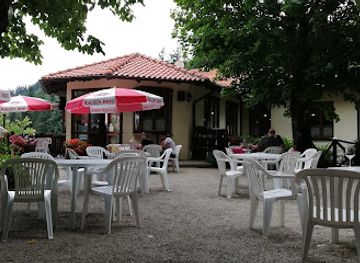
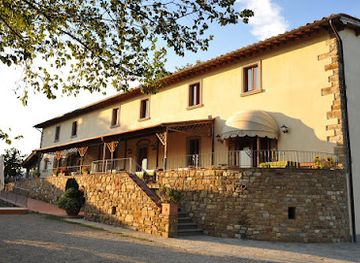
Experience authentic Italian cuisine and stunning views at Hotel Ristorante La Torricella in beautiful Poppi.

Best bars in Casentino
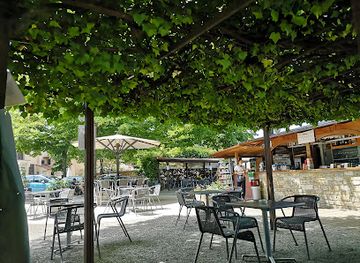
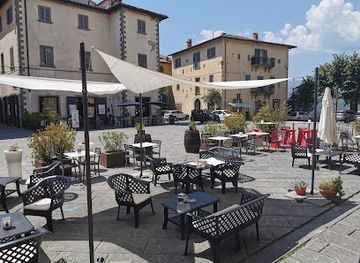
Evening life in Casentino is modest and community-oriented rather than centred on large nightclubs. In Bibbiena, Poppi, Stia and Pratovecchio, bars and cafés provide places for an aperitivo, coffee or an informal drink, while traditional inns and restaurants often form the main part of a night out. Live music and cultural events may appear seasonally in town squares or local venues, but dates and programmes change from year to year. Smaller villages generally become quiet after dinner, and visitors staying in the countryside should expect darkness and limited late transport. The most characteristic evening is a leisurely meal followed by a walk through an illuminated historic centre, rather than a late night of clubbing. Local breweries, wine selections and regional spirits may be available, but alcohol is not central to every social occasion.
-
Bar
Bar Scarpaccia
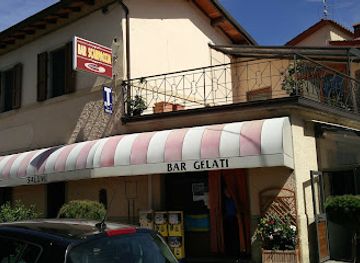
Experience the charm of Bar Scarpaccia in Pratovecchio Stia, the perfect blend of a cozy bar and local supermarket offering Tuscan delights.
-
Bar
Bar Cristallo
Experience the best of Italian bar culture at Bar Cristallo in Arezzo, where local flavors meet a cozy atmosphere.
-
Bar
Il Pratello
Discover the charm of Il Pratello, a bar and café in Poppi offering delightful drinks and local delicacies in a cozy atmosphere.
-
Cocktail bar
Le Logge del Tarlati
Experience the vibrant atmosphere of Le Logge del Tarlati, a cocktail bar and café in Bibbiena offering exquisite drinks and local charm.
Best nightclubs in Casentino
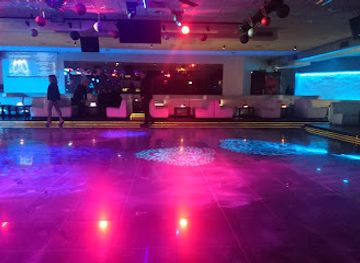
Evening life in Casentino is modest and community-oriented rather than centred on large nightclubs. In Bibbiena, Poppi, Stia and Pratovecchio, bars and cafés provide places for an aperitivo, coffee or an informal drink, while traditional inns and restaurants often form the main part of a night out. Live music and cultural events may appear seasonally in town squares or local venues, but dates and programmes change from year to year. Smaller villages generally become quiet after dinner, and visitors staying in the countryside should expect darkness and limited late transport. The most characteristic evening is a leisurely meal followed by a walk through an illuminated historic centre, rather than a late night of clubbing. Local breweries, wine selections and regional spirits may be available, but alcohol is not central to every social occasion.
-
Disco club
Il Principe
Discover Arezzo's nightlife at Il Principe, the premier disco club known for music, dancing, and an unforgettable atmosphere.
-
Cocktail bar
Le Logge del Tarlati
Discover the vibrant flavors and cozy ambiance of Le Logge del Tarlati, a cocktail bar and café in the heart of Bibbiena, Italy.
-
Disco club
Class 125
Discover the exhilarating nightlife of Arezzo at Class 125, a premier disco club where music and dance come alive in a vibrant atmosphere.
-
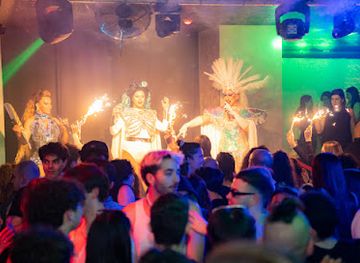
Disco club
Whynot Arezzo
Discover the vibrant nightlife of Arezzo at Whynot, a premier disco club offering unforgettable dance experiences and lively music.

Best shops in Casentino
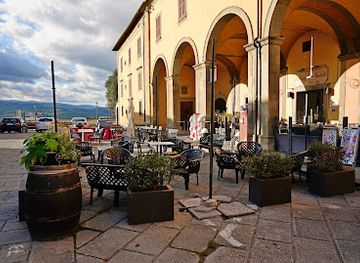
Shopping in Casentino is concentrated in the market towns rather than in large retail centres. Bibbiena provides the broadest practical choice of everyday shops, while Poppi, Stia and Pratovecchio combine small businesses with historic streets and food shops. Look for locally made pasta, chestnut flour and sweets, honey, olive oil, cured meats and cheeses, as well as products from the valley's woodland and farming traditions. Stia's textile history gives the area a particular connection with wool and craft, and the Museo dell'Arte della Lana helps explain that heritage, although contemporary retail availability varies. Village markets and seasonal fairs can be useful for regional produce, ceramics, small craft items and antiques, but dates differ and should be confirmed locally. Independent galleries and artisans are more likely to be found in historic centres than in dedicated shopping districts, making the region better suited to considered local purchases than to extensive fashion shopping.
-
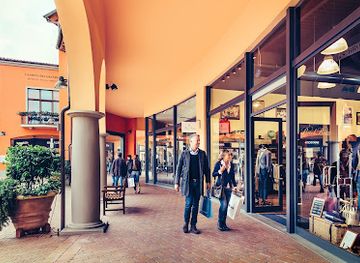
Outlet mall
Valdichiana Outlet Village
Explore Valdichiana Outlet Village for unbeatable deals on top brands in a picturesque Tuscan setting, perfect for every shopping enthusiast.
-
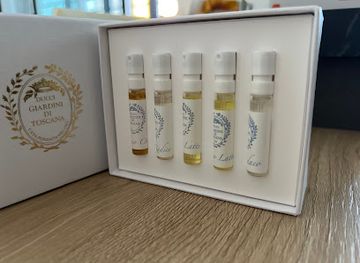
Perfume store
Giardini di Toscana, Bibbiena
Experience the artistry of fragrance at Giardini di Toscana, a charming perfume store in Bibbiena offering exquisite artisanal scents.
-
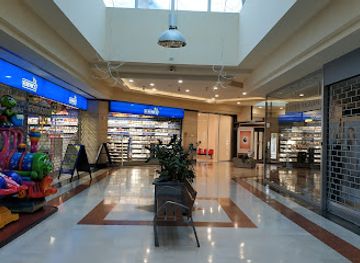
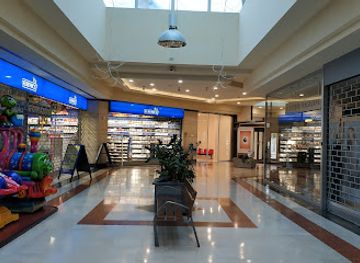
Shopping mall
CENTRO COMMERCIALE IL CASENTINO
Explore Centro Commerciale Il Casentino in Bibbiena for a vibrant shopping experience filled with fashion, gourmet foods, and Tuscan charm.
-
Electronics store
Euronics CDS
Discover the latest in electronics at Euronics CDS, a premier shopping destination in Bibbiena, Italy, offering top brands and exceptional service.
Get your free copy of our complete guide to Casentino, delivered straight to you.
Everything on this page, from attractions and restaurants to essentials and local phrases, in one PDF you can read offline, print or share.
Already have an account? Sign in
Your Casentino guide is ready.
We'll send it to · Not you? Sign out

Getting your guide ready…
We are putting together a fresh copy of the Casentino guide. This can take up to a minute.
This can take a few moments. If your browser asks, choose Allow so the download can start. You'll find the guide in your Downloads folder.
Nothing happened? Download it again
Sorry, the guide is taking longer than usual. Please try again in a minute, or get it by email instead.
Casentino essentials
Currency and Payment
Safety
Emergency Situations
Do's and Don'ts
Local Tips
From Eve
Local phrases worth knowing
You don't need to get them perfect. A few words go a long way, and locals appreciate the effort.
Basics
| English | Local | Say it |
|---|---|---|
| Hello | Ciao | [chow] |
| Goodbye | Arrivederci | [ah-ree-veh-DER-chee] |
| Yes | Sì | [see] |
| No | No | [noh] |
| Please/You're welcome | Per favore/Prego | [per fah-VOH-reh/PREH-goh] |
| Thank you | Grazie | [GRAHT-see-eh] |
| Excuse me/Sorry | Mi scusi/Scusa | [mee SKOO-zee/SKOO-zah] |
| How are you? | Come stai? | [KOH-meh stai] |
| Fine. And you? | Bene. E tu? | [BEH-neh. eh too] |
| Do you speak English? | Parli inglese? | [PAR-lee een-GLEH-zeh] |
| I don't understand | Non capisco | [non kah-PEE-skoh] |
Eating & Drinking
| English | Local | Say it |
|---|---|---|
| I'd like to see the menu, please | Vorrei vedere il menu, per favore | [vor-RAY veh-DEH-reh eel meh-NOO, per fah-VOH-reh] |
| I don't eat meat | Non mangio carne | [non MAHN-jo KAR-neh] |
| Cheers! | Salute! | [sah-LOO-teh] |
| I would like to pay, please | Vorrei pagare, per favore | [vor-RAY pah-GAH-reh, per fah-VOH-reh] |
Emergencies
| English | Local | Say it |
|---|---|---|
| Help! | Aiuto! | [ah-YOO-toh] |
| Go away! | Vai via! | [vai VEE-ah] |
| Call the Police! | Chiama la polizia! | [KYAH-mah lah poh-lee-TSEE-ah] |
| Call a doctor! | Chiama un dottore! | [KYAH-mah oon doht-TOH-reh] |
| I'm lost | Mi sono perso | [mee SOH-noh PER-soh] |
| I'm ill | Sono malato | [SOH-noh mah-LAH-toh] |
Shopping
| English | Local | Say it |
|---|---|---|
| I'd like to buy... | Vorrei comprare... | [vor-RAY kom-PRAH-reh] |
| I'm just looking | Sto solo guardando | [stoh SOH-loh gwar-DAN-doh] |
| How much is it? | Quanto costa? | [KWAN-toh KOH-stah] |
| That's too expensive | È troppo costoso | [eh TROH-poh koh-STOH-zoh] |
| Can you lower the price? | Puoi abbassare il prezzo? | [pwoy ab-BAH-sah-reh eel PRET-soh] |
Time & Numbers
| English | Local | Say it |
|---|---|---|
| What time is it? | Che ore sono? | [keh OR-eh SOH-noh] |
| It's one o'clock | È l'una | [eh LOO-nah] |
| Half past (10) | Dieci e mezzo | [DEE-eh-chee eh MED-zoh] |
| Morning | Mattina | [maht-TEE-nah] |
| Afternoon | Pomeriggio | [poh-meh-REE-joh] |
| Evening | Sera | [SEH-rah] |
| Yesterday | Ieri | [YEH-ree] |
| Today | Oggi | [OHJ-ee] |
| Tomorrow | Domani | [doh-MAH-nee] |
| 1 | Uno | [OO-noh] |
| 2 | Due | [DOO-eh] |
| 3 | Tre | [TREH] |
| 4 | Quattro | [KWAT-troh] |
| 5 | Cinque | [CHEEN-kweh] |
| 6 | Sei | [SAY] |
| 7 | Sette | [SET-teh] |
| 8 | Otto | [OT-toh] |
| 9 | Nove | [NOH-veh] |
| 10 | Dieci | [DEE-eh-chee] |
Transport & Directions
| English | Local | Say it |
|---|---|---|
| Where's a/the...? | Dove si trova...? | [DOH-veh see TROH-vah] |
| What's the address? | Qual è l'indirizzo? | [kwahl eh leen-dee-REET-zoh] |
| Can you show me (on the map)? | Puoi mostrarmi (sulla mappa)? | [pwoy mo-STRAR-mee (SOOL-lah MAH-pah)] |
| When's the next (bus)? | Quando passa il prossimo (autobus)? | [KWAN-doh PAH-sah eel PROH-ssee-mo (OW-toh-boos)] |
| A ticket (to ....) | Un biglietto (per ....) | [oon bee-LYEH-toh (per ....)] |
History of Casentino
Etruscan and Roman Casentino
The upper Arno valley was inhabited before Roman rule, with Etruscan communities connected to the wider settlements of eastern Tuscany. Roman influence brought roads, administrative organisation and agricultural development, although the mountainous terrain remained less urbanised than the plains. Archaeological evidence around the valley includes traces of ancient settlement and sanctuaries, while the Roman name Arretium links the area to the important city of Arezzo beyond the valley. The landscape that later supported castles and monasteries was already shaped by movement through the Apennine passes and by the management of woodland and farmland.
The Foundation of Camaldoli, 11th Century
Saint Romuald founded the hermitage of Camaldoli in the early eleventh century, establishing a community that combined solitary religious life with monastic organisation. The monastery and hermitage became a major spiritual and cultural presence in the upper valley, and the Camaldolese order managed extensive woodland and landholdings. Their influence helped shape the history of the Casentino forests, whose resources were used carefully for building timber and other purposes. Camaldoli remains one of the region's clearest examples of how religious institutions influenced settlement, landscape management and culture.
The Guidi Counts and Medieval Castles
From the Middle Ages, the Guidi family controlled much of Casentino through a network of fortified residences, including the castle at Poppi and strongholds at Romena and other strategic sites. Their power reflected the valley's position between Florence, Arezzo and the Romagna passes. Castles guarded routes, administered estates and projected authority over villages and farms. The Guidi presence declined as Florentine power expanded, but their legacy remains visible in the skyline of Poppi, the ruins of Romena and the surviving medieval architecture of several Casentino settlements.
Saint Francis and La Verna, 13th Century
The mountain of La Verna became associated with Saint Francis of Assisi after he visited the site and, according to Franciscan tradition, received the stigmata there in 1224. A sanctuary and monastery developed around the places linked with his retreat, transforming the mountain into one of central Italy's most important pilgrimage destinations. Its religious history is inseparable from its geography: the complex occupies a dramatic sandstone spur surrounded by forest. La Verna continues to draw pilgrims, visitors interested in Franciscan history and walkers exploring the surrounding landscape.
The Battle of Campaldino, 1289
The Battle of Campaldino was fought in 1289 on the plain near Poppi between the Guelph forces of Florence and their allies and the Ghibelline forces associated with Arezzo. Florence won, strengthening its influence in eastern Tuscany and contributing to the political transformation of Casentino. The battle is also remembered because Dante Alighieri is traditionally said to have taken part on the Florentine side, though the valley's importance does not depend on that literary association alone. The battlefield lies within the historic landscape around Poppi and Campaldino.
Florentine Rule and the Grand Duchy
After the decline of the Guidi family, Casentino was progressively incorporated into the Florentine state and later the Medici Grand Duchy of Tuscany. Political power became more centralised, while castles lost much of their military role and communities were governed through wider Tuscan institutions. Forestry, pastoralism and agriculture remained important, and roads through the valley linked local settlements with Florence and the Arno basin. The period left a legacy of administrative, architectural and cultural connections that help explain why Casentino is historically Tuscan while retaining a distinct mountain identity.
Wool-Making and Modern Casentino
Industrial activity developed particularly around Stia, where wool processing became a defining part of the local economy. The Casentino woollen cloth traditionally known as panno casentinese was valued for its warmth and distinctive appearance, and textile production shaped employment and settlement in the upper valley. Stia's former wool mill, now the Museo dell'Arte della Lana, documents this industrial heritage. In the twentieth century, improved roads, changing agriculture and the growth of protected landscapes altered the economy, with forestry, heritage and nature tourism becoming increasingly important alongside local production.
Casentino in Photos
Browse through our photo collection highlighting the charm and character of the destination.
Neighbouring regions of Casentino
The closest regions to Casentino, if you have time for more than one.
-

-

-

-

-


Swipe for more regions
Explore more

Explore more of Italy
Discover Italy: A land of ancient history, artistic marvels, and culinary delights; where every corner reveals a new story and every meal is a celebration.
Explore Italy