

Free Ravello Travel Guide & Mobile App
Plan your Ravello trip with Evendo. Get free guides to top attractions, restaurants, hotels, and bars. Web access or download the mobile app.


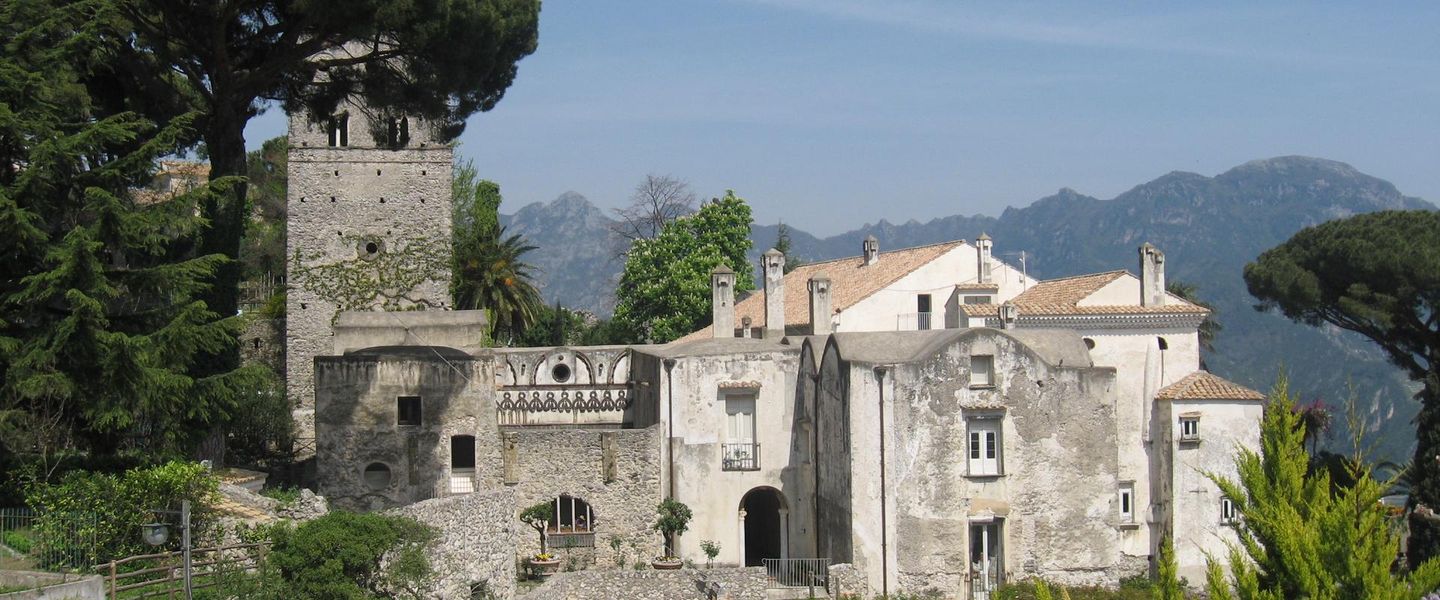


Ravello, Italy, pairs Amalfi Coast views with Villa Rufolo, Villa Cimbrone, classical concerts, medieval lanes, gardens and elegant local culture.
A Hill Town Above the Amalfi Coast
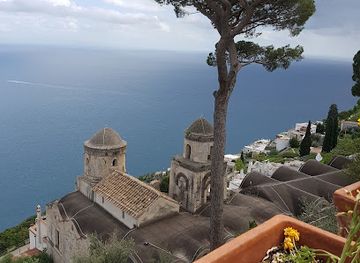
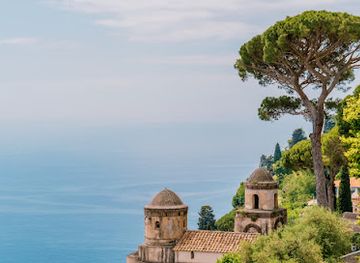
Ravello occupies a lofty terrace in the Lattari Mountains, high above the Tyrrhenian Sea and the coastal towns of Amalfi and Minori. Its elevated setting gives the town a quieter, more contemplative character than the busy shoreline below: stone lanes climb between whitewashed houses, small piazzas and old churches, while gardens open suddenly towards steep valleys and immense blue horizons. The views are among Ravello’s defining experiences, but the town’s appeal rests equally on its architecture, musical traditions and cultivated sense of place.Read more about Ravello
Historic Villas and Cultural Life
Exploring Ravello and Its Surroundings
When is the best time to visit Ravello?
Best: May–July · 22–30°C| Month | High (°C) | Rainfall (mm) |
|---|---|---|
| January | 14 | 110 |
| February | 15 | 110 |
| March | 17 | 100 |
| April | 19 | 90 |
| May (best) | 22 | 60 |
| June (best) | 27 | 40 |
| July (best) | 30 | 20 |
| August | 30 | 40 |
| September | 28 | 70 |
| October | 24 | 120 |
| November | 19 | 150 |
| December | 16 | 130 |
Getting to and around Ravello
How to get there
Transportation
Best attractions in Ravello
Ravello’s principal attractions are its gardens, churches and elevated viewpoints. Villa Rufolo introduces visitors to a medieval palace complex whose courtyards, towers and planted terraces look across the coast, while Villa Cimbrone combines historic architecture with one of the region’s most celebrated panoramas from the Belvedere of Infinity. In the town centre, the Cathedral of San Pantaleone contains a dignified medieval interior and a small museum collection, and the adjacent Piazza Duomo provides a useful starting point for exploring Ravello’s lanes. The Oscar Niemeyer Auditorium, with its curving contemporary form, brings modern architecture and concert programming to the historic town. Beyond the centre, footpaths pass through terraced lemon groves and wooded slopes towards Scala, Minori and Amalfi, offering a closer view of the cultivated mountain landscape that supports Ravello’s distinctive setting.
-
Scenic spot
Amalfi Coast
Experience the breathtaking beauty of the Amalfi Coast, where charming villages meet azure waters and rich Italian culture flourishes.
6 min drive · 1.9 km from city centre
-
Historical landmark
Villa Rufolo
Experience the blend of history and breathtaking views at Villa Rufolo, a stunning landmark in Ravello, Italy.
1 min walk · 0.1 km from city centre
-
 Hotel
HotelVilla Cimbrone
Experience the breathtaking beauty of Villa Cimbrone in Ravello, where stunning gardens meet the enchanting views of the Amalfi Coast.
7 min walk · 0.6 km from city centre
-
Hotel
Villa Cimbrone
Experience the enchanting beauty and luxury of Villa Cimbrone, a stunning hotel in Ravello with breathtaking gardens and views.
7 min walk · 0.6 km from city centre

Best landmarks in Ravello
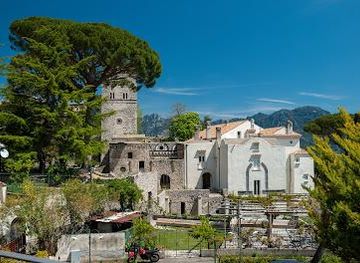
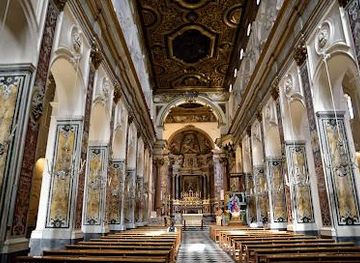
Ravello’s landmarks express the town’s medieval wealth, religious importance and later cultural reputation. The Cathedral of San Pantaleone anchors Piazza Duomo, its restrained exterior giving way to a historic interior associated with Ravello’s long ecclesiastical tradition. Villa Rufolo, developed by a powerful medieval family, is distinguished by its courtyards, towers and decorative forms shaped by southern Italy’s Mediterranean connections. Villa Cimbrone is a later, layered ensemble of buildings and gardens, best known for the Belvedere of Infinity and its line of classical busts above the coast. The Oscar Niemeyer Auditorium provides a striking modern counterpoint, with a sculptural concrete form set against the older townscape. Smaller churches, palaces and stone lanes complete a built environment in which aristocratic residences, sacred buildings and contemporary cultural architecture stand close together.
-
Historical landmark
Villa Rufolo
Explore the breathtaking Villa Rufolo in Ravello, a historical landmark with stunning views and exquisite gardens, perfect for culture and nature lovers.
1 min walk · 0.1 km from city centre
-
Hotel
Villa Cimbrone
Discover the charm of Villa Cimbrone, a luxurious hotel in Ravello offering stunning gardens, breathtaking views, and rich Italian heritage.
7 min walk · 0.6 km from city centre
-
Tourist attraction
Villa Cimbrone Gardens
Experience the serene beauty and rich history of Villa Cimbrone Gardens in Ravello, a must-visit destination for nature lovers and history buffs alike.
10 min walk · 0.8 km from city centre
-
Catholic cathedral
Cathedral of St Andrew Apostle
Discover the enchanting Cathedral of St Andrew Apostle, a historical gem on the Amalfi Coast with stunning architecture and rich cultural heritage.
5 min drive · 1.8 km from city centre
Explore Ravello on the map
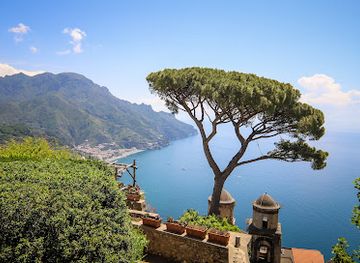
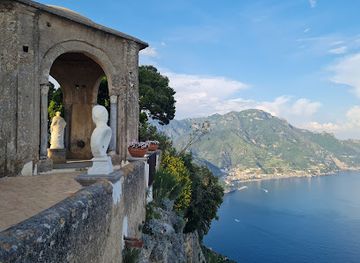
Plan your Ravello trip on one map. See where the top attractions, landmarks, restaurants, bars and hotels are, find what's near where you're staying, and book hotels and experiences in a few clicks.
Best hotels in Ravello
Best restaurants in Ravello
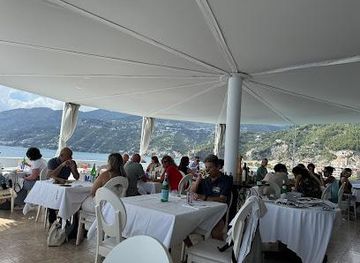
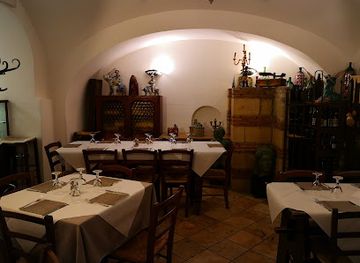
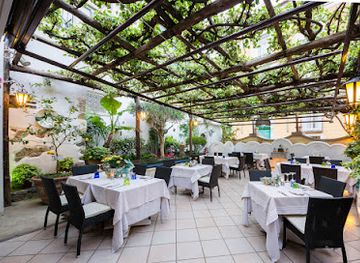
Ravello’s dining reflects the cooking of Campania and the Amalfi Coast, where lemons, tomatoes, herbs, vegetables, fresh fish and locally produced cheeses shape menus. Expect pasta dishes such as scialatielli, a thick ribbon pasta associated with the coast, alongside seafood, grilled fish, aubergine preparations and pizzas influenced by the wider Neapolitan tradition. The local lemon, grown on steep terraces, appears in desserts, drinks and savoury cooking, while delizia al limone is a characteristic coastal sweet. Restaurants and cafés cluster around Piazza Duomo and the historic centre, with further dining found in hotels and along the roads below. Meals may range from informal plates and pastries to carefully presented regional cuisine, and menus often change with the catch and seasonal produce. The setting is an important part of the experience, with terraces and gardens offering views over the gorge or sea.
-
Italian
Ristorante Torre Normanna
Medieval tower elegance meets sublime seafood artistry on Maiori's seafront, where Amalfi Coast sunsets frame exquisite tasting menus and intimate terrace romance.
9 min drive · 3.1 km from city centre
-
Italian
Da Maria
Experience authentic Italian cuisine at Da Maria in Amalfi – where every dish tells a story of tradition and flavor.
5 min drive · 1.8 km from city centre
-
Italian
Ristorante Giardiniello Minori - Costa d’Amalfi
Discover authentic Italian cuisine at Ristorante Giardiniello Minori - Costa d’Amalfi, where every dish tells a story.
16 min walk · 1.3 km from city centre
-
Pizza
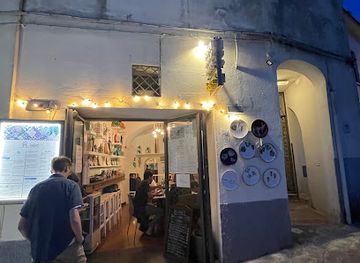
Mimí Pizzeria&Cucina /Mimí b&b
Experience authentic Italian flavors at Mimí Pizzeria&Cucina in Ravello—where delicious pizzas meet warm hospitality.
3 min walk · 0.2 km from city centre
Best bars in Ravello
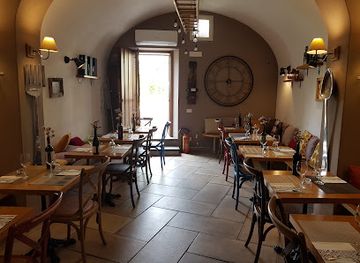
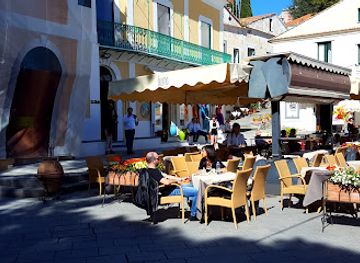
Ravello’s evening life is refined and relatively quiet rather than club-focused. After sightseeing, visitors generally gather in cafés, hotel terraces and wine bars around Piazza Duomo or along the lanes leading towards the villas, where local wines, aperitivi and simple drinks accompany views across the coast. Music is central to the town’s cultural identity: the Ravello Festival presents concerts and other performances in atmospheric settings, while the Oscar Niemeyer Auditorium provides a modern venue for programmed events. There are no large nightclub districts in Ravello, and many evenings are shaped by conversation, dining and the changing light over the mountains rather than late-night entertainment. For a broader choice of bars and a more animated coastal atmosphere, visitors can travel down to Amalfi or nearby towns, bearing in mind the limited nature of late transport on the winding roads.
-
Pizza
Mimí Pizzeria&Cucina /Mimí b&b
Experience authentic Italian cuisine and cozy accommodations in the heart of Ravello at Mimí Pizzeria&Cucina, a must-visit for every traveler.
3 min walk · 0.2 km from city centre
-
Italian
Ristorante Vittoria
Experience authentic Italian cuisine in Ravello at Ristorante Vittoria, where each meal is a culinary delight amidst stunning Amalfi Coast views.
1 min walk · 0.1 km from city centre
-
Restaurant
Babel wine bar bistrò & art
Experience the essence of Italian cuisine and art at Babel Wine Bar Bistrò & Art in Ravello, where every meal is a celebration.
1 min walk · 0.1 km from city centre
-
Bar
Garden Hotel Ristorante
Discover the charm of Ravello at Garden Hotel Ristorante, where exquisite dining meets breathtaking views in a serene setting.
2 min walk · 0.1 km from city centre
Best nightclubs in Ravello
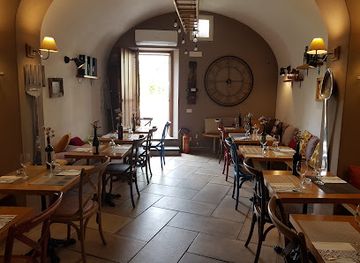
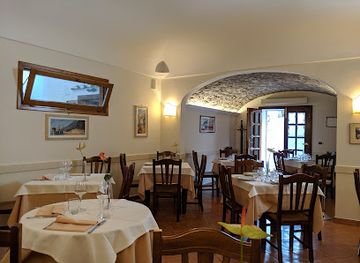
Ravello’s evening life is refined and relatively quiet rather than club-focused. After sightseeing, visitors generally gather in cafés, hotel terraces and wine bars around Piazza Duomo or along the lanes leading towards the villas, where local wines, aperitivi and simple drinks accompany views across the coast. Music is central to the town’s cultural identity: the Ravello Festival presents concerts and other performances in atmospheric settings, while the Oscar Niemeyer Auditorium provides a modern venue for programmed events. There are no large nightclub districts in Ravello, and many evenings are shaped by conversation, dining and the changing light over the mountains rather than late-night entertainment. For a broader choice of bars and a more animated coastal atmosphere, visitors can travel down to Amalfi or nearby towns, bearing in mind the limited nature of late transport on the winding roads.
-
Restaurant
Babel wine bar bistrò & art
Experience the best of Italian cuisine at Babel Wine Bar Bistrò & Art in Ravello, where art meets gastronomy in a stunning Amalfi Coast setting.
1 min walk · 0.1 km from city centre
-
Bar
Palazzo Avino
Experience the epitome of luxury at Palazzo Avino, a stunning hotel in Ravello, offering exquisite dining, a serene spa, and breathtaking views of the Amalfi Coast.
3 min walk · 0.2 km from city centre
-
Bar
Duomo Caffè Ravello Costa di Amalfi
Discover the enchanting flavors and stunning views at Duomo Caffè, the heart of Ravello's café culture on the Amalfi Coast.
1 min walk · 0.1 km from city centre
-
Lido
Moorea Beach Club
Experience the enchanting ambiance of Moorea Beach Club, a stunning lido on the Amalfi Coast, offering delicious food, vibrant atmosphere, and breathtaking views.
8 min drive · 2.5 km from city centre

Best shops in Ravello
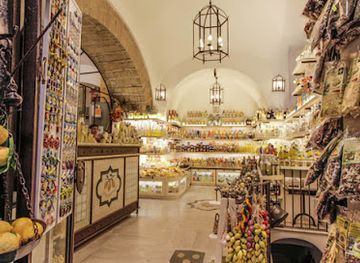
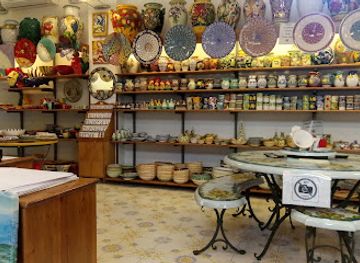
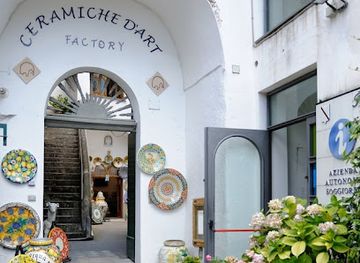
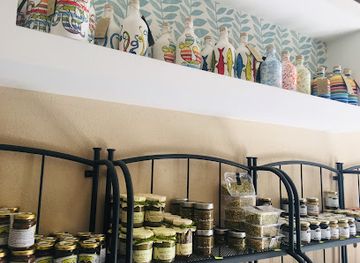
Shopping in Ravello is modest in scale and closely tied to local craft, food and the visual culture of the Amalfi Coast. Around Piazza Duomo and the central lanes, visitors find ceramics, painted tiles, linen, jewellery, artworks and small design pieces, alongside bottles and jars featuring lemons, olive oil, preserves and regional liqueurs. The coast is known for brightly coloured hand-painted ceramics, although shoppers should check the origin and production methods of individual pieces rather than assume every item is locally made. Small galleries and artisan-led shops reflect Ravello’s long association with artists and cultivated visitors, while bakeries and food shops offer practical edible gifts. Larger markets and a broader range of everyday retail are found in Amalfi, Minori and Salerno, which are more useful for substantial shopping than the compact hill town itself.
-
Souvenir store
Antichi Sapori d'Amalfi
Explore the essence of Amalfi with unique souvenirs, local liquors, and exquisite pottery at Antichi Sapori d'Amalfi.
6 min drive · 1.8 km from city centre
-
Pottery store
Ceramiche Cosmolena - Ravello
Discover the enchanting world of hand-crafted ceramics at Ceramiche Cosmolena in Ravello, a must-visit for authentic Italian pottery enthusiasts.
2 min walk · 0.1 km from city centre
-
Pottery store
Ceramiche d'Arte Pascal Ravello
Explore the enchanting Ceramiche d'Arte Pascal in Ravello - a pottery store where artistry meets tradition, offering exquisite ceramics and decor.
1 min walk · 0.1 km from city centre
-
Grocery store
Gusti & Delizie
Explore the authentic flavors of the Amalfi Coast at Gusti & Delizie, a charming grocery store in the heart of Ravello, Italy.
2 min walk · 0.1 km from city centre
Get your free copy of our complete guide to Ravello, delivered straight to you.
Everything on this page, from attractions and restaurants to essentials and local phrases, in one PDF you can read offline, print or share.
Already have an account? Sign in
Your Ravello guide is ready.
We'll send it to · Not you? Sign out

Getting your guide ready…
We are putting together a fresh copy of the Ravello guide. This can take up to a minute.
This can take a few moments. If your browser asks, choose Allow so the download can start. You'll find the guide in your Downloads folder.
Nothing happened? Download it again
Sorry, the guide is taking longer than usual. Please try again in a minute, or get it by email instead.
Ravello essentials
Currency and Payment
Safety
Emergency Situations
Do's and Don'ts
Local Tips
From Eve
Local phrases worth knowing
You don't need to get them perfect. A few words go a long way, and locals appreciate the effort.
Basics
| English | Local | Say it |
|---|---|---|
| Hello | Ciao | [chow] |
| Goodbye | Arrivederci | [a-ree-veh-dehr-chee] |
| Yes | Sì | [see] |
| No | No | [no] |
| Please/You're welcome | Per favore | [pair fah-voh-reh] |
| Thank you | Grazie | [grah-tsyeh] |
| Excuse me/Sorry | Scusa | [skoo-sah] |
| How are you? | Come stai? | [koh-meh stai] |
| Fine. And you? | Bene. E tu? | [beh-neh. eh too] |
| Do you speak English? | Parli inglese? | [par-lee een-gleh-zeh] |
| I don't understand | Non capisco | [non kah-pee-skoh] |
Eating & Drinking
| English | Local | Say it |
|---|---|---|
| I'd like to see the menu, please | Vorrei vedere il menu, per favore | [vohr-reh-ee veh-deh-reh eel men-oo, pair fah-voh-reh] |
| I don't eat meat | Non mangio carne | [non mahn-joh kahr-neh] |
| Cheers! | Salute! | [sah-loo-teh] |
| I would like to pay, please | Vorrei pagare, per favore | [vohr-reh-ee pah-gah-reh, pair fah-voh-reh] |
Emergencies
| English | Local | Say it |
|---|---|---|
| Help! | Aiuto! | [ah-yoo-toh] |
| Go away! | Vattene! | [vaht-teh-neh] |
| Call the Police! | Chiama la polizia! | [kee-ah-mah lah poh-lee-tsya] |
| Call a doctor! | Chiama un medico! | [kee-ah-mah oon meh-dee-koh] |
| I'm lost | Mi sono perso | [mee soh-no pehr-soh] |
| I'm ill | Sto male | [stoh mah-leh] |
Shopping
| English | Local | Say it |
|---|---|---|
| I'd like to buy... | Vorrei comprare... | [vohr-reh-ee kohm-prah-reh] |
| I'm just looking | Sto solo guardando | [stoh soh-loh gwahr-dahn-doh] |
| How much is it? | Quanto costa? | [kwahn-toh koh-stah] |
| That's too expensive | È troppo caro | [eh troh-poh kah-roh] |
| Can you lower the price? | Puoi abbassare il prezzo? | [pwoy ab-bah-sah-reh eel preh-tso] |
Time & Numbers
| English | Local | Say it |
|---|---|---|
| What time is it? | Che ora è? | [keh oh-rah eh] |
| It's one o'clock | È l'una | [eh loo-nah] |
| Half past (10) | Sono le dieci e mezza | [soh-no leh dyeh-chee eh meht-sah] |
| Morning | Mattina | [maht-tee-nah] |
| Afternoon | Pomeriggio | [poh-meh-ree-joh] |
| Evening | Sera | [seh-rah] |
| Yesterday | Ieri | [yeh-ree] |
| Today | Oggi | [oh-jee] |
| Tomorrow | Domani | [doh-mah-nee] |
| 1 | Uno | [oo-no] |
| 2 | Due | [dweh] |
| 3 | Tre | [treh] |
| 4 | Quattro | [kwah-troh] |
| 5 | Cinque | [cheen-kweh] |
| 6 | Sei | [sey] |
| 7 | Sette | [seh-teh] |
| 8 | Otto | [oh-toh] |
| 9 | Nove | [noh-veh] |
| 10 | Dieci | [dyeh-chee] |
Transport & Directions
| English | Local | Say it |
|---|---|---|
| Where's a/the...? | Dov'è il/l'... | [doh-veh eel/ehl] |
| What's the address? | Qual è l'indirizzo? | [kwahl eh leen-dee-ree-tso] |
| Can you show me (on the map)? | Puoi mostrarmi (sulla mappa)? | [pwoy mohs-trahr-mee (sool-lah mahp-pah)] |
| When's the next (bus)? | Quando passa il prossimo (autobus)? | [kwahn-doh pahs-sah eel prohs-see-moh (ow-toh-boos)] |
| A ticket (to ....) | Un biglietto (per ....) | [oon beel-yet-toh (pair)] |
History of Ravello
Origins Above the Coast
Ravello’s origins are associated with settlement on the elevated slopes above the Amalfi coast, a defensible position protected from the immediate pressures of the shoreline. Local tradition connects its early population with Roman families who moved into the hills during periods of instability, although the town’s documented development belongs principally to the medieval era. Its position placed it within the orbit of the maritime Duchy of Amalfi, whose coastal communities combined seafaring, commerce and agriculture. Ravello’s landscape was already shaped by terraces, woodland and paths linking mountain settlements with the sea, conditions that would remain central to its economy and appearance.
Medieval Amalfi and Norman Rule
Ravello expanded during the Middle Ages as Amalfi developed commercial links across the Mediterranean. Wealth from trade supported churches, palaces and prosperous family residences, many of which used local stone alongside decorative elements influenced by the wider Mediterranean world. After the Norman conquest of southern Italy in the eleventh century, the town became part of the political structures of the Kingdom of Sicily. The Cathedral of San Pantaleone, founded in the eleventh century and later altered, reflects this period of religious and civic investment. Ravello’s surviving medieval buildings reveal how commerce, faith and aristocratic patronage shaped a hill settlement above the coast.
Palaces, Trade and Decline
The Rufolo family became one of Ravello’s most influential medieval households, and Villa Rufolo preserves the scale and ambition of their palatial compound. The town also prospered through textile production, particularly wool, and through connections with the maritime economy of Amalfi. Over subsequent centuries, political change, shifting trade patterns and the decline of Amalfi’s commercial power reduced Ravello’s prominence. Some grand residences deteriorated, while agriculture and small-scale local production continued on the terraces. The mixture of ornate ruins, churches, modest homes and cultivated slopes visible today reflects these alternating periods of wealth, contraction and adaptation.
Travellers, Artists and Wagner
Ravello entered a new cultural chapter in the nineteenth century, when foreign travellers, writers and artists began to explore the Amalfi coast as part of the wider Grand Tour. Its dramatic setting and medieval architecture attracted figures including the English writer D. H. Lawrence, who stayed in the area, and the composer Richard Wagner, who visited Villa Rufolo in 1880. Wagner’s response to the gardens is closely associated with his later conception of Klingsor’s garden in Parsifal, although the precise nature of the influence is discussed by historians. Ravello’s reputation consequently shifted from declining medieval town to sought-after artistic retreat.
A Modern Cultural Destination
During the twentieth century, improved roads and the growth of tourism connected Ravello more closely with Amalfi and the rest of the coast, while its historic character remained central to its appeal. The gardens of Villa Rufolo and Villa Cimbrone became major cultural and horticultural attractions, and Ravello’s association with music developed into an organised festival tradition. Contemporary Ravello balances a resident community, religious life, hospitality and international cultural events. Its identity is still shaped by the relationship between the old town and the surrounding agricultural landscape, with terraces, footpaths and historic villas preserving visible links to earlier ways of living above the sea.
Travel experiences inspired by this city
-
 10 Day Trip
Family Adventure on the Amalfi Coast
Explore the breathtaking Amalfi Coast with family, discovering stunning landscapes, rich culture, and coastal charm for an unforgettable experience.
10 Day Trip
Family Adventure on the Amalfi Coast
Explore the breathtaking Amalfi Coast with family, discovering stunning landscapes, rich culture, and coastal charm for an unforgettable experience.
 10 Jun 2025
By Nayana Perera -
 10 Day Trip
Exploring the Ancient Ruins of Pompeii with Family
Join us on a 10-day journey to Pompeii, uncovering its ancient stories and savoring local charm, while staying at a cozy inn with family.
10 Day Trip
Exploring the Ancient Ruins of Pompeii with Family
Join us on a 10-day journey to Pompeii, uncovering its ancient stories and savoring local charm, while staying at a cozy inn with family.
 5 Jun 2025
By Jelena Popović -
 7 Day Trip
Exploring the Ancient Wonders of Herculaneum
Discover the ancient marvels of Herculaneum with Elza and Hans-Peter, as they explore Roman history amidst Italy's captivating landscapes.
7 Day Trip
Exploring the Ancient Wonders of Herculaneum
Discover the ancient marvels of Herculaneum with Elza and Hans-Peter, as they explore Roman history amidst Italy's captivating landscapes.
 5 Jun 2025
By Elza Bērziņa-Schmidt -
 14 Day Trip
Kevin's Italian Adventure: Exploring Naples with Friends
Join Kevin and friends as they explore the vibrant streets of Naples, savoring its history, culture, and culinary delights in a 14-day adventure.
14 Day Trip
Kevin's Italian Adventure: Exploring Naples with Friends
Join Kevin and friends as they explore the vibrant streets of Naples, savoring its history, culture, and culinary delights in a 14-day adventure.
 5 Apr 2025
By Kevin Rivera -
 11 Day Trip
Exploring the Enchanting Amalfi Coast with Friends
Discover the breathtaking beauty of the Amalfi Coast with friends, enjoying coastal views, charming towns, and vibrant culture in a relaxing getaway.
11 Day Trip
Exploring the Enchanting Amalfi Coast with Friends
Discover the breathtaking beauty of the Amalfi Coast with friends, enjoying coastal views, charming towns, and vibrant culture in a relaxing getaway.
 20 Mar 2025
By James Dlamini -
 8 Day Trip
Exploring the Amalfi Coast: A Friends' Getaway
Discover the beauty and culture of the Amalfi Coast with friends, enjoying local cuisine, stunning views, and vibrant Italian towns.
8 Day Trip
Exploring the Amalfi Coast: A Friends' Getaway
Discover the beauty and culture of the Amalfi Coast with friends, enjoying local cuisine, stunning views, and vibrant Italian towns.
 10 Mar 2025
By Anna Johansson
Swipe for more travel diaries
Ravello in Photos
Browse through our photo collection highlighting the charm and character of the destination.
Cities near Ravello
The closest cities to Ravello, if you have time for more than one stop.
-

-

-

-

-


Swipe for more cities
Explore more

Explore more of Italy
Discover Italy: A land of ancient history, artistic marvels, and culinary delights; where every corner reveals a new story and every meal is a celebration.
Explore Italy