

Free Vatican Necropolis Travel Guide & Mobile App
Plan your Vatican Necropolis trip with Evendo. Get free guides to top attractions, restaurants, hotels, and bars. Web access or download the mobile app.


Vatican Necropolis in Vatican City reveals Roman burial chambers, the traditional tomb of Saint Peter and archaeology beneath St Peter’s Basilica.
Buried Beneath Saint Peter’s
The Vatican Necropolis is an ancient burial ground beneath St Peter’s Basilica in Vatican City, where Roman tombs, painted chambers and fragments of a long-vanished cemetery survive below the great Renaissance church. Often called the Scavi, from the Italian word for excavations, it is not a conventional open-air city but a tightly controlled archaeological route into one of the most significant subterranean sites in Christian history. The passage leads through a Roman necropolis and towards the traditional tomb of Saint Peter, whose presence beneath the basilica has shaped the religious identity of the Vatican for centuries.Read more about Vatican Necropolis
Archaeology and Belief
A Visit Shaped by Access
When is the best time to visit Vatican Necropolis?
Best: April–May, October · 24–30°C| Month | High (°C) | Rainfall (mm) |
|---|---|---|
| January | 10 | 70 |
| February | 12 | 60 |
| March | 16 | 60 |
| April (best) | 24 | 50 |
| May (best) | 30 | 40 |
| June | 35 | 20 |
| July | 37 | 20 |
| August | 37 | 30 |
| September | 33 | 50 |
| October (best) | 27 | 60 |
| November | 17 | 70 |
| December | 12 | 70 |
Getting to and around Vatican Necropolis
How to get there
Best landmarks in Vatican Necropolis
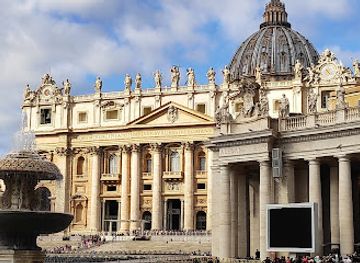
The central landmark associated with the Vatican Necropolis is St Peter’s Basilica, whose vast Renaissance and Baroque structure stands directly above the ancient cemetery and the traditional tomb of the apostle. Beneath it, the Tomb of Peter forms the spiritual focus of the Scavi, while the Trophy of Gaius represents an important early memorial structure in the archaeological sequence. The Clementine Chapel marks the devotional area around the subterranean shrine, linking the excavation with later forms of worship. Above ground, St Peter’s Square, defined by Bernini’s colonnades and the basilica’s monumental façade, expresses the later papal transformation of the site. Together these structures show how a Roman burial ground became a major Christian shrine and, eventually, the symbolic centre of Vatican City.
-
Basilica
St. Peter's Basilica
Explore the breathtaking beauty and spiritual significance of St. Peter's Basilica, a must-see landmark in Vatican City.
1 min walk · 0.1 km from city centre
Explore Vatican Necropolis on the map
Plan your Vatican Necropolis trip on one map. See where the top attractions, landmarks, restaurants, bars and hotels are, find what's near where you're staying, and book hotels and experiences in a few clicks.
Best hotels in Vatican Necropolis
Get your free copy of our complete guide to Vatican Necropolis, delivered straight to you.
Everything on this page, from attractions and restaurants to essentials and local phrases, in one PDF you can read offline, print or share.
Already have an account? Sign in
Your Vatican Necropolis guide is ready.
We'll send it to · Not you? Sign out

Getting your guide ready…
We are putting together a fresh copy of the Vatican Necropolis guide. This can take up to a minute.
This can take a few moments. If your browser asks, choose Allow so the download can start. You'll find the guide in your Downloads folder.
Nothing happened? Download it again
Sorry, the guide is taking longer than usual. Please try again in a minute, or get it by email instead.
From Eve
Local phrases worth knowing
You don't need to get them perfect. A few words go a long way, and locals appreciate the effort.
Basics
| English | Local | Say it |
|---|---|---|
| Hello | Ciao | [chow] |
| Goodbye | Arrivederci | [ah-ree-veh-dehr-chee] |
| Yes | Sì | [see] |
| No | No | [noh] |
| Please/You're welcome | Per favore/Prego | [pehr fah-voh-reh/pray-goh] |
| Thank you | Grazie | [grah-tsyeh] |
| Excuse me/Sorry | Mi scusi/Scusa | [mee skoo-zee/skoo-zah] |
| How are you? | Come stai? | [koh-meh stah-ee] |
| Fine. And you? | Bene. E tu? | [beh-neh. eh too] |
| Do you speak English? | Parli inglese? | [pahr-lee een-gleh-zeh] |
| I don't understand | Non capisco | [nohn kah-pee-skoh] |
Eating & Drinking
| English | Local | Say it |
|---|---|---|
| I'd like to see the menu, please | Vorrei vedere il menù, per favore | [vohr-ray veh-deh-reh eel meh-noo, pehr fah-voh-reh] |
| I don't eat meat | Non mangio carne | [nohn mahn-joh kahr-neh] |
| Cheers! | Salute! | [sah-loo-teh] |
| I would like to pay, please | Vorrei pagare, per favore | [vohr-ray pah-gah-reh, pehr fah-voh-reh] |
Emergencies
| English | Local | Say it |
|---|---|---|
| Help! | Aiuto! | [ah-yoo-toh] |
| Go away! | Vai via! | [vah-ee vee-ah] |
| Call the Police! | Chiama la polizia! | [kyah-mah lah poh-lee-tsyah] |
| Call a doctor! | Chiama un medico! | [kyah-mah oon meh-dee-koh] |
| I'm lost | Mi sono perso/a | [mee soh-noh pehr-soh/ah] |
| I'm ill | Sto male | [stoh mah-leh] |
Shopping
| English | Local | Say it |
|---|---|---|
| I'd like to buy... | Vorrei comprare... | [vohr-ray kohm-prah-reh] |
| I'm just looking | Sto solo guardando | [stoh soh-loh gwar-dahn-doh] |
| How much is it? | Quanto costa? | [kwahn-toh koh-stah] |
| That's too expensive | È troppo caro | [eh troh-poh kah-roh] |
| Can you lower the price? | Puoi abbassare il prezzo? | [pwoh-ee ahb-bahs-sah-reh eel preh-tsoh] |
Time & Numbers
| English | Local | Say it |
|---|---|---|
| What time is it? | Che ora è? | [keh oh-rah eh] |
| It's one o'clock | È l'una | [eh loo-nah] |
| Half past (10) | Sono le dieci e mezza | [soh-noh leh dyeh-chee eh meh-tsah] |
| Morning | Mattina | [maht-tee-nah] |
| Afternoon | Pomeriggio | [poh-meh-ree-joh] |
| Evening | Sera | [seh-rah] |
| Yesterday | Ieri | [yeh-ree] |
| Today | Oggi | [ohd-jee] |
| Tomorrow | Domani | [doh-mah-nee] |
| 1 | Uno | [oo-noh] |
| 2 | Due | [doo-eh] |
| 3 | Tre | [treh] |
| 4 | Quattro | [kwah-troh] |
| 5 | Cinque | [cheen-kweh] |
| 6 | Sei | [say] |
| 7 | Sette | [seh-teh] |
| 8 | Otto | [oh-toh] |
| 9 | Nove | [noh-veh] |
| 10 | Dieci | [dyeh-chee] |
Transport & Directions
| English | Local | Say it |
|---|---|---|
| Where's a/the...? | Dov'è un/il...? | [doh-veh oon/eel] |
| What's the address? | Qual è l'indirizzo? | [kwahl eh leen-dee-reet-soh] |
| Can you show me (on the map)? | Puoi mostrarmi (nella mappa)? | [pwoh-ee mohs-trar-mee (nehl-lah mahp-pah)] |
| When's the next (bus)? | Quando è il prossimo (autobus)? | [kwahn-doh eh eel prohs-see-moh (ow-toh-boo-s)] |
| A ticket (to ....) | Un biglietto (per ....) | [oon beel-lyet-toh (pehr)] |
History of Vatican Necropolis
The Vatican Hill Before Christianity
The Vatican area lay outside ancient Rome’s traditional political centre, on the western side of the Tiber. In antiquity the Vatican Hill and its surrounding plain contained gardens, villas, roads and burial grounds, including cemeteries established beyond the built-up city in accordance with Roman custom. The necropolis beneath St Peter’s preserves evidence of this funerary landscape: tomb structures, inscriptions, painted decoration and burial practices reveal a mixed community rather than a single Christian cemetery. Its position beside routes leading towards Rome helped make the area a place where families commemorated the dead and constructed substantial burial monuments.
A Roman Necropolis Takes Shape
The cemetery developed over several centuries during the Roman imperial period. Its tombs included both pagan and Christian burials, and their decoration reflects changing religious ideas, social status and family traditions. Some monuments were built as small mausoleums, while others formed part of a denser sequence of burial structures. Archaeological remains indicate that the ground level changed over time as new construction and burials accumulated. The surviving walls and inscriptions are important because they preserve ordinary Roman funerary culture close to the place later associated with Saint Peter, allowing the site to be understood as both a religious landscape and a complex urban cemetery.
Peter and the Early Christian Memory
Christian tradition locates the burial of the apostle Peter in the Vatican area after his martyrdom in Rome during the reign of Nero, usually dated to the 60s AD, although ancient evidence and later interpretation require careful distinction. A memorial connected with Peter’s grave became a focus for Christian remembrance, and the site’s importance grew as pilgrims came to honour the apostle. The excavated area includes the structure known as the Trophy of Gaius, a second-century memorial mentioned by the Christian writer Eusebius. Its relationship to Peter’s tomb has been central to scholarly and ecclesiastical interpretation.
Constantine’s Basilica Changes the Site
In the fourth century, after Constantine’s recognition of Christianity and the imperial patronage that followed, a monumental basilica was constructed over the area associated with Peter’s burial. Building on the Vatican slope required major engineering work and altered the ancient cemetery, burying portions of the necropolis beneath the new church. This decision fixed the location of the Christian shrine and established the Vatican as one of the principal pilgrimage centres of late antiquity. The later basilica was eventually replaced, but the Constantinian building explains why the Roman cemetery survived beneath successive layers of sacred architecture.
Excavation Beneath the Renaissance Basilica
The present St Peter’s Basilica was built between the sixteenth and seventeenth centuries above the earlier church, preserving the central association with Peter’s tomb. Archaeological investigations beneath the basilica became especially significant during the twentieth century, when excavators uncovered parts of the ancient necropolis and examined the shrine traditionally linked with Peter. The work was technically difficult because the excavated structures lay beneath a functioning church. The Vatican’s controlled Scavi visits now present the cemetery, inscriptions and memorial structures within the context of this long sequence of Roman burial, pilgrimage, excavation and continuing religious devotion.
Travel experiences inspired by this city
-
 11 Day Trip
Family Adventure Through the Eternal City: Rome
Join us on an 11-day family journey through Rome, where history, culture, and adventure await in the heart of Italy's capital.
11 Day Trip
Family Adventure Through the Eternal City: Rome
Join us on an 11-day family journey through Rome, where history, culture, and adventure await in the heart of Italy's capital.
 15 Sep 2025
By Andrew Taylor -
 7 Day Trip
Family Adventure in the Heart of Rome
Embark on a family adventure through Rome's historic landmarks, vibrant culture, and exquisite cuisine. Experience the eternal city's charm together.
7 Day Trip
Family Adventure in the Heart of Rome
Embark on a family adventure through Rome's historic landmarks, vibrant culture, and exquisite cuisine. Experience the eternal city's charm together.
 20 Feb 2025
By Andreea Albu
Swipe for more travel diaries
Vatican Necropolis in Photos
Browse through our photo collection highlighting the charm and character of the destination.
Cities near Vatican Necropolis
The closest cities to Vatican Necropolis, if you have time for more than one stop.
-

-

-

-

-


Swipe for more cities
Explore more
Explore more of Vatican City
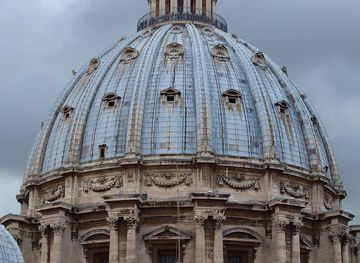
Explore Vatican City, the spiritual heart of Catholicism, home to St. Peter's Basilica, the Vatican Museums, and the serene Vatican Gardens, where art and faith converge.
Explore Vatican City