

Free Saint Saviour Travel Guide & Mobile App
Explore Saint Saviour with free travel guides. Discover regional history, expert tips, proposed trips, and audio guides on web or mobile app.


Explore Saint Saviour in Jersey for Neolithic heritage, manor gardens, country lanes, parish history and easy access to Saint Helier.
Read more about Saint Saviour
When is the best time to visit Saint Saviour?
Best: July–September · 21–23°C| Month | High (°C) | Rainfall (mm) |
|---|---|---|
| January | 6 | 70 |
| February | 7 | 60 |
| March | 10 | 65 |
| April | 14 | 70 |
| May | 17 | 70 |
| June | 20 | 60 |
| July (best) | 23 | 50 |
| August (best) | 23 | 50 |
| September (best) | 21 | 60 |
| October | 18 | 70 |
| November | 12 | 75 |
| December | 8 | 80 |
Getting to and around Saint Saviour
How to get there
Transportation
Top city travel guides in Saint Saviour
The cities of Saint Saviour, and the easiest places to base yourself.
-

-

-


Swipe for more cities
Destinations in Saint Saviour
Resorts, valleys and scenic spots worth a trip of their own.
-

-


Swipe for more destinations
Best attractions in Saint Saviour
Saint Saviour’s attractions combine archaeology, gardens, religious heritage and accessible countryside. La Hougue Bie is the parish’s principal historical destination, with its Neolithic passage grave, museum displays and German Command Bunker presenting several layers of Jersey’s past in one setting. Samarès Manor provides a different experience, centred on a historic estate, cultivated gardens and the island’s agricultural traditions. Saint Saviour’s Parish Church is worth visiting for its long history and local architectural character, while the surrounding lanes reveal granite houses, fields and small rural buildings that are attractions in their own right. The area around Saint Saviour’s Reservoir offers a quieter landscape for walking and observing seasonal wildlife, although it is not a large wilderness park. Visitors interested in contemporary local life can also explore the parish’s relationship with nearby Saint Helier, whose museums, galleries and cultural venues are just beyond the boundary. Families may prefer the more structured heritage and garden visits, while walkers and cyclists can build shorter excursions around the parish’s network of lanes. The appeal lies in the compact layering of sites rather than in a single dramatic natural spectacle.
-
Tourist attraction
Jersey War Tunnels
Uncover the poignant history of Jersey's occupation during WWII at the immersive Jersey War Tunnels, a must-visit historical landmark for all travelers.
-
Castle
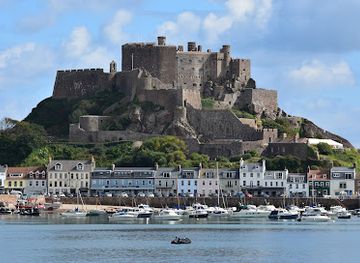
Mont Orgueil Castle
Discover the rich history and stunning views of Mont Orgueil Castle, a majestic fortress that narrates Jersey's captivating past.
-
Castle
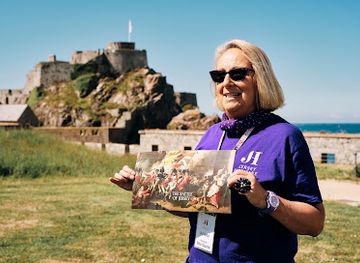
Elizabeth Castle
Explore the rich history and breathtaking views at Elizabeth Castle, a stunning landmark in St Aubin's Bay, Jersey.
-
Tourist attraction
Jersey Pearl
Explore Jersey Pearl: Where stunning jewelry meets rich cultural experiences in the heart of Jersey.



Best landmarks in Saint Saviour
La Hougue Bie is Saint Saviour’s most significant landmark, its grass-covered prehistoric mound marking a ceremonial and funerary site created thousands of years ago. Its form is visually restrained, but the passage and chamber reveal an extraordinary archaeological achievement when understood through the site’s interpretation. The German Command Bunker nearby adds a contrasting twentieth-century presence and preserves the physical memory of Jersey’s occupation. Samarès Manor is another defining landmark, representing the island’s historic estate culture through its buildings, grounds and cultivated setting. Saint Saviour’s Parish Church provides a more traditional marker of community history, with its tower and churchyard standing within the parish landscape rather than a dense town centre. Saint Saviour’s Reservoir is a notable modern landscape feature, associated with the island’s water supply and surrounded by greenery. Together these places show the parish’s unusual range: prehistoric monument, wartime structure, historic manor, medieval religious centre and practical civic infrastructure. The surrounding granite houses, walls and lanes are less monumental but equally important to Saint Saviour’s visual identity.
-
Tourist attraction
Jersey War Tunnels
Discover the poignant history of Jersey during WWII at the Jersey War Tunnels, an immersive museum experience in the heart of the island.
-
Castle
Mont Orgueil Castle
Explore the historic Mont Orgueil Castle in Gorey, Jersey - a captivating fortress with stunning views and rich history.
-
Zoo
Jersey Zoo
Explore Jersey Zoo: A conservation-driven wildlife park with diverse species, beautiful landscapes, and unforgettable experiences for all ages.
-
Castle
Elizabeth Castle
Discover the rich history and stunning views at Elizabeth Castle, a fascinating historical landmark in Jersey.


Explore Saint Saviour on the map
Plan your trip on one map. See where the top cities, national parks and sights are, and book hotels and experiences in a few clicks.
Best hotels in Saint Saviour
Best restaurants in Saint Saviour
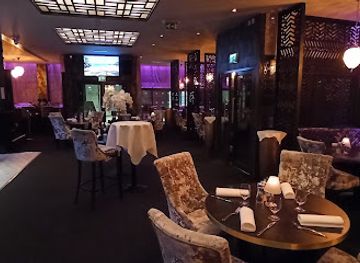
Saint Saviour’s dining scene is primarily local and practical rather than concentrated in a defined restaurant quarter. Parish cafés, pubs, farm-associated outlets and nearby suburban restaurants provide opportunities to sample Jersey produce, including potatoes, dairy products, seafood and seasonal fruit and vegetables. Jersey Royal potatoes are a particularly recognised island product, traditionally associated with early-season cultivation, while locally produced dairy and ice cream reflect Jersey’s agricultural identity. Visitors staying in the parish often combine daytime heritage visits with dinner in nearby Saint Helier, where the choice is broader and includes restaurants focused on seafood, modern British cooking and international cuisines. Farm shops and markets across Jersey can be useful for picnic ingredients and regional products, though availability varies by season. Traditional pub meals, café lunches and informal food are generally more representative of the parish’s everyday dining character than formal gastronomy. Those seeking locally sourced menus should check current offerings directly, as seasonal produce and individual business arrangements change.
-
Restaurant
White Horse Pub & Dining
Discover local flavors at White Horse Pub & Dining - a cozy gastropub in St. Saviour offering delicious meals and refreshing drinks.
-
Seafood
Roseville Bistro
Discover fresh seafood delights at Roseville Bistro in St. Helier - where exquisite flavors meet coastal charm.
-
 Restaurant
Longueville Manor Hotel and Restaurant
Discover luxury and tranquility at Longueville Manor Hotel and Restaurant in Jersey - where history meets modern elegance.
-
Continental restaurant
Mano's Bistro
Experience exquisite continental cuisine at Mano's Bistro in St Helier – where every meal is a celebration of flavor.


Best bars in Saint Saviour
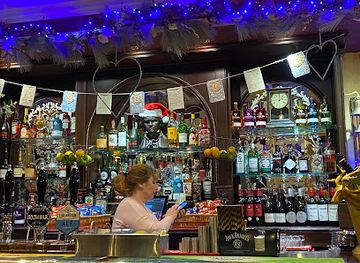
Saint Saviour has a modest evening scene shaped by pubs, hotel bars and neighbourhood restaurants rather than a major concentration of nightclubs. Traditional pubs provide the most characteristic local setting for an evening drink or casual meal, while the parish’s proximity to Saint Helier makes the capital the practical choice for cocktail bars, live music, theatre-related evenings and later nightlife. Rural and residential parts of Saint Saviour become quiet after business hours, and public transport options may be less convenient later at night, so visitors should plan their return or arrange a taxi. The parish can suit travellers who prefer a relaxed evening after visiting heritage sites and gardens, while those wanting a wider selection of venues should head into Saint Helier. Drinking is not necessary to experience the area: evening walks, dining and seasonal cultural events offer alternatives, subject to weather and current programming.
-
Pub
The Cock & Bottle
Experience the essence of Jersey's pub culture at The Cock & Bottle, where local flavors and a warm ambiance come together.
-
Pub
The Lamplighter
Discover the warm ambiance and local flavors at The Lamplighter, a beloved pub in St Helier, Jersey, perfect for a cozy evening out.
-
Restaurant
White Horse Pub & Dining
Experience the heart of Jersey at the White Horse Pub & Dining, where traditional flavors meet modern comfort in a cozy gastropub atmosphere.
-
Live music bar
Blue Note Bar
Discover the lively ambiance of Blue Note Bar, St Helier's premier live music venue, where every night is a celebration of rhythm and local culture.


Best nightclubs in Saint Saviour
Saint Saviour has a modest evening scene shaped by pubs, hotel bars and neighbourhood restaurants rather than a major concentration of nightclubs. Traditional pubs provide the most characteristic local setting for an evening drink or casual meal, while the parish’s proximity to Saint Helier makes the capital the practical choice for cocktail bars, live music, theatre-related evenings and later nightlife. Rural and residential parts of Saint Saviour become quiet after business hours, and public transport options may be less convenient later at night, so visitors should plan their return or arrange a taxi. The parish can suit travellers who prefer a relaxed evening after visiting heritage sites and gardens, while those wanting a wider selection of venues should head into Saint Helier. Drinking is not necessary to experience the area: evening walks, dining and seasonal cultural events offer alternatives, subject to weather and current programming.
-
Live music bar
Blue Note Bar
Experience electrifying live music and vibrant nightlife at Blue Note Bar, a beloved pub in the heart of St Helier, Jersey.
-
Bar
Vittoria
Experience the vibrant nightlife of Jersey at Vittoria, a lively bar in Liberty Wharf offering a fantastic selection of drinks and a lively atmosphere.
-
Sports bar
The Up & Down
The Up & Down in St Helier: Your go-to spot for live music, sports, and karaoke fun in Jersey.
-
Association / Organization
Masonic Temple
Experience the rich history and vibrant nightlife at the Masonic Temple in St Helier, Jersey, where tradition meets modern culture.

Best shops in Saint Saviour
Shopping in Saint Saviour is oriented towards everyday services, garden-related businesses, convenience retail and locally produced goods rather than a large independent shopping district. Visitors can look for Jersey produce such as potatoes, dairy items, preserves, seasonal fruit and vegetables, and products made with local ingredients at farm shops or island markets, subject to availability. Craft and gift purchases may include ceramics, textiles, artwork, books on Jersey history and food products, while garden outlets reflect the parish’s horticultural character and proximity to Samarès Manor. For a broader high-street selection, department-store shopping and a larger concentration of independent retailers, Saint Helier is nearby but outside the parish. Rural shopping is often spread along roads rather than gathered in a single centre, so visitors should check locations and opening arrangements in advance. A useful souvenir is one that reflects Jersey’s actual landscape and history, such as a locally made food product or a well-researched book about the island’s archaeology and occupation.
-
Gift shop
Jersey Market
Explore Jersey Market, a vibrant hub of local crafts and unique gifts in St Helier, showcasing the rich culture of Jersey in every stall.
-
Tourist attraction
Jersey Pearl
Explore the artistry and culture at Jersey Pearl, where exquisite jewelry meets local cuisine in a stunning coastal setting.
-
Shopping mall
Liberty Wharf Shopping Centre
Experience the best of retail and dining at Liberty Wharf Shopping Centre in St Helier, Jersey, where shopping meets stunning waterfront views.
-
Supermarket
Waitrose & Partners
Discover the finest local produce and gourmet specialties at Waitrose & Partners in Jersey, a culinary paradise for food enthusiasts.


Get your free copy of our complete guide to Saint Saviour, delivered straight to you.
Everything on this page, from attractions and restaurants to essentials and local phrases, in one PDF you can read offline, print or share.
Already have an account? Sign in
Your Saint Saviour guide is ready.
We'll send it to · Not you? Sign out

Getting your guide ready…
We are putting together a fresh copy of the Saint Saviour guide. This can take up to a minute.
This can take a few moments. If your browser asks, choose Allow so the download can start. You'll find the guide in your Downloads folder.
Nothing happened? Download it again
Sorry, the guide is taking longer than usual. Please try again in a minute, or get it by email instead.
Saint Saviour essentials
Currency and Payment
Safety
Emergency Situations
Do's and Don'ts
Local Tips
From Eve
Local phrases worth knowing
You don't need to get them perfect. A few words go a long way, and locals appreciate the effort.
Basics
| English | Local | Say it |
|---|---|---|
| Hello | Hello | [Heh-lo] |
| Goodbye | Goodbye | [Guhd-bye] |
| Yes | Yes | [Yes] |
| No | No | [No] |
| Please/You're welcome | Please/You're welcome | [Pleez/Yoore wel-kum] |
| Thank you | Thank you | [Thangk yoo] |
| Excuse me/Sorry | Excuse me/Sorry | [Ex-kyoos mee/Sor-ree] |
| How are you? | How are you? | [How ar yoo?] |
| Fine. And you? | Fine. And you? | [Fine. And yoo?] |
| Do you speak English? | Do you speak English? | [Doo yoo speek Ing-lish?] |
| I don't understand | I don't understand | [I dont un-der-stand] |
Eating & Drinking
| English | Local | Say it |
|---|---|---|
| I'd like to see the menu, please | I'd like to see the menu, please | [I'd lik to see thuh men-yoo, pleez] |
| I don't eat meat | I don't eat meat | [I dont eet meet] |
| Cheers! | Cheers! | [Cheerz] |
| I would like to pay, please | I would like to pay, please | [I wud lik to pay, pleez] |
Emergencies
| English | Local | Say it |
|---|---|---|
| Help! | Help! | [Help] |
| Go away! | Go away! | [Go aw-ay] |
| Call the Police! | Call the Police! | [Call thuh Po-lees] |
| Call a doctor! | Call a doctor! | [Call a dok-tor] |
| I'm lost | I'm lost | [I'm lost] |
| I'm ill | I'm ill | [I'm il] |
Shopping
| English | Local | Say it |
|---|---|---|
| I'd like to buy... | I'd like to buy... | [I'd lik to buy...] |
| I'm just looking | I'm just looking | [I'm just luk-ing] |
| How much is it? | How much is it? | [How much iz it?] |
| That's too expensive | That's too expensive | [Thats too ex-pen-siv] |
| Can you lower the price? | Can you lower the price? | [Can yoo lo-er thuh pryce?] |
Time & Numbers
| English | Local | Say it |
|---|---|---|
| What time is it? | What time is it? | [What tym iz it?] |
| It's one o'clock | It's one o'clock | [Its wun o-clock] |
| Half past (10) | Half past (10) | [Half past ten] |
| Morning | Morning | [Morn-ing] |
| Afternoon | Afternoon | [Af-ter-noon] |
| Evening | Evening | [Eve-ning] |
| Yesterday | Yesterday | [Yes-ter-day] |
| Today | Today | [To-day] |
| Tomorrow | Tomorrow | [To-mor-row] |
| 1 | 1 | [One] |
| 2 | 2 | [Two] |
| 3 | 3 | [Three] |
| 4 | 4 | [Four] |
| 5 | 5 | [Five] |
| 6 | 6 | [Six] |
| 7 | 7 | [Seven] |
| 8 | 8 | [Eight] |
| 9 | 9 | [Nine] |
| 10 | 10 | [Ten] |
Transport & Directions
| English | Local | Say it |
|---|---|---|
| Where's a/the...? | Where's a/the...? | [Whehrz a/thuh...?] |
| What's the address? | What's the address? | [Whats thuh ad-dress?] |
| Can you show me (on the map)? | Can you show me (on the map)? | [Can yoo show mee (on thuh map)?] |
| When's the next (bus)? | When's the next (bus)? | [When's thuh nekst (bus)?] |
| A ticket (to ....) | A ticket (to ....) | [A tik-it (to ....)] |
History of Saint Saviour
Neolithic La Hougue Bie
La Hougue Bie preserves one of Jersey’s most important prehistoric monuments. Built during the Neolithic period, probably around the fourth millennium BC, its long passage leads into a covered burial chamber beneath a substantial mound. The monument formed part of a ceremonial landscape rather than serving simply as an isolated tomb. Its alignment and construction demonstrate the technical and communal abilities of early farming societies in the Channel Islands. The site remains central to understanding Jersey’s prehistoric connections with neighbouring parts of Atlantic Europe and is now interpreted through a museum and archaeological displays.
Medieval Parish and Church Life
Saint Saviour developed within the medieval parish system that still shapes Jersey’s local identity. The parish church, dedicated to Saint Saviour, became the centre of religious and administrative life for a scattered rural community. Medieval agriculture, customary law and the authority of the church influenced settlement patterns across the parish, while granite buildings and lanes preserved aspects of the island’s distinctive vernacular character. Although later rebuilding altered parts of the church and surrounding settlement, the parish structure remains a visible link between contemporary Jersey and its medieval past.
Samarès Manor and Agricultural Estates
The estate at Samarès reflects the long importance of agriculture and landholding in Saint Saviour. Its history reaches back to the medieval period, while the manor’s later development illustrates the organisation of a substantial Jersey estate. Gardens, orchards and cultivated ground preserve the memory of a landscape shaped by farming rather than by large-scale industry. Estate life was connected to wider changes in Jersey’s economy, including the production and export of agricultural goods. Today, Samarès offers a tangible setting in which to understand the island’s rural history and horticultural traditions.
Jersey’s Maritime and Commercial Transformation
From the early modern period onwards, Jersey’s prosperity was influenced by trade, shipping, privateering, agriculture and links with England, France and the wider Atlantic world. Saint Saviour benefited indirectly from this transformation as roads, markets and demand from the growing urban centre of Saint Helier connected inland farms with external commerce. The parish remained predominantly rural, but its fields and estates were increasingly part of an export-oriented economy. Granite construction, improved communications and changing patterns of land use all left their mark on the parish before industrialisation reshaped the island more broadly.
The German Occupation, 1940–1945
Jersey was occupied by German forces during the Second World War, and Saint Saviour contains important evidence of that period. The German Command Bunker at La Hougue Bie formed part of the occupation administration and defensive infrastructure established across the island. The occupation affected food supplies, movement, labour and daily life, while the island’s civilians lived under military rule until liberation in May 1945. The bunker and associated interpretation at La Hougue Bie help visitors understand the occupation as a lived experience rather than only as a collection of military structures.
Post-war Growth and Suburban Saint Saviour
After liberation, Saint Saviour changed as Jersey’s population, housing and service economy expanded. Areas close to Saint Helier became increasingly suburban, while farms, lanes and historic properties remained embedded within the parish. Better roads and rising car ownership made it easier to commute between residential districts, commercial areas and the countryside. This mixture of modern housing, agricultural land and protected heritage sites is characteristic of contemporary Saint Saviour. The parish therefore illustrates Jersey’s wider post-war challenge: accommodating growth while retaining the landscapes and historic places that give the island its distinct identity.
Saint Saviour in Photos
Browse through our photo collection highlighting the charm and character of the destination.
Neighbouring regions of Saint Saviour
The closest regions to Saint Saviour, if you have time for more than one.
-

-
-

-

-


Swipe for more regions
Explore more

Explore more of Jersey
Discover the charm of Jersey, the largest Channel Island, with its stunning landscapes, rich history, and a delightful blend of British and French cultures.
Explore Jersey