

Free Atyrau Travel Guide & Mobile App
Plan your Atyrau trip with Evendo. Get free guides to top attractions, restaurants, hotels, and bars. Web access or download the mobile app.


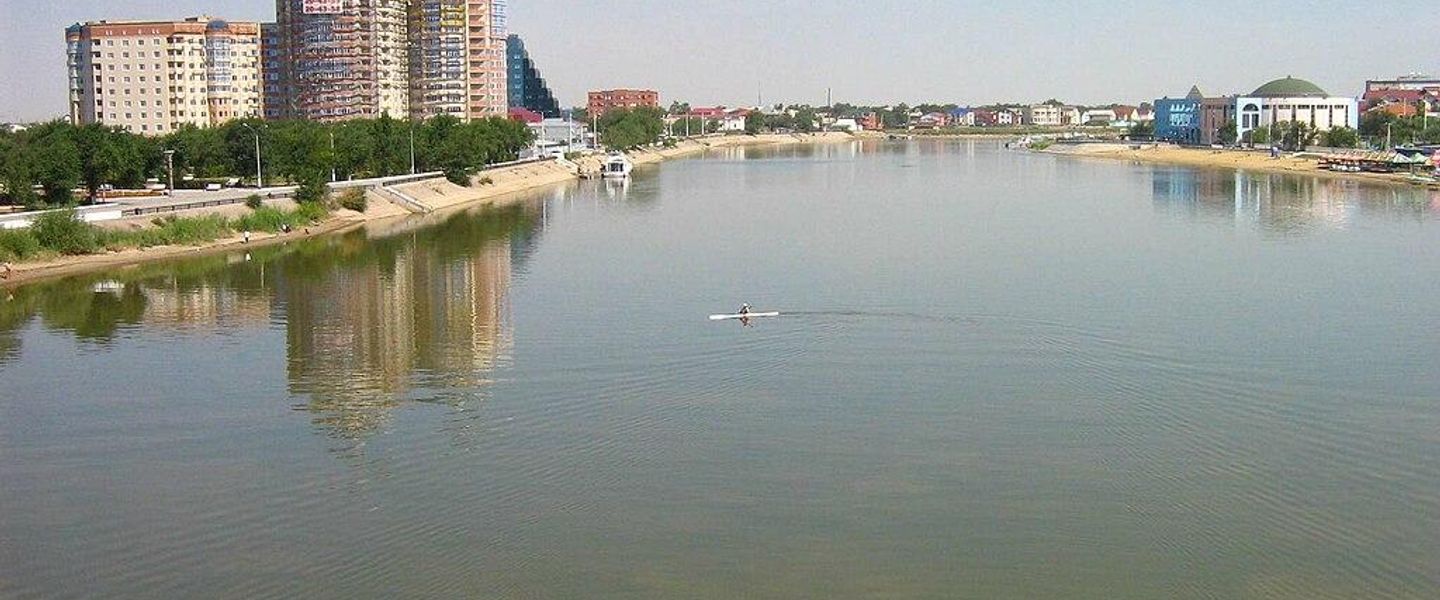


Atyrau travel reveals Kazakhstan’s Caspian oil city, the Ural River’s Europe–Asia meeting point, regional museums, mosques and steppe landscapes.
At the Ural River
Atyrau stands in western Kazakhstan where the Ural River reaches the northern Caspian Sea, a location traditionally described as the meeting point of Europe and Asia. The river divides the city physically, while bridges and broad avenues connect its European and Asian sides. Much of Atyrau’s modern prosperity comes from the oil industry, yet the city retains links to older histories of fishing, river trade, pastoral life and the vast Mangystau-Caspian region.Read more about Atyrau
City Life and Heritage
Steppe and Caspian Horizons
When is the best time to visit Atyrau?
Best: April–May, September · 18–25°C| Month | High (°C) | Rainfall (mm) |
|---|---|---|
| January | -4 | 12 |
| February | -1 | 10 |
| March | 7 | 11 |
| April (best) | 18 | 10 |
| May (best) | 25 | 9 |
| June | 34 | 9 |
| July | 37 | 8 |
| August | 33 | 7 |
| September (best) | 24 | 10 |
| October | 14 | 12 |
| November | 5 | 13 |
| December | 0 | 15 |
Getting to and around Atyrau
How to get there
Transportation
Best attractions in Atyrau
Atyrau’s sightseeing is concentrated around the Ural River and the central districts. The Ural embankment provides the city’s most atmospheric public walk, with bridges, open water and views towards both sides of the city. At the Regional Museum, archaeological material, natural-history displays and objects connected with western Kazakhstan explain the area’s long human and environmental history. The Imangali Mosque introduces contemporary Islamic architecture and remains one of the city’s most recognisable buildings, while the nearby Orthodox Cathedral of the Transfiguration reflects another strand of local religious life. Public squares and monuments dedicated to figures such as Isatay Taymanuly and Makhambet Otemisuly connect modern Atyrau with Kazakh history and literature. For visitors with more time, the Akzhaiyk State Nature Reserve offers wetlands and bird habitats in the Ural Delta, but it lies outside the city and requires separate planning.
-
Tourist attraction
Imangali Mosque
Discover the breathtaking Imangali Mosque in Atyrau, a stunning blend of modern and traditional architecture showcasing Kazakhstan's rich cultural heritage.
15 min walk · 1.2 km from city centre
-
Park
Victory Park
Discover the tranquil beauty of Victory Park in Atyrau, a memorial park honoring the sacrifices of World War II amidst serene landscapes and lush greenery.
17 min walk · 1.3 km from city centre
-
Tourist attraction
Isatay and Makhambet Square
Discover the cultural heart of Atyrau at Isatay and Makhambet Square, a vibrant gathering place rich in history and local traditions.
17 min walk · 1.4 km from city centre
-
Market
Staryy Bazar
Experience the vibrant culture and authentic flavors of Atyrau at Staryy Bazar, a local market filled with unique treasures and delicious cuisine.
8 min drive · 2.7 km from city centre


Best landmarks in Atyrau
The Ural River is Atyrau’s defining natural landmark, and the embankment and bridges embody the city’s often-mentioned geographical position between Europe and Asia. The Imangali Mosque is a prominent contemporary religious building in the centre, with a large dome and minarets that give the urban skyline a distinctly Islamic presence. The Orthodox Cathedral of the Transfiguration represents the city’s Russian religious heritage and the long history of Orthodox communities in the region. Monuments to Isatay Taymanuly and Makhambet Otemisuly commemorate leaders of the nineteenth-century anti-colonial uprising and poets whose work remains important in Kazakh culture. The Regional Museum is significant not for a single façade but for preserving the archaeological, natural and social record of Atyrau and the wider western Kazakh landscape. Together, these sites express river geography, faith, memory and modern regional identity.
-
Airport
Atyrau International Airport
Experience modern travel at Atyrau International Airport, your gateway to the breathtaking landscapes and vibrant culture of Kazakhstan.
14 min drive · 4.5 km from city centre
-
Park
Victory Park
Explore Victory Park in Atyrau, a serene memorial dedicated to the heroes of World War II amidst beautiful landscapes and tranquil pathways.
17 min walk · 1.3 km from city centre
-
Hotel
River Palace Hotel
Experience luxury and culture at the River Palace Hotel in Atyrau – your gateway to relaxation and exploration in Kazakhstan.
7 min drive · 2.5 km from city centre
-
Tourist attraction
Isatay and Makhambet Square
Explore the cultural heart of Atyrau at Isatay and Makhambet Square, a vibrant gathering place rich in history and local spirit.
17 min walk · 1.4 km from city centre


Explore Atyrau on the map
Plan your Atyrau trip on one map. See where the top attractions, landmarks, restaurants, bars and hotels are, find what's near where you're staying, and book hotels and experiences in a few clicks.
Best hotels in Atyrau
Best restaurants in Atyrau
Atyrau’s restaurants reflect western Kazakhstan’s position between the steppe, the Ural basin and the Caspian Sea. Kazakh cooking is represented by beshbarmak, traditionally served with boiled meat and broad noodles, as well as kuyrdak, horse-meat specialities, baursaki and hearty soups. Fish from the Caspian and lower Ural region appears in local menus, although preparation and availability vary. Russian and Central Asian influences are equally visible in dumplings, plov, lagman, shashlik, breads and pastries. Central cafés and hotel restaurants tend to offer the widest choice, from regional dishes to international food for the city’s business community. Markets and smaller eateries provide a more informal setting for bread, dairy products, snacks and seasonal produce, while dining rooms in newer districts often combine Kazakh hospitality with contemporary interiors and multilingual menus.
-
Turkish
Restaurant Sancak Atyrau
Experience authentic Turkish cuisine at Restaurant Sancak Atyrau – where every dish tells a story of flavor and tradition.
9 min drive · 3.0 km from city centre
-
Restaurant
Khutorok
Experience authentic Kazakh cuisine at Khutorok in Atyrau – a must-visit restaurant for food lovers exploring Kazakhstan.
9 min drive · 3.1 km from city centre
-
Restaurant
Ginza
Experience the luxury of Ginza in Atyrau – where exquisite dining meets warm hospitality.
7 min drive · 2.3 km from city centre
-
Restaurant
Jida
Savor authentic Kazakh cuisine at Jida in Atyrau - where tradition meets modern culinary artistry.
9 min drive · 3.0 km from city centre


Best bars in Atyrau
Atyrau’s evening scene is shaped less by a concentrated nightlife quarter than by restaurants, hotel lounges, cafés and independent bars scattered through the central and newer commercial districts. After work, residents often meet for tea, coffee, food or conversation, while larger hotels and modern venues may offer fuller drinks menus and occasional live entertainment. Nightclubs and late-night venues exist, but their schedules, atmosphere and availability can change, so local confirmation is useful. The Ural embankment is pleasant for an evening stroll when conditions are suitable, though it is not a continuous bar district. Alcohol is available in licensed establishments, while quieter socialising, Kazakh and Russian music, and televised sport are often as characteristic of an Atyrau night as dancing. Visitors should carry identification and use a taxi for late journeys.
-
Bar
City Brew
Discover the charm of City Brew, Atyrau's favorite bar, where delightful drinks and cozy ambiance await every visitor.
7 min walk · 0.5 km from city centre
-
Bar
BARMA Atyrau
Experience the vibrant nightlife of Atyrau at BARMA, where local flavors meet a lively atmosphere in a stylish bar setting.
9 min drive · 3.0 km from city centre
-
Pub
Port GURYEV
Discover the lively ambiance and local flavors at Port GURYEV, the perfect pub experience in Atyrau, Kazakhstan.
6 min walk · 0.5 km from city centre
-
Bar
Prospect Pub
Discover the lively atmosphere of Prospect Pub in Atyrau, where delicious drinks and vibrant nightlife create an unforgettable experience.
14 min drive · 4.5 km from city centre


Best nightclubs in Atyrau
Atyrau’s evening scene is shaped less by a concentrated nightlife quarter than by restaurants, hotel lounges, cafés and independent bars scattered through the central and newer commercial districts. After work, residents often meet for tea, coffee, food or conversation, while larger hotels and modern venues may offer fuller drinks menus and occasional live entertainment. Nightclubs and late-night venues exist, but their schedules, atmosphere and availability can change, so local confirmation is useful. The Ural embankment is pleasant for an evening stroll when conditions are suitable, though it is not a continuous bar district. Alcohol is available in licensed establishments, while quieter socialising, Kazakh and Russian music, and televised sport are often as characteristic of an Atyrau night as dancing. Visitors should carry identification and use a taxi for late journeys.
-
Restaurant
Armada
Discover Armada in Atyrau: a perfect blend of exquisite dining and lively karaoke entertainment for an unforgettable night out.
2 min walk · 0.2 km from city centre
-
Bar
BARMA Atyrau
Discover the electric atmosphere of BARMA Atyrau, a must-visit bar in Atyrau offering a vibrant nightlife experience with a wide range of drinks.
9 min drive · 3.0 km from city centre
-
Restaurant
A4 Cafe, Pub & Karaoke
Experience the vibrant atmosphere of A4 Cafe, Pub & Karaoke in Atyrau, where delicious European and Indian cuisine meets lively karaoke fun!
11 min drive · 3.6 km from city centre
-
Hookah bar
Harvey's Club
Experience the vibrant nightlife of Atyrau at Harvey's Club, a premier hookah bar with a cozy café atmosphere and a fantastic drink selection.
10 min walk · 0.8 km from city centre


Best shops in Atyrau
Shopping in Atyrau ranges from everyday bazaars and food halls to supermarkets, modern retail centres and specialist shops serving the city’s energy-sector population. Local markets are useful places to see displays of fruit, vegetables, dried goods, dairy products, bread and meat, while Kazakh food products make more practical souvenirs than fragile decorative items. Visitors may find embroidered textiles, felt goods, traditional patterns, leather items and small craft objects, although availability and quality vary between retailers. Central streets and newer commercial districts contain cafés, pharmacies, clothing shops and contemporary brands, with larger shopping centres offering familiar international-style retail. When buying food, check packaging and transport requirements, and use established shops for sealed regional products. Bargaining is not expected in every modern store, whereas an informal market may allow polite discussion over selected goods.
-
Clothing store
Koktem Market
Discover the vibrant Koktem Market in Atyrau for a unique shopping experience filled with local culture, clothing, and delightful finds.
16 min walk · 1.3 km from city centre
-
Shopping mall
Tamasha
Discover the ultimate shopping experience at Tamasha, Atyrau's vibrant shopping mall with diverse shops, delicious dining, and exciting entertainment options.
1 min walk · 0.1 km from city centre
-
Shopping mall
Насиха Пассажы
Explore Насиха Пассажы, Atyrau's lively shopping mall, where modern retail meets local culture and entertainment.
10 min drive · 3.4 km from city centre
-
Shopping mall
Shalkyma
Discover the vibrant shopping experience at Shalkyma, Atyrau's premier mall offering diverse retail, dining, and entertainment options.
8 min drive · 2.8 km from city centre


Get your free copy of our complete guide to Atyrau, delivered straight to you.
Everything on this page, from attractions and restaurants to essentials and local phrases, in one PDF you can read offline, print or share.
Already have an account? Sign in
Your Atyrau guide is ready.
We'll send it to · Not you? Sign out

Getting your guide ready…
We are putting together a fresh copy of the Atyrau guide. This can take up to a minute.
This can take a few moments. If your browser asks, choose Allow so the download can start. You'll find the guide in your Downloads folder.
Nothing happened? Download it again
Sorry, the guide is taking longer than usual. Please try again in a minute, or get it by email instead.
Atyrau essentials
Currency and Payment
Safety
Emergency Situations
Do's and Don'ts
Local Tips
From Eve
Local phrases worth knowing
You don't need to get them perfect. A few words go a long way, and locals appreciate the effort.
Basics
| English | Local | Say it |
|---|---|---|
| Hello | Сәлем | [Salem] |
| Goodbye | Жақсы көріңіз | [Jaqsy körińiz] |
| Yes | Ия | [Iya] |
| No | Жоқ | [Joq] |
| Please/You're welcome | Рақмет | [Raqmet] |
| Thank you | Рақмет сізге | [Raqmet sizge] |
| Excuse me/Sorry | Кешіріңіз | [Keshirińiz] |
| How are you? | Сіздің денсаулығыңыз қалай? | [Sizdiń densaulyǵyńyz qalai?] |
| Fine. And you? | Жақсымын. Сіз? | [Jaqsymın. Siz?] |
| Do you speak English? | Сіз ағылшын тілінде сөйлейсіз бе? | [Siz ağılşın tilinde söylesiz be?] |
| I don't understand | Мен түсінбедім | [Men tüsinbedim] |
Eating & Drinking
| English | Local | Say it |
|---|---|---|
| I'd like to see the menu, please | Менюді қарау керек, рахмет | [Menüdi qaraw kerek, rahmet] |
| I don't eat meat | Мен майықтарды жемін | [Men mayıqtardy jemin] |
| Cheers! | Бұл сізге! | [Bul sizge!] |
| I would like to pay, please | Тапсырыс беру керек, рахмет | [Tabsırys berw kerek, rahmet] |
Emergencies
| English | Local | Say it |
|---|---|---|
| Help! | Көмек! | [Kömek!] |
| Go away! | Ауыр болыңыз! | [Awır bolıńız!] |
| Call the Police! | Полицияға қоңырау шақырыңыз! | [Politsıyağa qoñaıraw şaqırıńız!] |
| Call a doctor! | Дәрігер шақырыңыз! | [Däriger şaqırıńız!] |
| I'm lost | Мен айықпын | [Men aıqpın] |
| I'm ill | Мен аурулымын | [Men awrulımın] |
Shopping
| English | Local | Say it |
|---|---|---|
| I'd like to buy... | Сатып алғым келеді... | [Satıp algım keledi...] |
| I'm just looking | Тек көремін | [Tek köremin] |
| How much is it? | Ол канша? | [Ol qanşa?] |
| That's too expensive | Ол тым де қымбат | [Ol tım de qımbat] |
| Can you lower the price? | Бағаларды төмендете аласыз бе? | [Baǵalary tömendete alasız be?] |
Time & Numbers
| English | Local | Say it |
|---|---|---|
| What time is it? | Қанша уақыт? | [Qanşa waqıt?] |
| It's one o'clock | Бір уақытта | [Bir waqıtta] |
| Half past (10) | Оның орташа (10) | [Onıñ ortaşa (10)] |
| Morning | Таң | [Tań] |
| Afternoon | Кеш | [Keş] |
| Evening | Кеш | [Keş] |
| Yesterday | Кеше | [Keşe] |
| Today | Бүгін | [Bugin] |
| Tomorrow | Ертең | [Erteń] |
| 1 | 1 | [1] |
| 2 | 2 | [2] |
| 3 | 3 | [3] |
| 4 | 4 | [4] |
| 5 | 5 | [5] |
| 6 | 6 | [6] |
| 7 | 7 | [7] |
| 8 | 8 | [8] |
| 9 | 9 | [9] |
| 10 | 10 | [10] |
Transport & Directions
| English | Local | Say it |
|---|---|---|
| Where's a/the...? | ...қайда? | [...qayda?] |
| What's the address? | Мекен-жайы қандай? | [Meken-jayı qanday?] |
| Can you show me (on the map)? | (картада) көрсете аласыз бе? | [(kartada) körsete alasız be?] |
| When's the next (bus)? | Келесі (автобус) не уақытта? | [Kelesi (awtobus) ne waqıtta?] |
| A ticket (to ....) | Билет (...ға) | [Bilet (...ğa)] |
History of Atyrau
Yaik River Beginnings
The settlement that developed into Atyrau grew beside the lower Yaik River, the historic Russian name for the Ural, in a region connected to nomadic Kazakh communities, fishing grounds and Caspian trade. Russian Cossack activity along the river increased during the seventeenth century, and a fortified settlement commonly associated with the foundation of Guryev appeared in 1640. Its position near the river mouth made it useful for controlling movement and exchanging fish, livestock products and goods moving between the steppe and the Caspian. The modern city’s location and economy still reflect this original relationship with water, although the river’s importance is now shared with petroleum and industrial development.
Fort, Fisheries and Frontier Trade
For much of the eighteenth and nineteenth centuries, Guryev functioned as a frontier settlement and fishing centre on the lower Ural. The river and Caspian supported commercial fishing, while the surrounding steppe connected the settlement with Kazakh pastoral routes and regional markets. The town’s population and administration were shaped by interaction between Russian settlers, Cossack communities and Kazakh inhabitants. Its history was also tied to the political turbulence of the steppe and the Russian Empire’s expanding authority in the region. Churches, administrative buildings and trading activity gradually gave the settlement a more permanent urban form, though its economy remained strongly dependent on the river and nearby fisheries.
Oil Transforms the Region
Petroleum began to alter western Kazakhstan’s economic landscape in the late nineteenth and early twentieth centuries, when commercial oil production developed around the northern Caspian and the Emba basin. Guryev became an important logistical point for supplying, processing and transporting resources from the wider region. Soviet industrialisation later expanded geological exploration, extraction and infrastructure, bringing engineers, workers and new administrative institutions. The growth of the oil economy changed the city’s scale and social composition, while also making it more closely connected to national industrial planning. Contemporary Atyrau’s prosperity, construction and international links are direct consequences of this long transformation from river and fishing settlement to energy centre.
Soviet Atyrau and Wartime Industry
During the Soviet period, the city was integrated into the administrative and industrial systems of the Kazakh Soviet Socialist Republic. It was known as Guryev until 1992, when the restored Kazakh name Atyrau became official after Kazakhstan’s independence. The Second World War intensified the strategic value of western Kazakhstan’s oil-producing areas and transport routes, while post-war development brought further urban expansion, housing and public institutions. Soviet-era planning established much of the broad-street layout and functional infrastructure visible today. Alongside industrial growth, local cultural life continued through museums, schools, religious communities and the preservation of regional historical memory.
Independent Kazakhstan’s Energy Capital
Since independence in 1991, Atyrau has become one of Kazakhstan’s principal centres for petroleum production and energy services, benefiting from major fields in the Caspian region, including the offshore Kashagan development. International companies, specialist workers and investment have influenced the city’s offices, hotels and newer residential districts, while public authorities have promoted improvements along the river and in central spaces. The city’s identity remains more complex than an oil headquarters: it is also a regional centre for western Kazakhstan, a meeting place between the steppe and the Caspian basin, and a city where Kazakh, Russian and broader Central Asian influences remain visible.
Atyrau in Photos
Browse through our photo collection highlighting the charm and character of the destination.
Cities near Atyrau
The closest cities to Atyrau, if you have time for more than one stop.
-

-

-
-

-


Swipe for more cities
Explore more

Explore more of Kazakhstan
Explore Kazakhstan's rich culture, modern cities, and stunning natural landscapes. From the Caspian Sea to the Altai Mountains, find adventure and beauty in Central Asia.
Explore Kazakhstan