

Free Eldoret Travel Guide & Mobile App
Plan your Eldoret trip with Evendo. Get free guides to top attractions, restaurants, hotels, and bars. Web access or download the mobile app.


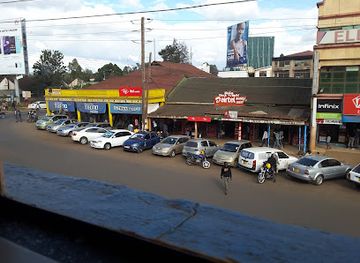
Eldoret, Kenya’s highland city, blends athletics heritage, Uasin Gishu scenery, local markets, cafés and easy access to western Kenya’s Rift Valley.
A Highland Crossroads
Eldoret stands on the Uasin Gishu Plateau in western Kenya, at an elevation of roughly 2,100 metres. Its cool climate, broad skies and fertile red soils have shaped a city associated with agriculture, education and long-distance running. Roads from Nairobi, Uganda and the western Rift Valley converge here, giving Eldoret a practical, energetic character rather than the historic-town atmosphere found in Kenya’s coastal or lakeside destinations. The surrounding countryside is marked by maize fields, dairy farms and gently rolling highland scenery.Read more about Eldoret
Sport, Culture and City Life
Beyond the Urban Plateau
When is the best time to visit Eldoret?
Best: January, August–September · 30–31°C| Month | High (°C) | Rainfall (mm) |
|---|---|---|
| January (best) | 31 | 80 |
| February | 31 | 75 |
| March | 32 | 80 |
| April | 32 | 85 |
| May | 32 | 90 |
| June | 31 | 100 |
| July | 30 | 90 |
| August (best) | 30 | 85 |
| September (best) | 31 | 80 |
| October | 31 | 75 |
| November | 32 | 80 |
| December | 31 | 85 |
Getting to and around Eldoret
How to get there
Transportation
Best attractions in Eldoret
Eldoret’s attractions reflect its role as a highland regional centre rather than a city of monumental historic sights. The Eldoret National Museum offers an accessible introduction to local archaeology, ethnography, wildlife and the natural environment of western Kenya, while the city’s markets reveal its agricultural connections through displays of grains, fruit, vegetables and household goods. Athletics enthusiasts can explore the public sporting culture that surrounds Eldoret, where runners train on roads and tracks across the plateau, although access to private camps is not automatic. For a quieter urban outing, Poa Place Gardens provides landscaped space and family-oriented recreation. The wider area opens into farm country and highland scenery, with the Kerio Valley, Saiwa Swamp National Park and Kitale suitable for organised regional excursions rather than city sightseeing. Each offers a different perspective on the plateau’s ecology and the landscape beyond Eldoret’s built-up streets.
-
Tourist attraction
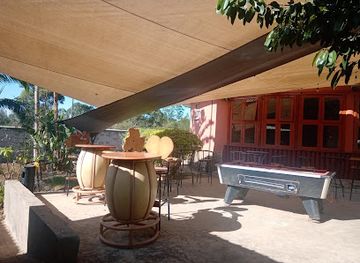
Eldoret Nature & Culture Centre
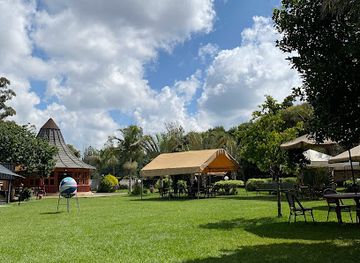
Explore the wonders of nature and culture at Eldoret Nature & Culture Centre, a family-friendly destination in the heart of Eldoret.
9 min drive · 2.9 km from city centre
-
Park
Baharini, Eldoret
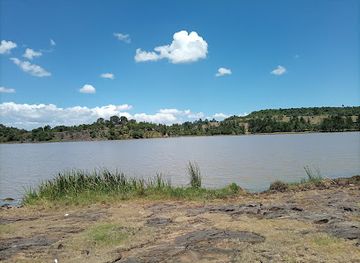
Discover the serenity of Baharini Park in Eldoret, a lush urban oasis perfect for relaxation, leisure, and nature exploration.
29 min drive · 9.7 km from city centre
-
Park
Eldoret Arboretum
Eldoret Arboretum: A serene park in Eldoret, Kenya, filled with diverse flora, perfect for picnics, relaxation, and nature walks.
13 min walk · 1.0 km from city centre
-
Park
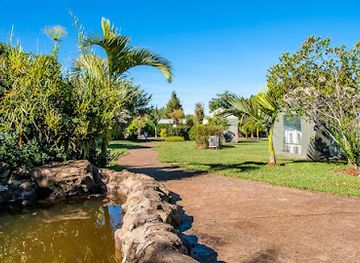
Poa place Eldoret
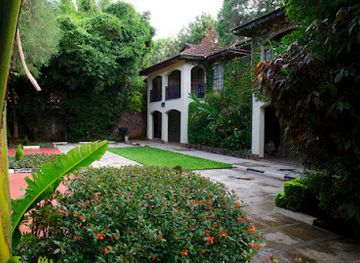
Explore the serene beauty of Poa Place in Eldoret, a tranquil park perfect for relaxation, nature walks, and family picnics.
8 min drive · 2.8 km from city centre
Best landmarks in Eldoret
The Eldoret National Museum is one of the city’s most significant cultural landmarks, occupying a former colonial-era house and presenting collections connected with the region’s communities, archaeology, wildlife and environment. The Cathedral of the Sacred Heart and Eldoret Mosque reflect the religious institutions that have grown alongside the city’s diverse population, while the central market represents Eldoret’s continuing role as an agricultural trading centre. Sporting landmarks are equally important to the city’s identity: 64 Stadium and other athletics facilities connect the urban landscape with Kenya’s international running culture. The railway setting and associated transport history help explain why Eldoret developed as a commercial centre on the Uasin Gishu Plateau. Together, these places show a city shaped less by a single monumental building than by the interaction of colonial infrastructure, faith communities, commerce, education and sport.
-
Shopping mall
Rupa's Mall
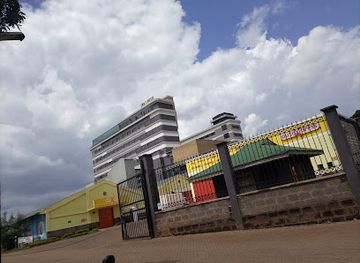
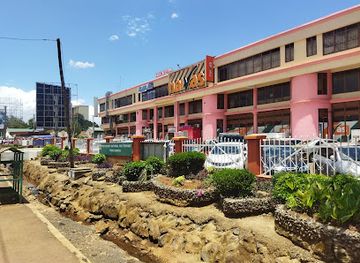
Experience shopping and dining like never before at Rupa's Mall in Eldoret, where local culture meets modern retail.
17 min walk · 1.4 km from city centre
-
Shopping mall
Zion Mall
Discover the vibrant shopping scene at Zion Mall in Eldoret, where diverse retailers and delightful dining await every visitor.
4 min walk · 0.3 km from city centre
-
 Hotel
HotelBoma Inn Eldoret
Experience comfort and local charm at Boma Inn Eldoret, your ideal retreat in the heart of the City of Champions.
5 min drive · 1.8 km from city centre
-
Hotel
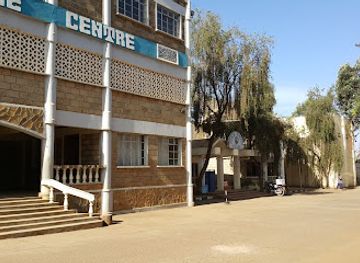
Noble Hotel And Conference Centre Eldoret
Discover unparalleled comfort and modern amenities at Noble Hotel and Conference Centre, your perfect Eldoret getaway.
7 min drive · 2.3 km from city centre
Explore Eldoret on the map
Plan your Eldoret trip on one map. See where the top attractions, landmarks, restaurants, bars and hotels are, find what's near where you're staying, and book hotels and experiences in a few clicks.
Best hotels in Eldoret
Best restaurants in Eldoret
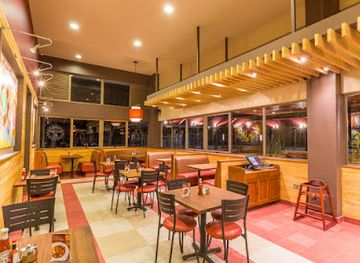
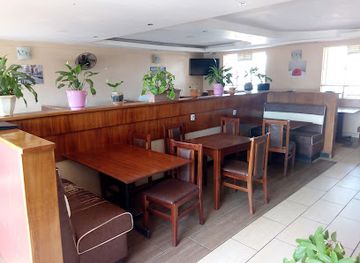
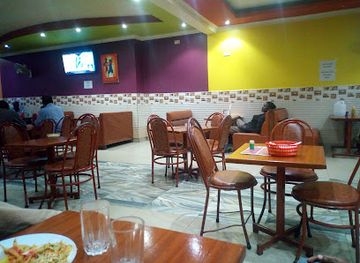
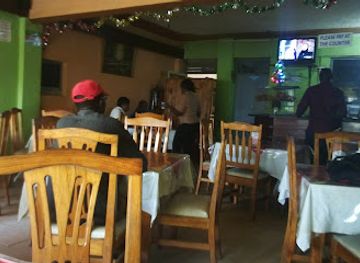
Eldoret’s dining scene is shaped by the agricultural wealth of Uasin Gishu and by residents drawn from across Kenya. Kenyan staples such as ugali with sukuma wiki, nyama choma, chapati, beans, rice, beef stew and roasted maize appear in cafés, informal eateries and family restaurants, while pilau and other spiced dishes reflect wider East African influences. Tea and coffee are natural parts of the city’s highland food culture, and bakeries and casual cafés are common around the commercial centre and shopping areas. Restaurants serving Indian, Ethiopian and international food add variety, especially in larger hotels and established urban venues. Local markets are useful for seeing the produce that supports the region, although cooked food should be chosen from busy stalls with good turnover. Dining is generally informal, with the most characteristic meals found in busy everyday establishments rather than formal fine-dining rooms.
-
Grill
TAMASHA ELDORET
Experience the vibrant flavors of grilling at Tamasha Eldoret - where every bite is a celebration of taste!
14 min drive · 4.6 km from city centre
-
Restaurant
Java House
Discover the flavors of Kenya at Java House in Eldoret - where local ingredients meet global cuisine in a warm and inviting atmosphere.
18 min walk · 1.4 km from city centre
-
Restaurant
Members Premier Restaurant
Discover authentic Kenyan flavors at Members Premier Restaurant in Eldoret - where every meal tells a story.
8 min walk · 0.6 km from city centre
-
Restaurant
Maggies Hotel And Bakery
Discover the flavors of Kenya at Maggies Hotel And Bakery in Eldoret – where delightful pastries meet authentic local cuisine.
8 min walk · 0.7 km from city centre
Best bars in Eldoret
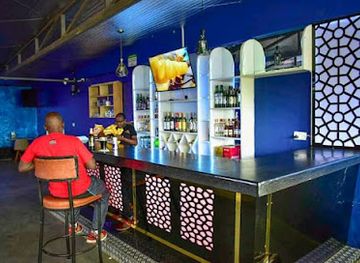
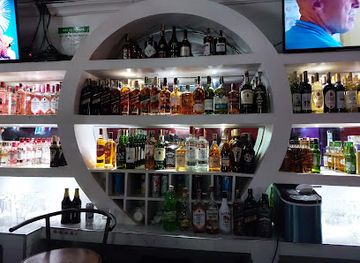
Eldoret’s evening scene is concentrated around the central business district, hotel lounges and entertainment areas along the town’s main commercial roads. Sports bars and casual pubs attract residents following football and athletics, while larger venues may offer DJs, dancing and contemporary Kenyan music at weekends. The city also has relaxed hotel bars and restaurants suited to quieter evenings, and live entertainment can appear as part of scheduled events rather than a permanent programme. Nightlife is active for a regional city but less extensive than Nairobi’s, with venues and crowds changing over time. Visitors should use trusted transport after dark, avoid leaving valuables unattended and check current local information before travelling to a particular venue, since opening arrangements and entertainment schedules are subject to change.
-
Lounge
E LOUNGE BAR RESTAURANT AND GRILL
Experience the vibrant culinary scene at E Lounge Bar Restaurant and Grill in Eldoret, where delicious food and a lively atmosphere await.
11 min drive · 3.7 km from city centre
-
Bar
Paradise Bar
Experience the vibrant nightlife at Paradise Bar in Eldoret, where affordable drinks and a lively atmosphere await every visitor.
7 min walk · 0.5 km from city centre
-
Pub
Jabez Pub & Restaurant
Experience the vibrant atmosphere and diverse menu at Jabez Pub & Restaurant, Eldoret's must-visit culinary hotspot.
6 min walk · 0.5 km from city centre
-
Bar
Olympia bar and restaurant
Enjoy a delightful dining experience at Olympia Bar and Restaurant in Eldoret, featuring a vibrant atmosphere, diverse menu, and refreshing drinks.
6 min drive · 1.8 km from city centre
Best nightclubs in Eldoret
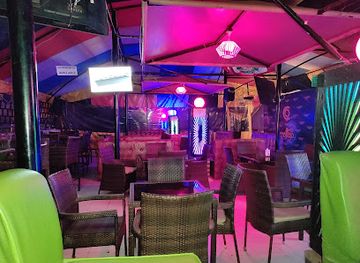
Eldoret’s evening scene is concentrated around the central business district, hotel lounges and entertainment areas along the town’s main commercial roads. Sports bars and casual pubs attract residents following football and athletics, while larger venues may offer DJs, dancing and contemporary Kenyan music at weekends. The city also has relaxed hotel bars and restaurants suited to quieter evenings, and live entertainment can appear as part of scheduled events rather than a permanent programme. Nightlife is active for a regional city but less extensive than Nairobi’s, with venues and crowds changing over time. Visitors should use trusted transport after dark, avoid leaving valuables unattended and check current local information before travelling to a particular venue, since opening arrangements and entertainment schedules are subject to change.
-
Disco club
Cloud 9 Lounge
Discover the exhilarating nightlife at Cloud 9 Lounge, where great food, drinks, and live entertainment create unforgettable memories in Eldoret.
12 min walk · 0.9 km from city centre
-
Night club
Sikh Union Club
Immerse yourself in the vibrant nightlife of Eldoret at Sikh Union Club, where great music and a lively atmosphere await every night.
5 min drive · 1.8 km from city centre
-
Night club
Rumours
Experience the vibrant nightlife at Rumours Nightclub in Eldoret, where music, dance, and good company come together for an unforgettable night.
8 min drive · 2.8 km from city centre
-
Night club
Club Babel
Immerse yourself in the heart of Eldoret's nightlife at Club Babel, where vibrant music and a lively atmosphere await every night.
9 min walk · 0.7 km from city centre
Best shops in Eldoret
Shopping in Eldoret ranges from produce markets and small independent shops to modern malls and supermarkets serving the expanding city. The central market is the most immediate place to see the region’s agricultural economy, with grains, vegetables, fruit, clothing and household goods traded alongside everyday services. Around the commercial centre, visitors will find Kenyan fabrics, shoes, leather goods, crafts and practical souvenirs, though quality and authenticity vary and bargaining is more suitable in informal stalls than in established shops. Larger retail centres offer restaurants, banks, pharmacies and familiar chain stores, making them useful for practical purchases rather than cultural discovery. Local tea, coffee and packaged foods can provide more distinctive gifts when bought from reputable retailers. Shopping streets are busiest during business hours, while markets reward an early visit when deliveries and trading are most active.
-
Clothing store
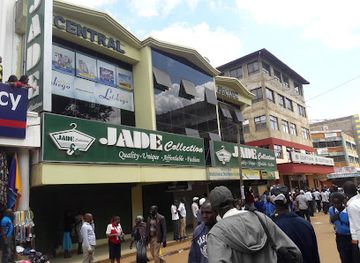
Jade Collection Eldoret Branch
Explore Jade Collection in Eldoret for a unique blend of local fashion, style, and quality clothing that enhances your travel experience.
11 min walk · 0.9 km from city centre
-
Shopping mall
Santuri Court
Explore Santuri Court in Eldoret for an unforgettable shopping experience featuring boutiques, local crafts, and vibrant culture.
8 min walk · 0.6 km from city centre
-
Gift shop
Warembo Gift Shop
Explore the heart of Kenya at Warembo Gift Shop, your go-to destination for unique handmade gifts and authentic local crafts in Eldoret.
9 min walk · 0.7 km from city centre
-
Home goods store
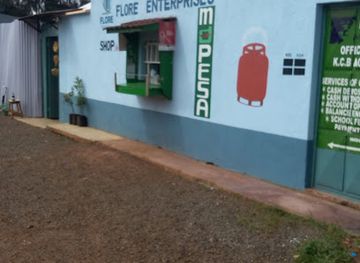
Flore Shop
Explore Flore Shop in Eldoret for unique home goods and local treasures, perfect for souvenirs and everyday needs.
10 min drive · 3.3 km from city centre
Get your free copy of our complete guide to Eldoret, delivered straight to you.
Everything on this page, from attractions and restaurants to essentials and local phrases, in one PDF you can read offline, print or share.
Already have an account? Sign in
Your Eldoret guide is ready.
We'll send it to · Not you? Sign out

Getting your guide ready…
We are putting together a fresh copy of the Eldoret guide. This can take up to a minute.
This can take a few moments. If your browser asks, choose Allow so the download can start. You'll find the guide in your Downloads folder.
Nothing happened? Download it again
Sorry, the guide is taking longer than usual. Please try again in a minute, or get it by email instead.
Eldoret essentials
Currency and Payment
Safety
Emergency Situations
Do's and Don'ts
Local Tips
From Eve
Local phrases worth knowing
You don't need to get them perfect. A few words go a long way, and locals appreciate the effort.
Basics
| English | Local | Say it |
|---|---|---|
| Hello | Salam | [sa-lam] |
| Goodbye | Kwaheri | [kwa-he-ri] |
| Yes | Ndio | [n-dio] |
| No | Hapana | [ha-pa-na] |
| Please/You're welcome | Tafadhali | [ta-fa-dha-li] |
| Thank you | Asante | [a-san-te] |
| Excuse me/Sorry | Samahani | [sa-ma-ha-ni] |
| How are you? | Uko aje? | [u-ko a-je] |
| Fine. And you? | Safi. Na wewe? | [sa-fi. na we-we] |
| Do you speak English? | Unasema Kiingereza? | [u-na-se-ma ki-in-ge-re-za] |
| I don't understand | Sieelewi | [si-e-le-wi] |
Eating & Drinking
| English | Local | Say it |
|---|---|---|
| I'd like to see the menu, please | Ningependa kuona menyu, tafadhali | [nin-ge-pen-da ku-o-na men-yu, ta-fa-dha-li] |
| I don't eat meat | Siwi kula nyama | [si-wi ku-la nya-ma] |
| Cheers! | Mambo! | [mam-bo] |
| I would like to pay, please | Ningependa kulipa, tafadhali | [nin-ge-pen-da ku-li-pa, ta-fa-dha-li] |
Emergencies
| English | Local | Say it |
|---|---|---|
| Help! | Msaada! | [msa-a-da] |
| Go away! | Nenda zako! | [nen-da za-ko] |
| Call the Police! | Piga polisi! | [pi-ga po-li-si] |
| Call a doctor! | Piga daktari! | [pi-ga dak-ta-ri] |
| I'm lost | Nimepotea | [ni-me-po-te-a] |
| I'm ill | Ninaumwa | [ni-na-um-wa] |
Shopping
| English | Local | Say it |
|---|---|---|
| I'd like to buy... | Ningependa kununua... | [nin-ge-pen-da ku-nu-nua] |
| I'm just looking | Natazama tu | [na-ta-za-ma tu] |
| How much is it? | Ni bei gani? | [ni bei ga-ni] |
| That's too expensive | Hiyo ni ghali sana | [hi-yo ni gha-li sa-na] |
| Can you lower the price? | Unaweza kupunguza bei? | [u-na-we-za ku-pun-gu-za bei] |
Time & Numbers
| English | Local | Say it |
|---|---|---|
| What time is it? | Saa ngapi? | [sa-a nga-pi] |
| It's one o'clock | Ni saa moja | [ni sa-a mo-ja] |
| Half past (10) | Nusu saa kumi | [nu-su sa-a ku-mi] |
| Morning | Asubuhi | [a-su-bu-hi] |
| Afternoon | Mchana | [m-cha-na] |
| Evening | Jioni | [jo-ni] |
| Yesterday | Jana | [ja-na] |
| Today | Leo | [le-o] |
| Tomorrow | Kesho | [ke-sho] |
| 1 | Moja | [mo-ja] |
| 2 | Mbili | [m-bi-li] |
| 3 | Tatu | [ta-tu] |
| 4 | Nne | [n-ne] |
| 5 | Tano | [ta-no] |
| 6 | Sita | [si-ta] |
| 7 | Saba | [sa-ba] |
| 8 | Nane | [na-ne] |
| 9 | Tisa | [ti-sa] |
| 10 | Kumi | [ku-mi] |
Transport & Directions
| English | Local | Say it |
|---|---|---|
| Where's a/the...? | Iko wapi...? | [i-ko wa-pi] |
| What's the address? | Anwani ni gani? | [an-wa-ni ni ga-ni] |
| Can you show me (on the map)? | Unaweza kunionyesha (kwenye ramani)? | [u-na-we-za ku-nio-nye-sha (kwe-nye ra-ma-ni)] |
| When's the next (bus)? | Basi la pili litakuja saa ngapi? | [ba-si la pi-li li-ta-ku-ja sa-a nga-pi] |
| A ticket (to ....) | Tiketi (kwenda ...) | [ti-ke-ti (kwen-da)] |
History of Eldoret
The Uasin Gishu Plateau Before Eldoret
Before the modern town developed, the Uasin Gishu Plateau was used and occupied by communities including the Nandi and other Kalenjin-speaking peoples. Its grasslands supported pastoralism, cultivation and seasonal movement, while the wider plateau formed part of the ecological and cultural zone between the western highlands and the Rift Valley. Colonial mapping and administrative expansion later altered patterns of land ownership and settlement. The name Eldoret is commonly linked to the Maasai word eldore, associated with the stony area around the Sosiani River. That river remains an important geographical reference for understanding the town’s original setting.
Colonial Settlement and the Railway
Eldoret emerged as a colonial-era settlement in the early twentieth century, when the British administration promoted farming and transport infrastructure on the Uasin Gishu Plateau. European settlers, including Afrikaner farmers who arrived in the 1910s, established agricultural holdings, while African labour and existing communities remained central to the region’s economy despite the inequalities of colonial land policy. The railway and road connections through the plateau helped move grain, livestock and other goods, encouraging the growth of a service centre around the station and administrative offices. Eldoret’s later importance as an agricultural town developed from this combination of fertile land and transport access.
Agriculture and Urban Growth
During the colonial period and after Kenya’s independence in 1963, Eldoret expanded as a commercial centre serving one of the country’s principal agricultural regions. Maize, wheat, dairy farming and other agricultural activities supported mills, warehouses, markets and associated businesses. The town attracted residents from many parts of Kenya, adding to the cultural diversity of its urban population. New schools, churches, mosques and public institutions accompanied this growth, gradually extending the built-up area beyond the original railway settlement. The surrounding farms remain visible in the city’s relationship with its hinterland, where agricultural production continues to influence employment, trade and local identity.
Education and Regional Importance
Eldoret’s role widened during the late twentieth century as educational, medical and civic institutions strengthened its position in western Kenya. The establishment and expansion of Moi University in nearby Kesses helped make the area an important centre for higher education, while Moi Teaching and Referral Hospital became a major medical institution serving patients from a broad region. These developments encouraged professional services, private enterprise and further population growth. Eldoret consequently became more than an agricultural market town: it developed into a regional centre whose influence extends across Uasin Gishu and neighbouring counties.
The City of Kenyan Distance Running
In the late twentieth and early twenty-first centuries, Eldoret became internationally associated with Kenya’s success in distance running. High altitude, training culture, established athletics clubs and the surrounding network of roads have helped make the area an important base for runners. Athletes from the wider region, including many Kalenjin runners, have contributed to Kenya’s Olympic and world-championship achievements, although success belongs to individuals and training communities rather than to the city alone. Stadiums, tracks, running camps and early-morning training groups now form part of Eldoret’s contemporary image, alongside its continuing agricultural and educational importance.
Eldoret in Photos
Browse through our photo collection highlighting the charm and character of the destination.
Cities near Eldoret
The closest cities to Eldoret, if you have time for more than one stop.
-

-

-

-

-


Swipe for more cities
Explore more
Explore more of Kenya
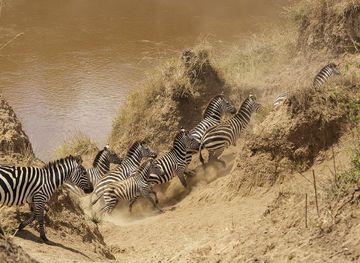
Discover Kenya: A land of breathtaking safaris, rich cultural heritage, and stunning coastlines that promise adventure and relaxation all in one.
Explore Kenya