

Grand Kru County, Liberia Travel Guide
Discover the untouched beaches, rich cultural heritage, and lush rainforests of Grand Kru County, the hidden gem of southeastern Liberia.
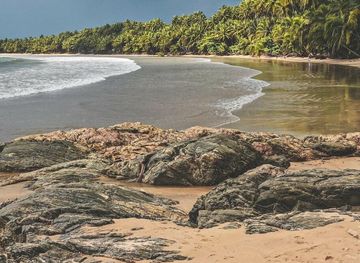
Grand Kru County, located in southeastern Liberia, is a hidden gem waiting to be discovered. This county is known for its stunning coastline along the Atlantic Ocean, with pristine beaches that stretch for miles, offering an untouched and tranquil escape. Whether you're an adventurer looking to explore the wild landscapes or a traveler seeking serene beachside relaxation, Grand Kru County has something to offer. The county is rich in cultural heritage, with the Kru people being the primary inhabitants. Visitors can immerse themselves in the local way of life, experiencing traditional dances, music, and crafts. The friendly and welcoming locals add to the charm of the region, making every visit memorable. Nature enthusiasts will be thrilled by the lush rainforests, diverse wildlife, and scenic river systems that Grand Kru County boasts. Hiking through the verdant terrain will reveal hidden waterfalls and opportunities for bird watching. The area is also a haven for eco-tourism, providing a chance to engage with Liberia's natural beauty in a meaningful way.

Know before you go
Hi, I'm Eve. Here are a few practical things to know before exploring Grand Kru County.
- Pack light and breathable clothing, as the climate is tropical and can be humid.
- Bring insect repellent and sunscreen to protect yourself from bugs and the sun.
- Engage with local guides for a more immersive experience and to learn about the area's history and culture.
- Visit the beaches early in the morning to enjoy the serene atmosphere before the day heats up.
- Respect local customs and traditions; always ask for permission before taking photos of people.

Best restaurants in Grand Kru County


Best bars in Grand Kru County
Top-rated picks
Best Bars

FuZion D'Afrique Restaurant
Discover the culinary delights of FuZion D'Afrique Restaurant in Monrovia, blending local flavors with a vibrant bar atmosphere.

Sajj House
Experience the authentic flavors of Liberia at Sajj House, a vibrant restaurant in Monrovia offering a delightful culinary journey.

Mama Susu's Restaurant
Experience authentic Liberian cuisine at Mama Susu's Restaurant in Monrovia, where local flavors meet warm hospitality.

Pandora's Basket
Savor the best of Liberian and international cuisine at Pandora's Basket in Monrovia, where every meal is a delightful experience.


Best shops in Grand Kru County
Top-rated picks
Best Shops

MAO Brothers Group Limited
Explore cutting-edge electronics at MAO Brothers Group Limited in Pleebo, Liberia - your destination for the latest gadgets and exceptional service.

Mohammed B. Barry
Discover the rich variety of building materials at Mohammed B. Barry in Kahnwiekehn, Liberia – a treasure trove for construction enthusiasts and curious travelers alike.

Barry Boutik
Explore Barry Boutik in Helomeh, Liberia – a vibrant clothes market brimming with unique fashion and local culture.

Abd Ar-Rahman Misrî Shop
Explore the vibrant culture of Liberia through unique fashion at Abd Ar-Rahman Misrî Shop in Helomeh.

Explore Grand Kru County on the Map
A handpicked selection of must-see spots in Grand Kru County, mapped for you.
Grand Kru County Essentials
-
Grand Kru County is located in the southeastern region of Liberia. The nearest major airport is Roberts International Airport (RIA) in Monrovia, the capital city of Liberia. From Monrovia, you can take a domestic flight to Greenville, from where you can travel by road to Grand Kru County. Alternatively, you can drive from Monrovia to Grand Kru County, which typically takes around 12 to 15 hours, depending on road conditions. Hiring a 4x4 vehicle is recommended due to the challenging terrain.
-
Within Grand Kru County, transportation options are limited but functional. Motorcycles and shared taxis are common modes of transport for short distances. For longer trips, you can hire a private taxi or a 4x4 vehicle. Public buses and minibuses (known locally as 'keh-keh') are available but may not adhere to strict schedules. Walking is also a practical option for exploring smaller towns and villages.
-
The official currency in Liberia is the Liberian Dollar (LRD). U.S. Dollars are also widely accepted. Credit cards are not commonly used, so it is advisable to carry sufficient cash. ATMs are scarce in Grand Kru County, so withdraw enough money in Monrovia or Greenville before your journey.
-
Grand Kru County is generally safe for tourists, but it is advisable to take standard precautions. Avoid walking alone at night and be cautious in isolated areas. Petty crimes like pickpocketing can occur, primarily in crowded places. There are no specific high-crime areas targeting tourists, but staying vigilant is always wise.
-
In case of an emergency, dial 911 for immediate assistance. The nearest major medical facilities are in Greenville, so it is advisable to carry a basic first aid kit and any necessary medications. Travel insurance that covers medical emergencies is highly recommended. Local police stations are available in major towns within Grand Kru County.
-
Fashion: Do dress modestly; light, breathable clothing is recommended due to the climate. Avoid wearing flashy jewelry. Religion: Do respect local customs and traditions. When visiting religious sites, dress modestly and ask for permission before taking photos. Public Transport: Do be patient as public transport can be slow and crowded. Don’t expect fixed schedules. Greetings: Do greet people with a friendly 'hello' or 'how are you'. A handshake is common. Eating & Drinking: Do try local dishes like palm butter and rice. Don’t refuse food or drink offerings, as it may be considered impolite.
-
To experience Grand Kru County like a local, visit the local markets where you can buy fresh produce and traditional crafts. Engage with the locals, who are often friendly and willing to share stories about their culture and history. Don’t miss visiting the beautiful beaches along the Atlantic coast and exploring the lush rainforest areas. Participating in local festivals and events can also provide an enriching experience.
When is the best time to visit Grand Kru County?
Useful Local Phrases for Grand Kru County
You don't need to speak the language perfectly. Even learning a few simple words can make conversations warmer—and locals usually appreciate the effort.
— Eve

Here are the phrases I use most often in Grand Kru County. Try a few—you'll be surprised how far they go! 😊
❤️
-
- HelloKia
[kee-ah] - GoodbyeNyeh
[nyeh] - YesEe
[ee] - NoNay
[nay] - Please/You're welcomeGreeh
[greeh] - Thank youTahnk you
[tahnk yoo] - Excuse me/SorrySowee
[so-wee] - How are you?Kia deh?
[kee-ah deh?] - Fine. And you?Mahn. An greeh?
[mahn. an greeh?] - Do you speak English?Greeh you speek English?
[greeh yoo speek English?] - I don't understandAh noh understan
[ah noh un-der-stan]
- HelloKia
-
- I'd like to see the menu, pleaseAh wan si deh menu, greeh
[ah wan see deh menu, greeh] - I don't eat meatAh noh eeht meet
[ah noh eet meet] - Cheers!Taas!
[taas] - I would like to pay, pleaseAh wan pay, greeh
[ah wan pay, greeh]
- I'd like to see the menu, pleaseAh wan si deh menu, greeh
-
- Help!Hahlp!
[halp] - Go away!Goh awey!
[goh aw-ay] - Call the Police!Kahl deh Police!
[kahl deh po-lees] - Call a doctor!Kahl a doctor!
[kahl a doc-tor] - I'm lostAh loss
[ah loss] - I'm illAh sick
[ah sick]
- Help!Hahlp!
-
- I'd like to buy...Ah wan buy...
[ah wan bye...] - I'm just lookingAh jus lokin
[ah jus lo-king] - How much is it?Kia muche deh?
[kee-ah mooch deh?] - That's too expensiveDat too hihg
[dat too high] - Can you lower the price?Greeh you loh deh praice?
[greeh yoo loh deh price?]
- I'd like to buy...Ah wan buy...
-
- What time is it?Kia time deh?
[kee-ah time deh?] - It's one o'clockDeh one o'clock
[deh one o-clock] - Half past (10)Half past ten
[half past ten] - MorningMornin
[mor-ning] - AfternoonAfta noon
[af-ta noon] - EveningEvenin
[e-ven-ing] - YesterdayYesterdee
[yes-ter-dee] - TodayTuday
[too-day] - TomorrowTomorow
[to-mor-row] - 1One
[one] - 2Two
[two] - 3Three
[three] - 4Four
[four] - 5Five
[five] - 6Six
[six] - 7Seven
[seven] - 8Eight
[eight] - 9Nine
[nine] - 10Ten
[ten]
- What time is it?Kia time deh?
-
- Where's a/the...?Wheh deh...?
[weh deh...?] - What's the address?Kia deh address?
[kee-ah deh ad-dress?] - Can you show me (on the map)?Greeh you sho me (on deh map)?
[greeh yoo show me (on deh map)?] - When's the next (bus)?Wen deh next (bus)?
[wen deh next (bus)?] - A ticket (to ....)A ticket (to ....)
[a ticket (to ....)]
- Where's a/the...?Wheh deh...?
History of Grand Kru County
-
Grand Kru County, located in the southeastern part of Liberia, is named after the Kru tribe, one of the indigenous ethnic groups in the region. The Kru people have inhabited this area for centuries, known for their seafaring skills and resistance to colonial rule. The name 'Kru' is believed to have been derived from the word 'Kroo,' which means 'a group of people' in the local dialect.
-
In the late 15th century, Portuguese explorers were among the first Europeans to make contact with the coastal regions of present-day Grand Kru County. The Portuguese established trade relationships with the Kru people, exchanging goods such as ivory, gold, and peppers. This early contact set the stage for further European interest and eventual colonization efforts in the region.
-
The Kru people are renowned for their fierce resistance to European colonization. Unlike many other African groups who were subdued by European powers, the Kru successfully defended their territory and maintained a degree of autonomy. This resistance was partly due to their strategic use of the dense forests and their superior knowledge of the local terrain.
-
Grand Kru County was officially established in 1984 as part of a nationwide reorganization of Liberia's administrative divisions. The county was formed by merging the Kru Coast Territory and Sasstown Territory. The establishment aimed to improve administrative efficiency and bring government services closer to the people.
-
Grand Kru County is rich in cultural heritage, with traditional music, dance, and storytelling playing a significant role in the community. The Kru people are known for their vibrant masquerades and festivals, which often feature elaborate costumes and masks. These cultural practices are not only forms of entertainment but also serve to maintain social cohesion and pass down historical knowledge.
-
Fishing and agriculture are the primary economic activities in Grand Kru County. The coastal location provides abundant fishing opportunities, while the fertile soil supports the cultivation of crops such as rice, cassava, and plantains. The local economy also benefits from small-scale trade and artisanal crafts, which are often sold in local markets.
-
Grand Kru County was significantly affected by the Liberian Civil Wars (1989-1996 and 1999-2003). The conflicts led to widespread displacement, destruction of infrastructure, and economic hardship. Many residents fled to neighboring countries or other parts of Liberia. Despite these challenges, the community has shown resilience and is gradually rebuilding.
-
In recent years, Grand Kru County has seen efforts to develop its infrastructure and improve living conditions. Projects include the construction of roads, schools, and healthcare facilities. These developments aim to enhance connectivity, education, and healthcare services for the residents. The county's rich natural resources and cultural heritage also hold potential for eco-tourism and cultural tourism, offering new opportunities for sustainable development.
Neighbouring Regions of Grand Kru County
The closest regions to Grand Kru County, if you have time for more than one.




Your all‑in‑one travel companion app
Explore expert travel guides, compare and book tours, experiences, hotels, and more—all from the palm of your hand. Download now for seamless trip planning wherever your wanderlust takes you.


Explore More of Liberia

Looking beyond Grand Kru County? Discover Liberia for broader travel guides, local hot-spots, and regional highlights.
Explore LiberiaGrand Kru County in Photos
Browse through our photo collection highlighting the charm and character of the destination.


Exploring the Untamed Beauty of Grand Kru County
Grand Kru County, located in southeastern Liberia, is a hidden gem waiting to be discovered. This county is known for its stunning coastline along the Atlantic Ocean, with pristine beaches that stretch for miles, offering an untouched and tranquil escape. Whether you're an adventurer looking to explore the wild landscapes or a traveler seeking serene beachside relaxation, Grand Kru County has something to offer. The county is rich in cultural heritage, with the Kru people being the primary inhabitants. Visitors can immerse themselves in the local way of life, experiencing traditional dances, music, and crafts. The friendly and welcoming locals add to the charm of the region, making every visit memorable. Nature enthusiasts will be thrilled by the lush rainforests, diverse wildlife, and scenic river systems that Grand Kru County boasts. Hiking through the verdant terrain will reveal hidden waterfalls and opportunities for bird watching. The area is also a haven for eco-tourism, providing a chance to engage with Liberia's natural beauty in a meaningful way.