

Free Balzers Region Travel Guide & Mobile App
Explore Balzers Region with free travel guides. Discover regional history, expert tips, proposed trips, and audio guides on web or mobile app.


Explore Balzers Region in Liechtenstein for Gutenberg Castle, Alpine walking, Rhine Valley scenery and a quietly distinctive village heritage.
Read more about Balzers Region
When is the best time to visit Balzers Region?
Best: July–September · 22–26°C| Month | High (°C) | Rainfall (mm) |
|---|---|---|
| January | 4 | 50 |
| February | 5 | 45 |
| March | 9 | 56 |
| April | 13 | 64 |
| May | 19 | 86 |
| June | 23 | 103 |
| July (best) | 26 | 103 |
| August (best) | 26 | 101 |
| September (best) | 22 | 83 |
| October | 15 | 72 |
| November | 9 | 64 |
| December | 5 | 61 |
Getting to and around Balzers Region
How to get there
Transportation
Top city travel guides in Balzers Region
The cities of Balzers Region, and the easiest places to base yourself.

Swipe for more cities
Destinations in Balzers Region
Resorts, valleys and scenic spots worth a trip of their own.
-

-


Swipe for more destinations
Best attractions in Balzers Region
Balzers' attractions are concentrated but varied, combining medieval heritage, village history and accessible Alpine countryside. Gutenberg Castle is the central attraction, rising above the settlement on its rocky hill; its exterior setting and views are particularly important, while interior access and cultural events depend on the current programme. In Mäls, St Peter's Chapel offers a quieter encounter with the municipality's medieval religious heritage, and the parish church of St Nicholas helps explain the continuing structure of village life. Walking and cycling routes across the southern Rhine valley provide a different experience, passing agricultural land, wooded edges and views towards the Liechtenstein and Swiss mountains. The lower landscape is suitable for gentle outings, whereas routes climbing towards the Rätikon require more preparation and appropriate footwear. Balzers also offers insight into modern industrial Liechtenstein through its association with advanced coating technology, although this is a working economic sector rather than a conventional visitor attraction. The municipality is best explored at a measured pace, with nearby excursions treated as separate journeys rather than folded into Balzers itself.
-
Tourist attraction
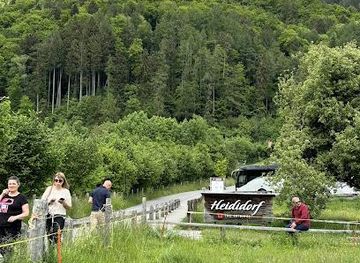
Heididorf
Immerse yourself in the timeless tale of Heidi at Heididorf in Maienfeld, Switzerland, where the beloved story comes to life amidst stunning alpine scenery.
-
Castle
Burg Gutenberg
Explore Burg Gutenberg, a stunning medieval castle in Balzers, Liechtenstein, where history and culture come alive amidst breathtaking landscapes.
-
Tourist attraction
Rhein Sandbank
Escape to the tranquil Rhein Sandbank in Sargans for relaxation, outdoor activities, and stunning natural beauty along the Rhine River.
-
Hiking area
Heidiweg
Hike through Heidi's world on this scenic trail in Maienfeld, Switzerland, offering stunning views and a charming immersion into the classic story.


Best landmarks in Balzers Region
Gutenberg Castle is Balzers' defining landmark, occupying a conspicuous hill above the village and visible across the southern Liechtenstein lowlands. Its fortified position, surviving walls and relationship with the surrounding settlement express the military and political importance of the medieval Rhine valley. St Peter's Chapel in Mäls is smaller but historically significant, preserving a religious landmark associated with one of the municipality's oldest settlement areas. The parish church of St Nicholas contributes a later architectural layer, linking the modern village with the long-standing Catholic organisation of local life. Beyond built monuments, the castle hill itself is a geographical landmark because it rises sharply from the otherwise open valley floor. Views from and around Balzers reveal the contrast between the Rhine lowlands, the Swiss mountains to the west and the rising Liechtenstein Alps to the east. Together these places form a compact landmark landscape in which defensive, religious and natural features remain closely connected.
-
Live Music
Burg Gutenberg
Discover the enchanting Burg Gutenberg in Balzers, Liechtenstein, where history meets live music in a stunning castle setting.
-
Children's museum
Alter Pfarrhof Balzers
Discover the joy of learning at Alter Pfarrhof Balzers, where history meets interactive fun for children of all ages.
-
Tourist attraction
Chillerbänkli
Explore Chillerbänkli in Balzers, Liechtenstein - a serene tourist attraction perfect for relaxation and breathtaking views.
-
Cultural landmark
Denkmal Balzers-Triesen - 300 Jahre Liechtenstein
Explore the Denkmal Balzers-Triesen, a cultural landmark symbolizing 300 years of Liechtenstein's rich heritage in the charming town of Triesen.


Explore Balzers Region on the map
Plan your trip on one map. See where the top cities, national parks and sights are, and book hotels and experiences in a few clicks.
Best hotels in Balzers Region
Best restaurants in Balzers Region
Dining in Balzers reflects the modest scale of a Liechtenstein village and its position beside Switzerland. Restaurants and inns generally draw on Alpine and central European traditions, with menus that may include rösti, seasonal soups, meat dishes, vegetables, pasta and locally familiar specialities such as käsespätzle. Liechtenstein's national cuisine overlaps considerably with neighbouring Swiss and Austrian food cultures, so dishes should not automatically be presented as exclusive to Balzers. Cafés and bakery counters are useful for breakfast, coffee and simple daytime meals, while village restaurants provide the most traditional evening setting. Regional wines from Liechtenstein's Rhine Valley vineyards may appear on menus, although production is small. Local and seasonal ingredients are more likely to shape a menu than a single signature dish. Visitors seeking greater culinary variety can travel to larger centres elsewhere in Liechtenstein or across the nearby Swiss border, but Balzers is well suited to unhurried meals in an understated local setting.
-
Restaurant
Speiserestaurant 'Selva' GmbH
Experience authentic Swiss cuisine at Speiserestaurant 'Selva', where local ingredients meet warm hospitality in Trübbach.
-
Restaurant
Zentrum Balzers
Experience the flavors of Liechtenstein at Zentrum Balzers—a perfect blend of local cuisine and warm hospitality.
-
Restaurant
Restaurant dasRiet
Experience exquisite cuisine and breathtaking views at Restaurant dasRiet in Balzers, Liechtenstein.
-
Restaurant
Restaurant Bahnhof Trübbach Steakhouse Bahnhöfli
Experience the best of Swiss cuisine at Restaurant Bahnhof Trübbach with mouthwatering steaks and irresistible pizzas.


Best bars in Balzers Region
Balzers does not have a major nightclub district, and evening life is primarily based around restaurants, traditional pubs, cafés and occasional community or live-music events. The village atmosphere is quieter than that of larger towns, with venues serving local residents as well as visitors and with operating arrangements that can vary by season. A drink in a pub or restaurant is a practical way to experience the municipality after sightseeing, but nightlife is not the main reason to stay here. For a broader choice of bars, cultural events and late evening venues, visitors generally travel to Vaduz or other larger centres in Liechtenstein, or to nearby Swiss towns; these are outside the Balzers Region and require return-transport planning. Visitors should check current arrangements rather than assume late opening, especially on weekdays.
-
Barbecue
PUR - Restaurant & Bar
Discover the finest barbecue and bar experience at PUR - Restaurant & Bar in Schaan, where culinary excellence meets a vibrant atmosphere.
-
Gastropub
Kainer
Discover Kainer in Triesenberg: a gastropub offering local flavors, stunning views, and a delightful dining experience.
-
Bar
Jonnys Lion-Cave
Discover Jonnys Lion-Cave, the premier live music bar in Trübbach, Switzerland, where fun meets flavor in every drink and performance.
-
Bar
Esquire Bar.Bistro
Discover the charm of Esquire Bar.Bistro in Vaduz, where delicious cuisine meets a cozy atmosphere for a memorable dining experience.


Best nightclubs in Balzers Region
Balzers does not have a major nightclub district, and evening life is primarily based around restaurants, traditional pubs, cafés and occasional community or live-music events. The village atmosphere is quieter than that of larger towns, with venues serving local residents as well as visitors and with operating arrangements that can vary by season. A drink in a pub or restaurant is a practical way to experience the municipality after sightseeing, but nightlife is not the main reason to stay here. For a broader choice of bars, cultural events and late evening venues, visitors generally travel to Vaduz or other larger centres in Liechtenstein, or to nearby Swiss towns; these are outside the Balzers Region and require return-transport planning. Visitors should check current arrangements rather than assume late opening, especially on weekdays.
-
Bar
PUR - Restaurant & Bar
Discover the exquisite flavors of PUR - Restaurant & Bar, Schaan's premier destination for barbecue and vibrant nightlife.
-
Restaurant
Zur Alten Eiche
Discover Zur Alten Eiche in Triesen: a charming restaurant featuring a beer garden and family-friendly atmosphere, perfect for special occasions.
-
Bar
Zwei Bar
Experience the vibrant nightlife of Vaduz at Zwei Bar, where every drink and moment is a celebration of local culture.
-
Bar
Take 5 Vaduz
Discover the vibrant atmosphere of Take 5 Vaduz, a must-visit bar in Triesen for tourists looking to unwind with great drinks and local flavor.


Best shops in Balzers Region
Shopping in Balzers is local and practical rather than centred on a large retail district. Small village businesses, cafés and everyday shops serve residents, while independent outlets may offer food, gifts and locally relevant products. Visitors interested in regional produce can look for Liechtenstein wines, Alpine foods, baked goods and other products from the wider Rhine Valley, bearing in mind that availability varies. There is no need to expect a substantial luxury or designer-shopping scene in the municipality. For antiques, galleries, specialist goods and a wider selection of shops, Vaduz and other Liechtenstein centres are outside Balzers and offer more choice. Nearby Swiss towns also function as shopping destinations, but cross-border travel and payment arrangements should be considered. The most meaningful purchases in Balzers are generally small regional food items, wine or craft-related gifts rather than mass-produced souvenirs.
-
Live Music
Burg Gutenberg
Experience the blend of history and live music at Burg Gutenberg, a stunning castle in Balzers, Liechtenstein, perfect for cultural exploration.
-
Supermarket
Migros-Partner - FL - Balzers
Explore Balzers' culinary delights at Migros-Partner, your go-to supermarket for fresh produce, baked goods, and local specialties.
-
Farm
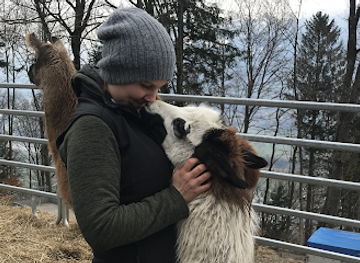
Lama- & Alpakahof Triesenberg
Experience the joy of interacting with llamas and alpacas at Lama- & Alpakahof Triesenberg, a unique farm destination in Liechtenstein's stunning landscapes.
-
Coffee shop
American Bagel&Coffee Co.
Experience the warm atmosphere and delectable flavors at American Bagel&Coffee Co. in Vaduz, where every visit feels like home.



Get your free copy of our complete guide to Balzers Region, delivered straight to you.
Everything on this page, from attractions and restaurants to essentials and local phrases, in one PDF you can read offline, print or share.
Already have an account? Sign in
Your Balzers Region guide is ready.
We'll send it to · Not you? Sign out

Getting your guide ready…
We are putting together a fresh copy of the Balzers Region guide. This can take up to a minute.
This can take a few moments. If your browser asks, choose Allow so the download can start. You'll find the guide in your Downloads folder.
Nothing happened? Download it again
Sorry, the guide is taking longer than usual. Please try again in a minute, or get it by email instead.
Balzers Region essentials
Currency and Payment
Safety
Emergency Situations
Do's and Don'ts
Local Tips
From Eve
Local phrases worth knowing
You don't need to get them perfect. A few words go a long way, and locals appreciate the effort.
Basics
| English | Local | Say it |
|---|---|---|
| Hello | Hallo | [Hah-loh] |
| Goodbye | Auf Wiedersehen | [Owf Veed-er-zay-en] |
| Yes | Ja | [Yah] |
| No | Nein | [Nine] |
| Please/You're welcome | Bitte | [Bit-teh] |
| Thank you | Danke | [Dahn-keh] |
| Excuse me/Sorry | Entschuldigung | [Ent-shool-dee-goong] |
| How are you? | Wie geht's? | [Vee gates?] |
| Fine. And you? | Gut. Und dir? | [Goot. Oond deer?] |
| Do you speak English? | Sprechen Sie Englisch? | [Shpreh-ken Zee Eng-lish?] |
| I don't understand | Ich verstehe nicht | [Ish fer-shtay-eh niht] |
Eating & Drinking
| English | Local | Say it |
|---|---|---|
| I'd like to see the menu, please | Ich hätte gerne die Speisekarte, bitte | [Ish het-teh ger-neh dee Shpie-ze-kar-teh, bit-teh] |
| I don't eat meat | Ich esse kein Fleisch | [Ish ess-eh kine Flysh] |
| Cheers! | Prost! | [Prohst!] |
| I would like to pay, please | Ich möchte bezahlen, bitte | [Ish mer-khteh beh-tsah-len, bit-teh] |
Emergencies
| English | Local | Say it |
|---|---|---|
| Help! | Hilfe! | [Hil-feh!] |
| Go away! | Geh weg! | [Geh veg!] |
| Call the Police! | Rufen Sie die Polizei! | [Roo-fen Zee dee Pol-ee-tzai!] |
| Call a doctor! | Rufen Sie einen Arzt! | [Roo-fen Zee eye-nen Arts-t!] |
| I'm lost | Ich bin verloren | [Ish bin fer-lo-ren] |
| I'm ill | Ich bin krank | [Ish bin krank] |
Shopping
| English | Local | Say it |
|---|---|---|
| I'd like to buy... | Ich möchte kaufen... | [Ish mer-khteh kow-fen...] |
| I'm just looking | Ich schaue nur | [Ish shau-eh noor] |
| How much is it? | Wie viel kostet es? | [Vee feel kost-et es?] |
| That's too expensive | Das ist zu teuer | [Dahs ist tsu toy-er] |
| Can you lower the price? | Können Sie den Preis senken? | [Kern-en Zee den Prize zen-ken?] |
Time & Numbers
| English | Local | Say it |
|---|---|---|
| What time is it? | Wie spät ist es? | [Vee shpaht ist es?] |
| It's one o'clock | Es ist ein Uhr | [Es ist ine Oor] |
| Half past (10) | Halb (10) | [Halb (10)] |
| Morning | Morgen | [Mor-gen] |
| Afternoon | Nachmittag | [Nach-mi-tag] |
| Evening | Abend | [Ah-bend] |
| Yesterday | Gestern | [Ges-tern] |
| Today | Heute | [Hoy-teh] |
| Tomorrow | Morgen | [Mor-gen] |
| 1 | Eins | [Eins] |
| 2 | Zwei | [Tsvai] |
| 3 | Drei | [Drai] |
| 4 | Vier | [Veer] |
| 5 | Fünf | [Foonf] |
| 6 | Sechs | [Zex] |
| 7 | Sieben | [Zee-ben] |
| 8 | Acht | [Ahkt] |
| 9 | Neun | [Noyn] |
| 10 | Zehn | [Tsen] |
Transport & Directions
| English | Local | Say it |
|---|---|---|
| Where's a/the...? | Wo ist ein/das...? | [Vo ist ine/dahs...?] |
| What's the address? | Was ist die Adresse? | [Vas ist dee Ah-dres-seh?] |
| Can you show me (on the map)? | Können Sie mir (auf der Karte) zeigen? | [Kern-en Zee meer (owf der Kar-teh) tsai-gen?] |
| When's the next (bus)? | Wann kommt der nächste (Bus)? | [Vahn komt der nay-sh-teh (Boos)?] |
| A ticket (to ....) | Ein Ticket (nach ....) | [Ine Tee-ket (nahkh ....)] |
History of Balzers Region
Prehistoric settlement around Gutenberg Hill
The hill on which Gutenberg Castle stands has archaeological significance because its elevated position offered defensive advantages and a clear view across the Rhine valley. Finds from the wider Balzers area indicate settlement and activity in prehistoric periods, although the surviving evidence represents several phases rather than one continuous settlement. The hill's prominence explains why it remained important long after prehistoric communities had disappeared: it controlled visibility across the southern Liechtenstein lowlands and became the site of a medieval fortress.
Roman and early medieval valley connections
Balzers occupied a strategic position beside routes linking the Alpine Rhine valley with passes towards the interior Alps. Roman influence reached the region through the wider settlement and road network of Raetia, while later communities inherited routes, cultivated land and crossing points shaped by that earlier system. The precise form of settlement changed over time, but Balzers' location continued to matter because traffic through the Rhine valley connected local villages with territories now belonging to Switzerland, Austria and Germany.
Medieval Balzers and Gutenberg Castle
Gutenberg Castle developed during the medieval period as a fortified stronghold on the hill above Balzers. Its buildings and ownership changed through successive phases of regional noble and dynastic power, reflecting the political fragmentation of the central Alpine lands. The castle is documented in medieval sources and later became associated with the Lords of Gutenberg and the Habsburg sphere. Today, its surviving walls and elevated position provide the clearest physical reminder of Balzers' strategic role in the Middle Ages.
Mäls, parish life and the formation of the village landscape
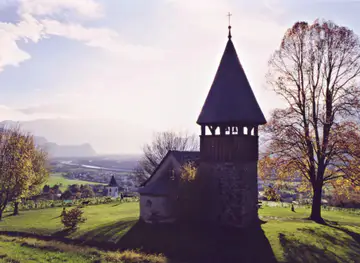
Balzers and Mäls developed as closely connected settlements, each with its own historic identity and religious buildings. St Peter's Chapel in Mäls preserves a medieval ecclesiastical tradition, while the parish church of St Nicholas represents the later growth and organisation of Catholic community life. Farms, houses, chapels and paths gradually formed the village landscape visible today. These buildings are important not simply as isolated monuments but as evidence of how settlement, agriculture and parish institutions structured everyday life in southern Liechtenstein.
From agrarian society to modern industry
For centuries, Balzers depended heavily on farming, livestock and the resources of the Rhine valley, as did much of Liechtenstein. During the nineteenth and twentieth centuries, improved roads, cross-border connections and industrialisation altered the local economy. The development of Balzers AG, later associated with Oerlikon Balzers and advanced coating technologies, gave the municipality an international industrial profile. This transformation brought skilled employment and new economic links while the village remained connected to its agricultural and residential foundations.
Balzers in contemporary Liechtenstein
Modern Balzers is one of Liechtenstein's municipalities, participating in the country's highly connected economy while retaining a distinct local scale. The Rhine valley has become easier to cross and travel through, and the municipality now functions within a regional network that includes neighbouring Swiss communities and the rest of Liechtenstein. Historic conservation around Gutenberg Castle and Mäls coexists with schools, industry, housing and recreation, illustrating the broader transition of Liechtenstein from a predominantly rural principality to a prosperous modern state.
Balzers Region in Photos
Browse through our photo collection highlighting the charm and character of the destination.
Neighbouring regions of Balzers Region
The closest regions to Balzers Region, if you have time for more than one.
-
-

-

-

-


Swipe for more regions
Explore more

Explore more of Liechtenstein
Discover the charm of Liechtenstein, a tiny Alpine principality offering medieval castles, stunning hiking trails, and a rich cultural heritage in the heart of Europe.
Explore Liechtenstein