

Lake Borgne Travel Guide - Free Web & App
Your ultimate guide to Lake Borgne. Discover top landmarks, proposed trips, and local tips. Free on the web or via the Evendo companion app.


Lake Borgne, Louisiana, offers tidal marshes, fishing waters, birdlife and coastal history near New Orleans, with boat access through St Bernard Parish.
A Shallow Coastal Waterway
Lake Borgne is a broad, shallow estuarine lake on the south-eastern edge of the New Orleans region, separated from the Gulf of Mexico by the low islands and marshes of the Mississippi Sound. Despite its name, it is not a freshwater lake: tides and openings to surrounding coastal waters give it a brackish character, while wind, storms and sediment continually influence its shape and salinity. The shoreline is largely wetland, with bayous, canals, marsh grasses and small fishing communities rather than a conventional lakeside resort landscape.Read more about Lake Borgne
Marshes, Fishing and Birdlife
A Landscape Shaped by Water and Storms
When is the best time to visit Lake Borgne?
Best: March–April, October · 22–26°C| Month | High (°C) | Rainfall (mm) |
|---|---|---|
| January | 17 | 110 |
| February | 19 | 95 |
| March (best) | 22 | 105 |
| April (best) | 26 | 95 |
| May | 29 | 110 |
| June | 33 | 140 |
| July | 34 | 160 |
| August | 34 | 150 |
| September | 31 | 130 |
| October (best) | 26 | 100 |
| November | 21 | 100 |
| December | 17 | 110 |
Getting to and around Lake Borgne
How to get there
Transportation
Best attractions in Lake Borgne
Lake Borgne’s principal attractions are its open-water views, tidal marshes and working coastal landscape rather than a collection of formal visitor sites. From Hopedale and Shell Beach, boat trips lead into a maze of bayous, shallow bays and marsh islands associated with the wider Biloxi Marshes, where fishing, crabbing and bird observation are the main pursuits. The lake itself offers a broad horizon and changing conditions shaped by wind and tide, while the surrounding wetlands provide opportunities to see pelicans, herons, egrets and other coastal birds. The Lake Borgne Surge Barrier is an important piece of modern flood-protection infrastructure, though it is not a general-purpose visitor attraction and access around such installations is controlled. The nearby communities of St Bernard Parish offer insight into coastal livelihoods, seafood culture and post-hurricane recovery. Visitors interested in a wider wetland context can also consider Bayou Sauvage National Wildlife Refuge near New Orleans, which is outside Lake Borgne and should be treated as a separate excursion.
-
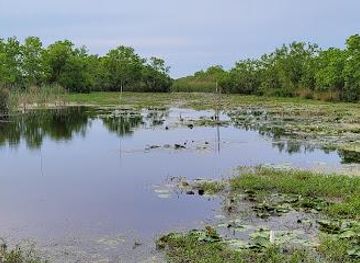
Wildlife refuge
Bayou Sauvage Urban National Wildlife Refuge
Explore the stunning Bayou Sauvage Urban National Wildlife Refuge, a unique urban oasis rich with diverse wildlife and scenic beauty in New Orleans.
-
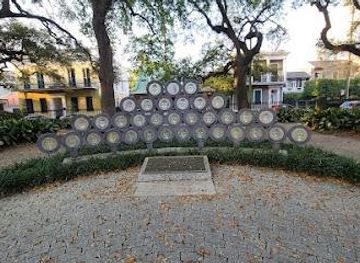
Park
Washington Square
Experience the charm and tranquility of Washington Square in New Orleans, a vibrant park nestled in the heart of the Marigny neighborhood offering lush greenery and local culture.
-
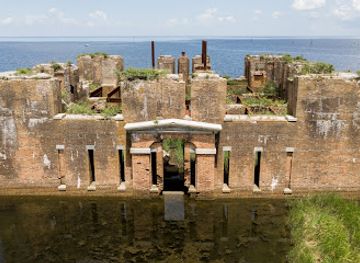
Tourist attraction
Fort Proctor
Discover the historical significance and natural beauty of Fort Proctor, a unique attraction at the mouth of Bayou Yscloskey, St. Bernard, Louisiana.
-
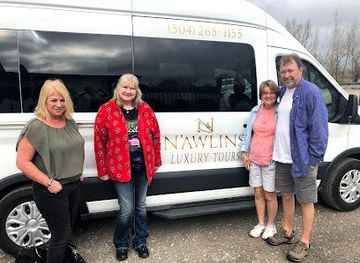
Sightseeing tour agency
N’awlins Luxury Tours
Discover the vibrant culture and history of New Orleans with N’awlins Luxury Tours, where luxury meets unforgettable experiences in the heart of the city.
Explore Lake Borgne on the map
Plan your trip on one map. See where the top attractions, landmarks, restaurants and hotels are, and book hotels and experiences in a few clicks.
Best hotels in Lake Borgne
Best bars in Lake Borgne
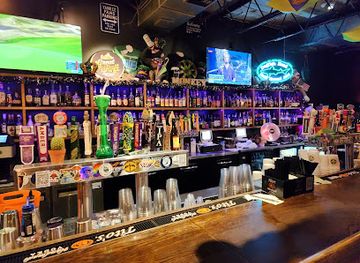
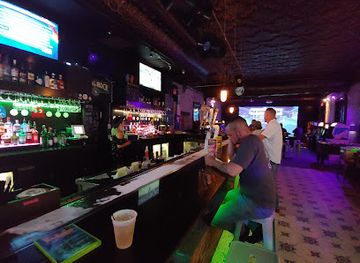
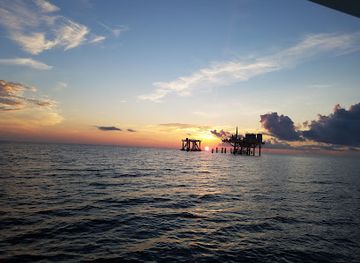
Lake Borgne has no established nightlife district and is best suited to quiet evenings after time on the water. Evening activity around Hopedale, Shell Beach and other St Bernard Parish communities centres on the hospitality associated with fishing lodges, marinas and local eateries, where any social atmosphere is informal and community-oriented rather than built around late-night entertainment. Chalmette provides more conventional local bars and dining options, while New Orleans, outside the destination, is the closest major centre for live music, cocktail bars, clubs and theatre. Rural businesses may have limited or changing operating patterns, so visitors staying near the lake should plan evening meals and drinks around their accommodation or transport arrangements. Sunset over the marsh and a dark, open coastal horizon are more characteristic evening experiences than organised entertainment.
-
Bar
The Brass Monkey Slidell
Experience the vibrant nightlife at The Brass Monkey in Slidell, where great drinks and local culture come together in a lively atmosphere.
-
Bar
Electric Avenue
Experience the vibrant nostalgia of Electric Avenue, a lively bar in Slidell celebrating the iconic 80s and 90s culture with drinks, music, and fun.
-
Bar
Olde Towne Tavern
Discover the lively nightlife at Olde Towne Tavern in Slidell, Louisiana, where great drinks, music, and camaraderie await every visitor.
-
Lake
Lake Borgne
Discover the natural beauty and tranquility of Lake Borgne, Louisiana's serene haven for outdoor enthusiasts and nature lovers.
Best shops in Lake Borgne
Shopping opportunities within the Lake Borgne area are limited and practical, reflecting the small settlements and working-waterfront character of St Bernard Parish. Hopedale and Shell Beach are places to arrange fishing supplies, provisions or boat-related services rather than browse a concentrated retail centre, while Chalmette has a broader selection of everyday shops and services. The most distinctive purchases associated with the wider region are Louisiana food products, seafood, prepared sauces, spices, rice-based specialities, Cajun and Creole seasonings, fishing equipment and locally made crafts. New Orleans, outside the destination, offers the widest choice of galleries, markets, cookery products and Louisiana-themed goods. Visitors should buy essentials before heading to a remote launch and should not expect a permanent artisan market or extensive souvenir shopping directly on the lake shore.
-
Department store
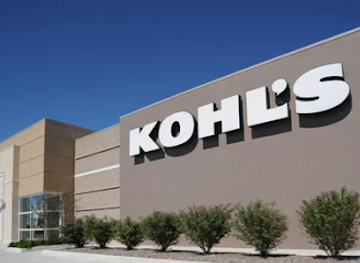
Kohl's
Explore Kohl's in Slidell for unbeatable deals on clothing, home goods, and more in a vibrant shopping environment.
-
Outdoor sports store
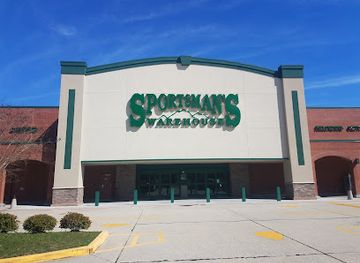
Sportsman's Warehouse
Discover Sportsman's Warehouse in Slidell, Louisiana - your go-to destination for hunting, fishing, and outdoor sporting goods.
-
Gift shop
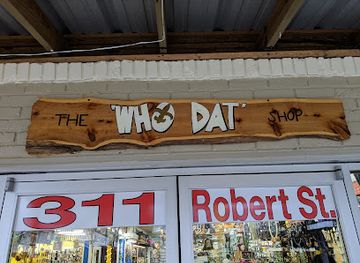
Who Dat Shoppe-Dunaway-Where The Who Dat Nation Shops
Explore Who Dat Shoppe, the ultimate destination for sports enthusiasts and collectors in Slidell, Louisiana, celebrating the Who Dat Nation.
-
Antique store
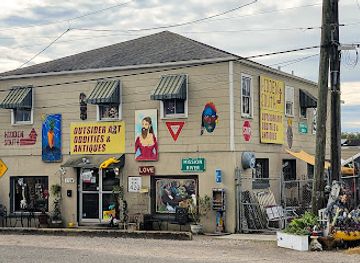
The Hidden South - Art, Oddities, And Antiques
Explore The Hidden South in Arabi, Louisiana - a unique antique store filled with art, curiosities, and treasures waiting to be discovered.
Get your free copy of our complete guide to Lake Borgne, delivered straight to you.
Everything on this page, from attractions and restaurants to essentials and local phrases, in one PDF you can read offline, print or share.
Already have an account? Sign in
Your Lake Borgne guide is ready.
We'll send it to · Not you? Sign out

Getting your guide ready…
We are putting together a fresh copy of the Lake Borgne guide. This can take up to a minute.
This can take a few moments. If your browser asks, choose Allow so the download can start. You'll find the guide in your Downloads folder.
Nothing happened? Download it again
Sorry, the guide is taking longer than usual. Please try again in a minute, or get it by email instead.
Lake Borgne essentials
Currency and Payment
Safety
Emergency Situations
Do's and Don'ts
Local Tips
From Eve
Local phrases worth knowing
You don't need to get them perfect. A few words go a long way, and locals appreciate the effort.
Basics
| English | Local | Say it |
|---|---|---|
| Hello | Howdy | [haw-dee] |
| Goodbye | See ya later | [see ya lay-tuh] |
| Yes | Yeah | [yeh] |
| No | Nah | [nah] |
| Please/You're welcome | Please/You're welcome | [Please/You're welcome] |
| Thank you | Thanks | [thanks] |
| Excuse me/Sorry | Pardon me | [par-dun me] |
| How are you? | How y'all doin'? | [how y'all doin'] |
| Fine. And you? | Fine. And y'all? | [fine. And y'all?] |
| Do you speak English? | Y'all speak English? | [y'all speak English?] |
| I don't understand | I don't git it | [I don't git it] |
Eating & Drinking
| English | Local | Say it |
|---|---|---|
| I'd like to see the menu, please | I'd like to see the menu, please | [I'd like to see the menu, please] |
| I don't eat meat | I don't eat meat | [I don't eat meat] |
| Cheers! | Cheers! | [Cheers!] |
| I would like to pay, please | I would like to pay, please | [I would like to pay, please] |
Emergencies
| English | Local | Say it |
|---|---|---|
| Help! | Help! | [Help!] |
| Go away! | Git outta here! | [Git outta here!] |
| Call the Police! | Call the Sheriff! | [Call the Sheriff!] |
| Call a doctor! | Call a doctor! | [Call a doctor!] |
| I'm lost | I'm lost | [I'm lost] |
| I'm ill | I'm sick | [I'm sick] |
Shopping
| English | Local | Say it |
|---|---|---|
| I'd like to buy... | I'd like to buy... | [I'd like to buy...] |
| I'm just looking | I'm just lookin' | [I'm just lookin'] |
| How much is it? | How much is it? | [How much is it?] |
| That's too expensive | That's too pricey | [That's too pricey] |
| Can you lower the price? | Can you lower the price? | [Can you lower the price?] |
Time & Numbers
| English | Local | Say it |
|---|---|---|
| What time is it? | What time is it? | [What time is it?] |
| It's one o'clock | It's one o'clock | [It's one o'clock] |
| Half past (10) | Half past (10) | [Half past (10)] |
| Morning | Mornin' | [Mornin'] |
| Afternoon | Afternoon | [Afternoon] |
| Evening | Evenin' | [Evenin'] |
| Yesterday | Yest'day | [Yest'day] |
| Today | Today | [Today] |
| Tomorrow | Tomorrer | [Tomorrer] |
| 1 | One | [One] |
| 2 | Two | [Two] |
| 3 | Three | [Three] |
| 4 | Four | [Four] |
| 5 | Five | [Five] |
| 6 | Six | [Six] |
| 7 | Seven | [Seven] |
| 8 | Eight | [Eight] |
| 9 | Nine | [Nine] |
| 10 | Ten | [Ten] |
Transport & Directions
| English | Local | Say it |
|---|---|---|
| Where's a/the...? | Where's a/the...? | [Where's a/the...?] |
| What's the address? | What's the address? | [What's the address?] |
| Can you show me (on the map)? | Can you show me (on the map)? | [Can you show me (on the map)?] |
| When's the next (bus)? | When's the next (bus)? | [When's the next (bus)?] |
| A ticket (to ....) | A ticket (to ....) | [A ticket (to ....)] |
History of Lake Borgne
A Lake Shaped by the Gulf
Lake Borgne is part of Louisiana’s shifting deltatic and coastal plain, where river sediment, tides, storms and subsidence have continually remodelled shallow bays and marshes. Its waters are connected to the Mississippi Sound and the Gulf of Mexico, making it an estuarine environment rather than an isolated inland lake. The wider shoreline has historically consisted of emergent marsh, bayous and low islands, landscapes that are productive but naturally exposed to erosion, saltwater intrusion and hurricanes.
French Exploration and the Name Borgne
The lake entered European maps during the period of French exploration and colonisation around the lower Mississippi. The name Borgne, meaning ‘one-eyed’ in French, is traditionally associated with a name applied by French explorers to the area, possibly reflecting an impression of the region’s irregular or incomplete appearance. Long before and alongside European mapping, Native peoples used the surrounding waterways and marshes for travel, fishing and hunting, although the low-lying environment left fewer monumental settlements than the better-drained parts of the region.
Working Coastal Communities
For centuries, the waters east of New Orleans supported fishing, trapping, oyster gathering and other forms of wetland livelihood. Communities in what is now St Bernard Parish developed around bayous, waterways and access to the Gulf, with boats often providing the most practical connection between settlements and productive marsh grounds. The culture of the area remains closely tied to commercial and recreational fishing, seafood, boatbuilding and knowledge of tides, channels and weather.
The Mississippi River-Gulf Outlet
The Mississippi River-Gulf Outlet, commonly known as the MR-GO, was constructed during the twentieth century as a deep-draft shipping route linking the New Orleans area with the Gulf. Its broad channel cut through coastal wetlands and became associated with increased saltwater intrusion, shoreline erosion and storm-surge exposure. After Hurricane Katrina in 2005, the waterway’s role in regional flooding and environmental change received renewed scrutiny; the navigation channel was subsequently closed to deep-draft traffic, including through the Bayou La Loutre rock closure completed in 2009.
Storm Protection and Coastal Management
Hurricane Katrina exposed the consequences of New Orleans’s low elevation and the loss of protective wetlands around Lake Borgne and adjacent waterways. In the years that followed, federal and state agencies developed major hurricane-protection works, including the Lake Borgne Surge Barrier across the Gulf Intracoastal Waterway. Completed in 2013, the barrier forms part of the wider system protecting New Orleans and nearby communities. The region’s modern history therefore combines maritime livelihoods with continuing efforts to restore wetlands, manage navigation and reduce storm risk.
Lake Borgne in Photos
Browse through our photo collection highlighting the charm and character of the destination.
Cities in Lake Borgne
The towns and cities of Lake Borgne, and the easiest places to base yourself.
-

-


Swipe for more cities
Neighbouring destination travel guides
The closest destinations to Lake Borgne, if you have time for more than one.
-

-

-

-

-


Swipe for more destinations
Explore more
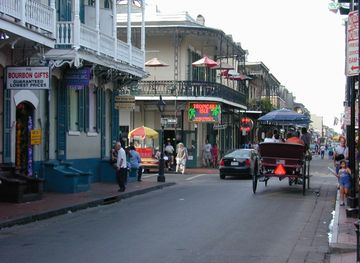
Explore more of Greater New Orleans
Greater New Orleans combines Creole history, jazz, distinctive cuisine, river landscapes, wetlands and richly varied neighbourhoods across south-east Louisiana.
Explore Greater New Orleans
Explore more of Louisiana
Discover Louisiana: A melting pot of cultures, flavors, and music in the heart of the American South. Experience the vibrant heritage and natural beauty of the Bayou State.
Explore Louisiana