

Lake Pontchartrain, Louisiana Travel Guide
Discover the serene beauty of Lake Pontchartrain in Louisiana, a haven for nature lovers and history enthusiasts alike, offering fishing, boating, and stunning landscapes.
Lake Pontchartrain is a vast and serene lake located in southeastern Louisiana. Known for its scenic beauty, it offers a peaceful escape from the hustle and bustle of city life. The lake spans over 630 square miles and is surrounded by charming towns and lush landscapes, making it a perfect spot for nature lovers and those seeking tranquility. The lake is a popular destination for fishing, boating, and bird watching. Its waters are teeming with a variety of fish species, and the surrounding wetlands provide a habitat for numerous bird species. For those interested in history, the area around Lake Pontchartrain is rich with cultural heritage, with many historic sites and museums to explore. Visitors can also enjoy the famous Lake Pontchartrain Causeway, the longest continuous bridge over water in the world. This engineering marvel offers stunning views of the lake and is a must-see for anyone visiting the area. Whether you're looking to relax by the water, explore nature, or learn about local history, Lake Pontchartrain has something to offer everyone.

Know before you go
Hi, I'm Eve. Here are a few practical things to know before exploring Lake Pontchartrain.
- Bring binoculars for bird watching; the wetlands are home to many species.
- Visit the historic towns around the lake for a taste of local culture and cuisine.
- Check the weather forecast before planning your activities on the lake.
- Take a drive across the Lake Pontchartrain Causeway for breathtaking views.
- Wear comfortable shoes if you plan to explore the nature trails.
Explore Lake Pontchartrain: Things to Do, Places to Eat, Hotels & More
Handpicked recommendations for top attractions, local dining, accommodations, and more

Best attractions in Lake Pontchartrain
Top-rated picks
Best Attractions

The National WWII Museum
Explore the National WWII Museum in New Orleans, an engaging tribute to the heroes and events of World War II with immersive exhibits and stories.

Jackson Square
Explore the historical and cultural heart of New Orleans at Jackson Square, where art, music, and history come alive in a vibrant park setting.

New Orleans City Park
Experience the lush landscapes, cultural attractions, and recreational activities at New Orleans City Park, a must-visit urban oasis in Louisiana.

Audubon Aquarium
Explore the captivating underwater world at the Audubon Aquarium in New Orleans, where marine life and conservation come together for an unforgettable experience.


Best restaurants in Lake Pontchartrain
Top-rated picks
Best Restaurants

Landry's Seafood House
Experience exquisite seafood and Creole flavors at Landry's Seafood House by Lake Pontchartrain – a culinary delight in New Orleans.

Ruth's Chris Steak House
Experience fine dining at Ruth's Chris Steak House in Metairie - where mouthwatering steaks meet impeccable service for an unforgettable meal.

Bonefish Grill
Discover Bonefish Grill in Metairie: where fresh seafood meets American flair for an unforgettable dining experience.

Carrabba's Italian Grill
Savor authentic Italian cuisine at Carrabba's Italian Grill in Metairie; an inviting spot for families and friends alike.

Best bars in Lake Pontchartrain
Top-rated picks
Best Bars

Frenier Landing Restaurant and Oyster Bar
Discover the flavors of Louisiana at Frenier Landing Restaurant and Oyster Bar, where fresh seafood meets warm hospitality.

Barley Oak
Discover Barley Oak in Mandeville: a vibrant bar with an extensive craft beer selection and a welcoming atmosphere by the lakeshore.

Sala Nola
Discover the flavors of New Orleans at Sala Nola, where a vibrant menu meets a cozy lounge ambiance for an unforgettable dining experience.

The Lighthouse Bar & Grill
Experience the essence of New Orleans dining at The Lighthouse Bar & Grill, where local flavors meet Southern hospitality in a vibrant atmosphere.


Best shops in Lake Pontchartrain
Top-rated picks
Best Shops

Lakeside Shopping Center
Discover the ultimate shopping experience at Lakeside Shopping Center - where fashion meets flavor in Metairie, Louisiana.

Pontchartrain Place Shopping Center
Explore the delightful Pontchartrain Place Shopping Center in Metairie, Louisiana, offering a unique blend of shopping and dining for all visitors.

Fleurty Girl French Quarter
Explore Fleurty Girl in New Orleans' French Quarter for unique gifts, stylish fashion, and memorable souvenirs that capture the city's spirit.

Forever New Orleans
Discover unique gifts, local artistry, and vibrant fashion at Forever New Orleans, your go-to boutique in the heart of the French Quarter.

Explore Lake Pontchartrain on the Map
A handpicked selection of must-see spots in Lake Pontchartrain, mapped for you.
Lake Pontchartrain Essentials
-
Lake Pontchartrain is located in southeastern Louisiana, near New Orleans. The nearest major airport is Louis Armstrong New Orleans International Airport (MSY), which is approximately 30 miles southwest of the lake. From the airport, you can rent a car, take a taxi, or use ride-sharing services to reach the lake. If you prefer public transportation, there are bus and train services that connect New Orleans to the surrounding areas.
-
Getting around Lake Pontchartrain and its surrounding areas is easiest by car. Car rentals are available at the airport and in New Orleans. The Causeway Bridge, one of the longest bridges in the world, connects the northern and southern shores of the lake and offers a scenic route. Public transportation options include local buses and trains, but these may be less convenient for exploring the more remote areas around the lake. Biking and walking are also popular ways to explore the lakefront.
-
The official currency in the United States is the US Dollar (USD). Credit and debit cards are widely accepted in most hotels, restaurants, and shops around Lake Pontchartrain. ATMs are readily available for cash withdrawals. It’s advisable to carry some cash for small purchases, especially in more rural areas or at local markets.
-
Lake Pontchartrain and its surrounding areas are generally safe for tourists. However, New Orleans, located nearby, has neighborhoods with higher crime rates. Tourists should avoid areas such as Central City, parts of the French Quarter late at night, and certain parts of the Lower Ninth Ward. Always stay vigilant, keep your belongings secure, and avoid walking alone at night in unfamiliar areas.
-
In case of emergency, dial 911 for immediate assistance. This number connects you to police, fire, and medical services. For non-emergency medical issues, there are several hospitals and clinics in the New Orleans area, including Ochsner Medical Center and Tulane Medical Center. It’s advisable to have travel insurance that covers medical emergencies. Pharmacies are available throughout the area for over-the-counter medications.
-
Fashion: Do dress comfortably and appropriately for the weather. Light, breathable clothing is recommended in the summer. Avoid overly revealing attire, especially when visiting churches or cultural sites. Religion: Do respect local religious practices and sites. Be mindful of dress codes in places of worship. Public Transport: Do use public transport where available, but be aware of your surroundings. Don’t eat or drink on public buses. Greetings: Do greet people with a friendly 'Hello' or 'Good day.' A handshake is common in formal settings. Eating & Drinking: Do try the local cuisine, including seafood and Creole dishes. Don’t refuse food or drink offerings, as it can be considered impolite.
-
To experience Lake Pontchartrain like a local, consider visiting the small towns around the lake such as Mandeville and Slidell. Enjoy local seafood at a lakeside restaurant or take a boat tour. Attend local festivals and events, such as the Wooden Boat Festival in Madisonville. Explore the lake by kayak or paddleboard for a unique perspective. Engaging with locals can also provide insights into the history and culture of the area.
When is the best time to visit Lake Pontchartrain?
Useful Local Phrases for Lake Pontchartrain
You don't need to speak the language perfectly. Even learning a few simple words can make conversations warmer—and locals usually appreciate the effort.
— Eve

Here are the phrases I use most often in Lake Pontchartrain. Try a few—you'll be surprised how far they go! 😊
❤️
-
- HelloBonjour
[bon-zhoor] - GoodbyeAu revoir
[oh re-vwah] - YesOui
[wee] - NoNon
[nohn] - Please/You're welcomeS'il vous plaît
[see voo pleh] - Thank youMerci
[mehr-see] - Excuse me/SorryExcusez-moi
[ex-kew-zay mwa] - How are you?Comment ça va?
[koh-mohn sah vah] - Fine. And you?Bien. Et vous?
[byen. ay voo] - Do you speak English?Parlez-vous anglais?
[par-lay voo ahn-glay] - I don't understandJe ne comprends pas
[zhuh nuh kohm-prahn pah]
- HelloBonjour
-
- I'd like to see the menu, pleaseJe voudrais voir le menu, s'il vous plaît
[zhuh voo-dray vwahr luh may-noo, see voo pleh] - I don't eat meatJe ne mange pas de viande
[zhuh nuh mahnj pah duh vee-ahnd] - Cheers!Santé!
[sahn-tay] - I would like to pay, pleaseJe voudrais payer, s'il vous plaît
[zhuh voo-dray pay-ay, see voo pleh]
- I'd like to see the menu, pleaseJe voudrais voir le menu, s'il vous plaît
-
- Help!Au secours!
[oh seh-koor] - Go away!Allez-vous en!
[ah-lay voo ahn] - Call the Police!Appelez la police!
[ah-peh-lay lah poh-lees] - Call a doctor!Appelez un médecin!
[ah-peh-lay uh mayd-sanh] - I'm lostJe suis perdu
[zhuh swee pair-doo] - I'm illJe suis malade
[zhuh swee mah-lahd]
- Help!Au secours!
-
- I'd like to buy...Je voudrais acheter...
[zhuh voo-dray ash-tay...] - I'm just lookingJe regarde juste
[zhuh ruh-gard zhewst] - How much is it?Combien ça coûte?
[kohm-byen sah koot] - That's too expensiveC'est trop cher
[say troh shair] - Can you lower the price?Pouvez-vous baisser le prix?
[poo-vay voo bay-say luh pree]
- I'd like to buy...Je voudrais acheter...
-
- What time is it?Quelle heure est-il?
[kell ur ay-till] - It's one o'clockIl est une heure
[eel ay oon ur] - Half past (10)Dix et demie
[dees ay duh-mee] - MorningMatin
[mah-tahn] - AfternoonAprès-midi
[ah-pray mee-dee] - EveningSoir
[swah] - YesterdayHier
[ee-air] - TodayAujourd'hui
[oh-zhoor-dwee] - TomorrowDemain
[duh-mahn] - 1Un
[uhn] - 2Deux
[duh] - 3Trois
[twah] - 4Quatre
[kah-truh] - 5Cinq
[sank] - 6Six
[sees] - 7Sept
[sept] - 8Huit
[wheat] - 9Neuf
[nuf] - 10Dix
[dees]
- What time is it?Quelle heure est-il?
-
- Where's a/the...?Où est...?
[oo ay] - What's the address?Quelle est l'adresse?
[kell ay lah-dress] - Can you show me (on the map)?Pouvez-vous me montrer (sur la carte)?
[poo-vay voo muh mohn-tray (soor lah kart)] - When's the next (bus)?Quand est le prochain (bus)?
[kahn ay luh proh-shahn (boos)] - A ticket (to ....)Un billet (pour ...)
[uhn bee-yay (poor)]
- Where's a/the...?Où est...?
History of Lake Pontchartrain
-
Long before European explorers set foot in the region, Lake Pontchartrain was a vital resource for Native American tribes such as the Choctaw, Houma, and Tchefuncte. These indigenous peoples relied on the lake for fishing, transportation, and trade. Artifacts and shell middens found around the lake provide evidence of their long-standing relationship with the area.
-
In the late 17th century, French explorers, including Pierre Le Moyne d'Iberville, began charting the Gulf Coast and its inland waters. The lake was named in honor of Louis Phélypeaux, comte de Pontchartrain, who was the French Minister of the Marine at the time. This period marked the beginning of European settlement and exploration in the area.
-
Lake Pontchartrain played a strategic role during the War of 1812, particularly in the Battle of New Orleans. American forces, led by General Andrew Jackson, utilized the lake's waterways for transportation and defense. British forces attempted to advance through the lake but were thwarted by American naval defenses and local militias.
-
In the 1830s, the Pontchartrain Railroad was established, connecting the lake to the city of New Orleans. This was one of the earliest railroads in the United States, and it significantly boosted commerce and tourism in the region. The railroad allowed for the easy transport of goods and passengers, enhancing the economic importance of the lake.
-
During the late 19th and early 20th centuries, Lake Pontchartrain became a popular destination for leisure and recreation. Numerous resorts, amusement parks, and dance halls sprang up along its shores. The Southern Yacht Club, established in 1849, is one of the oldest yacht clubs in the United States and remains a testament to the lake's recreational heritage.
-
In the latter half of the 20th century, Lake Pontchartrain faced significant environmental challenges, including pollution and habitat degradation. Efforts to restore and protect the lake led to the establishment of the Lake Pontchartrain Basin Foundation in 1989. This organization has been instrumental in improving water quality and promoting sustainable use of the lake's resources.
-
In 2005, Hurricane Katrina brought unprecedented devastation to the Lake Pontchartrain area. The storm surge breached levees, causing widespread flooding in New Orleans and surrounding communities. The lake's waters were a key factor in the flooding, highlighting the need for improved infrastructure and disaster preparedness. Recovery efforts have since focused on rebuilding and strengthening the region's resilience.
-
The Lake Pontchartrain Causeway, completed in 1956, is one of the longest bridges over water in the world. Spanning 24 miles, it connects the northern and southern shores of the lake, serving as a critical transportation link for commuters and travelers. The causeway is an engineering marvel and an iconic feature of the lake's landscape.
-
Today, Lake Pontchartrain remains a vibrant cultural and recreational hub. It hosts annual events such as the Mandeville Seafood Festival and the Wooden Boat Festival. The lake's shores are dotted with parks, marinas, and fishing piers, making it a beloved destination for locals and visitors alike. Its rich history and diverse ecosystems continue to draw those seeking both adventure and tranquility.
Cities in Lake Pontchartrain
Browse our curated selection of top destinations, scenic points, and must-visit spots in the area.


Neighbouring destination travel guides
Browse our curated selection of top destinations, scenic points, and must-visit spots in the area.



Your all‑in‑one travel companion app
Explore expert travel guides, compare and book tours, experiences, hotels, and more—all from the palm of your hand. Download now for seamless trip planning wherever your wanderlust takes you.


Explore More of Northshore
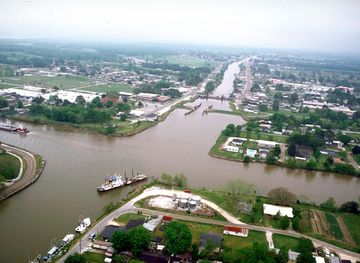
Looking beyond Lake Pontchartrain? Discover Northshore for broader travel guides, local hot-spots, and regional highlights.
Explore NorthshoreExplore More of Louisiana

Looking beyond Lake Pontchartrain? Discover Louisiana for broader travel guides, local hot-spots, and regional highlights.
Explore LouisianaLake Pontchartrain in Photos
Browse through our photo collection highlighting the charm and character of the destination.


Lake Pontchartrain: Gateway to Louisiana's Natural Beauty
Lake Pontchartrain is a vast and serene lake located in southeastern Louisiana. Known for its scenic beauty, it offers a peaceful escape from the hustle and bustle of city life. The lake spans over 630 square miles and is surrounded by charming towns and lush landscapes, making it a perfect spot for nature lovers and those seeking tranquility. The lake is a popular destination for fishing, boating, and bird watching. Its waters are teeming with a variety of fish species, and the surrounding wetlands provide a habitat for numerous bird species. For those interested in history, the area around Lake Pontchartrain is rich with cultural heritage, with many historic sites and museums to explore. Visitors can also enjoy the famous Lake Pontchartrain Causeway, the longest continuous bridge over water in the world. This engineering marvel offers stunning views of the lake and is a must-see for anyone visiting the area. Whether you're looking to relax by the water, explore nature, or learn about local history, Lake Pontchartrain has something to offer everyone.