

Georgetown City Centre (George Town) Travel Guide - Free
Explore Georgetown City Centre in George Town with Evendo's free guide. Find the best shops, historic streets, restaurants, and gems on web or mobile.


Georgetown City Centre in George Town, Malaysia, pairs UNESCO-listed shophouses, clan temples, street art, hawker food and walkable heritage lanes.
Shophouses, Shrines and Street Life
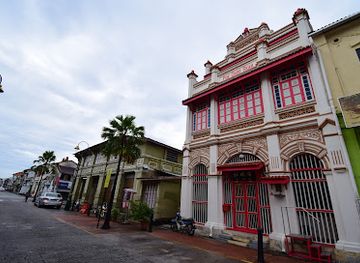
Georgetown City Centre occupies the historic heart of George Town on Penang Island, where a compact grid of streets runs between the harbour, Fort Cornwallis, Penang Road and the commercial quarters around Komtar. Much of the area forms part of the George Town UNESCO World Heritage Site, recognised for its layered townscape of Chinese shophouses, colonial buildings, clan houses, mosques, churches and Hindu temples. The result is not an open-air museum but a working urban neighbourhood, with residents, traders, worshippers, schoolchildren and visitors sharing the same lanes.Read more about Georgetown City Centre
A Multicultural Urban Landscape
Food, Art and the Waterfront
Best attractions in Georgetown City Centre
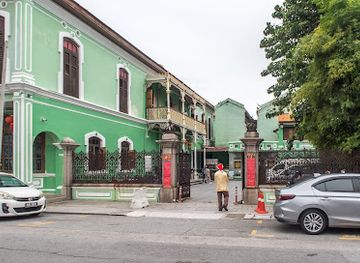
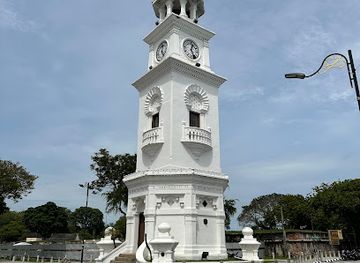
Georgetown City Centre’s attractions are concentrated within a walkable heritage grid. The Khoo Kongsi is known for its ornate clan-house complex and the history of one of Penang’s prominent Chinese associations, while the Pinang Peranakan Mansion presents domestic objects and social history associated with the Straits Chinese community. Cheong Fatt Tze—The Blue Mansion offers another perspective through its restored nineteenth-century residence and distinctive blue façade. Armenian Street, Lebuh Cannon and Lebuh Acheh combine shophouse architecture, galleries, small museums and street art, with the narrow lanes rewarding unhurried exploration. Fort Cornwallis and the Esplanade open onto the waterfront, and the nearby Queen Victoria Memorial Clock Tower marks the old harbour approach. For a change of pace, Chowrasta Market and the surrounding food streets reveal the centre as a living commercial district rather than a purely preserved quarter.
-
Tourist attraction
Chew Jetty
Explore Chew Jetty: A captivating stilt village in George Town, Penang, offering rich culture, stunning views, and a glimpse into local heritage.
11 min walk · 0.9 km from neighbourhood centre
-
Museum
Upside Down Museum
Discover the whimsical world of the Upside Down Museum in Penang, where every room is an optical illusion waiting to be explored.
5 min walk · 0.4 km from neighbourhood centre
-
Tourist attraction
Komtar Walk
Discover the lively Komtar Walk in George Town, a hub for shopping, dining, and breathtaking city views that captures the essence of Penang.
7 min walk · 0.6 km from neighbourhood centre
-
Museum
George Town Mansion
Discover the rich heritage of the Peranakan culture at George Town Mansion, a beautifully restored museum in Penang showcasing exquisite architecture and history.
5 min walk · 0.4 km from neighbourhood centre


Best landmarks in Georgetown City Centre
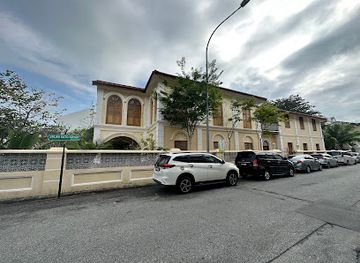
The physical landmarks of Georgetown City Centre express the town’s overlapping colonial, commercial and religious histories. Fort Cornwallis occupies the waterfront site associated with the early British settlement, while the Esplanade and the Queen Victoria Memorial Clock Tower retain the ceremonial language of the old harbour frontage. Inside the street grid, Khoo Kongsi is a major example of a Chinese clan complex, and the Kapitan Keling Mosque, St George’s Church and Sri Mahamariamman Temple stand within the multicultural central landscape. The Blue Mansion and the Pinang Peranakan Mansion show how wealthy households adapted regional, Chinese and European influences to Penang conditions. Rows of five-foot-way shophouses on streets such as Armenian Street, Lebuh Chulia and Campbell Street are landmarks in their own right, preserving the mixed commercial and residential pattern that shaped the city centre.
-
Tourist attraction
Georgetown UNESCO Historic Site
Discover Georgetown: A UNESCO World Heritage Site filled with history, culture, and culinary delights amidst stunning colonial architecture.
5 min walk · 0.4 km from neighbourhood centre
-
Museum
Pinang Peranakan Mansion
Explore the rich heritage of the Peranakan community at the Pinang Peranakan Mansion, a captivating museum in George Town, Malaysia.
9 min walk · 0.7 km from neighbourhood centre
-
Historical landmark
Queen Victoria Memorial Clock Tower
Discover the Queen Victoria Memorial Clock Tower, a historical gem in George Town, showcasing colonial architecture and the rich heritage of Penang.
13 min walk · 1.0 km from neighbourhood centre
-
Museum
George Town Mansion
Explore the captivating history of George Town Mansion, a museum showcasing Malaysia's rich cultural heritage through unique antiques and stunning architecture.
5 min walk · 0.4 km from neighbourhood centre
Explore Georgetown City Centre on the map
A handpicked selection of must-see spots in Georgetown City Centre, mapped for you.
Best hotels in Georgetown City Centre
Best restaurants in Georgetown City Centre
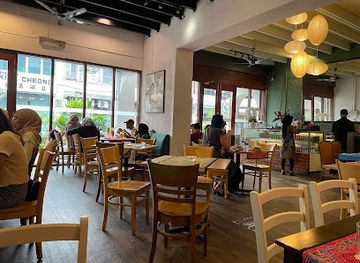
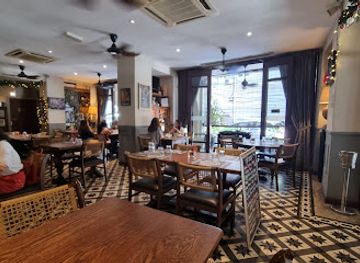
Eating in Georgetown City Centre is inseparable from Penang’s hawker culture and the neighbourhood’s layered trading history. Coffee shops and food stalls around Chulia Street, Carnarvon Street, Campbell Street and the market area serve dishes shaped by Chinese, Malay, Indian and Peranakan traditions, including noodles, rice dishes, snacks and richly spiced curries. Chulia Street is particularly associated with evening hawker stalls, while Tek Sen on Carnarvon Street is a long-established Chinese restaurant; ChinaHouse adds a contemporary café and cultural setting in restored shophouses. Tamil eateries cluster around the central streets near Little India, where banana-leaf meals, breads and sweets are part of the daily rhythm. Menus, stallholders and opening arrangements can change, so the most useful approach is to look for busy local trade, share dishes where appropriate and allow time for small coffee shops rather than treating the centre as a conventional restaurant district.
-
Restaurant
The Forest - Heritage
Discover culinary excellence at The Forest - Heritage in Georgetown, where local flavors meet modern dining in a serene atmosphere.
9 min walk · 0.7 km from neighbourhood centre
-
Halal
Lagenda House & Cafe
Experience exquisite Halal and Western cuisine at Lagenda House & Cafe in George Town - where every dish tells a story.
2 min walk · 0.2 km from neighbourhood centre
-
Nyonya restaurant
Auntie Gaik Lean's Old School Eatery
Discover the authentic taste of Nyonya cuisine at Auntie Gaik Lean's Old School Eatery in Georgetown, where tradition meets flavor.
10 min walk · 0.8 km from neighbourhood centre
-
Italian
Il Bacaro
Discover authentic Italian flavors at Il Bacaro in Georgetown, Penang - a culinary gem where tradition meets taste.
2 min walk · 0.2 km from neighbourhood centre


Best bars in Georgetown City Centre
Nightlife in Georgetown City Centre is more about compact bars, live music, evening food and restored shophouse venues than large clubs. Chulia Street and Love Lane form the best-known evening corridor, with casual pubs and bars serving visitors alongside long-established local businesses; nearby Muntri Street has a quieter, design-conscious atmosphere. The centre also contains venues combining drinks with music, cultural programming or gallery-style spaces, though events and opening patterns change. Food stalls keep parts of the area active after dark, particularly around Chulia Street, while the Esplanade offers an open-air evening walk rather than a nightlife venue. The transition between entertainment streets and residential lanes is quick, so visitors should keep voices low outside bars, avoid blocking shopfronts and use sensible transport arrangements when returning late.
-
Pub
The Pokok - All Day Bar
Experience the vibrant nightlife and local flavors at The Pokok - All Day Bar in the heart of George Town, Penang.
1 min walk · 0.1 km from neighbourhood centre
-
Buffet
Three Sixty Revolving Restaurant and Rooftop Bar
Discover breathtaking views and exquisite Malay cuisine at the Three Sixty Revolving Restaurant and Rooftop Bar in George Town.
5 min walk · 0.4 km from neighbourhood centre
-
Bar
Beso Rosado
Discover Beso Rosado, a trendy bar in George Town, known for its unique cocktails and vibrant nightlife scene.
7 min walk · 0.6 km from neighbourhood centre
-
Bar
The Beach Bar
Experience the vibrant nightlife at The Beach Bar in George Town, where stunning views meet exquisite cocktails and local flavors.
5 min walk · 0.4 km from neighbourhood centre


Best nightclubs in Georgetown City Centre
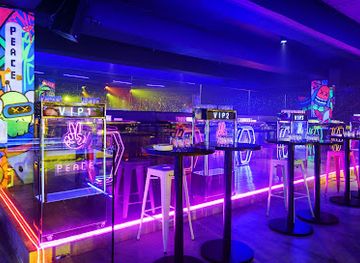
Nightlife in Georgetown City Centre is more about compact bars, live music, evening food and restored shophouse venues than large clubs. Chulia Street and Love Lane form the best-known evening corridor, with casual pubs and bars serving visitors alongside long-established local businesses; nearby Muntri Street has a quieter, design-conscious atmosphere. The centre also contains venues combining drinks with music, cultural programming or gallery-style spaces, though events and opening patterns change. Food stalls keep parts of the area active after dark, particularly around Chulia Street, while the Esplanade offers an open-air evening walk rather than a nightlife venue. The transition between entertainment streets and residential lanes is quick, so visitors should keep voices low outside bars, avoid blocking shopfronts and use sensible transport arrangements when returning late.
-
Disco club
Peace Club Penang
Discover the electrifying nightlife of Peace Club Penang, a premier disco club and casino in the heart of George Town, perfect for party lovers.
7 min walk · 0.6 km from neighbourhood centre
-
Disco club
PENDORA CLUB | 潘多拉俱乐部
Unleash your spirit at Pendora Club, George Town's premier disco destination, where the nightlife comes alive with music, dancing, and unforgettable moments.
5 min walk · 0.4 km from neighbourhood centre
-
Karaoke bar
豪门 Haoman Night Club
Discover the exhilarating nightlife scene at Haoman Night Club, a premier karaoke bar in George Town, Penang, perfect for music lovers and partygoers.
8 min walk · 0.7 km from neighbourhood centre
-
Night club
Lim Bar
Discover the vibrant nightlife of George Town at Lim Bar, a lively night club offering great music, cocktails, and a unique local atmosphere.
7 min walk · 0.5 km from neighbourhood centre


Best shops in Georgetown City Centre
Shopping in Georgetown City Centre ranges from practical markets to small independent businesses occupying historic shophouses. Chowrasta Market and the surrounding stalls near Penang Road are associated with produce, local snacks and everyday shopping, while Campbell Street remains a long-established commercial street with specialist retailers and food businesses. Armenian Street and nearby lanes contain craft shops, galleries, prints, souvenirs and contemporary design-led stores, though the mix changes over time. Around Little India, textile shops, Indian sweets, spices, devotional items and music businesses reflect the area’s longstanding South Asian commercial presence. Visitors interested in heritage architecture should look above shopfronts for timber shutters, ventilation panels and painted façades, but should remember that many premises remain working businesses rather than display interiors. Bargaining is not universal; it is more appropriate in some market settings than in fixed-price shops.
-
Shopping mall
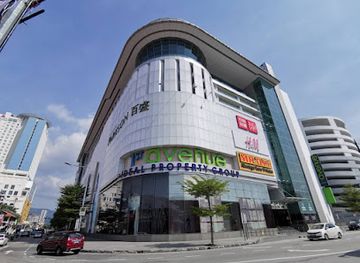
1st Avenue Mall
Discover the best shopping, dining, and entertainment at 1st Avenue Mall in George Town, Penang, a vibrant hub for tourists.
10 min walk · 0.8 km from neighbourhood centre
-
Shopping mall
KOMTAR Tower
Explore the vibrant shopping and dining experiences at KOMTAR Tower, a premier shopping destination in George Town, Penang.
9 min walk · 0.7 km from neighbourhood centre
-
Outlet mall
Mano Plus Select Store
Explore the vibrant Mano Plus Select Store in George Town for unique crafts and souvenirs reflecting the rich culture of Penang.
10 min walk · 0.8 km from neighbourhood centre
-
Clothing store
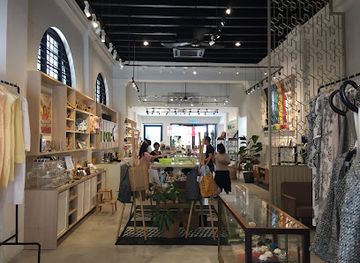
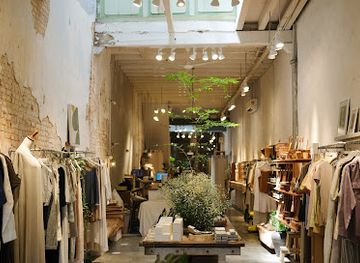
Sixth Sense
Experience the vibrant fusion of contemporary fashion and local craftsmanship at Sixth Sense in George Town, Penang.
8 min walk · 0.6 km from neighbourhood centre

Georgetown City Centre essentials
Getting There
Getting Around
Safety
Emergency Situations
Do's and Don'ts
Local Tips

From Eve
Local phrases worth knowing
You don't need to get them perfect. A few words go a long way, and locals appreciate the effort.
Basics
| English | Local | Say it |
|---|---|---|
| Hello | Apa khabar | [Ah-pah kah-bar] |
| Goodbye | Selamat tinggal | [Suh-lah-maht ting-gahl] |
| Yes | Ya | [Yah] |
| No | Tidak | [Tee-dahk] |
| Please/You're welcome | Sila | [See-lah] |
| Thank you | Terima kasih | [Teh-ree-mah kah-see] |
| Excuse me/Sorry | Maaf | [Mah-ahf] |
| How are you? | Apa khabar? | [Ah-pah kah-bar] |
| Fine. And you? | Baik. Dan awak? | [Ba-ee-k. Dan ah-wahk] |
| Do you speak English? | Boleh cakap Bahasa Inggeris? | [Boh-leh chah-kahp Bah-hah-sah Ing-gehr-ees] |
| I don't understand | Saya tidak faham | [Sah-yah tee-dahk fah-hahm] |
Eating & Drinking
| English | Local | Say it |
|---|---|---|
| I'd like to see the menu, please | Boleh saya lihat menu, sila | [Boh-leh sah-yah lee-haht meh-noo, see-lah] |
| I don't eat meat | Saya tidak makan daging | [Sah-yah tee-dahk mah-kahn dah-yihng] |
| Cheers! | Sihat! | [See-haht] |
| I would like to pay, please | Boleh saya bayar, sila | [Boh-leh sah-yah bah-yahr, see-lah] |
Emergencies
| English | Local | Say it |
|---|---|---|
| Help! | Tolong! | [Toh-lohng] |
| Go away! | Pergi! | [Pehr-gee] |
| Call the Police! | Panggil polis! | [Pahng-geel poh-lees] |
| Call a doctor! | Panggil doktor! | [Pahng-geel dohk-tohr] |
| I'm lost | Saya sesat | [Sah-yah suh-saht] |
| I'm ill | Saya sakit | [Sah-yah sah-keet] |
Shopping
| English | Local | Say it |
|---|---|---|
| I'd like to buy... | Boleh saya beli... | [Boh-leh sah-yah beh-lee...] |
| I'm just looking | Saya hanya tengok | [Sah-yah hahn-yah tehn-gohk] |
| How much is it? | Berapa harganya? | [Beh-rah-pah hahr-gahn-yah] |
| That's too expensive | Terlalu mahal | [Tehr-lah-loo mah-hahl] |
| Can you lower the price? | Boleh kurangkan harga? | [Boh-leh koor-ang-kahn hahr-gah] |
Time & Numbers
| English | Local | Say it |
|---|---|---|
| What time is it? | Pukul berapa sekarang? | [Poo-kool beh-rah-pah suh-kah-rahn] |
| It's one o'clock | Pukul satu | [Poo-kool sah-too] |
| Half past (10) | Setengah (sepuluh) | [Suh-tuhn-gah (suh-poo-loo)] |
| Morning | Pagi | [Pah-gee] |
| Afternoon | Petang | [Puh-tahng] |
| Evening | Malam | [Mah-lahm] |
| Yesterday | Semalam | [Suh-mah-lahm] |
| Today | Hari ini | [Hah-ree ee-nee] |
| Tomorrow | Esok | [Eh-sohk] |
| 1 | Satu | [Sah-too] |
| 2 | Dua | [Doo-ah] |
| 3 | Tiga | [Tee-gah] |
| 4 | Empat | [Um-paht] |
| 5 | Lima | [Lee-mah] |
| 6 | Enam | [Eh-nahm] |
| 7 | Tujuh | [Too-joo] |
| 8 | Lapan | [Lah-pahn] |
| 9 | Sembilan | [Suhm-bee-lahn] |
| 10 | Sepuluh | [Suh-poo-loo] |
Transport & Directions
| English | Local | Say it |
|---|---|---|
| Where's a/the...? | Di mana? | [Dee mah-nah] |
| What's the address? | Apa alamatnya? | [Ah-pah ah-lah-maht-nyah] |
| Can you show me (on the map)? | Boleh tunjukkan saya (di peta)? | [Boh-leh toon-jook-kahn sah-yah (dee peh-tah)] |
| When's the next (bus)? | Bila bas seterusnya? | [Bee-lah bahs suh-teh-roos-nyah] |
| A ticket (to ....) | Satu tiket (ke ....) | [Sah-too tee-keht (keh ....)] |
History of Georgetown City Centre
A Port Town Takes Shape
George Town was founded in 1786 when the British East India Company established a settlement on Penang under Francis Light. The harbour and its position on maritime routes encouraged the growth of a trading town, while the grid of streets and early administrative buildings developed around the waterfront. The present city centre retains this original relationship with the sea, particularly around the Esplanade, Fort Cornwallis and the old commercial streets. Its population and built environment soon became markedly plural, with Chinese, Indian, Malay, Eurasian and European communities contributing to the town’s institutions, places of worship and trading networks.
Guilds, Clans and Commercial Streets
During the nineteenth and early twentieth centuries, George Town expanded as a regional entrepôt linking the Malay Peninsula with South and Southeast Asia. Merchants, artisans and labourers established shops, associations, temples and clan houses in the central streets. Buildings such as Khoo Kongsi expressed the wealth and solidarity of Chinese clan networks, while Lebuh Acheh and the Kapitan Keling Mosque formed part of an important Muslim quarter. Shophouses combined homes, workshops, warehouses and businesses, creating the dense mixed-use pattern that remains a defining feature of Georgetown City Centre.
War, Independence and Urban Change
The Japanese occupation from 1941 to 1945 disrupted George Town’s commercial life and brought hardship to its residents. After the war, the town continued as an important port and administrative centre, and Penang became part of the Federation of Malaya at independence in 1957. Modern development altered the city’s skyline and commercial balance, particularly with the construction of newer business districts and shopping centres around the central area. Some historic shophouses deteriorated or changed use, while long-established markets, religious institutions and family businesses continued to anchor daily life.
Heritage Recognition and Renewal
George Town was inscribed with Malacca as a UNESCO World Heritage Site in 2008 for its historic urban landscape and multicultural heritage. Conservation has since encouraged the repair and adaptive reuse of shophouses, former residences and commercial premises in the central area. The process has brought museums, cafés, galleries and boutique accommodation alongside renewed attention to traditional crafts and local food, while also raising familiar questions about rising costs, tourism and the place of existing residents. Georgetown City Centre remains significant precisely because conservation and ordinary urban life continue side by side.
Georgetown City Centre in Photos
Browse through our photo collection highlighting the charm and character of the destination.
Neighbourhoods near Georgetown City Centre
The closest neighbourhoods to Georgetown City Centre, if you have time for more than one stop.
-

-

-

-

-


Swipe for more neighbourhoods
Explore more

Explore more of George Town
George Town, Malaysia, blends UNESCO-listed streets, Peranakan heritage, hawker flavours, historic temples and street art on Penang Island today.
Explore George Town