

Mili Atoll, Marshall Islands Travel Guide
Discover Mili Atoll in the Marshall Islands: An untouched paradise with pristine waters, vibrant coral reefs, and rich history, perfect for nature enthusiasts and adventurers.
Mili Atoll, nestled in the Marshall Islands, is a captivating destination that invites visitors to explore its pristine beauty and rich history. This secluded paradise consists of 92 small islands, offering an idyllic escape from the hustle and bustle of modern life. The atoll is characterized by its crystal-clear waters, vibrant coral reefs, and lush green landscapes that make it a perfect spot for nature lovers and adventure seekers alike. One of the most remarkable features of Mili Atoll is its underwater world. Snorkeling and diving enthusiasts will be thrilled to discover an array of marine life, including colorful fish, sea turtles, and mesmerizing coral formations. The atoll also boasts several World War II relics, such as sunken planes and shipwrecks, providing a unique diving experience for history buffs. Beyond its natural beauty, Mili Atoll offers a glimpse into the traditional Marshallese way of life. Visitors can engage with the local community, learn about their customs, and partake in cultural activities such as traditional dance and handicraft making. The warm hospitality of the islanders ensures a memorable and enriching experience for all who visit.

Know before you go
Hi, I'm Eve. Here are a few practical things to know before exploring Mili Atoll.
- Pack reef-safe sunscreen to protect the delicate coral ecosystems while enjoying the water activities.
- Bring cash, as there are limited ATMs and credit card facilities on the atoll.
- Respect local customs and traditions, and always ask for permission before taking photos of people.
- Plan your visit during the dry season (November to April) for the best weather conditions.
- Consider hiring a local guide to explore the historical World War II sites scattered around the atoll.

Best landmarks in Mili Atoll
Top-rated picks
Best Landmarks

Marshallese ship
Explore the Marshallese Shipwreck, a captivating historical landmark in Majuro Atoll, rich in maritime heritage and breathtaking natural beauty.
Garu
Explore Garu Island, a hidden gem in Mili Atoll, where stunning beaches, vibrant marine life, and rich culture await your discovery.

Best restaurants in Mili Atoll
Top-rated picks
Best Restaurants

Tide Table Restaurant & Lounge
Experience exquisite dining at Tide Table Restaurant & Lounge in Majuro - where local flavors meet oceanfront views.

Toeak Bar and Grill
Experience toe-to-toe local flavors at Toeak Bar and Grill in Majuro Atoll—where every meal is a celebration of Marshallese cuisine.

Yummy
Experience authentic Marshallese flavors at Yummy, a top-rated takeout restaurant in Majuro Atoll.

Island Star
Experience exquisite local cuisine at Island Star, nestled in the stunning Majuro Atoll - a must-visit dining destination for all travelers.

Best bars in Mili Atoll
Top-rated picks
Best Bars

Marshall Islands Resort
Discover the enchanting beauty of the Marshall Islands at the luxurious Marshall Islands Resort, where relaxation meets adventure in a tropical paradise.

Tide Table Restaurant & Lounge
Experience the culinary delights of Tide Table Restaurant & Lounge in Majuro, where local flavors meet breathtaking ocean views.

Hotel Robert Reimers
Discover comfort and local charm at Hotel Robert Reimers, your gateway to exploring the stunning Marshall Islands.

Amata Kabua International Airport
Amata Kabua International Airport: Your gateway to the breathtaking beauty and vibrant culture of the Marshall Islands.


Best shops in Mili Atoll
Top-rated picks
Best Shops

Marshall Islands Resort
Discover the beauty of the Marshall Islands at the Marshall Islands Resort, where relaxation meets adventure in a tropical paradise.

K&K Island Pride Supermarket
Experience the vibrant local culture at K&K Island Pride Supermarket in Majuro Atoll, where culinary treasures and island life converge.

Majuro
Explore Majuro Atoll's stunning lagoons, vibrant marine life, and rich culture in the heart of the Marshall Islands.

Hotel Robert Reimers
Discover the charm of the Marshall Islands at Hotel Robert Reimers, where comfort meets local culture in a stunning tropical setting.

Explore Mili Atoll on the Map
A handpicked selection of must-see spots in Mili Atoll, mapped for you.
Mili Atoll Essentials
-
Mili Atoll is part of the Marshall Islands in the central Pacific Ocean. The nearest international airport is Amata Kabua International Airport in Majuro, the capital of the Marshall Islands. From Majuro, you can take a domestic flight to Mili Atoll. Air Marshall Islands operates flights to and from Mili Atoll, although schedules can be irregular, so it is advisable to check in advance. Alternatively, you can arrange for a boat transfer from Majuro, which provides an adventurous way to reach the atoll.
-
Transportation options within Mili Atoll are limited. The primary modes of transportation are walking and bicycling, due to the small size and the layout of the atoll. Motorized vehicles are rare. For inter-island travel within the atoll, local boats are commonly used. If you need to travel further, arranging transport with local boat operators is your best bet.
-
The official currency of the Marshall Islands is the United States Dollar (USD). Cash is the primary method of payment on Mili Atoll, as credit and debit card facilities are extremely limited. It is advisable to carry sufficient cash for your entire stay, as there are no ATMs on the atoll. Major transactions are typically conducted in Majuro, so plan accordingly before arriving.
-
Mili Atoll is generally a safe destination for tourists. However, standard safety precautions should be taken. Avoid walking alone at night in poorly lit or unfamiliar areas. Keep your belongings secure and be mindful of your surroundings. There are no specific areas with high crime rates targeting tourists, but maintaining vigilance is always a good practice.
-
In case of an emergency, it is essential to have a plan in place due to the remote nature of Mili Atoll. The local police and medical facilities are limited, so it is advisable to have comprehensive travel insurance that covers medical evacuations. For minor health issues, there are small clinics on the atoll, but for serious conditions, you may need to be transported to Majuro or even further afield.
-
Fashion: Do wear lightweight, breathable clothing suitable for tropical climates. Don't wear overly revealing attire as it may be considered disrespectful. Religion: Do respect local customs and traditions. Be mindful of local religious practices and dress modestly when visiting religious sites. Public Transport: Do use local boats for inter-island travel and be respectful to boat operators. Don't expect regular schedules and be prepared for flexibility. Greetings: Do greet locals with a friendly smile and a nod. Handshakes are less common but appreciated in more formal settings. Eating & Drinking: Do try local foods and accept any food offered to you graciously. Don't waste food, as resources can be scarce on the atoll.
-
To experience Mili Atoll like a local, spend time engaging with the community and participating in local activities. Visit local markets to buy fresh produce and handmade crafts. Attend traditional events and ceremonies if you have the opportunity. Fishing and snorkeling are popular pastimes, so taking part in these activities can give you a deeper appreciation of the local lifestyle. Be open and respectful, and you’ll likely find the locals warm and welcoming.
When is the best time to visit Mili Atoll?
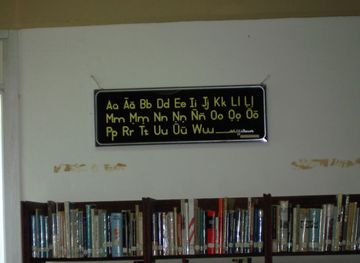
Useful Local Phrases for Mili Atoll
You don't need to speak the language perfectly. Even learning a few simple words can make conversations warmer—and locals usually appreciate the effort.
— Eve

Here are the phrases I use most often in Mili Atoll. Try a few—you'll be surprised how far they go! 😊
❤️
-
- HelloYokwe
[yoh-kweh] - GoodbyeAolep
[ah-oh-lep] - YesIja
[ee-hah] - NoAolep
[ah-oh-lep] - Please/You're welcomeKomol tata
[koh-mohl tah-tah] - Thank youKommol
[koh-mohl] - Excuse me/SorryBwe in
[bweh in] - How are you?Ejjabok?
[eh-jah-bok] - Fine. And you?Jab et, ejjabok?
[jahb eht, eh-jah-bok] - Do you speak English?Ija eban English?
[ee-hah eh-bahn English] - I don't understandEjjabok in kein
[eh-jah-bok in ke-in]
- HelloYokwe
-
- I'd like to see the menu, pleaseIjjab eja eban menu, komol
[ee-jahb eh-jah eh-bahn meh-nu, koh-mohl] - I don't eat meatEjjab eban meat
[eh-jah-bok eh-bahn meet] - Cheers!Irooj!
[ee-rooj] - I would like to pay, pleaseIjjab eja eban eja, komol
[ee-jahb eh-jah eh-bahn eh-jah, koh-mohl]
- I'd like to see the menu, pleaseIjjab eja eban menu, komol
-
- Help!Jibab!
[jee-bahb] - Go away!Jibab in!
[jee-bahb in!] - Call the Police!Jibab in Police!
[jee-bahb in Puh-leese!] - Call a doctor!Jibab in doctor!
[jee-bahb in dok-tor!] - I'm lostEjjab eban jor
[eh-jah-bok eh-bahn jor] - I'm illEjjab eban im
[eh-jah-bok eh-bahn im]
- Help!Jibab!
-
- I'd like to buy...Ijjab eja eban ...
[ee-jahb eh-jah eh-bahn ...] - I'm just lookingEjjab ejja eja
[eh-jah-bok eh-jah eh-jah] - How much is it?Ejjab eja eban?
[eh-jah-bok eh-jah eh-bahn?] - That's too expensiveEjjab eja eban jor
[eh-jah-bok eh-jah eh-bahn jor] - Can you lower the price?Ija eban jor in price?
[ee-hah eh-bahn jor in price?]
- I'd like to buy...Ijjab eja eban ...
-
- What time is it?Ejjab eja eban time?
[eh-jah-bok eh-jah eh-bahn time?] - It's one o'clockEjjab eja o'clock
[eh-jah-bok eh-jah oh-clock] - Half past (10)Ejjab ejja half past (10)
[eh-jah-bok eh-jah half past (10)] - MorningMaan
[mahn] - AfternoonAeo
[ah-eh-oh] - EveningJab
[jahb] - YesterdayJebon
[jeh-bon] - TodayJebon in
[jeh-bon in] - TomorrowJebon im
[jeh-bon im] - 1Jeb
[jehb] - 2Ruk
[rook] - 3Jel
[jehl] - 4Jelkok
[jehl-kok] - 5Jebl
[jeh-bl] - 6Jeblrok
[jeh-bl-rok] - 7Jebljel
[jeh-bl-jehl] - 8Jebljelkok
[jeh-bl-jehl-kok] - 9Jebljeb
[jeh-bl-jehb] - 10Jeblron
[jeh-bl-ron]
- What time is it?Ejjab eja eban time?
-
- Where's a/the...?Ejjab eja a/the...?
[eh-jah-bok eh-jah ah/the...?] - What's the address?Ejjab eja address?
[eh-jah-bok eh-jah address?] - Can you show me (on the map)?Ija eban show in (on the map)?
[ee-hah eh-bahn show in (on the map)?] - When's the next (bus)?Ejjab eja next (bus)?
[eh-jah-bok eh-jah next (bus)?] - A ticket (to ....)Ejjab eja ticket (to ....)
[eh-jah-bok eh-jah ticket (to ....)]
- Where's a/the...?Ejjab eja a/the...?
History of Mili Atoll
-
Mili Atoll, like many of the Marshall Islands, was settled by Micronesian navigators thousands of years ago. These early inhabitants developed a rich culture based on seafaring, fishing, and agriculture. They built traditional outrigger canoes and navigated the vast Pacific Ocean using stars, ocean currents, and bird migrations as guides.
-
The first recorded European contact with Mili Atoll occurred in the early 16th century when Spanish explorers entered the region. However, it wasn't until the 19th century that European influence became more pronounced. In 1823, British whaling ships began to frequent the area, and Mili Atoll became a notable stop for trade and resupply.
-
In the late 19th century, the Marshall Islands, including Mili Atoll, fell under German control. The Germans established a colonial administration in the region in 1885. They introduced new agricultural practices, particularly the cultivation of copra (dried coconut meat), which became a primary export. The German period also saw the introduction of Western education and Christianity.
-
Following World War I, the League of Nations mandated the Marshall Islands to Japan. Mili Atoll was then fortified by the Japanese military during World War II. The atoll became a strategic site for the Japanese navy, leading to the construction of airfields and other military installations. This period brought significant changes to the local way of life, with many islanders being conscripted for labor.
-
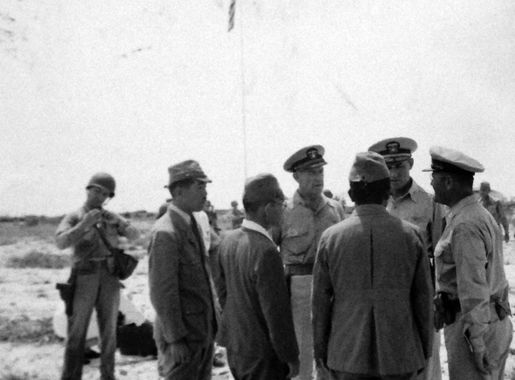
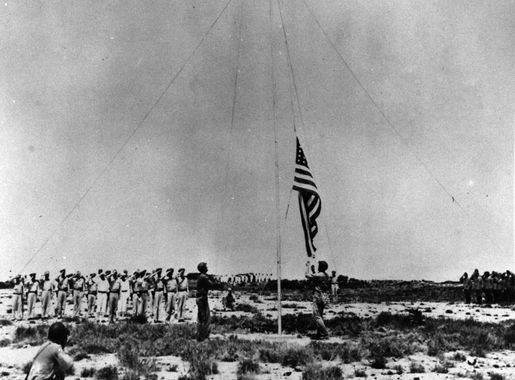
Mili Atoll was a significant battleground during World War II. From November 1943 to August 1945, the United States launched a series of air and naval attacks on the Japanese fortifications on the atoll. The relentless bombardment left the island heavily damaged. The battle had a profound impact on the local population, many of whom were displaced or affected by the wartime destruction.
-
After World War II, the Marshall Islands, including Mili Atoll, came under U.S. administration as part of the Trust Territory of the Pacific Islands. The U.S. focused on rebuilding and developing infrastructure. During this period, traditional lifestyles began to blend with modern influences, and the atoll saw improvements in education, healthcare, and transportation.
-
Mili Atoll is now part of the Republic of the Marshall Islands, which gained independence in 1986. The atoll has embraced its rich cultural heritage while also adapting to contemporary challenges. Today, Mili Atoll is known for its beautiful lagoons, vibrant marine life, and historical sites, making it a fascinating destination for travelers interested in both natural beauty and historical exploration.
Neighbouring Regions of Mili Atoll
The closest regions to Mili Atoll, if you have time for more than one.



Your all‑in‑one travel companion app
Explore expert travel guides, compare and book tours, experiences, hotels, and more—all from the palm of your hand. Download now for seamless trip planning wherever your wanderlust takes you.


Explore More of Marshall Islands

Looking beyond Mili Atoll? Discover Marshall Islands for broader travel guides, local hot-spots, and regional highlights.
Explore Marshall IslandsMili Atoll in Photos
Browse through our photo collection highlighting the charm and character of the destination.



Mili Atoll: A Hidden Gem in the Marshall Islands
Mili Atoll, nestled in the Marshall Islands, is a captivating destination that invites visitors to explore its pristine beauty and rich history. This secluded paradise consists of 92 small islands, offering an idyllic escape from the hustle and bustle of modern life. The atoll is characterized by its crystal-clear waters, vibrant coral reefs, and lush green landscapes that make it a perfect spot for nature lovers and adventure seekers alike. One of the most remarkable features of Mili Atoll is its underwater world. Snorkeling and diving enthusiasts will be thrilled to discover an array of marine life, including colorful fish, sea turtles, and mesmerizing coral formations. The atoll also boasts several World War II relics, such as sunken planes and shipwrecks, providing a unique diving experience for history buffs. Beyond its natural beauty, Mili Atoll offers a glimpse into the traditional Marshallese way of life. Visitors can engage with the local community, learn about their customs, and partake in cultural activities such as traditional dance and handicraft making. The warm hospitality of the islanders ensures a memorable and enriching experience for all who visit.