

Free Utirik Atoll Travel Guide & Mobile App
Explore Utirik Atoll with free travel guides. Discover regional history, expert tips, proposed trips, and audio guides on web or mobile app.


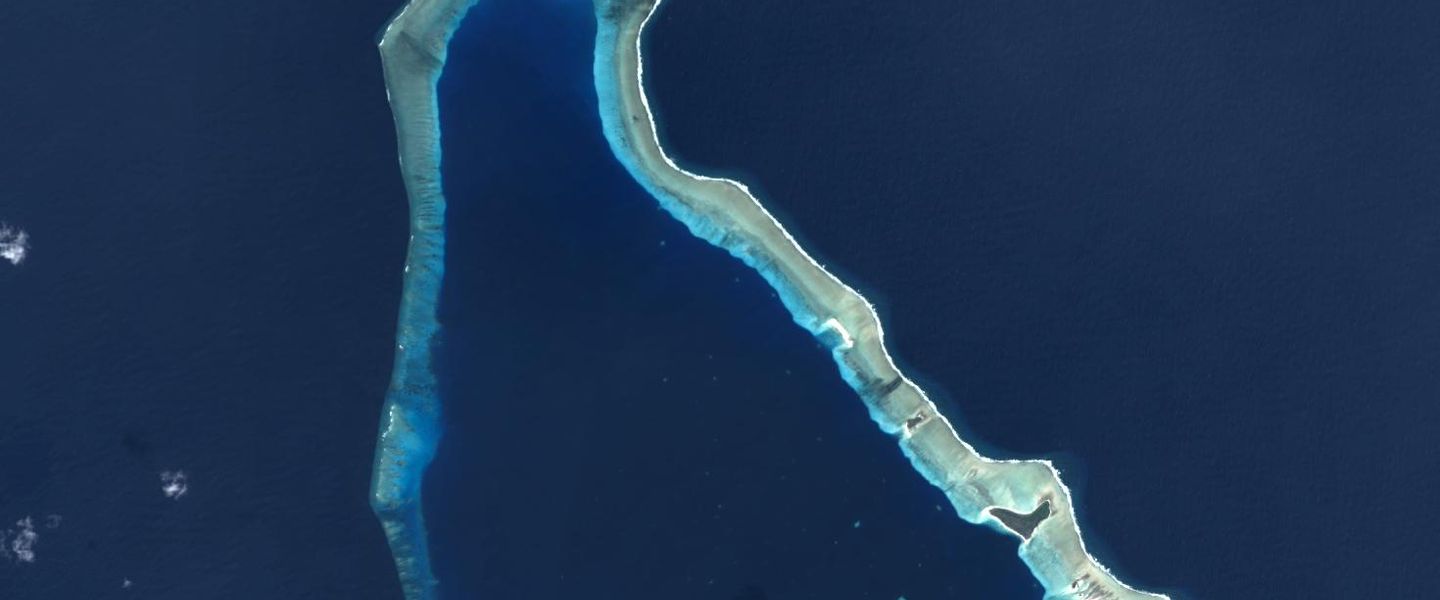


Utirik Atoll offers remote lagoon landscapes, Marshallese island life and important nuclear-era history for carefully prepared travellers.
Read more about Utirik Atoll
When is the best time to visit Utirik Atoll?
Best: February–April · 29–30°C| Month | High (°C) | Rainfall (mm) |
|---|---|---|
| January | 29 | 200 |
| February (best) | 29 | 170 |
| March (best) | 29 | 170 |
| April (best) | 30 | 170 |
| May | 30 | 170 |
| June | 30 | 190 |
| July | 30 | 220 |
| August | 30 | 230 |
| September | 30 | 230 |
| October | 30 | 210 |
| November | 30 | 200 |
| December | 29 | 200 |
Getting to and around Utirik Atoll
How to get there
Transportation
Best landmarks in Utirik Atoll
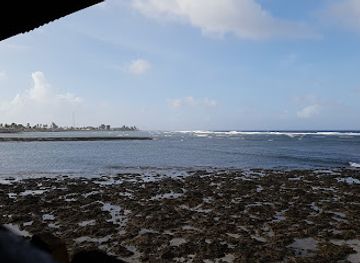
Utirik's defining landmarks are geographical and communal rather than monumental. The encircling coral-ring formation and open lagoon express the physical structure of a low-lying atoll, while Utirik Island's settled shoreline shows how homes, boats, coconut palms and small cultivated areas occupy a narrow strip of land between lagoon and ocean. Local churches and community buildings are important visual and social reference points, although visitors should enter or photograph them only with permission. The surrounding reef and lagoon channels are significant landmarks in their own right because they govern travel, fishing and daily life. The atoll's most consequential historical marker is not a grand structure but the landscape's connection to the 1954 Castle Bravo fallout and the subsequent evacuation and return of Utirik's people. Visitors should approach that history through community knowledge and established local arrangements rather than searching for unmarked or sensitive sites. In Utirik, the scale and vulnerability of the landscape are central to its meaning.
-
Historical landmark
Typhoon Monument
Explore the Typhoon Monument in Majuro Atoll, a powerful symbol of resilience and a must-see historical landmark reflecting the spirit of the Marshallese people.
-
 Atoll
AtollUtrik Atoll
Explore the tranquil beauty of Utrik Atoll, a pristine paradise in the Marshall Islands, perfect for relaxation and adventure in nature's embrace.
-
Island
Utirik Island
Discover the untouched beauty and rich cultural heritage of Utirik Island, a hidden paradise in the Marshall Islands perfect for adventurous travelers.
Explore Utirik Atoll on the map
Plan your trip on one map. See where the top cities, national parks and sights are, and book hotels and experiences in a few clicks.
Best hotels in Utirik Atoll
Best restaurants in Utirik Atoll
Utirik has no developed restaurant scene in the usual visitor sense. Meals are normally arranged through a host, household, community contact or small accommodation provider, with menus shaped by what is locally available and what has arrived on the latest supply journey. Fish and other seafood may feature alongside rice, tinned provisions, coconut and imported staples, while breadfruit, pandanus and other atoll foods appear according to season, cultivation and availability. Food is closely tied to hospitality, fishing and household life, so visitors should agree in advance whether meals are included and should not assume that supplies can be purchased after arrival. Bring suitable snacks for delays, but offer to share or dispose of packaging responsibly rather than adding pressure to limited waste systems. There are no reliable claims to make about formal fine dining or award-winning establishments on the atoll; the meaningful culinary experience is a locally prepared meal shared with permission and respect.
-
Restaurant
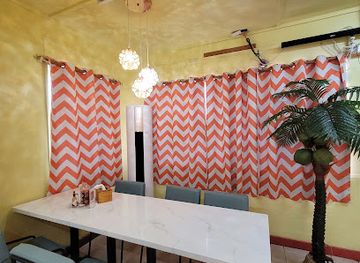
Tide Table Restaurant & Lounge
Experience delightful dining at Tide Table Restaurant & Lounge in Majuro, where local flavors meet stunning ocean views.
-
Restaurant
Toeak Bar and Grill
Discover delicious local cuisine and stunning views at Toeak Bar and Grill in Majuro Atoll - A true island dining experience.
-
Takeout Restaurant
Yummy
Experience delicious takeout at Yummy in Majuro Atoll – where local flavors meet global tastes.
-
Restaurant
Island Star
Discover culinary bliss at Island Star in Majuro Atoll - savor local flavors and global dishes in a tropical paradise.

Best bars in Utirik Atoll
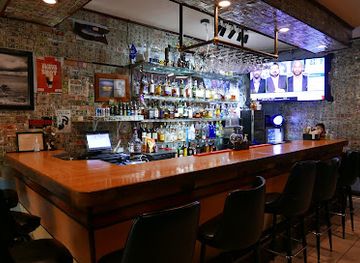
Utirik has no established nightclub district or commercial late-night entertainment scene. Evenings are centred on households, community gatherings, conversation, church and the natural quiet of a remote atoll rather than on bars or ticketed venues. Alcohol should not be assumed to be available, and visitors should follow local expectations about where and when drinking is acceptable. Bring no alcohol without first understanding transport rules and local sensitivities, and never let consumption compromise boat safety or respectful behaviour. After dark, a torch is useful because paths and shorelines may have limited lighting. The absence of nightlife is part of Utirik's character: evening life is primarily social and community-based, with the lagoon, weather and stars providing the setting rather than organised entertainment.
-
Hotel
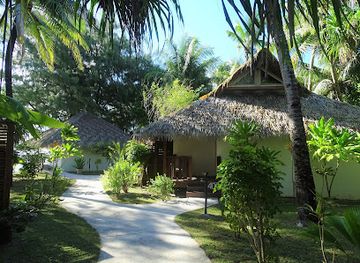
Marshall Islands Resort
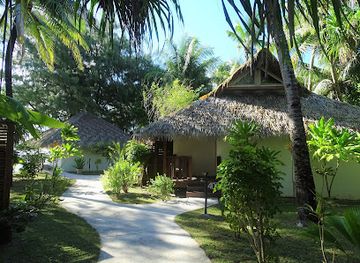
Experience the serene beauty of Marshall Islands Resort, a tropical haven on Majuro Atoll with modern comforts and vibrant marine adventures.
-
Restaurant
Tide Table Restaurant & Lounge
Discover the flavors of the Marshall Islands at Tide Table Restaurant & Lounge, where ocean views meet culinary excellence.
-
Hotel
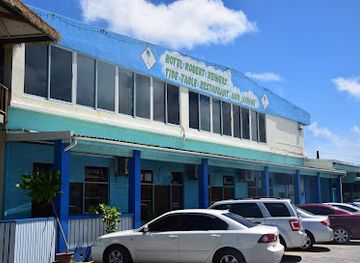
Hotel Robert Reimers
Discover the charm of Majuro at Hotel Robert Reimers, your comfortable sanctuary in the heart of the Marshall Islands.
-
International airport
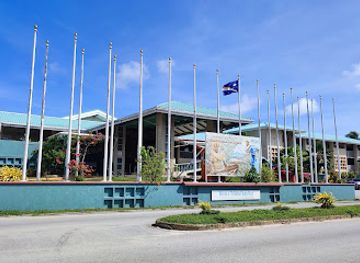
Amata Kabua International Airport
Experience the warm welcome of Amata Kabua International Airport, your gateway to the stunning beauty of the Marshall Islands.
Best nightclubs in Utirik Atoll
Utirik has no established nightclub district or commercial late-night entertainment scene. Evenings are centred on households, community gatherings, conversation, church and the natural quiet of a remote atoll rather than on bars or ticketed venues. Alcohol should not be assumed to be available, and visitors should follow local expectations about where and when drinking is acceptable. Bring no alcohol without first understanding transport rules and local sensitivities, and never let consumption compromise boat safety or respectful behaviour. After dark, a torch is useful because paths and shorelines may have limited lighting. The absence of nightlife is part of Utirik's character: evening life is primarily social and community-based, with the lagoon, weather and stars providing the setting rather than organised entertainment.
-
Night club
Marshall Islands Club
Discover the vibrant nightlife of Majuro Atoll at the Marshall Islands Club, where music, dance, and culture come alive.
Best shops in Utirik Atoll
Shopping on Utirik is extremely limited and should not be a central reason for travelling there. There are no dependable shopping centres, specialist craft quarters or broad retail streets, and imported supplies may be scarce between delivery journeys. Visitors may occasionally be able to buy basic provisions through local arrangements, but availability, payment methods and opening times cannot be assumed. Any locally made handicrafts, woven items, food products or small souvenirs should be purchased directly and respectfully from makers or households where offered, without pressuring people to sell culturally significant objects. Do not remove shells, coral, archaeological material or other natural items as souvenirs. Bring essential toiletries, medicines, snacks, batteries and other personal requirements from Majuro or another well-supplied point before travelling. A responsible purchase is one that supports a local maker while respecting the limited resources and community character of the atoll.
-
Hotel
Marshall Islands Resort
Experience the serene beauty and rich culture of the Marshall Islands at the tranquil Marshall Islands Resort on Majuro Atoll.
-
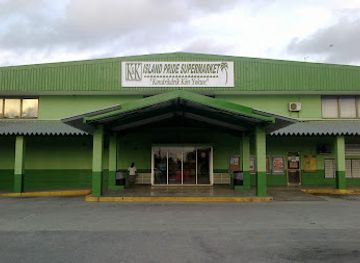
Supermarket
K&K Island Pride Supermarket
Explore the flavors of the Marshall Islands at K&K Island Pride Supermarket, your ultimate shopping destination in Majuro.
-
Hotel
Hotel Robert Reimers
Discover comfort and local charm at Hotel Robert Reimers, your serene retreat in Majuro, Marshall Islands, where adventure meets relaxation.
-
International airport
Amata Kabua International Airport
Discover the beauty of the Marshall Islands at Amata Kabua International Airport, your gateway to a tropical paradise.

Get your free copy of our complete guide to Utirik Atoll, delivered straight to you.
Everything on this page, from attractions and restaurants to essentials and local phrases, in one PDF you can read offline, print or share.
Already have an account? Sign in
Your Utirik Atoll guide is ready.
We'll send it to · Not you? Sign out

Getting your guide ready…
We are putting together a fresh copy of the Utirik Atoll guide. This can take up to a minute.
This can take a few moments. If your browser asks, choose Allow so the download can start. You'll find the guide in your Downloads folder.
Nothing happened? Download it again
Sorry, the guide is taking longer than usual. Please try again in a minute, or get it by email instead.
Utirik Atoll essentials
Currency and Payment
Safety
Emergency Situations
Do's and Don'ts
Local Tips
From Eve
Local phrases worth knowing
You don't need to get them perfect. A few words go a long way, and locals appreciate the effort.
Basics
| English | Local | Say it |
|---|---|---|
| Hello | Iakwe | [Yah-kweh] |
| Goodbye | Aolep | [Ah-oh-lep] |
| Yes | E | [Eh] |
| No | Aolep | [Ah-oh-lep] |
| Please/You're welcome | Ejjab | [Ej-jab] |
| Thank you | Komol tata | [Koh-mol tah-tah] |
| Excuse me/Sorry | Maal | [Mah-al] |
| How are you? | Bwe in ke? | [Bweh in keh?] |
| Fine. And you? | Bwe in, bwe in ke? | [Bweh in, bwe in keh?] |
| Do you speak English? | Ij in karan English? | [Ee-j in kah-ran English?] |
| I don't understand | Ejjab in karan | [Ej-jab in kah-ran] |
Eating & Drinking
| English | Local | Say it |
|---|---|---|
| I'd like to see the menu, please | Ejjab in jela an menu | [Ej-jab in jeh-lah an men-oo] |
| I don't eat meat | Ejjab in wot meat | [Ej-jab in wot meet] |
| Cheers! | Iakwe! | [Yah-kweh!] |
| I would like to pay, please | Ejjab in jela an wot | [Ej-jab in jeh-lah an wot] |
Emergencies
| English | Local | Say it |
|---|---|---|
| Help! | Jeb! | [Jeb!] |
| Go away! | Aolep ia! | [Ah-oh-lep ee-ah!] |
| Call the Police! | Aolep karan Police! | [Ah-oh-lep kah-ran Police!] |
| Call a doctor! | Aolep karan dokta! | [Ah-oh-lep kah-ran dok-tah!] |
| I'm lost | Ejjab in jela | [Ej-jab in jeh-lah] |
| I'm ill | Ejjab in wa | [Ej-jab in wah] |
Shopping
| English | Local | Say it |
|---|---|---|
| I'd like to buy... | Ejjab in jela an ... | [Ej-jab in jeh-lah an ...] |
| I'm just looking | Ejjab in jela | [Ej-jab in jeh-lah] |
| How much is it? | Bwe in ke? | [Bweh in keh?] |
| That's too expensive | Ejjab in jela an jepta | [Ej-jab in jeh-lah an jehp-tah] |
| Can you lower the price? | Bwe in ke an jela? | [Bweh in keh an jeh-lah?] |
Time & Numbers
| English | Local | Say it |
|---|---|---|
| What time is it? | Bwe in ke jab? | [Bweh in keh jahb?] |
| It's one o'clock | Ejjab in jab wot | [Ej-jab in jahb wot] |
| Half past (10) | Bwe in ke jab wot imwot | [Bweh in keh jahb wot im-wot] |
| Morning | Bok | [Bok] |
| Afternoon | Bwe in ke an | [Bweh in keh an] |
| Evening | Jeb | [Jeb] |
| Yesterday | Jeblok | [Jeb-lok] |
| Today | Tota | [Toh-tah] |
| Tomorrow | Bwe in ke jela | [Bweh in keh jeh-lah] |
| 1 | Wot | [Wot] |
| 2 | Jeb | [Jeb] |
| 3 | Jeblok | [Jeb-lok] |
| 4 | Jeb 2 | [Jeb 2] |
| 5 | Jeb 3 | [Jeb 3] |
| 6 | Jeb 4 | [Jeb 4] |
| 7 | Jeb 5 | [Jeb 5] |
| 8 | Jeb 6 | [Jeb 6] |
| 9 | Jeb 7 | [Jeb 7] |
| 10 | Jeb 8 | [Jeb 8] |
Transport & Directions
| English | Local | Say it |
|---|---|---|
| Where's a/the...? | Bwe in ke ...? | [Bweh in keh ...?] |
| What's the address? | Bwe in ke address? | [Bweh in keh address?] |
| Can you show me (on the map)? | Bwe in ke an map? | [Bweh in keh an map?] |
| When's the next (bus)? | Bwe in ke jab next bus? | [Bweh in keh jahb next bus?] |
| A ticket (to ....) | Ejjab in jela an ticket (to ...) | [Ej-jab in jeh-lah an ticket (to ...)] |
History of Utirik Atoll
Early Austronesian Settlement
The Marshall Islands were settled by seafaring Austronesian peoples over many centuries, who developed sophisticated knowledge of currents, winds, stars, reefs and ocean swells. Utirik's small coral islands could support only limited terrestrial agriculture, so community life depended heavily on the lagoon, reef and surrounding ocean. Marshallese navigational traditions and systems of kinship connected distant atolls across the Ratak and Ralik chains. Although written records are limited for the early period, the landscape of Utirik reflects this long relationship between people, canoe travel, marine resources and fragile atoll ecology.
European Contact and Colonial Rule
European navigators reached the Marshall Islands during the early modern period, but sustained outside influence developed later through traders, missionaries and colonial administrations. Germany incorporated the islands into its colonial empire in the late nineteenth century, and Japan took control after the First World War under a League of Nations mandate. These changes introduced new political structures, commercial networks and religious institutions while leaving local communities to negotiate outside authority through established chiefly and family relationships.
Japanese Administration and the Second World War
Under Japanese administration, the Marshall Islands became part of a wider Pacific strategic network. The Second World War brought military facilities, air operations and disruption to many atolls, although Utirik remained remote compared with major wartime bases. The conflict ended Japanese rule and placed the islands under United States administration through the United Nations Trust Territory of the Pacific Islands. Wartime and post-war changes increased the islands' strategic importance to outside powers.
Nuclear Testing in the Marshall Islands
From 1946 to 1958, the United States conducted nuclear weapons tests in the Marshall Islands, chiefly at Bikini and Enewetak Atolls. The 1 March 1954 Castle Bravo test produced extensive radioactive fallout, which reached inhabited atolls including Utirik. Residents were evacuated after exposure and later returned, while the consequences generated long-term medical, environmental and political concerns. Utirik's experience forms part of the broader Marshallese history of displacement, contested assurances, health monitoring and demands for recognition and responsibility.
Evacuation, Return and Community Continuity
The people of Utirik were removed from the atoll after the 1954 fallout event and subsequently returned to their home islands. Resettlement did not erase the effects of evacuation, disrupted food practices, health fears or dependence on outside assistance. Families continued to maintain community life in a setting where land, freshwater and food resources are naturally limited. The history of return is therefore both a story of continuity and a reminder that the physical home of an atoll community cannot easily be replaced by an administrative relocation.
The Modern Republic of the Marshall Islands
The Marshall Islands became self-governing in free association with the United States through the Compact of Free Association, which took effect in 1986. Responsibility for local government and community affairs rests within the Republic's national and municipal systems, while the country's relationship with the United States continues to influence migration, funding, defence and public services. Utirik today remains part of this modern republic, balancing local customs and island obligations with the practical difficulties of maintaining services across a widely dispersed ocean territory.
Climate Pressure and Outlying Atoll Life
In recent decades, sea-level rise, coastal erosion, saltwater intrusion, storms and changing marine conditions have intensified the challenges faced by low-lying atolls. Utirik's history is consequently connected to the wider climate-risk experience of the Marshall Islands. Maintaining safe water, reliable food supplies, transport links and habitable shorelines requires both local adaptation and national and international support. These pressures are not merely future concerns; they affect everyday decisions about housing, infrastructure, mobility and the protection of customary island life.
Utirik Atoll in Photos
Browse through our photo collection highlighting the charm and character of the destination.
Neighbouring regions of Utirik Atoll
The closest regions to Utirik Atoll, if you have time for more than one.
-

-

-

-

-


Swipe for more regions
Explore more

Explore more of Marshall Islands
Discover the untouched beauty and rich cultural heritage of the Marshall Islands, a Pacific paradise offering pristine beaches, vibrant marine life, and historical treasures.
Explore Marshall Islands