

Free Wotje Atoll Travel Guide & Mobile App
Explore Wotje Atoll with free travel guides. Discover regional history, expert tips, proposed trips, and audio guides on web or mobile app.


Wotje Atoll in the Marshall Islands offers remote lagoon scenery, reef-based activities, community life and significant Second World War remains.
Read more about Wotje Atoll
When is the best time to visit Wotje Atoll?
Best: March–May · 30°C| Month | High (°C) | Rainfall (mm) |
|---|---|---|
| January | 30 | 160 |
| February | 30 | 140 |
| March (best) | 30 | 130 |
| April (best) | 30 | 120 |
| May (best) | 30 | 130 |
| June | 31 | 150 |
| July | 31 | 180 |
| August | 31 | 190 |
| September | 31 | 200 |
| October | 31 | 190 |
| November | 30 | 180 |
| December | 30 | 170 |
Getting to and around Wotje Atoll
How to get there
Transportation
Explore Wotje Atoll on the map
Plan your trip on one map. See where the top cities, national parks and sights are, and book hotels and experiences in a few clicks.
Best hotels in Wotje Atoll
Best restaurants in Wotje Atoll
Dining on Wotje is based on local arrangements rather than a restaurant district. Visitors may eat with accommodation providers or community contacts, with meals shaped by what has arrived by ship or aircraft and what households, fishers and growers can provide. Freshly caught fish, coconut, breadfruit, pandanus fruit, rice and imported tinned or packaged foods may all appear in everyday meals. Copra remains an important part of the atoll's economic history, although it is a traded product rather than a restaurant dish. There is no dependable expectation of cafés, supermarkets or formal evening dining, so confirm meal arrangements before arrival and carry modest emergency provisions. Food should be accepted and discussed with cultural sensitivity, and guests should not assume that particular ingredients will always be available. Drinking water deserves advance planning because freshwater resources and deliveries can be constrained. The dining experience is consequently communal and practical, reflecting the logistics of a remote Marshallese atoll rather than a developed tourism economy.
-
Restaurant
Tide Table Restaurant & Lounge
Experience authentic Pacific cuisine at Tide Table Restaurant & Lounge in Majuro Atoll – where every meal is paired with breathtaking ocean views.
-
Restaurant
Toeak Bar and Grill
Discover authentic Marshallese flavors at Toeak Bar and Grill in Majuro Atoll – a must-visit dining destination for every traveler.
-
Bank
Bank Of Marshall Islands - Wotje Branch
Experience seamless banking at the Bank of Marshall Islands - Wotje Branch while exploring the breathtaking beauty of Wotje Atoll.
-
Takeout Restaurant
Jittak Take-out
Discover authentic Marshallese cuisine at Jittak Take-out - your go-to spot for delicious takeout options in Majuro.



Best bars in Wotje Atoll
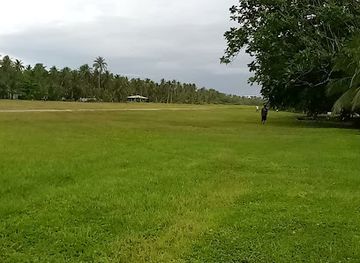
Wotje does not have a conventional bar or nightclub scene. Evening social life is more likely to centre on households, community gatherings, church-related activity and informal conversation than on dedicated entertainment venues. Visitors should not assume that alcohol is available, welcome in every setting or appropriate near churches and family occasions; local expectations and host guidance should take precedence. After dark, the limited artificial light can make the lagoon horizon and Pacific sky especially prominent, although walking at night requires care because paths may be uneven and services are scarce. A quiet evening may involve sharing food, hearing local stories or discussing fishing and atoll travel rather than going out. Any locally available refreshments should be arranged through trusted hosts, and visitors should avoid creating noise or disturbance in residential areas.
-
Hotel
Marshall Islands Resort
Discover the tranquility and beauty of Marshall Islands Resort on Majuro Atoll, where relaxation meets adventure in a tropical paradise.
-
Restaurant
Tide Table Restaurant & Lounge
Experience the flavors of the Marshall Islands at Tide Table Restaurant & Lounge, where fresh seafood meets breathtaking ocean views in Majuro.
-
Hotel
Hotel Robert Reimers
Experience the serenity of Majuro Atoll at Hotel Robert Reimers, your gateway to the beauty of the Marshall Islands.
-
International airport
Amata Kabua International Airport
Experience the warmth of the Marshall Islands at Amata Kabua International Airport, your gateway to a tropical paradise with stunning landscapes and rich culture.


Best nightclubs in Wotje Atoll
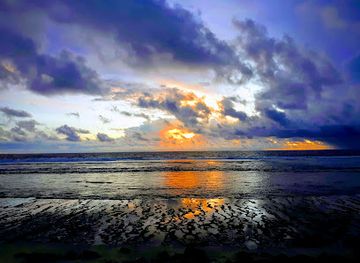
Wotje does not have a conventional bar or nightclub scene. Evening social life is more likely to centre on households, community gatherings, church-related activity and informal conversation than on dedicated entertainment venues. Visitors should not assume that alcohol is available, welcome in every setting or appropriate near churches and family occasions; local expectations and host guidance should take precedence. After dark, the limited artificial light can make the lagoon horizon and Pacific sky especially prominent, although walking at night requires care because paths may be uneven and services are scarce. A quiet evening may involve sharing food, hearing local stories or discussing fishing and atoll travel rather than going out. Any locally available refreshments should be arranged through trusted hosts, and visitors should avoid creating noise or disturbance in residential areas.
-
Bar
Oceanview Club aka Snake Pit
Discover the Oceanview Club, a charming bar on Kwajalein Atoll, perfect for enjoying affordable drinks with breathtaking ocean views.
-
Night club
Marshall Islands Club
Discover the lively nightlife of the Marshall Islands at the Marshall Islands Club, a must-visit for travelers seeking fun and entertainment.
Best shops in Wotje Atoll
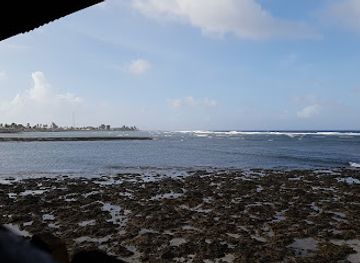
Shopping on Wotje is limited and practical rather than oriented towards retail tourism. Small local stores may carry a changing selection of staple foods, drinks, toiletries and household goods, but stock depends on irregular outer-island supply lines and should not be relied upon for specialist equipment or medicines. Visitors may encounter locally made handicrafts, woven items or small souvenirs through personal contacts rather than in a permanent craft market; ask before photographing or handling work and agree prices clearly. Marshallese handicrafts, including weaving traditions, can provide more meaningful purchases than imported trinkets, while copra and locally caught or grown foods are part of the atoll economy rather than standard souvenirs. Carry necessary supplies from Majuro, particularly batteries, personal care items and medicines, and avoid adding unnecessary packaging to a community with limited waste capacity. There is no large shopping centre or established luxury-shopping area on the atoll.
-
Hotel
Marshall Islands Resort
Discover the tranquility and beauty of the Marshall Islands Resort, the perfect getaway for relaxation and adventure in Majuro Atoll.
-
Supermarket
K&K Island Pride Supermarket
Experience the local culture at K&K Island Pride Supermarket, your go-to destination for fresh produce and unique island flavors in Majuro.
-
Hotel
Hotel Robert Reimers
Discover the charm of Majuro Atoll at Hotel Robert Reimers, where comfort meets local culture amidst stunning Pacific scenery.
-
International airport
Amata Kabua International Airport
Explore the beauty of the Marshall Islands starting at Amata Kabua International Airport, your gateway to tropical adventures and local culture.



Get your free copy of our complete guide to Wotje Atoll, delivered straight to you.
Everything on this page, from attractions and restaurants to essentials and local phrases, in one PDF you can read offline, print or share.
Already have an account? Sign in
Your Wotje Atoll guide is ready.
We'll send it to · Not you? Sign out

Getting your guide ready…
We are putting together a fresh copy of the Wotje Atoll guide. This can take up to a minute.
This can take a few moments. If your browser asks, choose Allow so the download can start. You'll find the guide in your Downloads folder.
Nothing happened? Download it again
Sorry, the guide is taking longer than usual. Please try again in a minute, or get it by email instead.
Wotje Atoll essentials
Currency and Payment
Safety
Emergency Situations
Do's and Don'ts
Local Tips
From Eve
Local phrases worth knowing
You don't need to get them perfect. A few words go a long way, and locals appreciate the effort.
Basics
| English | Local | Say it |
|---|---|---|
| Hello | Iakwe | [Yah-kweh] |
| Goodbye | Aolep | [Ah-oh-lep] |
| Yes | Ejjab | [Eh-jab] |
| No | Jeb | [Jeb] |
| Please/You're welcome | Komol tata | [Ko-mol tah-tah] |
| Thank you | Kommol | [Ko-mol] |
| Excuse me/Sorry | Iakwe eok | [Yah-kweh eh-ok] |
| How are you? | Bwij jor? | [Bweej yor?] |
| Fine. And you? | Ejjab. Eok? | [Eh-jab. Eh-ok?] |
| Do you speak English? | Eok eban English? | [Eh-ok eh-ban English?] |
| I don't understand | Inej imata | [Ee-nej ee-mah-tah] |
Eating & Drinking
| English | Local | Say it |
|---|---|---|
| I'd like to see the menu, please | Iakwe ejju imata menu, komol tata | [Yah-kweh eh-joo ee-mah-tah meh-nyoo, ko-mol tah-tah] |
| I don't eat meat | Inej ekwe wot | [Ee-nej ek-weh wot] |
| Cheers! | M̧ajeļ! | [Mah-jehl!] |
| I would like to pay, please | Iakwe ejju imata ro, komol tata | [Yah-kweh eh-joo ee-mah-tah roh, ko-mol tah-tah] |
Emergencies
| English | Local | Say it |
|---|---|---|
| Help! | Ejjab! | [Eh-jab!] |
| Go away! | Iakwe an jor! | [Yah-kweh ahn yor!] |
| Call the Police! | Ejjab kowe Police! | [Eh-jab koh-weh Police!] |
| Call a doctor! | Ejjab kowe dokta! | [Eh-jab koh-weh dok-tah!] |
| I'm lost | Iakwe ejja elon | [Yah-kweh eh-jah eh-lon] |
| I'm ill | Iakwe ejja ruwak | [Yah-kweh eh-jah roo-wahk] |
Shopping
| English | Local | Say it |
|---|---|---|
| I'd like to buy... | Iakwe ejju ian... | [Yah-kweh eh-joo ee-an...] |
| I'm just looking | Iakwe ejju an ian | [Yah-kweh eh-joo ahn ee-an] |
| How much is it? | Ejjab jor aolep? | [Eh-jab yor ah-oh-lep?] |
| That's too expensive | Ejjab aolep ekwe | [Eh-jab ah-oh-lep ek-weh] |
| Can you lower the price? | Eok ejjab ekwe aolep? | [Eh-ok eh-jab ek-weh ah-oh-lep?] |
Time & Numbers
| English | Local | Say it |
|---|---|---|
| What time is it? | Ejjab jor aolep? | [Eh-jab yor ah-oh-lep?] |
| It's one o'clock | Ejjab juon o'klo | [Eh-jab joo-on oh-kloh] |
| Half past (10) | Mitom juon (10) | [Mee-tom joo-on (10)] |
| Morning | Bwij | [Bweej] |
| Afternoon | Pij | [Peej] |
| Evening | Jab | [Jab] |
| Yesterday | Rin | [Reen] |
| Today | Jor | [Yor] |
| Tomorrow | Bwij jor | [Bweej yor] |
| 1 | Juon | [Joo-on] |
| 2 | Ruo | [Roo-oh] |
| 3 | Jilu | [Jee-loo] |
| 4 | Jeblu | [Jeb-loo] |
| 5 | Jit | [Jeet] |
| 6 | Jit ruwak | [Jeet roo-wahk] |
| 7 | Jit jilu | [Jeet jee-loo] |
| 8 | Jit jeblu | [Jeet jeb-loo] |
| 9 | Jit ruo | [Jeet roo-oh] |
| 10 | Jit juon | [Jeet joo-on] |
Transport & Directions
| English | Local | Say it |
|---|---|---|
| Where's a/the...? | Iakwe jor a ...? | [Yah-kweh yor ah ...?] |
| What's the address? | Ejjab jor a address? | [Eh-jab yor ah address?] |
| Can you show me (on the map)? | Eok ejjab an ian (kwo ian)? | [Eh-ok eh-jab ahn ee-an (kwo ee-an)?] |
| When's the next (bus)? | Ejjab jor a next (bus)? | [Eh-jab yor ah next (bus)?] |
| A ticket (to ....) | Ian ticket (to ...) | [Ee-an ticket (to ...)] |
History of Wotje Atoll
Marshallese Settlement and Atoll Society
Wotje was settled as part of the wider Marshall Islands, whose seafaring communities developed detailed knowledge of currents, winds, stars, reefs and island routes. Marshallese society was organised through extended family networks and chiefly land rights, with access to coconut groves, fishing grounds and other resources governed by customary relationships. The atoll environment encouraged mobility between islets and neighbouring atolls, while breadfruit, pandanus, taro grown in pits where possible, coconuts and marine foods supported life on land with very limited freshwater.
Spanish Claims and German Administration
European powers claimed the Marshall Islands from the sixteenth century, although outside control remained limited for long periods. Germany established an effective colonial administration in the late nineteenth century and encouraged commercial copra production, linking atolls such as Wotje to international trade. Copra, the dried meat of the coconut, became a major export and remained economically important well beyond the colonial period. German rule also brought new administrative structures and missionary activity, while local landholding and community authority continued to shape everyday life.
Japanese Rule and Missionary Change
Japan took control of the Marshall Islands during the First World War and later administered them under a League of Nations mandate. Japanese officials expanded communications, commercial activity and military planning, while Christian institutions and schools continued to influence community life. Wotje became particularly important because of its position in the Ratak Chain and its relatively substantial land area and lagoon. The Japanese presence altered the atoll's economy and administration, but it did not erase Marshallese social institutions or the importance of customary land relationships.
Wotje in the Second World War
During the Second World War, Japan developed Wotje as a military base, constructing an airfield and other facilities intended to support operations across the central Pacific. United States forces attacked Japanese positions in the Marshall Islands, and Wotje was subjected to bombardment and isolation as the wider American advance moved through the region. The wartime landscape remains visible in portions of the atoll through concrete structures, defensive works and airfield traces. Visitors should treat these remnants as hazardous historic sites rather than informal ruins.
United States Administration and the Trust Territory
After the war, the Marshall Islands became part of the United Nations Trust Territory of the Pacific Islands, administered by the United States. The period brought new government institutions, schooling, public-health programmes and stronger links between outer atolls and Majuro, while also drawing residents into changing wage and education patterns. Wotje's wartime infrastructure and remote position continued to influence its practical importance, but the atoll remained primarily a community of family land, fishing, subsistence activity and inter-island connections.
Self-Government and Contemporary Wotje
The Republic of the Marshall Islands became self-governing under a Compact of Free Association with the United States in 1986, with the compact entering into force in 1986 and later being renewed. Wotje is now one of the country's outer atolls, linked to national government through elected representation and public services that must operate across enormous ocean distances. Contemporary life combines Marshallese customary practice with modern communications, education, imported goods and migration. Climate change, coastal erosion, drought, saltwater intrusion and transport costs are especially consequential for a low coral atoll.
Wotje Atoll in Photos
Browse through our photo collection highlighting the charm and character of the destination.
Neighbouring regions of Wotje Atoll
The closest regions to Wotje Atoll, if you have time for more than one.
-

-

-

-

-


Swipe for more regions
Explore more

Explore more of Marshall Islands
Discover the untouched beauty and rich cultural heritage of the Marshall Islands, a Pacific paradise offering pristine beaches, vibrant marine life, and historical treasures.
Explore Marshall Islands