

Rockville, Maryland Travel Guide
Rockville, Maryland: Discover a vibrant city where history meets modernity, offering unique cultural experiences, outdoor adventures, and a gateway to the Washington, D.C. area.
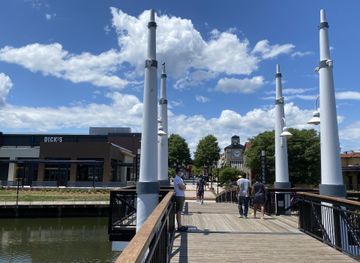
Rockville, located in the heart of Maryland, offers a perfect blend of historic charm and modern living. As the county seat of Montgomery County, Rockville is rich in history and culture, providing visitors with an array of experiences that range from exploring historical landmarks to enjoying contemporary amenities. Take a stroll through the historic Rockville Town Square, where you can enjoy boutique shopping, unique dining options, and seasonal events that bring the community together. The Town Square is also home to the Rockville Memorial Library and the VisArts Center, where art enthusiasts can engage with local art exhibits and participate in creative workshops. For those who appreciate the great outdoors, Rockville boasts numerous parks and recreational areas. The Croydon Creek Nature Center offers trails and educational programs perfect for nature lovers. Meanwhile, the Rockville Civic Center Park, with its F. Scott Fitzgerald Theatre and Glenview Mansion, is a great spot for cultural events and leisurely walks. Rockville's strategic location makes it an excellent base for exploring the greater Washington, D.C. area. With easy access to public transportation, visitors can conveniently travel to nearby attractions including the nation’s capital, ensuring a diverse and enriching travel experience.

Know before you go
Hi, I'm Eve. Here are a few practical things to know before exploring Rockville.
- Visit Rockville Town Square for a variety of dining and shopping options.
- Make use of the city's extensive public transportation to easily explore nearby Washington, D.C.
- Check the local events calendar for festivals, farmer’s markets, and cultural events.
- Explore the Croydon Creek Nature Center for family-friendly outdoor activities and educational programs.
- Don’t miss a visit to the F. Scott Fitzgerald Theatre for live performances and cultural events.
Explore Rockville: Things to Do, Places to Eat, Hotels & More
Handpicked recommendations for top attractions, local dining, accommodations, and more

Best attractions in Rockville
Top-rated picks
Best Attractions

National Mall
Explore the National Mall, a historic park in Washington, D.C., filled with monuments, memorials, and museums that embody American history and culture.

Smithsonian National Museum of Natural History
Explore the Smithsonian National Museum of Natural History: A treasure trove of natural wonders, ancient artifacts, and family-friendly fun in Washington, D.C.

Smithsonian National Air and Space Museum
Discover the history of aviation and space exploration at the Smithsonian National Air and Space Museum, an iconic attraction in Washington, D.C.

Smithsonian National Zoological Park
Experience the breathtaking diversity of wildlife at the Smithsonian National Zoological Park in the heart of Washington, D.C.

Best landmarks in Rockville
Top-rated picks
Best Landmarks

Washington Monument
Experience the grandeur of the Washington Monument, a historic symbol of American freedom and perseverance, offering stunning views and rich history.

The Tomb of the Unknown Soldier

President John F. Kennedy Memorial
Explore the President John F. Kennedy Memorial, a serene tribute to a legendary leader, set in the tranquil landscape of Fort Myer, Virginia.

Rockville Town Square
Explore Rockville Town Square for a dynamic blend of shopping, dining, and entertainment in the heart of Maryland's vibrant community.

Best restaurants in Rockville
Top-rated picks
Best Restaurants

Clyde's Tower Oaks Lodge
Discover Clyde's Tower Oaks Lodge in Rockville for an unforgettable taste of classic American cuisine amidst rustic charm.

Silver Diner
Discover the vibrant flavors of America at Silver Diner in Rockville - where breakfast meets community spirit.

Iron Age
Experience authentic Korean BBQ at Iron Age in Rockville - a vibrant destination for food lovers craving an interactive dining adventure.

matchbox
Discover Matchbox in Rockville: A vibrant American restaurant offering gourmet burgers, artisanal pizzas, and delightful brunch options in a lively atmosphere.

Best bars in Rockville
Top-rated picks
Best Bars

TGI Fridays
Discover the lively atmosphere and delicious American cuisine at TGI Fridays in Rockville, MD, the perfect spot for food and sports lovers.

Cooper's Hawk Winery & Restaurant- Rockville
Experience the perfect blend of American cuisine and exquisite wines at Cooper's Hawk Winery & Restaurant in Rockville, Maryland.

Mosaic Cuisine
Experience the best of French cuisine at Mosaic Cuisine, where exquisite flavors blend with a charming atmosphere in Rockville.

Botanero Restaurant
Savor the vibrant flavors of small plates and a lively bar experience at Botanero Restaurant in Rockville, a culinary gem in Maryland.

Best nightclubs in Rockville
Top-rated picks
Best Nightclubs

Cooper's Hawk Winery & Restaurant- Rockville
Savor exquisite American cuisine and exceptional wines at Cooper's Hawk Winery & Restaurant in Rockville, a must-visit for foodies and wine lovers alike.

Finnegan’s Wake Irish Pub
Discover the heart of Ireland at Finnegan’s Wake Irish Pub in Rockville, MD, where authentic cuisine and lively music create a warm, welcoming atmosphere.

iRock Karaoke Lounge
Experience the joy of singing and camaraderie at iRock Karaoke Lounge, a vibrant karaoke bar and hookah lounge in Gaithersburg, MD.

Vibes Hookah Lounge
Discover the ultimate relaxation at Vibes Hookah Lounge in Rockville, where aromatic blends and a vibrant atmosphere await.

Best shops in Rockville
Top-rated picks
Best Shops

Westfield Wheaton
Explore Westfield Wheaton: a shopping paradise with diverse stores, delicious dining, and entertainment options to delight every visitor.

Westfield Montgomery
Explore Westfield Montgomery in Bethesda for an unforgettable shopping and dining experience with diverse stores and entertainment options.

L'Enfant Plaza
Discover L'Enfant Plaza, a bustling shopping and dining destination in Washington, D.C. with diverse restaurants, shops, and vibrant atmosphere.

Leesburg Premium Outlets
Discover incredible bargains at Leesburg Premium Outlets, where top brands meet delightful savings in a charming Virginia setting.

Explore Rockville on the Map
A handpicked selection of must-see spots in Rockville, mapped for you.
Rockville Essentials
-
Rockville is conveniently located in Montgomery County, Maryland, and is accessible via multiple modes of transport. The nearest major airport is Washington Dulles International Airport (IAD), approximately 30 miles away, and Baltimore/Washington International Thurgood Marshall Airport (BWI), about 40 miles away. From these airports, you can take a taxi, rideshare service, or rent a car. Rockville is also well-served by Amtrak and MARC train services at the Rockville Station, and it's easily accessible by car via Interstate 270 and Route 355.
-
Rockville offers various transportation options, including the Metrorail Red Line, which connects to Washington, D.C., and other nearby areas. The Rockville Metro Station is centrally located and provides easy access to the city. Local bus services, such as Ride On and Metrobus, cover most parts of the city. For more flexibility, consider renting a car. Taxis and rideshare services like Uber and Lyft are also readily available.
-
The official currency is the United States Dollar (USD). Credit and debit cards are widely accepted in most hotels, restaurants, and shops. ATMs are plentiful, and you can also use mobile payment options like Apple Pay and Google Wallet. While major establishments accept cards, it is advisable to carry some cash for small purchases or in areas where card acceptance might be limited.
-
Rockville is generally a safe destination for tourists. However, as with any city, it is wise to take standard precautions. Avoid walking alone at night in less populated areas and always be aware of your surroundings. Keep your belongings secure, especially in crowded places. While there are no specific high-crime areas targeting tourists, staying vigilant is always recommended.
-
In case of emergency, dial 911 for immediate assistance. Rockville has several medical facilities, including Shady Grove Medical Center. It is advisable to have travel insurance that covers medical emergencies. For minor health issues, numerous pharmacies are available throughout the city where over-the-counter medications can be purchased. The Rockville Police Department is also available for non-emergency assistance.
-
Fashion: Dress comfortably and appropriately for the weather. Smart casual attire is suitable for most occasions. Religion: Respect local customs and places of worship by dressing modestly and maintaining silence when required. Public Transport: Be courteous and offer your seat to elderly passengers or those with disabilities. Avoid eating and drinking on public transport. Greetings: A friendly handshake or a simple 'hello' is the norm. Eating & Drinking: Try local cuisines and be open to different types of food. Tip your servers as tipping is customary in the United States.
-
To experience Rockville like a local, explore the Rockville Town Square, which hosts numerous events and has a variety of dining and shopping options. Visit the local farmers' markets to buy fresh produce and artisanal goods. Engage with locals who are often friendly and willing to share insights about the city. Don't miss visiting the historic Glenview Mansion and taking a stroll in the beautiful Rock Creek Regional Park.
When is the best time to visit Rockville?
Useful Local Phrases for Rockville
You don't need to speak the language perfectly. Even learning a few simple words can make conversations warmer—and locals usually appreciate the effort.
— Eve

Here are the phrases I use most often in Rockville. Try a few—you'll be surprised how far they go! 😊
❤️
-
- HelloHey
[hey] - GoodbyeSee ya
[see ya] - YesYup
[yup] - NoNah
[nah] - Please/You're welcomeSure thing
[sure thing] - Thank youThanks
[thanks] - Excuse me/SorryMy bad
[my bad] - How are you?How you doin'?
[how you doin'] - Fine. And you?I'm good. You?
[I'm good. You?] - Do you speak English?You speak English?
[you speak English?] - I don't understandI don't get it
[I don't get it]
- HelloHey
-
- I'd like to see the menu, pleaseCan I check out the menu?
[can I check out the menu?] - I don't eat meatI'm vegetarian
[I'm vegetarian] - Cheers!Cheers!
[cheers!] - I would like to pay, pleaseCan I pay now?
[can I pay now?]
- I'd like to see the menu, pleaseCan I check out the menu?
-
- Help!Help!
[help!] - Go away!Go away!
[go away!] - Call the Police!Call the cops!
[call the cops!] - Call a doctor!Call a doc!
[call a doc!] - I'm lostI'm lost
[I'm lost] - I'm illI'm sick
[I'm sick]
- Help!Help!
-
- I'd like to buy...I wanna get...
[I wanna get...] - I'm just lookingJust looking around
[just looking around] - How much is it?How much does it cost?
[how much does it cost?] - That's too expensiveThat's too pricey
[that's too pricey] - Can you lower the price?Can you give me a deal?
[can you give me a deal?]
- I'd like to buy...I wanna get...
-
- What time is it?What time is it?
[what time is it?] - It's one o'clockIt's one
[it's one] - Half past (10)It's ten thirty
[it's ten thirty] - MorningMorning
[morning] - AfternoonAfternoon
[afternoon] - EveningEvening
[evening] - YesterdayYesterday
[yesterday] - TodayToday
[today] - TomorrowTomorrow
[tomorrow] - 1One
[one] - 2Two
[two] - 3Three
[three] - 4Four
[four] - 5Five
[five] - 6Six
[six] - 7Seven
[seven] - 8Eight
[eight] - 9Nine
[nine] - 10Ten
[ten]
- What time is it?What time is it?
-
- Where's a/the...?Where's the...?
[where's the...?] - What's the address?What's the address?
[what's the address?] - Can you show me (on the map)?Can you show me (on the map)?
[can you show me (on the map)?] - When's the next (bus)?When's the next (bus)?
[when's the next (bus)?] - A ticket (to ....)A ticket (to ....)
[a ticket (to ....)]
- Where's a/the...?Where's the...?
History of Rockville
-
Rockville, located in Montgomery County, Maryland, has a rich history that dates back to the early 18th century. Initially settled by European colonists around 1717, the area was known as Hungerford’s Tavern, named after the prominent landowner and tavern keeper, John Hungerford. The settlement grew as more families moved to the area, and by 1801, it was officially named Rockville, likely due to the nearby Rock Creek.
-
During the Civil War, Rockville found itself in a precarious position, caught between Union and Confederate forces. The town served as a strategic location for both sides due to its proximity to Washington, D.C. Notably, Confederate General J.E.B. Stuart passed through Rockville during the Gettysburg Campaign in 1863, capturing supplies and disrupting Union communications. The war left an indelible mark on the town, affecting its economy and population.
-
The arrival of the Metropolitan Branch of the Baltimore and Ohio Railroad in 1873 was a turning point for Rockville. The new rail line connected the town to major cities like Washington, D.C., and Baltimore, fostering economic growth and making Rockville a desirable place to live. The town transitioned from a rural community to a more suburban environment, with new businesses and residential areas emerging.
-
The 20th century brought significant changes to Rockville, transforming it into a modern suburban city. The post-World War II era saw a population boom, driven by the expansion of government agencies and private sector jobs in nearby Washington, D.C. The construction of Interstate 270 in the 1950s further fueled growth, making Rockville accessible to commuters. During this period, Rockville developed a robust infrastructure, including schools, parks, and shopping centers.
-
Rockville played a role in the Civil Rights Movement of the 1960s. Local activists and residents participated in various demonstrations and efforts to desegregate schools and public facilities. In 1962, the Rockville City Council passed an ordinance to desegregate all public places, marking a significant step toward equality and justice in the community.
-
In recent decades, Rockville has become a hub for cultural and artistic activities. The city is home to the F. Scott Fitzgerald Theatre, named after the famous author who is buried in Rockville. The theatre hosts a variety of performances, including plays, concerts, and dance productions. The annual Rockville Arts Festival attracts artists and visitors from around the region, showcasing the city's commitment to fostering a vibrant cultural scene.
-
Today, Rockville is a thriving city with a diverse economy. It is part of the I-270 Technology Corridor, which hosts numerous biotechnology and software companies. The presence of institutions like the National Institute of Standards and Technology (NIST) and various private firms has positioned Rockville as a center for innovation and research. The city continues to grow, balancing its rich historical heritage with modern advancements.
Cities near Rockville
The closest cities to Rockville, if you have time for more than one stop.

Your all‑in‑one travel companion app
Explore expert travel guides, compare and book tours, experiences, hotels, and more—all from the palm of your hand. Download now for seamless trip planning wherever your wanderlust takes you.


Rockville in Photos
Browse through our photo collection highlighting the charm and character of the destination.


Rockville: The Heart of Maryland's Heritage and Modern Charm
Rockville, located in the heart of Maryland, offers a perfect blend of historic charm and modern living. As the county seat of Montgomery County, Rockville is rich in history and culture, providing visitors with an array of experiences that range from exploring historical landmarks to enjoying contemporary amenities. Take a stroll through the historic Rockville Town Square, where you can enjoy boutique shopping, unique dining options, and seasonal events that bring the community together. The Town Square is also home to the Rockville Memorial Library and the VisArts Center, where art enthusiasts can engage with local art exhibits and participate in creative workshops. For those who appreciate the great outdoors, Rockville boasts numerous parks and recreational areas. The Croydon Creek Nature Center offers trails and educational programs perfect for nature lovers. Meanwhile, the Rockville Civic Center Park, with its F. Scott Fitzgerald Theatre and Glenview Mansion, is a great spot for cultural events and leisurely walks. Rockville's strategic location makes it an excellent base for exploring the greater Washington, D.C. area. With easy access to public transportation, visitors can conveniently travel to nearby attractions including the nation’s capital, ensuring a diverse and enriching travel experience.
Explore More of Eastern Shore

Looking beyond Rockville? Discover Eastern Shore for broader travel guides, local hot-spots, and regional highlights.
Explore Eastern ShoreExplore More of Maryland

Looking beyond Rockville? Discover Maryland for broader travel guides, local hot-spots, and regional highlights.
Explore Maryland