

Swallow Falls State Park Travel Guide - Free Web & App
Your ultimate guide to Swallow Falls State Park. Discover top landmarks, proposed trips, and local tips. Free on the web or via the Evendo companion app.


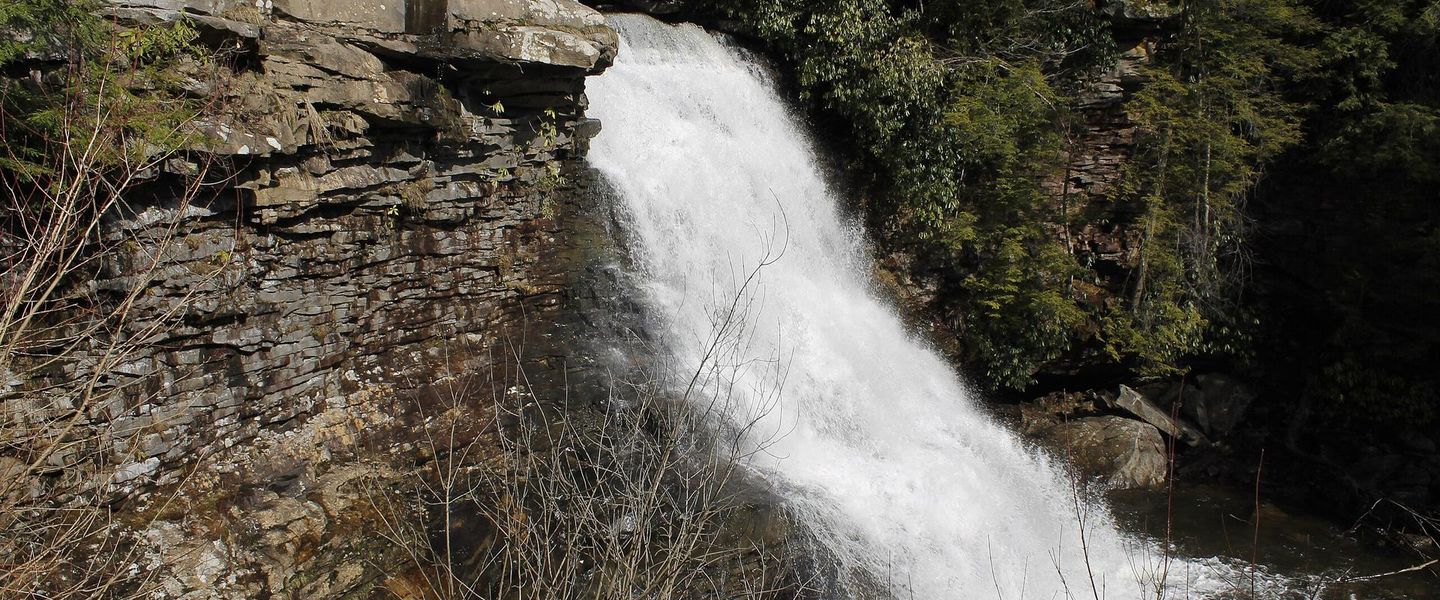


Swallow Falls State Park in Maryland features Muddy Creek Falls, forest trails, river scenery and outdoor escapes near Deep Creek Lake and Oakland.
River Gorge and Waterfall Country
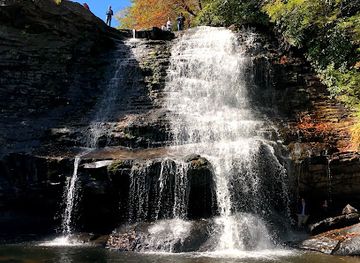
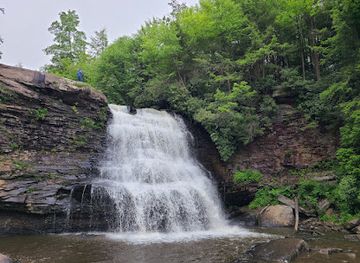
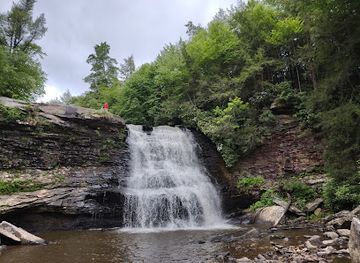
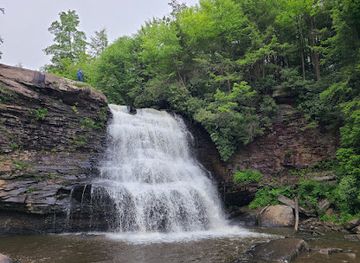
Swallow Falls State Park occupies a forested landscape in Garrett County, western Maryland, close to the Pennsylvania and West Virginia borders and a short drive from Oakland and Deep Creek Lake. Its defining feature is Muddy Creek Falls, a 53-foot waterfall where the stream drops over a rocky ledge before continuing through a narrow, boulder-strewn gorge. The falls are often described as Maryland’s highest free-falling waterfall, although the park’s appeal extends well beyond the main cascade. Trails follow Muddy Creek and the nearby Youghiogheny River through hemlock and hardwood forest, with smaller rapids, rock shelves and shaded viewpoints along the way.Read more about Swallow Falls State Park
Forest, Water and Recreation
Gateway to Garrett County
When is the best time to visit Swallow Falls State Park?
Best: June–August · 23–26°C| Month | High (°C) | Rainfall (mm) |
|---|---|---|
| January | 2 | 102 |
| February | 3 | 89 |
| March | 8 | 114 |
| April | 13 | 114 |
| May | 19 | 127 |
| June (best) | 23 | 127 |
| July (best) | 26 | 127 |
| August (best) | 25 | 127 |
| September | 21 | 114 |
| October | 16 | 114 |
| November | 9 | 114 |
| December | 3 | 102 |
Getting to and around Swallow Falls State Park
How to get there
Transportation
Best attractions in Swallow Falls State Park
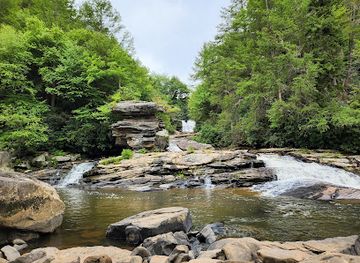
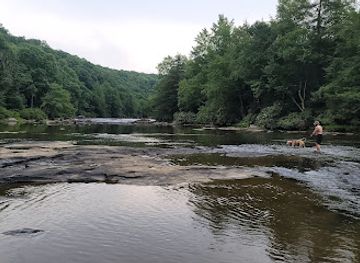
Muddy Creek Falls is the principal attraction at Swallow Falls State Park, dropping 53 feet through a wooded gorge and reached by a compact network of walking trails. The route also follows smaller cascades and rapids along Muddy Creek, where mossy rocks, hemlocks and hardwoods create a cool, shaded setting. The Youghiogheny River adds broader riverside scenery and a sense of the park’s connection with the Allegheny uplands. Visitors who want a longer outing can explore the relationship between Swallow Falls and neighbouring Herrington Manor State Park, although these are separate state parks with their own facilities and access arrangements. The wider Garrett County landscape provides further possibilities around Deep Creek Lake, Oakland and forested public lands, but these lie outside Swallow Falls State Park itself. The park is most rewarding for short woodland walks, waterfall viewing, photography, picnicking and observing seasonal changes in the forest rather than for a large programme of built attractions.
-
Hiking area
Swallow Falls Trailhead
Discover the breathtaking beauty of Swallow Falls Trailhead in Maryland, a paradise for hikers and nature lovers with stunning waterfalls and scenic trails.
-
Nature preserve
Swallow Falls Natural Area
Experience the breathtaking beauty of Swallow Falls Natural Area in Oakland, MD, a serene nature preserve with stunning waterfalls and diverse wildlife.
-
Tourist attraction
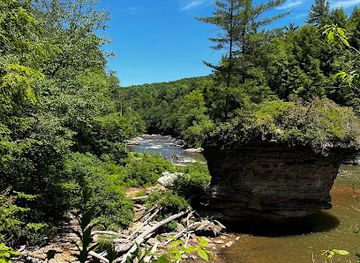
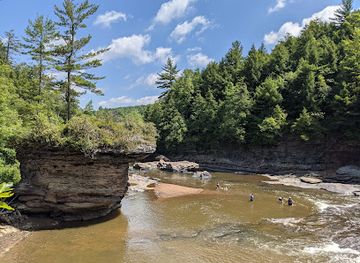
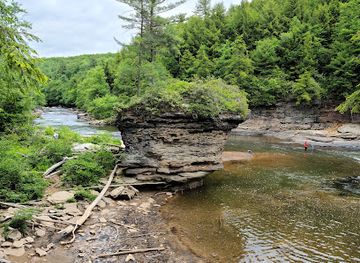
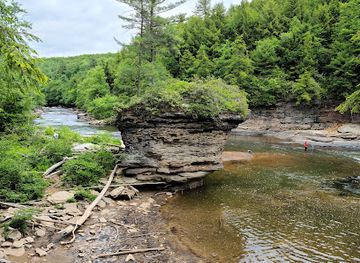
Riverside Rock Overhang
Explore the breathtaking beauty of Riverside Rock Overhang, a serene natural attraction in Oakland, Maryland, perfect for nature lovers and adventure seekers.
Best landmarks in Swallow Falls State Park
Muddy Creek Falls is the defining natural landmark of Swallow Falls State Park and is widely identified as Maryland’s highest free-falling waterfall, with a drop of about 53 feet. Its significance comes from the combination of exposed rocky ledge, forested gorge and the stream’s continuing sequence of rapids below. The Youghiogheny River is another important physical feature, linking the park to the larger drainage and upland geography of the Allegheny region. Mature hemlock and hardwood woodland forms the setting for both waterways and is central to the park’s protected character. Unlike historic towns or architectural sites, Swallow Falls has few built landmarks; its identity rests on water, rock, forest and the long tradition of public recreation in western Maryland’s mountain landscape. Nearby Herrington Manor State Park is a separate landmark-rich recreation area rather than part of Swallow Falls itself.
-
Nature preserve
Swallow Falls Natural Area
Explore the breathtaking waterfalls and serene landscapes of Swallow Falls Natural Area in Oakland, Maryland, a true natural gem for outdoor enthusiasts.
Explore Swallow Falls State Park on the map
Plan your trip on one map. See where the top attractions, landmarks, restaurants and hotels are, and book hotels and experiences in a few clicks.
Best hotels in Swallow Falls State Park
Best restaurants in Swallow Falls State Park
Swallow Falls State Park is not a dining destination in its own right, so visitors commonly bring a picnic or eat before or after their walk. More substantial choices are concentrated in nearby Oakland, Mountain Lake Park and the Deep Creek Lake area, where restaurants, cafés, takeaway counters and casual dining businesses serve visitors exploring Garrett County. Menus vary, but the regional setting means that hearty American meals, burgers, sandwiches, breakfast food and seasonal dishes are more characteristic than a specialised cuisine associated solely with the waterfall. Some accommodation businesses and rural inns around the lake and mountain communities also provide dining, although visitors should check current opening arrangements rather than assume service outside peak periods. Farm shops and local food retailers can be useful for assembling a picnic, while park picnic areas provide a setting for packed food subject to current regulations and fire restrictions.
-
Country food restaurant
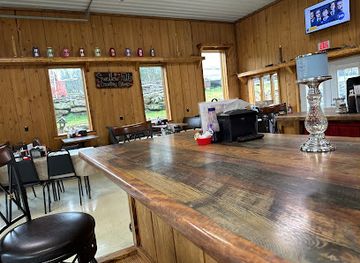
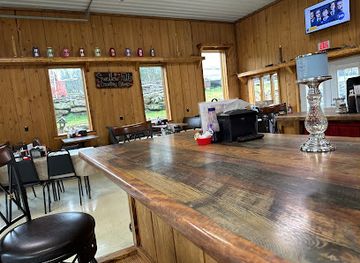
Swallow Falls Country Store
Discover authentic country cuisine at Swallow Falls Country Store in Oakland, MD - where every meal is made with love and local ingredients.
Best bars in Swallow Falls State Park
Evenings around Swallow Falls are generally quiet, with no nightlife district or concentration of nightclubs inside the state park. Visitors staying in Oakland, Mountain Lake Park or around Deep Creek Lake can find the area’s principal choice of traditional pubs, casual bars and restaurants, with entertainment patterns shaped by weekends, holidays and the seasonal visitor calendar. The most characteristic evening is likely to be a meal or drink at a local hospitality business followed by the dark, wooded atmosphere of the surrounding mountains rather than a late-night urban outing. Deep Creek Lake has the broadest selection of visitor-oriented evening venues in the region, but it remains a separate gateway area rather than part of Swallow Falls State Park. Current opening days and live-event schedules should be checked locally, particularly outside summer.
-
Hiking area
Swallow Falls Trailhead
Explore Swallow Falls Trailhead, a breathtaking hiking area in Maryland featuring scenic waterfalls, lush forests, and unforgettable outdoor adventures.
-
Country food restaurant
Swallow Falls Country Store
Experience the essence of country dining at Swallow Falls Country Store, where homemade meals meet local charm in the heart of Maryland.
-
Nature preserve
Swallow Falls Natural Area
Explore the stunning waterfalls and lush landscapes of Swallow Falls Natural Area, a must-visit nature preserve in Oakland, Maryland.
Best shops in Swallow Falls State Park
Shopping facilities are limited within Swallow Falls State Park, where the emphasis is on woodland recreation rather than retail. Visitors can obtain food, everyday supplies and outdoor essentials in Oakland, Mountain Lake Park and the Deep Creek Lake area, the principal nearby service centres. Regional shopping may include locally produced food, farm goods, artwork, handmade items and outdoor clothing or equipment, though the range and availability vary by business and season. Garrett County’s rural character is reflected more in small independent stores, food producers and craft-oriented businesses than in large shopping complexes. Visitors planning a picnic, longer walk or remote day outdoors should purchase supplies before entering the park, as there is no reason to expect a full retail selection at the waterfall area itself. Nearby towns also provide the most practical place to find cash machines and other everyday services.
-
State park
Swallow Falls State Park
Explore the enchanting Swallow Falls State Park in Maryland, a perfect blend of stunning waterfalls, scenic trails, and serene nature for every outdoor enthusiast.
-
Hiking area
Swallow Falls Trailhead
Explore the stunning trails and breathtaking waterfalls of Swallow Falls Trailhead, a natural paradise in Maryland perfect for hikers and nature lovers.
-
Country food restaurant
Swallow Falls Country Store
Discover the authentic flavors of Maryland at Swallow Falls Country Store, where homemade country dishes meet rustic charm.
-
Nature preserve
Swallow Falls Natural Area
Experience the breathtaking natural beauty of Swallow Falls Natural Area, a serene haven in Maryland perfect for outdoor adventures and relaxation.
Get your free copy of our complete guide to Swallow Falls State Park, delivered straight to you.
Everything on this page, from attractions and restaurants to essentials and local phrases, in one PDF you can read offline, print or share.
Already have an account? Sign in
Your Swallow Falls State Park guide is ready.
We'll send it to · Not you? Sign out

Getting your guide ready…
We are putting together a fresh copy of the Swallow Falls State Park guide. This can take up to a minute.
This can take a few moments. If your browser asks, choose Allow so the download can start. You'll find the guide in your Downloads folder.
Nothing happened? Download it again
Sorry, the guide is taking longer than usual. Please try again in a minute, or get it by email instead.
Swallow Falls State Park essentials
Currency and Payment
Safety
Emergency Situations
Do's and Don'ts
Local Tips
From Eve
Local phrases worth knowing
You don't need to get them perfect. A few words go a long way, and locals appreciate the effort.
Basics
| English | Local | Say it |
|---|---|---|
| Hello | Howdy | [HOU-dee] |
| Goodbye | See ya | [SEE yuh] |
| Yes | Yup | [YUHP] |
| No | Nah | [NAH] |
| Please/You're welcome | Please | [PLEEZ] |
| Thank you | Thanks | [THANKS] |
| Excuse me/Sorry | Sorry | [SOR-ee] |
| How are you? | How y'all doin'? | [HOW y'all DOO-in] |
| Fine. And you? | Just fine. You? | [JUST FINE. YUH?] |
| Do you speak English? | Ya speak English? | [YUH speak ING-lish?] |
| I don't understand | Huh? | [HUH?] |
Eating & Drinking
| English | Local | Say it |
|---|---|---|
| I'd like to see the menu, please | Can I see the menu, please | [CAN ah SEE the MEH-nyoo, please] |
| I don't eat meat | I don't eat meat | [I don't eat meat] |
| Cheers! | Cheers! | [Cheers!] |
| I would like to pay, please | I'd like to pay, please | [I'd like to pay, please] |
Emergencies
| English | Local | Say it |
|---|---|---|
| Help! | Help! | [Help!] |
| Go away! | Go away! | [Go away!] |
| Call the Police! | Call the cops! | [Call the cops!] |
| Call a doctor! | Need a doc! | [Need a doc!] |
| I'm lost | Lost | [Lost] |
| I'm ill | Sick | [Sick] |
Shopping
| English | Local | Say it |
|---|---|---|
| I'd like to buy... | I wanna buy... | [I wanna buy...] |
| I'm just looking | Just lookin' | [Just lookin'] |
| How much is it? | How much? | [How much?] |
| That's too expensive | Too much | [Too much] |
| Can you lower the price? | Lower the price? | [Lower the price?] |
Time & Numbers
| English | Local | Say it |
|---|---|---|
| What time is it? | What time? | [What time?] |
| It's one o'clock | It's one | [It's one] |
| Half past (10) | Half ten | [Half ten] |
| Morning | Mornin' | [Mornin'] |
| Afternoon | Afternoon | [Afternoon] |
| Evening | Evenin' | [Evenin'] |
| Yesterday | Yest'day | [Yest'day] |
| Today | Today | [Today] |
| Tomorrow | Tomorry | [Tomorry] |
| 1 | One | [Wun] |
| 2 | Two | [Too] |
| 3 | Three | [Three] |
| 4 | Four | [Fohr] |
| 5 | Five | [Fahv] |
| 6 | Six | [Siks] |
| 7 | Seven | [Sev'n] |
| 8 | Eight | [Ayt] |
| 9 | Nine | [Nahyn] |
| 10 | Ten | [Tehn] |
Transport & Directions
| English | Local | Say it |
|---|---|---|
| Where's a/the...? | Where's the...? | [Where's the...?] |
| What's the address? | Address? | [Address?] |
| Can you show me (on the map)? | Show me on the map? | [Show me on the map?] |
| When's the next (bus)? | Next bus? | [Next bus?] |
| A ticket (to ....) | Ticket (to ...) | [Ticket (to ...)] |
History of Swallow Falls State Park
A Shaped Appalachian Landscape
Swallow Falls lies in Maryland’s Allegheny Plateau, a highland region formed from ancient sedimentary rocks that have been uplifted and gradually eroded by streams. Muddy Creek and the Youghiogheny River have cut through the woodland landscape, exposing rocky ledges and creating the cascades and rapids that define the park. The waterfall itself is therefore part of a long geological process rather than a single historical event. Cooler elevations, abundant rainfall and stream valleys have helped sustain the hemlock and mixed hardwood forest that gives the area its distinctive atmosphere.
Timber and Mountain Settlement
Before the area became a protected recreation landscape, Garrett County’s valleys and uplands were used by local communities for farming, transport and timber production. Logging became especially important in the late nineteenth and early twentieth centuries, when railways and expanding markets encouraged the harvesting of western Maryland’s forests. The surrounding towns of Oakland and Mountain Lake Park developed within this wider mountain economy. Evidence of the region’s working landscape is more apparent across Garrett County than in the compact waterfall area itself, where forest recovery has become central to the visitor experience.
From Recreation Area to State Park
The waterfalls and river scenery attracted early recreational visitors as interest in Maryland’s mountain landscapes grew. Swallow Falls is recognised as one of Maryland’s older state parks, and its protection reflects the early twentieth-century movement to preserve scenic woodland and provide public recreation. The park’s development created a managed setting for walking, picnicking and nature appreciation while retaining the natural character of the streams. Facilities and access have changed over time, but the central attraction remains the same combination of mature forest, moving water and rocky gorge.
Conservation in the Modern Park
Today Swallow Falls State Park is managed by the Maryland Department of Natural Resources as part of a wider network of public lands in Garrett County. Management balances access to Muddy Creek Falls and the Youghiogheny River with protection of stream banks, woodland habitats and visitor safety. Its relationship with nearby Herrington Manor State Park and other Garrett County recreation areas allows visitors to experience a larger connected mountain landscape. Seasonal weather, flooding, erosion and heavy visitation can affect paths and facilities, making responsible use and current park information important parts of the contemporary history of the site.
Swallow Falls State Park in Photos
Browse through our photo collection highlighting the charm and character of the destination.
Neighbouring destination travel guides
The closest destinations to Swallow Falls State Park, if you have time for more than one.
-

-
-

-

-


Swipe for more destinations
Explore more

Explore more of Appalachian Plateau
Explore Maryland’s Appalachian Plateau for Deep Creek Lake, forested state parks, waterfalls, mountain history and four-season outdoor recreation.
Explore Appalachian Plateau
Explore more of Maryland
Discover Maryland, where coastal charm meets rich history and outdoor adventure. Experience the best of the East Coast in this small but diverse state.
Explore Maryland