

Free Oualata Travel Guide & Mobile App
Explore Oualata with free travel guides. Discover regional history, expert tips, proposed trips, and audio guides on web or mobile app.


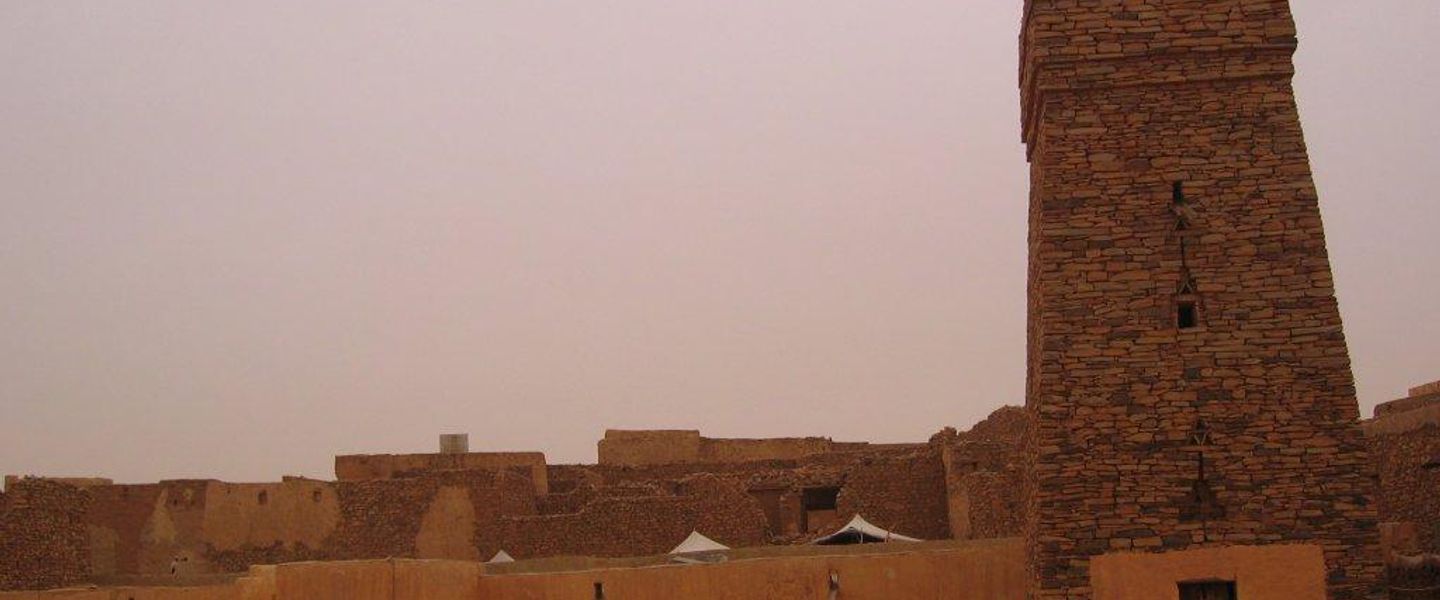


Explore Oualata in Mauritania for painted earthen architecture, Saharan history and a remote UNESCO-listed ksar shaped by trans-Saharan trade.
When is the best time to visit Oualata?
Best: December–February · 25–28°C| Month | High (°C) | Rainfall (mm) |
|---|---|---|
| January (best) | 25 | 1 |
| February (best) | 28 | 1 |
| March | 31 | 1 |
| April | 34 | 1 |
| May | 38 | 5 |
| June | 42 | 10 |
| July | 43 | 20 |
| August | 42 | 20 |
| September | 40 | 10 |
| October | 37 | 5 |
| November | 30 | 1 |
| December (best) | 26 | 1 |
Getting to and around Oualata
How to get there
Transportation
Explore Oualata on the map
Plan your trip on one map. See where the top cities, national parks and sights are, and book hotels and experiences in a few clicks.
Best hotels in Oualata
Best restaurants in Oualata
Dining in Oualata is simple, local and closely dependent on prior arrangements rather than a developed restaurant industry. Visitors should organise meals through their accommodation, host or guide and carry supplementary provisions from Néma. Food may include rice, couscous, bread, legumes, vegetables when available and meat prepared according to local practice, while sweet mint tea remains an important part of hospitality across Mauritania. Dates and other portable foods are useful on the approach journey, where stopping places and supplies cannot be taken for granted. Oualata is not a destination for a broad choice of cafés or formal dining rooms, and menus may be limited by remoteness, season and transport. Eating respectfully, accepting local rhythms and avoiding waste are more relevant than seeking a particular culinary venue. Travellers with dietary or medical requirements should explain them in advance and bring suitable backup food, especially when staying beyond the main urban centres.
-
Portuguese
A Casa Portuguesa
Experience authentic Portuguese cuisine at A Casa Portuguesa in Nouakchott - where every dish tells a story.

Best bars in Oualata
Oualata has no conventional bar or nightclub scene. As a small, predominantly Muslim and remote town, its evening social life is more likely to centre on family hospitality, conversation, tea and the quiet routines of residents than on commercial nightlife. Alcohol should not be expected and is inappropriate to introduce into local settings. After sunset, the absence of urban light creates an opportunity to observe the desert sky, provided this is done safely and with local permission rather than by wandering away from the settlement alone. Evening temperatures can fall sharply after hot days, and wind-blown sand may affect outdoor plans. Travellers seeking live music, late-opening restaurants or a wider choice of evening venues will need to find them in a larger Mauritanian town rather than treating Oualata as a nightlife destination.
-

Mauricenter Hotel
Discover modern comfort and Mauritanian hospitality at Mauricenter Hotel, your perfect base in the heart of Nouakchott.
-
Bar
فندق انواكشوط
Discover the charm of Nouakchott at فندق انواكشوط, where comfort meets cultural experience in the heart of Mauritania.
-
Restaurant
Tafarit Restaurant
Discover authentic Mauritanian cuisine at Tafarit Restaurant in Nouakchott, a culinary experience rich in flavor and culture.
-
Hotel
Monotel (Dar El Barka)
Discover the perfect blend of modern comfort and Mauritanian hospitality at Monotel (Dar El Barka), your ideal stay in Nouakchott.


Best shops in Oualata
Shopping in Oualata is limited and practical, with no extensive retail district or dependable choice of specialist souvenir shops. The most appropriate purchases are locally made items or Mauritanian handicrafts obtained through trusted local contacts, provided that the transaction is fair and the object is legal to export. Visitors may encounter textiles, leatherwork, jewellery, baskets or small decorative pieces, but availability varies and should not be assumed. The town’s painted architectural motifs are part of the built heritage, not merchandise, so nothing should be removed from walls or historic structures. Food and basic travel supplies are best purchased in Néma before the journey, where choice and payment facilities are more reliable. Carry cash in ouguiya for small local transactions, ask permission before photographing craftspeople or their work and avoid buying archaeological objects, old manuscripts or items claimed to have been taken from historic sites.
-
Shopping mall
Marche Capitale
Experience the vibrant shopping and cultural hub of Marche Capitale in Nouakchott, where local flavors and international brands blend seamlessly.
-
Art gallery
Galerie Zeinart
Explore the vibrant art scene at Galerie Zeinart, an inspiring gallery showcasing local and international artists in the heart of Nouakchott.
-
Grocery store
Épicerie Oum Lahbal
Discover local flavors and the vibrant culture of Nouakchott at Épicerie Oum Lahbal, your go-to grocery store for authentic Mauritanian products.
-
Clothing store
MARCHE TURC
Discover the vibrant shopping scene at Marche Turc, where fashion meets culture in the heart of Nouakchott, Mauritania.


Get your free copy of our complete guide to Oualata, delivered straight to you.
Everything on this page, from attractions and restaurants to essentials and local phrases, in one PDF you can read offline, print or share.
Already have an account? Sign in
Your Oualata guide is ready.
We'll send it to · Not you? Sign out

Getting your guide ready…
We are putting together a fresh copy of the Oualata guide. This can take up to a minute.
This can take a few moments. If your browser asks, choose Allow so the download can start. You'll find the guide in your Downloads folder.
Nothing happened? Download it again
Sorry, the guide is taking longer than usual. Please try again in a minute, or get it by email instead.
Oualata essentials
Currency and Payment
Safety
Emergency Situations
Do's and Don'ts
Local Tips
From Eve
Local phrases worth knowing
You don't need to get them perfect. A few words go a long way, and locals appreciate the effort.
Basics
| English | Local | Say it |
|---|---|---|
| Hello | سلام | [Salam] |
| Goodbye | وداعا | [Wada'an] |
| Yes | نعم | [Na'am] |
| No | لا | [La] |
| Please/You're welcome | من فضلك | [Min fadlik] |
| Thank you | شكرا | [Shukran] |
| Excuse me/Sorry | عفوا | [Afwan] |
| How are you? | كيف حالك؟ | [Kayfa halak?] |
| Fine. And you? | بخير. وأنت؟ | [Bikhayr. Wa anta?] |
| Do you speak English? | هل تتحدث الإنجليزية؟ | [Hal tatahaddath al-ingliziyya?] |
| I don't understand | لا أفهم | [La afham] |
Eating & Drinking
| English | Local | Say it |
|---|---|---|
| I'd like to see the menu, please | أود رؤية القائمة، من فضلك | [Awad ru'yat al-qa'ima, min fadlik] |
| I don't eat meat | لا أتناول اللحوم | [La atanaawal al-luhum] |
| Cheers! | في صحتك! | [Fi sihtak!] |
| I would like to pay, please | أود الدفع، من فضلك | [Awad al-daf'a, min fadlik] |
Emergencies
| English | Local | Say it |
|---|---|---|
| Help! | نجدة! | [Najda!] |
| Go away! | ابتعد! | [Ibt'id!] |
| Call the Police! | اتصل بالشرطة! | [Ittasil bil-shurta!] |
| Call a doctor! | اتصل بالطبيب! | [Ittasil bil-tabeeb!] |
| I'm lost | أنا ضائع | [Ana da'i'] |
| I'm ill | أنا مريض | [Ana marid] |
Shopping
| English | Local | Say it |
|---|---|---|
| I'd like to buy... | أود شراء... | [Awad shir'a...] |
| I'm just looking | أنا فقط أنظر | [Ana faqat anzur] |
| How much is it? | كم ثمنه؟ | [Kam thamanu?] |
| That's too expensive | هذا مكلف للغاية | [Hatha mukallaf lilghaya] |
| Can you lower the price? | هل يمكنك تخفيض السعر؟ | [Hal yumkinuka takhfid al-si'r?] |
Time & Numbers
| English | Local | Say it |
|---|---|---|
| What time is it? | كم الساعة؟ | [Kam al-saa'a?] |
| It's one o'clock | الساعة واحدة | [Al-saa'a wahida] |
| Half past (10) | نصف بعد (10) | [Nisf ba'd (10)] |
| Morning | صباح | [Sabah] |
| Afternoon | بعد الظهر | [Ba'd al-dhuhr] |
| Evening | مساء | [Masa'] |
| Yesterday | أمس | [Ams] |
| Today | اليوم | [Al-yawm] |
| Tomorrow | غدا | [Ghad] |
| 1 | واحد | [Wahid] |
| 2 | اثنان | [Ithnan] |
| 3 | ثلاثة | [Thalatha] |
| 4 | أربعة | [Arba'a] |
| 5 | خمسة | [Khamsa] |
| 6 | ستة | [Sitta] |
| 7 | سبعة | [Sab'a] |
| 8 | ثمانية | [Thamaniya] |
| 9 | تسعة | [Tis'a] |
| 10 | عشرة | [Ashara] |
Transport & Directions
| English | Local | Say it |
|---|---|---|
| Where's a/the...? | أين ...؟ | [Ayn ...?] |
| What's the address? | ما هو العنوان؟ | [Ma huwa al-'unwan?] |
| Can you show me (on the map)? | هل يمكنك أن تريني (على الخريطة)؟ | [Hal yumkinuka an turini (ala al-kharita)?] |
| When's the next (bus)? | متى تكون الحافلة التالية؟ | [Mata takun al-hafila al-taliya?] |
| A ticket (to ....) | تذكرة (إلى ....) | [Tadhkara (ila ....)] |
History of Oualata
Early Saharan Settlement and Oasis Life
Oualata developed in an environment where permanent settlement depended on access to water, grazing and long-distance exchange. The wider Hodh has been occupied and crossed for centuries, although the precise origins of the modern town are difficult to separate from later traditions and archaeological interpretation. Its position between the Sahara and the Sahel allowed an oasis community to serve travellers moving between desert caravan routes and the more agricultural lands to the south.
The Trans-Saharan Trading Era
By the medieval period, Oualata had become an important stopping place on routes carrying salt, textiles, metals and other goods between North Africa and the western Sahel. Caravans required dependable water, places to rest and communities able to provide food, animals and commercial links. Oualata’s built form and social history were shaped by this role, while its connections extended well beyond present-day Mauritania into the trading world of the western Sudan.
Oualata in the Medieval Scholarly World
The town was also known for religious learning and manuscript culture. The traveller Ibn Battuta passed through the settlement in the fourteenth century and left an important written account of the hardships and customs associated with the journey across the Sahara. His description places Oualata within the intellectual and commercial networks of the medieval western Islamic world, when scholars, jurists and merchants travelled alongside or followed the caravan routes.
Earthen Architecture and the Historic Ksar
Oualata’s traditional architecture took shape through adaptation to climate, materials and social life. Thick earthen walls provide insulation, while internal courtyards and narrow lanes offer shade and privacy. Decorative treatment on house façades became one of the town’s most recognisable features. These buildings are not isolated monuments but parts of a historic urban fabric, in which domestic, religious and communal spaces express the accumulated influence of trade, Islam and local building knowledge.
The Shift in Regional Trade Routes
Oualata’s commercial importance declined as political conditions, transport patterns and the growth of Atlantic-facing trade altered the old caravan economy. Modern roads and administrative centres further changed the balance between historic oasis towns and newer hubs. The town never disappeared, but its role became more local and its remote position increasingly defined its contemporary circumstances.
UNESCO Recognition and Heritage Preservation
In 1996, Oualata was inscribed with Chinguetti, Ouadane and Tichitt as the Ancient Ksour of Mauritania on the UNESCO World Heritage List. The designation recognises the four historic desert settlements as evidence of the cultural and commercial systems that crossed the Sahara. Preservation remains challenging because earthen buildings are vulnerable to rain, erosion, neglect and unsuitable repairs. Conservation therefore depends on maintaining both the structures and the skills, customs and community life that give them meaning.
Oualata in Photos
Browse through our photo collection highlighting the charm and character of the destination.
Neighbouring regions of Oualata
The closest regions to Oualata, if you have time for more than one.
-

-

-

-

-


Swipe for more regions
Explore more

Explore more of Mauritania
Discover Mauritania's vast Sahara Desert, ancient cities, and rich cultural heritage. Experience the stunning landscapes and warm hospitality of this West African gem.
Explore Mauritania