

Central Caroline Islands, Micronesia Travel Guide
Discover the Central Caroline Islands: A Micronesian paradise offering pristine beaches, vibrant marine life, and a rich cultural tapestry in the heart of the Pacific Ocean.
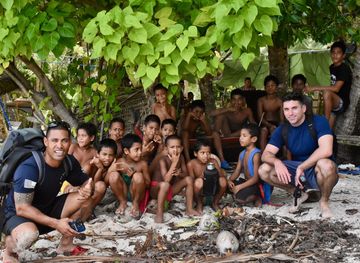
Nestled in the heart of the Pacific Ocean, the Central Caroline Islands offer a unique blend of natural beauty and rich cultural heritage. This idyllic cluster of islands is part of Micronesia and is renowned for its pristine beaches, crystal-clear waters, and vibrant marine life. A haven for divers and snorkelers, the underwater world here is teeming with colorful coral reefs and exotic fish species. On land, the lush tropical landscapes and traditional villages provide a glimpse into the simple yet profound way of life of the local communities. Exploring the Central Caroline Islands, you will encounter a tapestry of history and tradition. The islands are dotted with ancient stone ruins and cultural sites that tell stories of a bygone era. The warm and welcoming locals are eager to share their customs, from traditional dance performances to handcrafted souvenirs. The islands’ cuisine, featuring fresh seafood and tropical fruits, is a delightful experience for the taste buds. Whether you are seeking adventure or relaxation, the Central Caroline Islands have something to offer every traveler. Kayak through tranquil lagoons, hike through verdant forests, or simply lounge on the sun-kissed beaches. The islands' natural beauty and serene atmosphere make them a perfect destination for those looking to escape the hustle and bustle of everyday life.

Know before you go
Hi, I'm Eve. Here are a few practical things to know before exploring Central Caroline Islands.
- Visit during the dry season from December to April for the best weather conditions.
- Bring reef-safe sunscreen to protect the coral reefs while enjoying water activities.
- Respect local customs and traditions, especially when visiting villages and cultural sites.
- Try the local seafood dishes, which are both fresh and delicious.
- Pack light, breathable clothing to stay comfortable in the tropical climate.
- Consider hiring a local guide to enhance your exploration and understanding of the islands’ history and culture.
Explore Central Caroline Islands: Things to Do, Places to Eat, Hotels & More
Handpicked recommendations for top attractions, local dining, accommodations, and more

Top Attractions & Sightseeing in Central Caroline Islands
Top-rated picks
Best Attractions

Kepirohi Waterfall
Explore the enchanting Kepirohi Waterfall in Pohnpei, a perfect blend of adventure, swimming, and stunning natural beauty amidst lush landscapes.

Pohnpei Surf and Dive Club
Explore the vibrant marine life and stunning coral reefs at Pohnpei Surf and Dive Club, the ultimate diving destination in Kolonia, Pohnpei.

Marakei Island
Experience the breathtaking beauty and rich culture of Marakei Island, a heart-shaped atoll paradise in the pristine waters of Kiribati.

Best landmarks in Central Caroline Islands
Top-rated picks
Best Landmarks

Nan Madol
Explore Nan Madol, an ancient architectural marvel in Pohnpei, and uncover the secrets of the Pacific's historical grandeur.

Kepirohi Waterfall
Experience the breathtaking beauty of Kepirohi Waterfall in Pohnpei, a must-visit destination for nature lovers and adventure seekers.

Lelu Ruins Historic Park
Discover the ancient secrets of Lelu Ruins Historic Park, an archaeological gem in Kosrae surrounded by stunning natural beauty and rich history.

Sokehs Rock
Discover the breathtaking views and natural beauty of Sokehs Rock, a must-visit scenic spot in Pohnpei, Micronesia, for every adventurous traveler.

Best restaurants in Central Caroline Islands
Top-rated picks
Best Restaurants

Nan Madol
Explore Nan Madol: A UNESCO World Heritage Site with stunning ruins and rich cultural history in Pohnpei.

Manta Ray Bay Resort & Yap Divers
Experience unparalleled comfort and adventure at Manta Ray Bay Resort & Yap Divers—your gateway to Micronesia's underwater wonders.
Joy Hotel & Restaurant
Experience comfort and exquisite Japanese cuisine at Joy Hotel & Restaurant in Kolonia, Pohnpei – your gateway to culinary delight.
Cliff Hotel & Restaurant
Discover comfort and delightful dining at Cliff Hotel & Restaurant in Kolonia, Pohnpei – your gateway to tropical adventures.

Best bars in Central Caroline Islands
Top-rated picks
Best Bars

Palau Hotel
Experience the best of local and international cuisine at Palau Hotel, your perfect culinary and lodging destination in Koror, Palau.

Nan Madol
Explore Nan Madol, a UNESCO World Heritage Site and ancient city of stunning ruins and rich cultural heritage in Pohnpei, Micronesia.

Palasia Hotel Palau
Discover luxury and adventure at Palasia Hotel Palau, the perfect retreat in the heart of Koror, offering exquisite dining and relaxation.

Manta Ray Bay Resort & Yap Divers
Experience the beauty of Yap at Manta Ray Bay Resort & Yap Divers, where adventure meets tranquility in a tropical paradise.

Best nightclubs in Central Caroline Islands
Top-rated picks
Best Nightclubs

Micronesia Mall
Explore Micronesia Mall, Guam's largest shopping destination, featuring diverse retail stores, delightful dining, and exciting entertainment options.

MM Theatres Guam
Enjoy a cinematic adventure at MM Theatres Guam, featuring the latest films in a state-of-the-art setting perfect for families and movie buffs.

Nan Madol
Explore the mesmerizing ruins of Nan Madol, an ancient city of stone islets and a UNESCO World Heritage site, rich in history and natural beauty.

Manta Ray Bay Resort & Yap Divers
Discover the ultimate tropical escape at Manta Ray Bay Resort & Yap Divers, where adventure meets relaxation in Yap's breathtaking paradise.

Best shops in Central Caroline Islands
Top-rated picks
Best Shops

Micronesia Mall
Discover shopping, dining, and cultural experiences at Micronesia Mall, Guam's premier shopping destination for tourists.
Palau Pacific Resort
Experience luxury and tranquility at Palau Pacific Resort, a premier destination in the heart of Palau's stunning tropical paradise.

Palau Hotel
Experience the perfect blend of comfort and adventure at Palau Hotel, your gateway to the wonders of Palau's tropical paradise.

Nan Madol
Discover the ancient marvels of Nan Madol, a UNESCO World Heritage site in Pohnpei, where history and nature intertwine in stunning harmony.

Explore Central Caroline Islands on the Map
A handpicked selection of must-see spots in Central Caroline Islands, mapped for you.
Central Caroline Islands Essentials
-
The Central Caroline Islands in Micronesia can be accessed via the Pohnpei International Airport (PNI) or Chuuk International Airport (TKK). Flights are available from major hubs like Guam, Hawaii, and other parts of Micronesia. United Airlines operates regular flights to these airports. From the U.S. mainland, you might need to transit through Guam or Hawaii. Boat services are also available for inter-island travel, but they are less frequent and more time-consuming.
-
Transportation within the Central Caroline Islands is primarily by boat or small aircraft for inter-island travel. On larger islands like Pohnpei and Chuuk, taxis and rental cars are available. Public buses are limited, but they do operate in some areas. Biking and walking are also common means of getting around on the islands. For a more local experience, consider hiring a traditional outrigger canoe for short trips between nearby islands.
-
The official currency in the Central Caroline Islands is the U.S. Dollar (USD). Credit cards are accepted in larger hotels and some restaurants, but cash is preferred, especially in smaller establishments and local markets. ATMs are available in main towns, but it's advised to carry enough cash when traveling to more remote areas.
-
The Central Caroline Islands are generally safe for tourists. However, it is advisable to take standard precautions. Avoid walking alone at night in unfamiliar areas. Petty crimes such as pickpocketing can occur in crowded places, so keep an eye on your belongings. There are no specific high-crime areas targeting tourists, but remaining vigilant is always best.
-
In case of emergency, dial the local emergency number for police, fire, or medical services. On Pohnpei, the emergency number is 911. Ensure you have travel insurance that covers medical emergencies. Medical facilities are available in larger towns, but for severe cases, medical evacuation to Guam or Hawaii might be necessary. Pharmacies are available, but carrying essential medications is recommended.
-
Fashion: Do dress modestly, especially when visiting villages or religious sites. Avoid wearing revealing clothing. Religion: Do respect local customs and traditions. Always ask for permission before entering a church or sacred site. Public Transport: Do be polite and courteous. Offer your seat to elderly passengers. Greetings: Do greet people with a handshake. A slight bow of the head is also a sign of respect. Eating & Drinking: Do try local dishes and accept food offerings graciously. Don’t refuse hospitality, as it is considered impolite.
-
To experience the Central Caroline Islands like a local, visit the local markets where you can buy fresh produce and traditional Micronesian goods. Engage with locals, as they are often friendly and willing to share stories about the islands' history and culture. Don't miss the opportunity to participate in traditional events and festivals. For a unique experience, explore the ancient ruins and stone structures scattered across the islands. Taking a guided tour with a local can enhance your understanding of the region's rich cultural heritage.
When is the best time to visit Central Caroline Islands?
Useful Local Phrases for Central Caroline Islands
You don't need to speak the language perfectly. Even learning a few simple words can make conversations warmer—and locals usually appreciate the effort.
— Eve

Here are the phrases I use most often in Central Caroline Islands. Try a few—you'll be surprised how far they go! 😊
❤️
-
- HelloKaselehlie
[kah-seh-leh-lee-eh] - GoodbyeKaselehlie
[kah-seh-leh-lee-eh] - YesE
[eh] - NoA
[ah] - Please/You're welcomeNgirail
[ngih-rah-eel] - Thank youKommol tata
[kohm-mohl tah-tah] - Excuse me/SorryChok
[chok] - How are you?E aom?
[eh ah-om] - Fine. And you?E aom. E aom mo?
[eh ah-om. eh ah-om moh] - Do you speak English?A kirel English?
[ah kee-rehl ehng-lish] - I don't understandNgai e ngeni
[ngai eh ngeh-nee]
- HelloKaselehlie
-
- I'd like to see the menu, pleaseE aom a chad rehi, ngirail
[eh ah-om ah chahd reh-hee, ngih-rah-eel] - I don't eat meatNgai e chad mar
[ngai eh chahd mahr] - Cheers!Chor
[chor] - I would like to pay, pleaseE aom a kirel, ngirail
[eh ah-om ah kee-rehl, ngih-rah-eel]
- I'd like to see the menu, pleaseE aom a chad rehi, ngirail
-
- Help!Chok!
[chok!] - Go away!A chad!
[ah chahd!] - Call the Police!A kirel a Police!
[ah kee-rehl ah poh-lees!] - Call a doctor!A kirel a dokto!
[ah kee-rehl ah dok-toh!] - I'm lostNgai e kirel
[ngai eh kee-rehl] - I'm illNgai e aom mar
[ngai eh ah-om mahr]
- Help!Chok!
-
- I'd like to buy...E aom a kirel...
[eh ah-om ah kee-rehl...] - I'm just lookingNgai e a chad ngeni
[ngai eh ah chahd ngeh-nee] - How much is it?E aom a kirel?
[eh ah-om ah kee-rehl?] - That's too expensiveA chad aom a chad mar
[ah chahd ah-om ah chahd mahr] - Can you lower the price?E aom a kegad a rehi?
[eh ah-om ah keh-gahd ah reh-hee?]
- I'd like to buy...E aom a kirel...
-
- What time is it?E aom a chad?
[eh ah-om ah chahd?] - It's one o'clockE aom a chad e rait
[eh ah-om ah chahd eh rah-it] - Half past (10)E aom a chad e dos
[eh ah-om ah chahd eh dos] - MorningMwan
[mwan] - AfternoonPate
[pah-teh] - EveningMwan a chad
[mwan ah chahd] - YesterdayAton
[ah-ton] - TodayIta
[ee-tah] - TomorrowIta a chad
[ee-tah ah chahd] - 1Chad
[chahd] - 2Dau
[dau] - 3Tati
[tah-tee] - 4Aro
[ah-roh] - 5Lima
[lee-mah] - 6Oro
[oh-roh] - 7Fitu
[fee-too] - 8Walu
[wah-loo] - 9Siu
[see-oo] - 10Sang
[sahng]
- What time is it?E aom a chad?
-
- Where's a/the...?E aom a...?
[eh ah-om ah...?] - What's the address?E aom a rehi e kirel?
[eh ah-om ah reh-hee eh kee-rehl?] - Can you show me (on the map)?E aom a kirel a ngeni (e map)?
[eh ah-om ah kee-rehl ah ngeh-nee (eh map)?] - When's the next (bus)?E aom a kirel a chad (bus)?
[eh ah-om ah kee-rehl ah chahd (bus)?] - A ticket (to ....)E aom a kirel a ticket (e ....)
[eh ah-om ah kee-rehl ah ti-ket (eh ....)]
- Where's a/the...?E aom a...?
History of Central Caroline Islands
-
The Central Caroline Islands, part of the Federated States of Micronesia, have a rich history of seafaring and settlement dating back over 2,000 years. The islands were originally settled by Austronesian-speaking peoples who navigated the open ocean using sophisticated outrigger canoes and star navigation. These early settlers established complex societies with distinct cultural practices and social structures, laying the foundation for the region’s unique cultural heritage.
-
During the early centuries AD, the island of Yap emerged as a dominant cultural and economic center within the Central Caroline Islands. The Yapese established an extensive trade network that spanned hundreds of miles, involving the exchange of goods such as shells, turmeric, and highly prized stone money known as Rai. Yap's influence extended to neighboring islands, and its complex system of tribute and trade ensured its prominence in the region for centuries.
-
The arrival of European explorers in the 16th century marked the beginning of a new era for the Central Caroline Islands. Spanish explorers were the first Europeans to make contact, and the islands were later claimed by Spain as part of their Pacific empire. In the late 19th century, following Spain's defeat in the Spanish-American War, the islands were sold to Germany. German colonial rule brought significant changes, including the establishment of plantations and the introduction of new administrative systems.
-
In 1914, during World War I, Japan seized control of the Central Caroline Islands from Germany. Under Japanese administration, the islands underwent further development, including the construction of infrastructure and the expansion of agricultural production. The islands played a strategic role during World War II, serving as important military bases for the Japanese. Intense battles, such as the Battle of Truk Lagoon, left a lasting impact on the region, with many shipwrecks and relics still visible today.
-
After World War II, the Central Caroline Islands came under the administration of the United States as part of the Trust Territory of the Pacific Islands. During this period, significant efforts were made to rebuild the islands and improve living conditions. The islands gradually moved toward self-governance, culminating in the establishment of the Federated States of Micronesia in 1979. The Central Caroline Islands, including Yap, Chuuk, Pohnpei, and Kosrae, became integral states within the new federation, each preserving its unique cultural identity while contributing to the nation's development.
-
Despite the waves of external influence, the Central Caroline Islands have managed to retain a vibrant and diverse cultural heritage. Traditional practices such as navigation, dance, and craftsmanship continue to thrive alongside modern advancements. Festivals and ceremonies play a vital role in community life, and the islands' rich oral history is passed down through generations. Today, the Central Caroline Islands offer a unique blend of ancient traditions and contemporary living, providing visitors with an immersive cultural experience.
Neighbouring Regions of Central Caroline Islands
The closest regions to Central Caroline Islands, if you have time for more than one.



Your all‑in‑one travel companion app
Explore expert travel guides, compare and book tours, experiences, hotels, and more—all from the palm of your hand. Download now for seamless trip planning wherever your wanderlust takes you.


Explore More of Micronesia

Looking beyond Central Caroline Islands? Discover Micronesia for broader travel guides, local hot-spots, and regional highlights.
Explore MicronesiaCentral Caroline Islands in Photos
Browse through our photo collection highlighting the charm and character of the destination.


The Enchanting Central Caroline Islands: A Micronesian Paradise
Nestled in the heart of the Pacific Ocean, the Central Caroline Islands offer a unique blend of natural beauty and rich cultural heritage. This idyllic cluster of islands is part of Micronesia and is renowned for its pristine beaches, crystal-clear waters, and vibrant marine life. A haven for divers and snorkelers, the underwater world here is teeming with colorful coral reefs and exotic fish species. On land, the lush tropical landscapes and traditional villages provide a glimpse into the simple yet profound way of life of the local communities. Exploring the Central Caroline Islands, you will encounter a tapestry of history and tradition. The islands are dotted with ancient stone ruins and cultural sites that tell stories of a bygone era. The warm and welcoming locals are eager to share their customs, from traditional dance performances to handcrafted souvenirs. The islands’ cuisine, featuring fresh seafood and tropical fruits, is a delightful experience for the taste buds. Whether you are seeking adventure or relaxation, the Central Caroline Islands have something to offer every traveler. Kayak through tranquil lagoons, hike through verdant forests, or simply lounge on the sun-kissed beaches. The islands' natural beauty and serene atmosphere make them a perfect destination for those looking to escape the hustle and bustle of everyday life.