

Free Outer Islands of Yap Travel Guide & Mobile App
Explore Outer Islands of Yap with free travel guides. Discover regional history, expert tips, proposed trips, and audio guides on web or mobile app.


Explore the remote Outer Islands of Yap for coral atolls, traditional island communities, ocean voyaging and a rare Pacific cultural experience.
Read more about Outer Islands of Yap
When is the best time to visit Outer Islands of Yap?
Best: January–March · 29–30°C| Month | High (°C) | Rainfall (mm) |
|---|---|---|
| January (best) | 29 | 200 |
| February (best) | 29 | 150 |
| March (best) | 30 | 170 |
| April | 30 | 200 |
| May | 30 | 250 |
| June | 30 | 300 |
| July | 30 | 320 |
| August | 30 | 340 |
| September | 30 | 300 |
| October | 30 | 270 |
| November | 30 | 230 |
| December | 29 | 210 |
Getting to and around Outer Islands of Yap
How to get there
Transportation
Best attractions in Outer Islands of Yap
The principal attractions of the Outer Islands of Yap are their living communities and ocean environments rather than purpose-built visitor facilities. Lagoon trips, reef observation, fishing, canoe journeys and locally guided walks reveal the relationship between island settlements and the surrounding sea. Ulithi offers a particularly significant combination of coral-island scenery and Second World War history, while Fais differs physically as a raised coral island with its own landscape and traditions. Woleai, Ifalik, Lamotrek and Elato provide opportunities for carefully arranged cultural visits, traditional food, church communities, handicrafts and conversations about navigation and island life. Remote reefs can support excellent marine experiences, but conditions and access vary and should always be assessed locally. There are no dependable theme parks, extensive museums or resort-style activity programmes across the region; the value lies in the setting, the people and the chance to understand how small communities sustain themselves far from major urban centres. Visitors should seek permission before visiting culturally important places and should not treat ceremonies, homes or working areas as attractions.
-
Tourist attraction
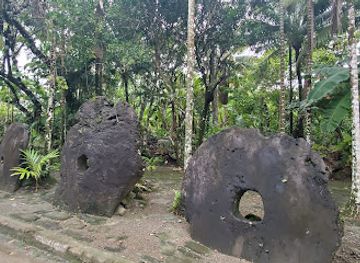
Yap Stone Money Bank
Explore the Yap Stone Money Bank and immerse yourself in the fascinating history of Yap's traditional stone currency and cultural heritage.
Best landmarks in Outer Islands of Yap
The most recognisable landmarks of the Outer Islands are natural and cultural rather than monumental. Ulithi Atoll's broad lagoon is both a defining geographical feature and the site of a major Allied naval anchorage during the Second World War, giving its waters historical significance beyond their coral scenery. The low reef islands of Woleai, Ifalik, Lamotrek and Elato illustrate the narrow margins on which atoll communities live, while Fais stands apart as a raised coral island with a different physical character. Traditional meeting places, churches, canoe houses, shoreline canoe landings and community grounds can be visually modest but socially important; their significance depends on local explanation and permission. Reef passes, lagoon channels and coconut-fringed islets are also key geographic landmarks, although currents and landing conditions make them places to approach only with experienced local guidance.
-
 Resort hotel
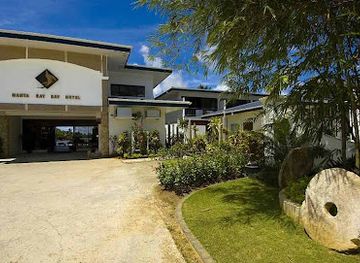
Manta Ray Bay Resort & Yap Divers
Discover luxury and adventure at Manta Ray Bay Resort & Yap Divers, where stunning ocean views meet thrilling diving experiences in Yap.
-
Park
Yap Living History Museum
Experience the unique culture and rich history of Yap Island at the Yap Living History Museum, a must-visit destination for travelers.
-
Tourist attraction
Yap Stone Money Bank
Explore the Yap Stone Money Bank, a unique cultural site showcasing the ancient currency system of Yap through impressive stone discs.
-
Hiking area
Tamilyog Trail
Discover the breathtaking landscapes and rich biodiversity of Tamilyog Trail, a must-visit hiking destination in Kanif, Yap.
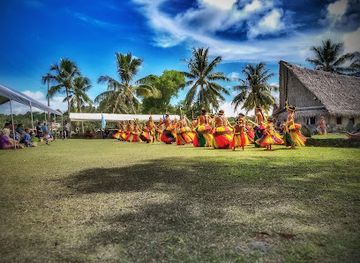

Explore Outer Islands of Yap on the map
Plan your trip on one map. See where the top cities, national parks and sights are, and book hotels and experiences in a few clicks.
Best hotels in Outer Islands of Yap
Best restaurants in Outer Islands of Yap
Dining in the Outer Islands is generally home-based, communal or arranged through a host rather than offered by a developed restaurant industry. Meals may draw on reef fish, other locally caught seafood, taro, breadfruit, pandanus, coconut, bananas and seasonal garden produce, alongside imported rice, tinned goods and packaged foods brought from Yap proper or elsewhere. Preparation varies between islands and households, so visitors should discuss dietary needs before arrival and never assume that replacement supplies can be bought locally. A shared meal is often an important part of hospitality, but guests should follow the host's lead about when to begin, what to accept and how to express thanks. There are no established dining districts, and fine dining in the conventional resort sense is not a feature of the region. Those travelling to the outer islands should carry appropriate snacks and emergency provisions without undermining local arrangements or creating excess packaging.
-
Hotel
Oceania Hotel Restaurant Bar
Experience unparalleled dining at Oceania Hotel Restaurant Bar in Yap - where local flavors meet international flair.
-
Restaurant
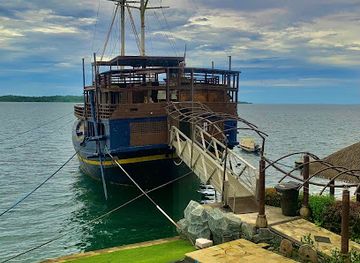
Manta Ray SV Mnuw
Experience authentic local cuisine at Manta Ray SV Mnuw in Colonia, Yap—where every dish tells a story.
Best bars in Outer Islands of Yap
The Outer Islands of Yap do not have a conventional bar, nightclub or late-night entertainment scene. Evenings are shaped by family and community life, church activities, conversation, fishing schedules and the quiet conditions of small islands after dark. Any locally available alcoholic drinks should be approached with restraint and according to community expectations; drinking is not a substitute for engaging respectfully with hosts. There are no dependable opening hours, nightlife districts or regular commercial music venues, and electricity may be limited or interrupted. Bring a torch and avoid walking unfamiliar reef edges or shorelines at night. Social occasions, when offered, should be accepted as invitations within a community rather than assumed to be public events.
-
Bar
Manta Ray Bay Resort & Yap Divers
Discover the ultimate tropical escape at Manta Ray Bay Resort & Yap Divers, where relaxation meets adventure in the heart of Yap.
-
Bar
Oceania Hotel Restaurant Bar
Discover the culinary delights of Yap at Oceania Hotel Restaurant Bar, featuring fresh seafood and expertly crafted cocktails in a tropical paradise.
-
Restaurant
Manta Ray SV Mnuw
Discover the vibrant flavors of Yap at Manta Ray SV Mnuw, a culinary gem in Colonia offering a unique dining experience.
-
Grill
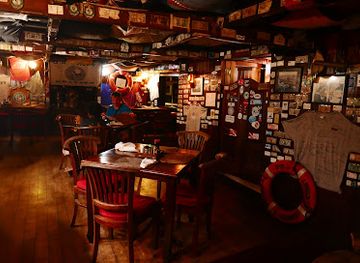
Pine Bar and Grill
Explore the vibrant culinary scene at Pine Bar and Grill, where local flavors and a lively atmosphere converge for an unforgettable dining experience.
Best nightclubs in Outer Islands of Yap
The Outer Islands of Yap do not have a conventional bar, nightclub or late-night entertainment scene. Evenings are shaped by family and community life, church activities, conversation, fishing schedules and the quiet conditions of small islands after dark. Any locally available alcoholic drinks should be approached with restraint and according to community expectations; drinking is not a substitute for engaging respectfully with hosts. There are no dependable opening hours, nightlife districts or regular commercial music venues, and electricity may be limited or interrupted. Bring a torch and avoid walking unfamiliar reef edges or shorelines at night. Social occasions, when offered, should be accepted as invitations within a community rather than assumed to be public events.
-
Hotel
Oceania Hotel Restaurant Bar
Experience the best of Yap at Oceania Hotel Restaurant Bar, where local flavors and vibrant atmosphere meet.
-
Restaurant
Manta Ray SV Mnuw
Explore the culinary delights of Yap at Manta Ray SV Mnuw, where local flavors meet a warm, welcoming atmosphere.
Best shops in Outer Islands of Yap
Shopping in the Outer Islands is limited to small local stores, household exchange and community-based handicrafts rather than formal retail districts. Visitors may encounter woven pandanus mats, baskets, fans, coconut products, shell work or locally made items, but availability differs sharply between islands and should never be assumed. Ask before buying culturally important objects, and do not purchase archaeological material, wartime relics, coral or shells taken from protected or living reef environments. Essential food, fuel, medicines and batteries should be obtained on Yap proper before an outer-island journey because local shops may carry only a narrow range of supplies and may open irregularly. Cash in United States dollars is normally necessary. The most appropriate souvenirs are modest, locally made goods obtained with community approval, together with responsibly purchased regional products rather than mass-produced items brought in from elsewhere.
-
Gift shop
Manta Ray Bay Resort & Yap Divers
Explore the wonders of Yap at Manta Ray Bay Resort & Yap Divers, your ultimate destination for relaxation and adventure in a tropical paradise.
-
Hotel
Oceania Hotel Restaurant Bar
Discover a vibrant blend of local flavors and hospitality at Oceania Hotel Restaurant Bar in Yap, where every meal is a memorable experience.
-
Hotel
O'keefe's Waterfront Inn
Discover tranquility and adventure at O'Keefe's Waterfront Inn, your serene retreat in beautiful Yap.
-
General store
Yap Cooperative Association General Store
Discover the heart of Yap at the Yap Cooperative Association General Store, where local culture meets everyday convenience in Colonia.
Get your free copy of our complete guide to Outer Islands of Yap, delivered straight to you.
Everything on this page, from attractions and restaurants to essentials and local phrases, in one PDF you can read offline, print or share.
Already have an account? Sign in
Your Outer Islands of Yap guide is ready.
We'll send it to · Not you? Sign out

Getting your guide ready…
We are putting together a fresh copy of the Outer Islands of Yap guide. This can take up to a minute.
This can take a few moments. If your browser asks, choose Allow so the download can start. You'll find the guide in your Downloads folder.
Nothing happened? Download it again
Sorry, the guide is taking longer than usual. Please try again in a minute, or get it by email instead.
Outer Islands of Yap essentials
Currency and Payment
Safety
Emergency Situations
Do's and Don'ts
Local Tips
From Eve
Local phrases worth knowing
You don't need to get them perfect. A few words go a long way, and locals appreciate the effort.
Basics
| English | Local | Say it |
|---|---|---|
| Hello | Maalol | [Mah-ah-lohl] |
| Goodbye | Ewe | [Eh-weh] |
| Yes | Iye | [Ee-yeh] |
| No | O | [Oh] |
| Please/You're welcome | Tanu | [Tah-noo] |
| Thank you | Kalah | [Kah-lah] |
| Excuse me/Sorry | Masi | [Mah-see] |
| How are you? | Ngei tanu? | [Ngeh-ee tah-noo] |
| Fine. And you? | Kalah. Ngei? | [Kah-lah. Ngeh-ee?] |
| Do you speak English? | Ngei pihs English? | [Ngeh-ee pees English?] |
| I don't understand | Masi i ngangae | [Mah-see ee ngah-ngah-eh] |
Eating & Drinking
| English | Local | Say it |
|---|---|---|
| I'd like to see the menu, please | Kalah a see menu, tanu | [Kah-lah ah see meh-noo, tah-noo] |
| I don't eat meat | Masi i ngangae mes | [Mah-see ee ngah-ngah-eh mess] |
| Cheers! | Kalah! | [Kah-lah!] |
| I would like to pay, please | Kalah a pay, tanu | [Kah-lah ah pay, tah-noo] |
Emergencies
| English | Local | Say it |
|---|---|---|
| Help! | Alo! | [Ah-lo!] |
| Go away! | Ngei masi! | [Ngeh-ee mah-see!] |
| Call the Police! | Alo Police! | [Ah-lo Police!] |
| Call a doctor! | Alo doctor! | [Ah-lo doctor!] |
| I'm lost | I am lost | [Ee am lost] |
| I'm ill | I am sick | [Ee am sick] |
Shopping
| English | Local | Say it |
|---|---|---|
| I'd like to buy... | Kalah a buy... | [Kah-lah ah buy...] |
| I'm just looking | I am just looking | [Ee am just looking] |
| How much is it? | Ngei peh? | [Ngeh-ee peh?] |
| That's too expensive | Ita epe epe | [Ee-tah eh-peh eh-peh] |
| Can you lower the price? | Ngei pihs low price? | [Ngeh-ee pees low price?] |
Time & Numbers
| English | Local | Say it |
|---|---|---|
| What time is it? | Ngei peh time? | [Ngeh-ee peh time?] |
| It's one o'clock | E epe peh one | [Eh eh-peh peh one] |
| Half past (10) | Half past (10) | [Half past (10)] |
| Morning | Bok | [Bok] |
| Afternoon | Peh | [Peh] |
| Evening | Ewe | [Eh-weh] |
| Yesterday | Ngei a ngangae | [Ngeh-ee ah ngah-ngah-eh] |
| Today | Ngei a | [Ngeh-ee ah] |
| Tomorrow | Ngei a pihs | [Ngeh-ee ah pees] |
| 1 | Tahi | [Tah-hee] |
| 2 | Lua | [Loo-ah] |
| 3 | Tolu | [Toh-loo] |
| 4 | Fa | [Fah] |
| 5 | Lima | [Lee-mah] |
| 6 | Ono | [Oh-no] |
| 7 | Fitu | [Fee-too] |
| 8 | Walu | [Wah-loo] |
| 9 | Sivu | [See-voo] |
| 10 | Tahi | [Tah-hee] |
Transport & Directions
| English | Local | Say it |
|---|---|---|
| Where's a/the...? | Ngei e a/the...? | [Ngeh-ee eh ah/the...?] |
| What's the address? | Ngei peh address? | [Ngeh-ee peh address?] |
| Can you show me (on the map)? | Ngei pihs show me (on the map)? | [Ngeh-ee pees show me (on the map)?] |
| When's the next (bus)? | Ngei peh next (bus)? | [Ngeh-ee peh next (bus)?] |
| A ticket (to ....) | A ticket (to ....) | [A ticket (to ....)] |
History of Outer Islands of Yap
Austronesian settlement and ocean voyaging
The islands of Yap State were settled by Austronesian-speaking seafarers over many centuries, using knowledge of stars, winds, swells, birds and currents to navigate the Caroline Islands. Isolated atolls developed their own languages, chiefly systems, ceremonies and relationships with neighbouring islands, while remaining connected through exchange and voyaging. On islands such as Woleai, Ifalik, Lamotrek and Elato, traditions of canoe building and ocean travel remain important markers of cultural identity. Archaeological evidence is less monumental than on some Pacific islands, but the continuing social and linguistic patterns of the outer-island communities reveal the depth of this maritime heritage.
Inter-island networks of the Caroline Islands
Before European colonial rule, the outer islands participated in regional networks linking atolls and raised islands across the western Caroline chain. Canoes carried people, food, tools and information between communities, although these connections depended on seasonal winds, local authority and the risks of open-ocean travel. Island societies maintained distinctive customs while exchanging goods and maintaining kinship or political relationships across considerable distances. This history helps explain why the Outer Islands of Yap cannot be understood simply as isolated tropical specks: their communities were part of a sophisticated maritime world whose routes extended across hundreds of kilometres.
Spanish and German colonial periods
Spanish influence reached the Caroline Islands through missionary and administrative activity during the nineteenth century, although the practical reach of colonial government varied greatly across remote atolls. In 1899 Spain sold its remaining rights in the Carolines to Germany, which incorporated the islands into its Pacific colonial possessions. German administration expanded commercial and administrative links, particularly around copra production, but the outer islands remained geographically difficult to govern. Missionary Christianity also became increasingly influential, interacting with rather than simply replacing older social structures and island customs.
Japanese administration and the Pacific War
Japan took control of the Carolines during the First World War and later administered them under a League of Nations mandate. Japanese commercial activity and administrative systems affected island life, while Japanese became an important language of wider regional contact for some communities. During the Second World War, Ulithi Atoll was transformed into a major Allied naval anchorage from 1944. Thousands of ships used its sheltered waters during the Pacific campaign, and wartime remains, submerged objects and memories still form an important part of Ulithi's modern historical landscape. Other outer islands also experienced wartime disruption, shortages and military contact.
United States trust administration
After the Second World War, the islands became part of the Trust Territory of the Pacific Islands administered by the United States under United Nations authority. The period brought expanded schooling, medical services, public administration and new transport and communications links, while also accelerating migration and dependence on imported goods. Remoteness continued to limit the reach of government services in the outer islands, and local communities retained significant importance in organising daily life. The political transition also encouraged modern institutions alongside enduring customary authority.
Federated States of Micronesia and contemporary island life
The Federated States of Micronesia entered into a Compact of Free Association with the United States in the 1980s, and Yap became one of its four states. The Outer Islands of Yap are now governed within Yap State while maintaining distinctive local communities, languages and customary practices. Contemporary life combines subsistence fishing and gardening with remittances, public employment, imported goods and periodic transport links. Climate pressures, coastal erosion, storm damage and the high cost of supplying remote islands are increasingly significant concerns, making local resilience and community decision-making central to the region's future.
Outer Islands of Yap in Photos
Browse through our photo collection highlighting the charm and character of the destination.
Neighbouring regions of Outer Islands of Yap
The closest regions to Outer Islands of Yap, if you have time for more than one.
-

-
-

-

-


Swipe for more regions
Explore more

Explore more of Micronesia
Discover Micronesia: A Pacific paradise with vibrant coral reefs, rich cultural heritage, and breathtaking landscapes.
Explore Micronesia